
By submitting you consent to receive service-related texts from Drastic Drainage. Reply STOP to opt out. Msg & data rates may apply. Consent not required to book service.
Useful Links
Here is what septic pumping in Ridge looks like once the work is done. Most Ridge homeowners don’t think about their septic tank until something goes wrong. A slow drain, a smell coming from the yard, a soggy patch of grass near the tree line by the time those signs show up, the system has usually been under stress for a while. Getting ahead of it with routine pumping is what keeps a $400 service call from turning into a $10,000 repair.
Ridge sits right at the edge of the Long Island Central Pine Barrens, and that matters more than most people realize. The sandy, porous soils beneath this hamlet move water and whatever’s in it down toward the aquifer faster than denser soils elsewhere in Suffolk County. If your septic system is overdue and you’re drawing from a private well on the same property, that’s not an abstract concern. It’s a real one specific to where you live.
The homes along Middle Country Road and throughout the wooded neighborhoods off William Floyd Parkway were mostly built in the 1960s and 1970s. That means the septic systems underneath them are approaching or already past the 50-year mark. Regular pumping is what keeps those systems functional and keeps you from discovering a much bigger problem at the worst possible moment.
For most single-family homes in Ridge, a septic tank should be pumped every three to five years, depending on household size and tank capacity. A family of four with a 1,000-gallon tank typically lands in the three-to-four-year range. Cesspools which are more common in older Ridge housing stock generally need service more frequently, closer to every one to two years, because they don’t separate solids from liquids the way a septic tank does.
Ridge’s older housing stock is an important factor here. Homes built in the 1960s and 1970s may have original systems that have never been fully assessed. If you’ve owned your property for several years and can’t confirm when the tank was last pumped, don’t wait for a symptom to appear. Scheduling a pump-out and inspection now is far less disruptive and far less expensive than dealing with a backed-up system or a failed drainfield later.
Standard residential septic tank pumping in Suffolk County typically runs between $225 and $600, depending on tank size. A 1,000-gallon tank generally falls in the $225 to $400 range; a 2,000-gallon system runs closer to $400 to $600. Those figures assume the access lid is reachable. If the lid is buried which is very common on Ridge’s older, wooded lots excavation to locate and expose it adds to the total cost.
That lid excavation cost is one of the most common sources of surprise on a service call, and it’s worth asking about upfront. A company that gives you a complete picture before the truck arrives is worth more than one that quotes the lowest number and adjusts it once they’re on your property. We provide a free estimate before any work begins, so you know what you’re agreeing to not what you owe after the fact.
This is one of the most common questions from Ridge homeowners, and it’s completely understandable. The distinction matters because the two systems work differently, fail differently, and need service on different schedules. A cesspool is a single underground chamber that receives all household waste solids settle at the bottom, liquids leach out through the walls into the surrounding soil. A septic tank is a two-stage system: solids settle in the first chamber, and clarified liquid flows to a separate leaching field.
Ridge’s housing stock, built largely in the 1960s and 1970s, often includes older cesspool systems. Some properties have had partial upgrades over the decades, which can create a mixed setup that’s harder to identify without a proper inspection. If you’re not sure what you have, the easiest answer is to call and have someone look. Knowing your system type affects how often you need service, what a replacement would involve under current Suffolk County regulations, and whether you might qualify for county or state grant funding for an upgrade.
A failing septic system anywhere in Suffolk County is a problem, but Ridge’s location adds a layer of urgency that doesn’t apply the same way to communities with denser soils. The sandy, porous substrate that makes the Long Island Central Pine Barrens such an important aquifer recharge zone is the same soil that sits beneath Ridge’s residential neighborhoods. Water and contaminants move through it quickly. A system that’s overloaded or backing up doesn’t just create a yard problem; it creates a groundwater problem that can reach the aquifer faster than most homeowners expect.
If you’re on a private well and your septic system is on the same property, the risk is even more direct. Suffolk County’s regulations recognize this the groundwater management zones in the Pine Barrens area impose stricter standards precisely because the environmental stakes are higher. A failed system in Ridge may trigger a required upgrade rather than a simple repair, and under current Suffolk County rules, in-kind cesspool replacement is no longer permitted. Getting ahead of system maintenance is the most straightforward way to avoid that situation entirely.
Yes, and this is something we specifically handle. On Ridge’s older properties particularly the ranch homes and hi-ranches set back on large wooded lots septic and cesspool lids get buried under years of accumulated soil, leaves, and root growth. It’s not unusual for a homeowner to have no idea where their access point is, especially if the system hasn’t been serviced in a long time or if they’re relatively new to the property.
Locating a buried lid is part of the service, not an obstacle we turn back to you. The process typically involves probing the yard in the area where the system is likely to be based on the home’s layout and age, then carefully excavating to expose the lid once it’s found. If the lid is significantly buried, there will be an additional cost for that excavation work which is standard across the industry and something we’ll discuss with you before we start digging. Once the lid is found and marked, future service calls are faster and less involved.
It depends on how the community’s wastewater infrastructure is structured, and it’s worth knowing the answer for your specific unit before assuming. Leisure Village and Leisure Knoll are large 55-plus communities in Ridge with hundreds of homes between them, and while some community associations manage shared infrastructure collectively, individual units in many cases still have their own septic or cesspool systems that require individual service and maintenance.
If you’re a homeowner in one of these Ridge communities and you’re not sure whether your unit has its own system or shares infrastructure with the broader community, the HOA management office is the right first call. If you do have an individual system which is common in Leisure Knoll’s detached ranch homes then the same pumping schedule applies to you as to any other Ridge homeowner: every one to two years for a cesspool, every three to five years for a septic tank, adjusted for your household size. We serve both individual homeowners and community-level accounts throughout Ridge, and a free estimate is available regardless of property type.
Free, no-obligation estimates on cesspool, sewer, and drain work.
We get there quickly. No waiting days for a callback.
Backups don’t wait for business hours. Neither do we.
Fully licensed and insured across Long Island.
Up-to-date trucks and tools for cleaner, faster jobs.
Straight quotes, no surprises on the bill.
Hear from Our Customers
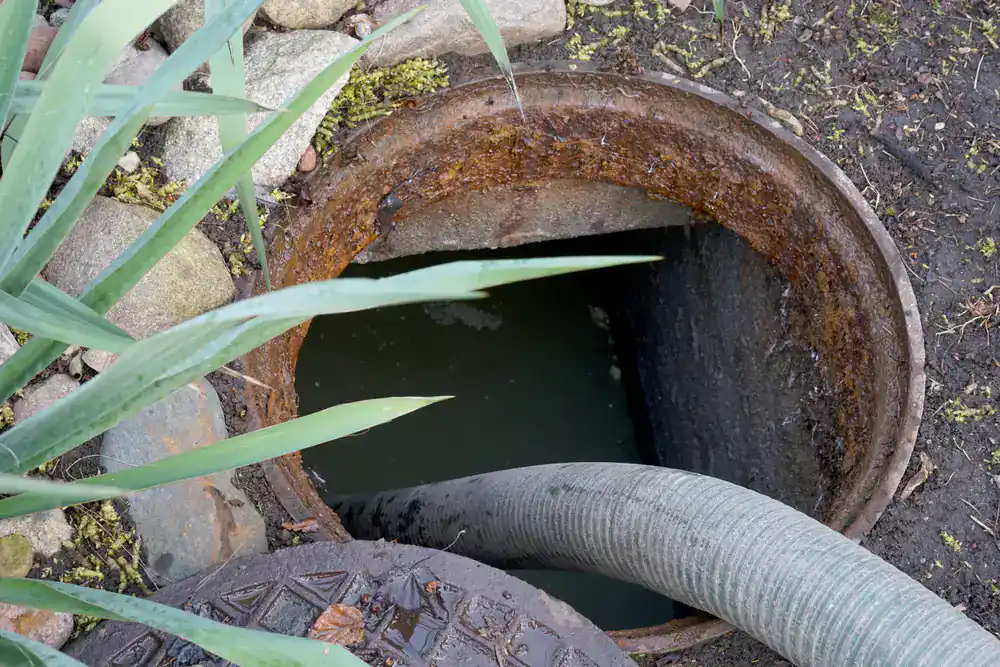
Here is what septic pumping in Ridge looks like once the work is done. Most Ridge homeowners don’t think about their septic tank until something goes wrong. A slow drain, a smell coming from the yard, a soggy patch of grass near the tree line by the time those signs show up, the system has usually been under stress for a while. Getting ahead of it with routine pumping is what keeps a $400 service call from turning into a $10,000 repair.
Ridge sits right at the edge of the Long Island Central Pine Barrens, and that matters more than most people realize. The sandy, porous soils beneath this hamlet move water and whatever’s in it down toward the aquifer faster than denser soils elsewhere in Suffolk County. If your septic system is overdue and you’re drawing from a private well on the same property, that’s not an abstract concern. It’s a real one specific to where you live.
The homes along Middle Country Road and throughout the wooded neighborhoods off William Floyd Parkway were mostly built in the 1960s and 1970s. That means the septic systems underneath them are approaching or already past the 50-year mark. Regular pumping is what keeps those systems functional and keeps you from discovering a much bigger problem at the worst possible moment.
We’ve been working across Suffolk County for over 30 years. That includes the older housing stock in Brookhaven Town, the large wooded lots in Ridge where lids go missing under decades of soil and roots, and the specific conditions that come with living near the Pine Barrens. This isn’t a national chain running calls from a regional dispatch center we’re a Long Island operation that knows this county’s systems and what they actually need.
One thing that sets us apart in this market is a straightforward commitment: no unnecessary recommendations, no inflated charges for simple work. If a pump-out is all you need, that’s all you’ll be quoted. If something else is going on, you’ll hear about it clearly and decide what to do not be pressured into it on the spot.
Whether you’re in Leisure Village, Leisure Knoll, or a single-family home on a wooded lot in Ridge, you get the same honest service. Free estimate upfront, real pricing before any work begins, and technicians who don’t leave until the job is done right.
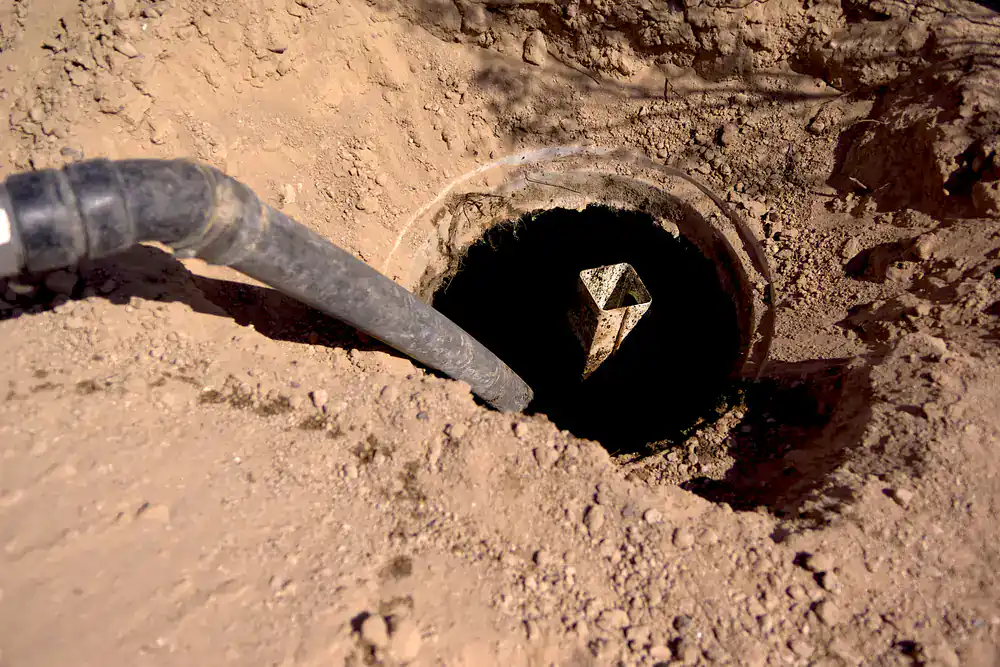
It starts with locating the system. On Ridge’s older properties particularly the ranch homes and hi-ranches on larger wooded lots the access lid is often buried under years of accumulated soil and leaf matter. We specialize in finding hard-to-locate systems, so if you don’t know where your tank is, that’s not a problem we hand back to you. We handle it.
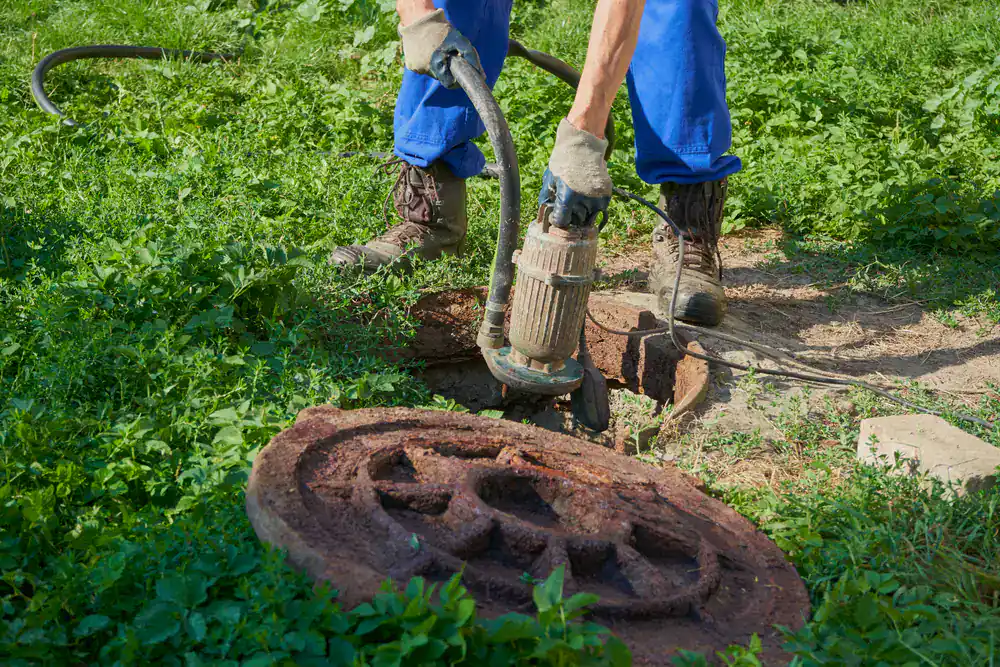
Once the lid is accessed, we fully pump out the tank not a partial job, not a surface-level pull. The goal is to remove all accumulated sludge and waste so the system can function the way it’s supposed to. After pumping, our technician checks the condition of the tank and baffles and will tell you plainly what they found. If everything looks good, you’ll know. If something needs attention, you’ll hear what it is and what your options are before anything else happens.
Because Ridge properties are in a Suffolk County groundwater management zone adjacent to the Pine Barrens, proper disposal of septage matters here. All waste is hauled legally to a licensed treatment facility not just pumped and driven away without accountability. Spring is typically when Ridge homeowners discover latent system issues after winter snowmelt raises the water table, so if you haven’t had service in a few years, that’s the window to act.
Ready to get started?
Septic tank pumping is the core of what brings most Ridge homeowners to call, but it’s rarely the only thing a 50-year-old system needs. We handle the full range cesspool pumping, drywell cleaning, drain cleaning, house trap replacements, main sewer line cleaning, and full system installation when the time comes for an upgrade. If a pump-out reveals a related issue, you don’t need to call a second company.
For Ridge residents in Leisure Village, Leisure Knoll, or Leisure Glen, the age of the underlying infrastructure is worth taking seriously. These communities were established in the early 1970s, and the systems serving them have been working for decades. Routine pumping is what keeps those systems out of the emergency category and what keeps a HOA-managed property from facing a much larger collective repair bill down the road.
Suffolk County’s regulations are also worth understanding. Since 2019, any cesspool that fails and requires replacement can no longer be swapped out in kind it has to be upgraded to a more advanced system. If your system is older and showing signs of stress, a service call is also an opportunity to understand where you stand before a failure forces the decision. New York State and Suffolk County currently offer grant funding to help homeowners cover the cost of qualifying upgrades, which is worth asking about when you call.
