

Most Suffolk County, NY homes run on a cesspool. When it's working, you forget it exists. When it's not, the clock starts ticking — and in this county, a failed system doesn't get swapped out cheaply anymore.
We carry the Suffolk County Consumer Affairs Liquid Waste License — the specific credential that separates legitimate operators from the ones you want to avoid.
Three decades working Long Island cesspools means we understand your soil, your housing stock, and your county's regulations better than any out-of-area company can.
Older Suffolk County homes often have cesspools with no records and no markers. We specialize in locating systems that other companies give up on — using electronic locating equipment to find what's buried.
We don't recommend work you don't need or charge premium prices for straightforward jobs. You get an honest assessment and a clear scope before anything starts.

Most of Suffolk County, NY Runs on a Cesspool
About 74% of Suffolk County isn't connected to a public sewer system. That means the vast majority of homeowners here — from West Babylon to Patchogue, from Bay Shore to Hauppauge — rely entirely on an underground cesspool to handle their household wastewater. It's been that way since most of these homes were built in the 1950s, '60s, and '70s.
A cesspool handles everything in one chamber. Solids settle at the bottom, liquids filter out into the surrounding soil. Over time, the sludge builds up. When it builds up too much, the system stops absorbing properly — and that's when you start noticing the symptoms. Slow drains. Gurgling pipes. A smell outside near the yard, especially after rain. Regular pumping is what keeps all of that from happening.
What Regular Pumping Actually Does for You
A pump-out every few years isn't just maintenance — in Suffolk County, NY it's the most cost-effective decision you can make as a homeowner.
Your drains keep flowing normally instead of slowing down or backing up into the house.
You avoid the outdoor sewage smell that shows up near the yard after heavy rain when a system is under stress.
You protect your system from the kind of failure that now costs $19,000–$25,000 to fix under current Suffolk County regulations.
You get an honest look at your system's condition while we're there — so nothing catches you off guard later.
You stop guessing when it was last serviced and get back on a schedule that actually fits your household size and usage.
You keep contaminants out of the sole-source aquifer that supplies every drop of drinking water in Suffolk County.
What Pumping Costs vs. What Ignoring It Costs
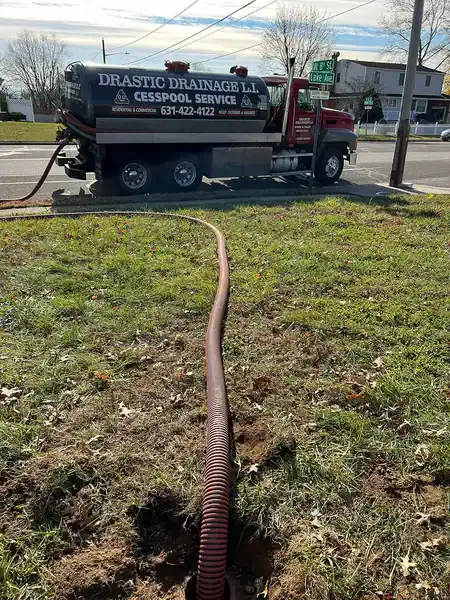
For most residential homes in Suffolk County, NY, a routine cesspool pump-out runs between $300 and $600. The exact number depends on your tank size, when it was last serviced, and how accessible the system is. We'll give you a clear picture before the truck ever pulls up.
Here's what makes that number worth paying attention to: since July 2019, Suffolk County no longer allows in-kind cesspool replacement. If your system fails today, you can't simply swap in a new cesspool the way homeowners used to. You're looking at a full septic system installation — and if the property requires an Innovative and Alternative system, that bill can reach $19,000 to $25,000.
Routine pumping at $300–$600 every two to three years is the simplest way to protect against that outcome. A system that gets maintained regularly lasts significantly longer than one that doesn't — and in Suffolk County's regulatory environment, the cost of letting a cesspool fail has never been higher.
Here's Exactly What Happens During a Pump-Out
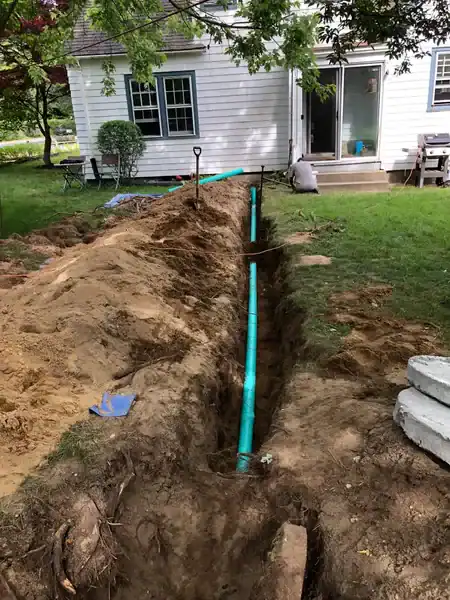
We start by locating your cesspool — and if you don't know where it is, that's not a problem. We've been finding hard-to-locate systems across Long Island for over 30 years, and we use electronic locating equipment when records don't exist or aren't reliable.
Once we have access, we remove all liquid and solid waste from the tank. Not a partial pull — a full pump-out. From there, we take a look at the system's condition while we're in there. If we see something worth flagging — a baffle issue, signs of absorption problems, anything that suggests the system is under stress — we'll tell you plainly and explain what it means before recommending anything.
You get honest documentation of the work performed and a straightforward assessment of where things stand. No pressure, no manufactured urgency. If the system is fine, we'll tell you that too.
Simple Process, No Guesswork on Your End
Reach us by phone and we'll get you on the schedule — same day for emergencies, or at a time that works for you.
We find your cesspool, expose the access point, and confirm the setup before any work begins — no assumptions.
We remove everything, inspect the system's condition, and give you a clear, straight answer on where things stand before we leave.
Cesspool Pumping Questions, Answered Straight
The national guideline you'll often hear is every three to five years, but that's a broad average that doesn't account for Long Island's specific conditions. For most Suffolk County families, every two to three years is a more realistic target. A few factors push that number in either direction: household size, system capacity, and how much water your home uses on a daily basis. A single person in a home with a large tank might stretch to four years without issue. A family of four or five with an older, smaller system may need service annually. If you've just moved into a home and have no idea when it was last pumped, that's the first call you should make — don't wait for symptoms to show up before finding out where you stand.
The most common ones are slow or gurgling drains throughout the house, toilets that don't flush cleanly, and a sewage smell outside near the yard — especially noticeable after a rainstorm. If you see water pooling or unusually green, lush grass over the cesspool area, that's a sign the system is saturated and effluent is surfacing. The problem with waiting for these symptoms is that by the time they appear, the system is already under significant stress. A cesspool that's maintained proactively rarely shows any of these signs at all. If you're noticing any of them now, don't put off the call — a backup inside the house is a much worse situation than a pump-out you scheduled in advance.
A cesspool handles everything in a single chamber — solids settle to the bottom, liquids leach out into the surrounding soil through the walls and base of the pit. A septic tank is a two-stage system: solids break down in a sealed tank first, then clarified liquid moves to a separate drain field for absorption. Because a cesspool does both jobs in one space, it tends to fill with sludge faster and generally needs more frequent pumping — typically every two to three years compared to every three to five years for a septic tank. Suffolk County, NY still has a very high concentration of older cesspools, particularly in towns like Bay Shore, Brentwood, West Babylon, and Ronkonkoma where much of the housing stock dates back to the mid-twentieth century. Knowing which system you have matters, and we can help you identify it if you're not sure.
No — routine cesspool pumping does not require a permit in Suffolk County. You do, however, want to make sure the company you hire holds a valid Suffolk County Consumer Affairs Liquid Waste License with the appropriate endorsements for the type of work being performed. That license is the county-specific credential that separates legitimate operators from unlicensed contractors. If you're ever unsure, you can ask any company for their license number before they start work — a legitimate operation will provide it without hesitation. Where permits do come into play is with system replacements, repairs, or any new installation. Those require SCDHS involvement and proper registration. But for a standard pump-out, you just need a licensed hauler and a scheduled appointment.
This is more common than most people realize, especially in older Suffolk County homes where the original installation records were never passed along to subsequent owners. A few starting points: check with your local building department, as some municipalities have records on file from the time of construction. Your home inspector's report from when you purchased the property may also include a rough location. If none of that turns up anything useful, electronic locating is the reliable fallback — we use specialized equipment to find buried systems without any digging or guesswork. We specifically call out hard-to-find cesspools as something we handle regularly, because it genuinely is a problem that comes up often across Long Island's older housing stock. Don't assume a system can't be found just because you don't have records.
Suffolk County sits entirely on a sole-source aquifer — meaning every drop of drinking water for every resident in the county comes from the groundwater directly beneath the properties here. There is no municipal water grid as a backup, no alternative supply. Long Island's sandy, glacially deposited soils are highly permeable, which means effluent from a neglected or failing cesspool doesn't stay put — it moves through the ground relatively quickly, reaching the water table and eventually the aquifer. Studies have shown that nitrate levels in Suffolk County's drinking water are already higher than in 95% of the country, and 70% of the nitrogen entering local bays like Great South Bay and the Peconic comes directly from the county's 360,000-plus cesspools and septic systems. Maintaining your system isn't just about avoiding a backup in your house — it's about protecting the water supply that your family and your neighbors drink from every day.