

Suffolk County changed the rules in 2019. When your cesspool fails, you can't just swap it for another one — and navigating what comes next shouldn't fall on you. We handle cesspool installation from permit to final inspection, so you don't have to figure it out alone.
Our license number — LW-63684 — is posted publicly. You can verify it before you ever pick up the phone.
We've been working Suffolk County soil, codes, and health department requirements for over three decades. That's not a number we throw around lightly.
You'll know exactly what you're getting into before anyone touches your yard. No surprises on the invoice, no bait-and-switch.
Cesspool failures don't wait for business hours. We're available 24 hours a day, 7 days a week — including weekends and holidays.
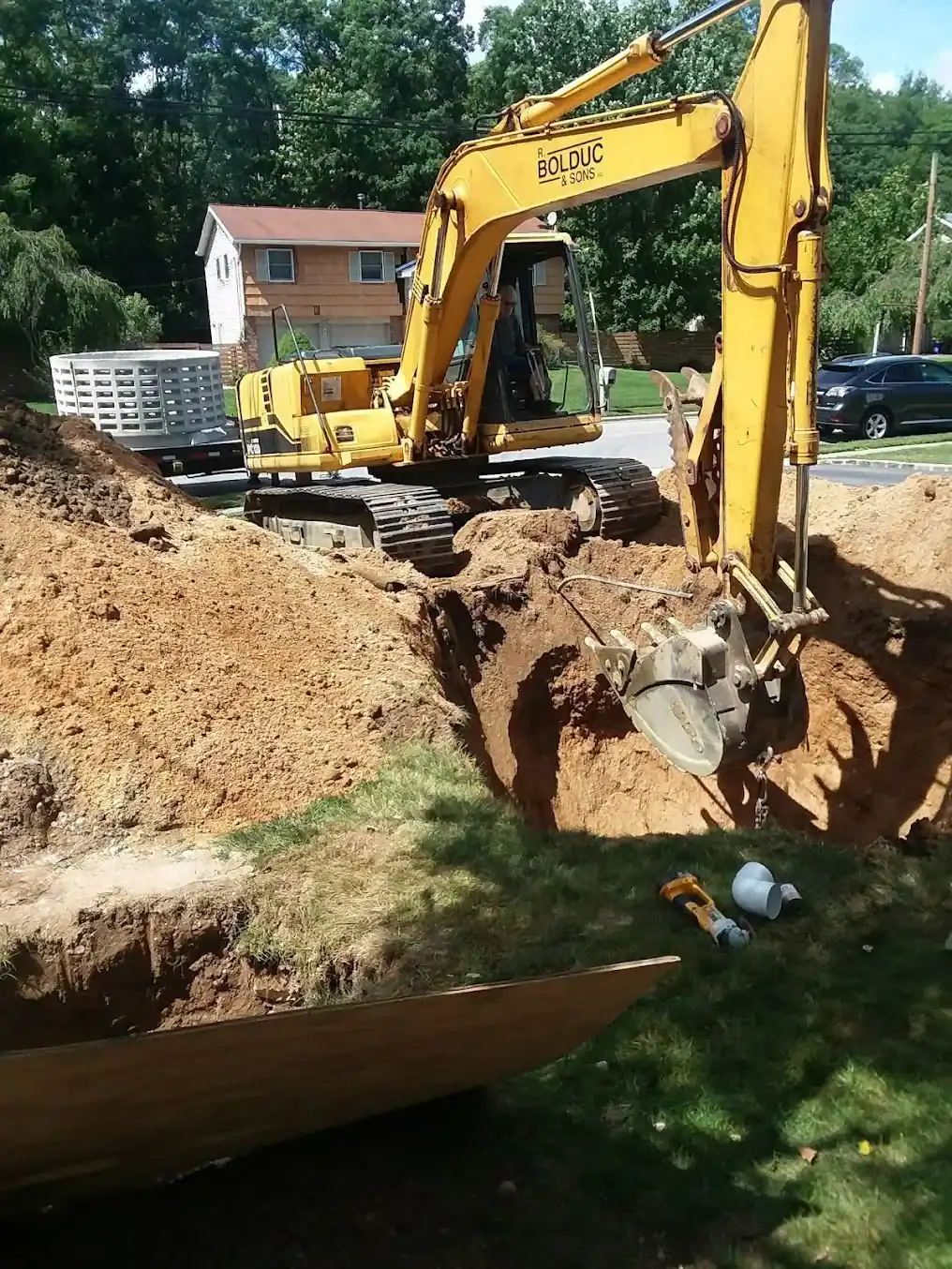
What Suffolk County Homeowners Need to Know First
If your cesspool is failing, backing up, or flagged during a home inspection, you're probably realizing fast that this isn't a simple fix. Since July 2019, Suffolk County has banned the installation of new cesspool-only systems. Any replacement now requires at minimum a conventional septic system — and depending on your property's location, possibly an advanced nitrogen-reducing system called an I/A OWTS.
That sounds like a lot. It doesn't have to be. We've been through this process hundreds of times across communities like Babylon, Huntington, Sayville, Oakdale, and Bayport. We know what the Suffolk County Department of Health Services requires, how to get permits approved, and how to keep your project moving without unnecessary delays.
What most homeowners don't realize is that significant grant funding — up to $30,000 combined from Suffolk County and New York State — may be available to cover most or all of the cost. But the grant has to be applied for before work begins. That's exactly the kind of detail that makes working with someone who knows this county inside and out worth it.
What a Proper Installation Actually Gets You
A compliant, correctly installed system protects your home, your sale, your water, and your wallet — for the next 20 to 40 years.
You won't have to worry about Suffolk County Department of Health Services violations or a failed inspection shutting down your home sale.
A correctly sized and installed system handles your household's wastewater without the backups, odors, or wet spots in your yard.
If you qualify for the Suffolk County Septic Improvement Program, you could have most — or all — of the installation cost covered by grant funding.
Your new system meets current Suffolk County code, so you're not facing a forced upgrade again in five years.
With the right system in place, you're no longer contributing nitrogen runoff to the groundwater that Long Island's 2.8 million residents drink from every day.
Once the job is done, your yard is restored — we don't leave a mess behind and call it finished.

What Does Cesspool Installation Actually Cost in Suffolk County?
For a standard residential installation in Suffolk County, costs typically run between $4,500 and $9,500. If your property requires an I/A OWTS nitrogen-reducing system — which is now mandatory for new construction and in certain priority areas near sensitive waterways — that range rises to approximately $19,200 to $25,000.
Those numbers can feel jarring. But here's what most homeowners don't know until they talk to us: the Suffolk County Septic Improvement Program offers a base grant of $10,000, with additional funding available for low-to-moderate income households and certain system types. Combined with New York State programs, total available grants can reach $25,000 to $30,000. That money is paid directly to us after installation — you don't front it. You just have to apply before work begins.
We can walk you through what your property may qualify for during your free estimate. The permit itself typically costs between $200 and $650 and takes two to four weeks to process — something we handle on your behalf so you're not navigating Suffolk County Department of Health Services paperwork on your own.
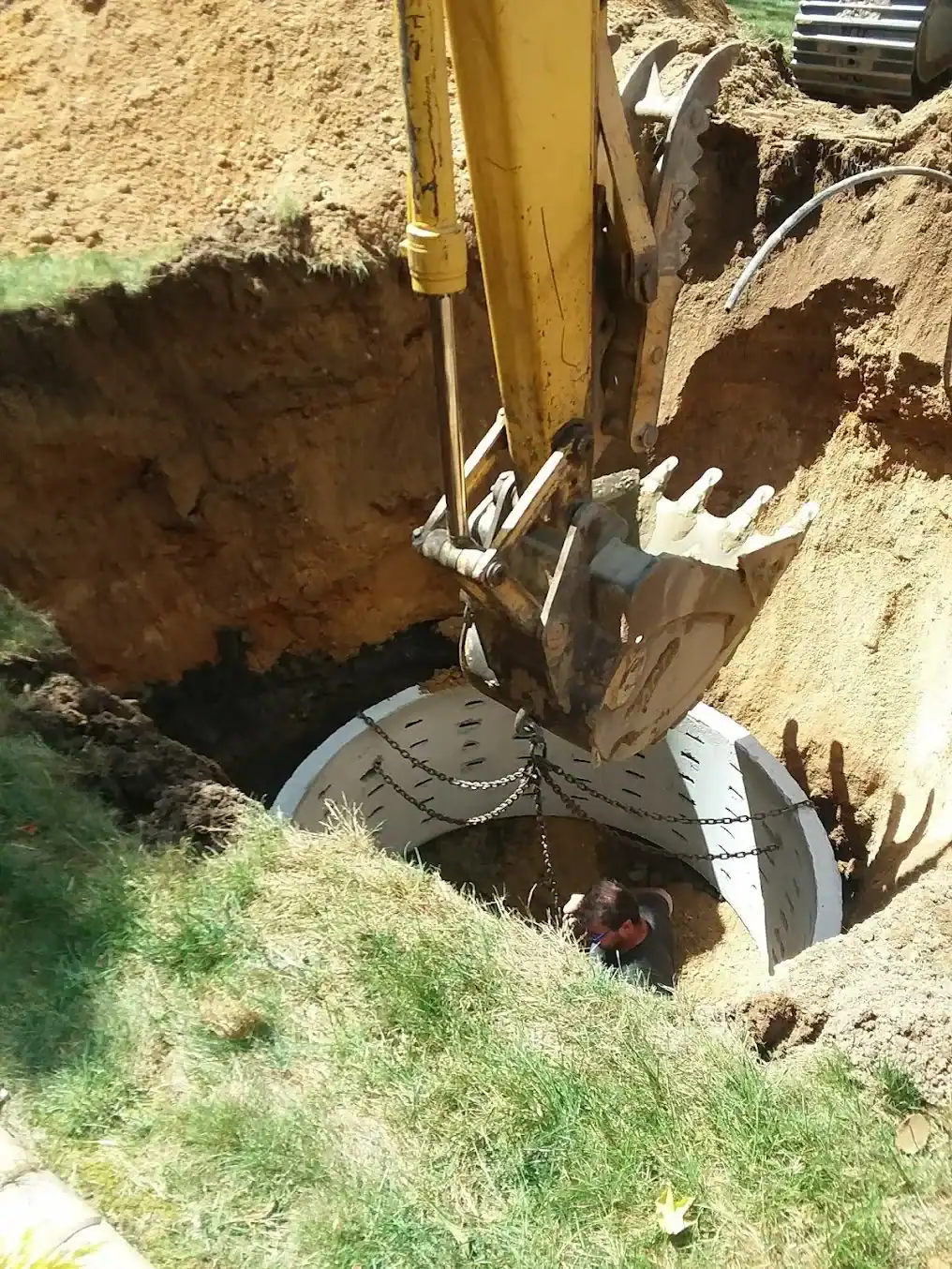
Cesspools, Leaching Pools, Drywells — We Handle All of It
Not every job is a full system replacement. Sometimes the issue is a deteriorating cesspool ring — the precast concrete rings that form the structure of your cesspool. When rings crack, settle, or shift, we can often replace them without tearing out the entire system, which is a significantly less expensive fix when the rest of the system is still functional.
We also install leaching pools and drywells. A leaching pool is the soil-absorption component of a septic system — it's where treated wastewater disperses into the ground after leaving the septic tank. A drywell handles surface and stormwater drainage separately from your wastewater system. Both are common on Long Island properties, and both require proper sizing, placement, and permitting to work correctly and stay compliant with Suffolk County regulations.
If you're not sure which component of your system is the problem, that's what the site assessment is for. We'll tell you what you actually need — not what costs the most.
No Guesswork — Here's Exactly What Happens
We evaluate your property, locate your existing system, assess soil conditions, and give you a written estimate before any work begins.
We handle the permit application, engineered plans, and all coordination with the Suffolk County Department of Health Services — you don't have to make a single call to the health department.
We excavate, install your new system, coordinate required Suffolk County Department of Health Services inspections at each stage, backfill, and restore your yard. Most residential jobs are completed in one to two days.
Cesspool Installation Questions, Answered Straight
No. Suffolk County banned the installation of new cesspool-only systems effective July 1, 2019. If your existing cesspool fails and needs to be replaced, you are now required to install at minimum a conventional septic system — which includes a septic tank for solids separation and a leaching structure for soil-based treatment. In certain areas of Suffolk County, particularly near sensitive waterways like the Great South Bay or Peconic Bay, you may be required to install an I/A OWTS nitrogen-reducing system instead. Many homeowners discover this for the first time when their system fails, which is why it's important to call us before assuming a simple swap is possible.
Yes, always. Since 2019, any cesspool replacement or new installation in Suffolk County requires at minimum a registration with the Suffolk County Department of Health Services. Most projects require a full permit application, which includes engineered plans, soil testing documentation, and verification that your system meets setback requirements — including at least 100 feet from any water supply well and 20 feet from your property lines. Permit processing typically takes two to four weeks. We handle all of this on your behalf. You don't need to call the health department, fill out forms, or figure out what documentation is required. That's part of what you're hiring us for.
It does, and it's something we deal with regularly across Suffolk County. A significant portion of the county's housing stock was built during the post-World War II suburban boom of the 1940s and 1960s, and many of those homes still have their original cesspools — systems that are now 50 to 80 years old, well past their 20 to 40 year design life. Pre-1970s cesspools were built without septic tanks, meaning they don't treat wastewater at all before it enters the ground. They're also structurally vulnerable — prone to cracking, settling, and collapse. When we assess an older property, we take extra care to evaluate what's actually down there before recommending a course of action. The older the system, the more important it is to work with someone who's seen these situations before and knows what to expect once excavation begins.
Yes, and this is one of the most important things to know before you start the process. Suffolk County's Septic Improvement Program provides a base grant of $10,000 for eligible homeowners installing approved systems. Additional funding of up to $5,000 is available for low-to-moderate income applicants, and another $5,000 for certain system types, bringing the Suffolk County maximum to $20,000. Combined with New York State programs, total available grants can reach $25,000 to $30,000. The grant money is paid directly to us after installation — you don't need to front it yourself. The critical detail: the grant must be applied for and approved before work begins. If you've already started the job, you're no longer eligible. Call us before anything happens so we can help you understand what your property qualifies for.
This is a situation we handle regularly, and the urgency is real — a failed cesspool inspection can delay or derail a home sale entirely. The good news is that a replacement can typically be completed in one to two days for a residential property, and we also provide cesspool certification services once the new system is installed and passes inspection. The challenge in a real estate timeline is the permitting process, which takes two to four weeks under normal circumstances. The sooner you call, the more options you have. We'll assess the system, give you a written estimate, and walk you through the fastest compliant path forward so you can keep your transaction on track.
A cesspool is a single underground pit that collects household wastewater and slowly allows liquid to seep into the surrounding soil through its walls and bottom. There's no treatment happening — raw sewage goes in, and whatever leaches out goes directly into the ground. On Long Island, where 100% of drinking water comes from underground aquifers with no reservoir or backup supply, that's a significant problem. A conventional septic system works differently. Wastewater flows from your home into a septic tank, where solids settle and liquids separate. The liquid — called effluent — then flows to a leaching structure, where it disperses into the soil and receives natural biological treatment before reaching groundwater. It's a more effective system that dramatically reduces the nitrogen load entering the aquifer. Since 2019, new installations in Suffolk County must be septic systems, not cesspools.