Useful Links
Other Services we provide in Bay Shore
Not as a replacement system, no. Suffolk County banned cesspool-only replacements effective July 1, 2019. If your existing system fails or needs to be replaced, the new installation must include at minimum a septic tank preceding the leaching structure. You can’t swap one cesspool for another and call it done that’s no longer permitted under Suffolk County Sanitary Code.
For new single-family construction in Bay Shore, the requirement goes further. Since July 2021, new builds must install an I/A OWTS system an Innovative and Alternative Onsite Wastewater Treatment system which treats wastewater more effectively before it reaches the soil and reduces nitrogen output by 70 to 90 percent. If you’re not sure which requirement applies to your specific situation, that’s exactly what the free estimate conversation covers. The rules depend on whether you’re replacing an existing system or building new, and we can tell you which path you’re on before any money changes hands.
The honest answer is that cost depends on what your property needs, and the only way to get a real number is a site visit. What drives cost up or down includes the type of system required, your soil conditions, how accessible the site is, whether the old system needs to be fully decommissioned, and whether you’re doing a conventional replacement or a full I/A OWTS installation.
What’s worth knowing for Bay Shore specifically is the grant program. The Suffolk County Septic Improvement Program currently offers combined State and County grants of up to $45,000 for eligible I/A OWTS installations. That funding is disbursed directly to the licensed installer after final inspection you pay the balance, not the full amount. For a lot of Bay Shore homeowners, that grant changes the math significantly. The program is first-come, first-served, and the available funding does get drawn down over time, so it’s worth understanding your eligibility sooner rather than later. We provide free, written estimates so you know the full picture before committing to anything.
This is a real pattern in Bay Shore and it has a specific cause. The water table here doesn’t only respond to rainfall it responds to the tides. The Great South Bay pushes groundwater upward during high-tide events, and when that happens, the vertical distance between the bottom of your cesspool and the water table can temporarily shrink or disappear entirely. When the water table rises to meet the cesspool, the system has nowhere to drain, and you get a backup even on a dry day.
This is documented behavior in South Shore coastal communities, and Bay Shore is specifically named in research on this issue alongside communities like Lindenhurst and East Islip. If you’re experiencing intermittent backups that don’t correlate with heavy rainfall or heavy household use, tidal groundwater fluctuation is a likely factor. An aging system that’s already operating near capacity has no margin when the water table rises. A properly installed replacement system, sized and positioned correctly for Bay Shore’s actual soil and groundwater conditions, is built to handle that dynamic not just designed for generic Long Island conditions.
Yes, every cesspool installation and replacement in Bay Shore requires a permit from the Suffolk County Department of Health Services. Bay Shore is an unincorporated hamlet within the Town of Islip, so there’s no separate municipal permitting layer the SCDHS is the governing authority under Article 6 of the Suffolk County Sanitary Code.
The permit application requires engineered plans, soil testing results, and documentation of setback distances from wells, property lines, and water bodies. Processing typically takes two to four weeks, and permit costs generally run in the range of $200 to $500 depending on system size and specifics. Skipping the permit isn’t a shortcut unpermitted work can void your certificate of occupancy, create problems with your homeowner’s insurance, and surface as a serious issue when you go to sell the property. In Bay Shore’s active real estate market, where homes receive multiple offers and move quickly, an unpermitted cesspool installation is the kind of thing that kills a deal at inspection. We handle the permit process from start to finish, so you’re not navigating the SCDHS paperwork on your own.
For most residential properties in Bay Shore, the physical installation takes one to five days once permits are approved. A straightforward residential replacement on a property with clear access and cooperative soil conditions is typically on the shorter end of that range one to two days for the actual work. More complex jobs, like properties with tight lot access, mature landscaping, or systems that require full decommissioning of multiple old structures, take longer.
The permit approval process is separate from the installation timeline and typically adds two to four weeks before the crew can break ground. That’s not something any contractor can speed up it’s the SCDHS review process, and it applies to everyone working in Suffolk County. The practical takeaway is that if you’re dealing with a system that’s struggling but hasn’t fully failed yet, starting the permit process now gives you the most control over timing. Waiting until the system fails means emergency conditions, no time to plan, and no ability to apply for grant funding before the work begins. We can start the estimate and permit process before your situation becomes urgent.
We’re based in West Babylon, roughly ten miles west of Bay Shore along Sunrise Highway and the Southern State Parkway. We’ve been working in South Shore Suffolk County communities for over 30 years, which means our crew has spent decades working in the same post-war housing stock that fills Bay Shore’s neighborhoods the Baywood subdivisions, the older blocks in North Bay Shore off Sunrise Highway, the properties near the ferry terminals in the core hamlet.
The housing stock in Bay Shore is specific. Homes built between the mid-1950s and mid-1960s have cesspool systems that were installed under very different standards than what Suffolk County requires today. Knowing what those older systems look like, how they were typically positioned, and what the soil conditions in this part of the South Shore tend to do that’s the kind of local knowledge that comes from actually working here, not from reading about it. The tidal water table dynamic that affects South Shore coastal communities, the SCDHS permit process for Town of Islip properties, the grant programs available to homeowners near the Great South Bay these aren’t abstract topics for us. They’re part of the job on every Bay Shore call.
Hear from Our Customers
Most Bay Shore homeowners don’t think about their cesspool until something goes wrong. Then it’s a Sunday night, there’s a smell in the yard, and the options feel limited. Getting ahead of that moment or getting out of it fast is exactly what a properly installed system does for you.
The median Bay Shore home was built in 1965. That means the cesspool underneath it was designed for a 30 to 40-year lifespan, and many of those systems are now running 20 years past that. Once a new system is in the ground, correctly sized and installed to current Suffolk County code, you’re not just solving today’s problem. You’re protecting your home’s value in one of Long Island’s most competitive real estate markets, where buyers’ inspectors flag aging systems and deals fall apart over it.
There’s also something specific to Bay Shore that most people don’t think about until they’ve lived through it. The water table here doesn’t just rise with rain it rises with the tide. The Great South Bay pushes groundwater up during high-tide events, and a cesspool that functions fine in dry weather can back up when that buffer disappears. A system built for Bay Shore’s actual conditions accounts for that. A generic install doesn’t.
We’re a family-owned, fully licensed, insured, and bonded cesspool and drainage company based in West Babylon about ten miles west of Bay Shore along the South Shore corridor. That’s not a footnote. It means when our crew shows up to your property in Baywood or North Bay Shore, we already know what the soil looks like, what the water table does, and what the SCDHS permit process requires for this part of Suffolk County.
We hold License #LW-63684, which you can verify directly through Suffolk County Consumer Affairs. Over 30 years of experience in this specific market not generic industry time, but actual time spent working in the same post-war housing stock that makes up most of Bay Shore’s neighborhoods.
We handle the full job: from the permit application through excavation, installation, and final inspection. No subcontractors, no handoffs, no surprises at the end. You deal with one crew from start to finish, and we’re available 24 hours a day if something can’t wait.

It starts with a free estimate. We come to the property, look at what you have, evaluate the site, and give you a written number before any work begins. For older Bay Shore homes especially those in Baywood, Bay Shore Northwest, or the blocks near the marina that site visit also includes locating the existing system if records don’t exist. We specialize in finding cesspools that homeowners don’t know they have, which saves you from unnecessary excavation and guesswork.
Once the scope is confirmed, the permit process starts. Every cesspool installation in Bay Shore requires a permit from the Suffolk County Department of Health Services under Article 6 of the Suffolk County Sanitary Code. The application requires engineered plans, soil testing results, and documentation of setback distances. We manage all of that. You don’t have to figure out what SCDHS requires or how to submit it that’s handled.
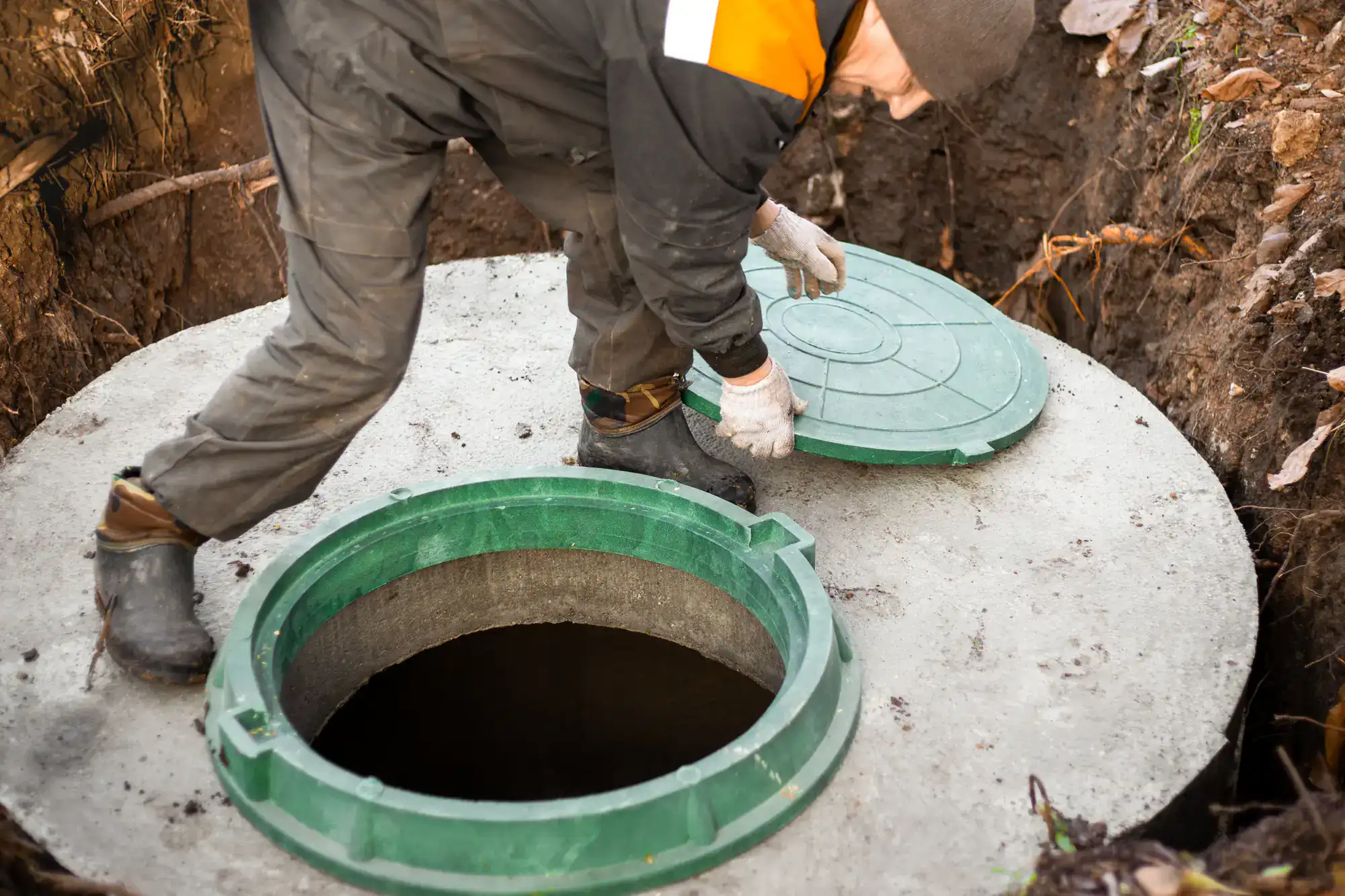
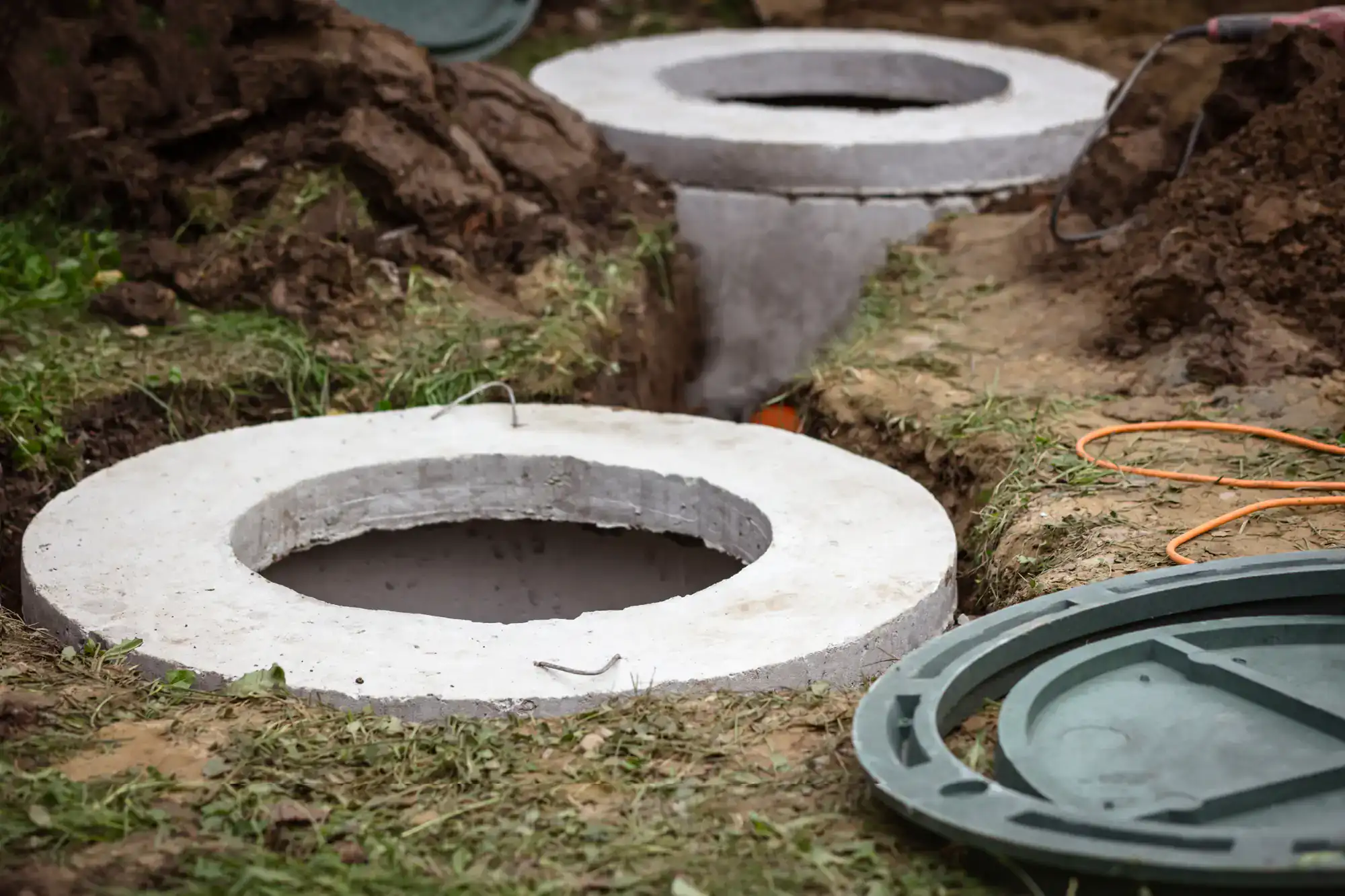
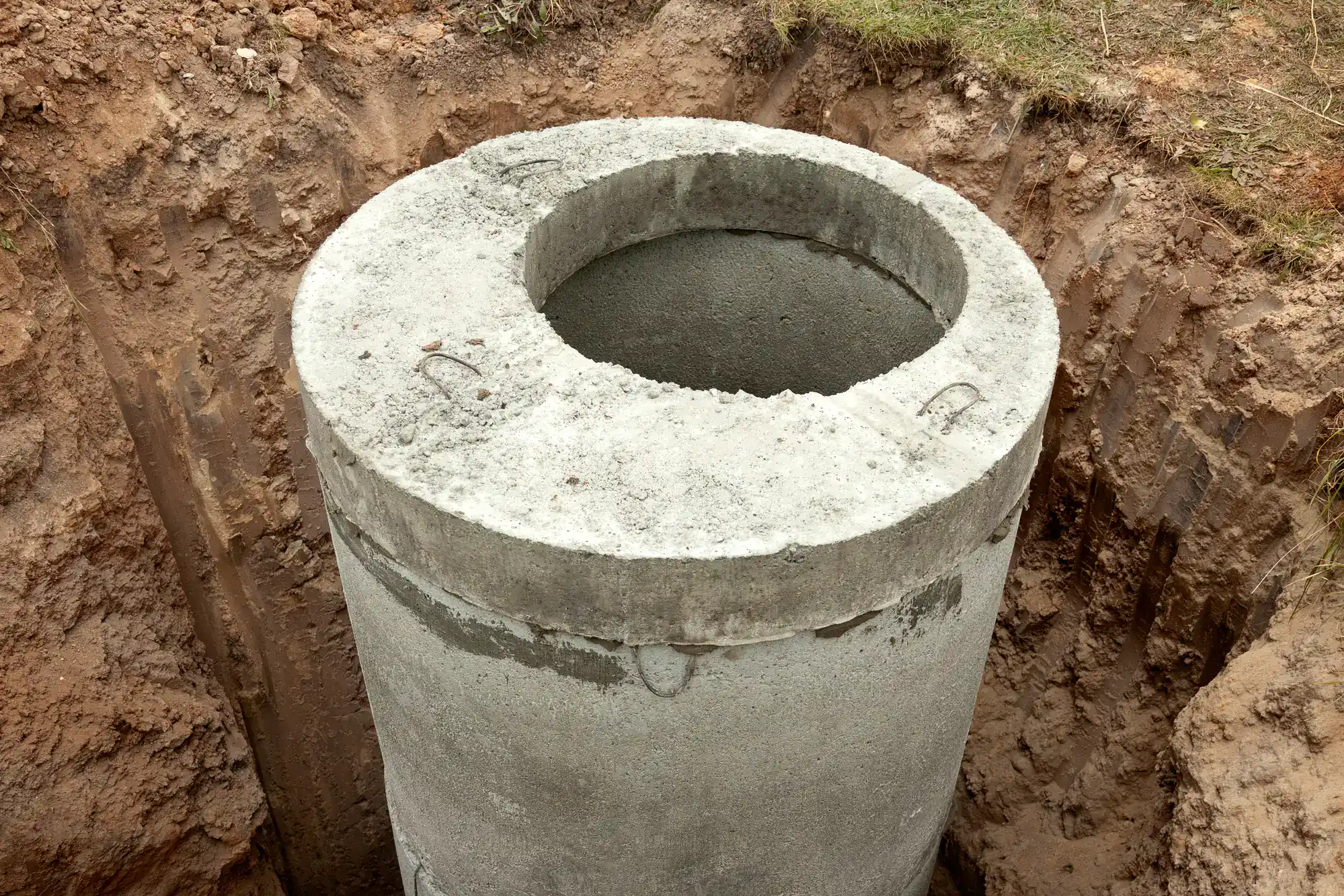
After permits are approved, the installation itself typically takes one to five days for a residential property, depending on system type and site conditions. Excavation goes roughly ten to twelve feet deep. The old system gets properly decommissioned, the new system goes in, connections are made to your home’s sewer line, and the site gets backfilled and graded. Final inspection is coordinated with the county before the job is considered done.

Ready to get started?
Since July 2019, you can no longer replace a cesspool with a cesspool in Suffolk County. Any replacement system must include at minimum a septic tank preceding the leaching structure. And since July 2021, new single-family construction requires an Innovative and Alternative Onsite Wastewater Treatment system an I/A OWTS which reduces nitrogen by 70 to 90 percent compared to a conventional cesspool.
For Bay Shore homeowners, that matters beyond just compliance. The Great South Bay has been formally declared an impaired water body, and approximately 70 percent of the nitrogen entering it comes from cesspools and septic systems via groundwater. What’s under your yard connects directly to that water.
On the cost side, the Suffolk County Septic Improvement Program offers combined State and County grants of up to $45,000 for eligible I/A OWTS installations. Bay Shore’s proximity to the Great South Bay a designated impaired water body makes its homeowners strong candidates. Grants are disbursed directly to the installer after final inspection, so you only pay the balance. This funding is first-come, first-served, and it doesn’t last forever.
We handle both conventional cesspool replacements and full I/A OWTS installations. The service covers the complete scope: permit acquisition, excavation, decommissioning of the old system, installation of the new one, leaching pool and drywell work as needed, cesspool ring replacement where applicable, site restoration, and final inspection coordination. One call, one crew, complete job.