Useful Links
Other Services we provide in Islip Terrace
No and this is one of the most common misunderstandings among Islip Terrace homeowners dealing with a failing system. Suffolk County banned cesspool-only replacements effective July 1, 2019. If your system needs to be replaced, the new installation must include at minimum a septic tank preceding the leaching structure. You cannot simply swap one cesspool for another, regardless of how old your home is or how the original system was installed.
For Islip Terrace homes built in the 1950s, this means the replacement process looks different than it did even a decade ago. The good news is that a properly designed system installed to current SCDHS requirements will outlast anything that was put in the ground in 1955 by a significant margin. We handle the permit application and design the replacement system to meet current Suffolk County standards, so you are not left guessing about what the regulations require.
The honest answer is that the cost depends on what your specific property needs, and any contractor who gives you a firm number before seeing your site is guessing. What drives the price is the type of system required, the condition and location of your existing cesspool, your soil conditions, and whether your property qualifies for grant funding that offsets a significant portion of the cost.
In Islip Terrace, where sandy South Shore soil and current Suffolk County regulations often point toward I/A OWTS nitrogen-reducing systems, eligible homeowners can access combined State and County grant funding of up to $45,000 through the Suffolk County Septic Improvement Program. That funding is paid directly to us after final inspection which means your out-of-pocket cost can be substantially lower than the total project cost. We provide free estimates and can walk you through the grant eligibility process before any work begins, so you know exactly what you are looking at before you commit to anything.
If your home was built in the 1950s and the cesspool has never been replaced, the short answer is that it has already exceeded its expected service life by at least 30 years. Cesspools are designed to last 30 to 40 years under normal conditions. A system installed in 1955 is now 70 years old. That does not automatically mean it has failed today, but it does mean the question is no longer whether it will need replacement it is when, and whether you will have time to plan for it or be forced into an emergency situation.
Common signs that replacement is overdue include slow drains throughout the house, gurgling sounds from toilets and sinks, wet or unusually green patches in the yard, and sewage odor near the system’s location. In Islip Terrace’s sandy soil, a failing cesspool can also allow effluent to travel toward the water table faster than in clay-soil areas, which means problems can develop without obvious surface symptoms. A free estimate from us gives you a clear picture of what your system’s condition actually is not a guess.
Yes every cesspool installation and replacement in Suffolk County requires a permit from the Suffolk County Department of Health Services. There is no legal workaround, and skipping the permit process creates serious problems: unpermitted work can void your certificate of occupancy, make your home harder to sell, and leave you personally liable for any violations. Suffolk County Consumer Affairs also requires that all cesspool work be performed by a licensed Liquid Waste contractor we hold License #LW-63684.
The permit application requires engineered plans, soil evaluation results, and documentation of setback distances from wells, property lines, and water bodies. Processing typically takes two to four weeks. We manage the entire permit process on your behalf you do not need to coordinate with SCDHS directly or navigate the application requirements on your own. The final SCDHS inspection after installation is also part of what we coordinate, so you receive a fully documented, compliant system when the job is done.
A leaching pool sometimes called a drywell is the underground structure that receives pre-treated wastewater and allows it to slowly disperse into the surrounding soil. In a conventional cesspool system, the cesspool serves both as a settling chamber and a leaching structure. Under current Suffolk County regulations, those two functions must now be separated: a septic tank handles the initial settling and treatment, and a dedicated leaching pool handles the final dispersal into the ground.
In Islip Terrace, the sandy South Shore soil affects how a leaching pool needs to be engineered. Sandy soil drains quickly, which sounds like an advantage but it also means that effluent reaches the groundwater table faster and with less natural filtration than in clay-heavy soil. A properly sized and positioned leaching pool accounts for the local percolation rate and ensures the system is not simply flushing untreated wastewater directly toward the aquifer. Our 30-plus years working Long Island’s variable soil conditions means the leaching field is designed for what is actually in the ground at your address not a generic template applied regardless of local conditions.
It depends on the condition of your system, but for most Islip Terrace homes with original 1950s-era cesspools, the answer is worth taking seriously. Suffolk County requires septic documentation as part of the home sale process, and buyers’ attorneys routinely flag cesspool compliance issues. When a home inspection identifies an aging or non-compliant system, it does not just create a repair negotiation it can stall or derail a transaction entirely, particularly in a market where buyers are spending well above $560,000 and are not inclined to absorb unknown infrastructure costs.
The strategic case for proactive replacement is straightforward: if you replace the system before listing, you control the timing, the contractor selection, and the ability to apply for grant funding that can offset a significant portion of the cost. If you wait until a buyer’s inspection flags the system, you lose all of that you are replacing it under deadline pressure, at emergency-adjacent timelines, with no time to compare quotes or pursue grant applications. A free estimate from us before you list gives you a clear picture of what you are working with and what your options are, without any obligation to move forward immediately.
Hear from Our Customers

When a cesspool finally gets replaced the right way, you stop managing a problem and start ignoring it in the best possible sense. No more slow drains you write off as a fluke. No more wet patches in the yard after a heavy rain. No more wondering whether this is the season it finally gives out.
For Islip Terrace homeowners specifically, that peace of mind carries real weight. The hamlet sits on the South Shore outwash plain, where sandy soil lets effluent move quickly toward the groundwater table. A properly engineered leaching field sized and positioned for those soil conditions means your system actually performs the way it’s supposed to, not just on installation day but years from now.
There’s also the home value angle. With median home prices in Islip Terrace well above $560,000, a cesspool that gets flagged during a buyer’s inspection is not a footnote it’s a negotiating problem. A properly installed, permitted, and inspected system from us gives you documentation that holds up in any transaction, so your asking price stays where it belongs.
We are a family-owned, fully licensed, insured, and bonded cesspool and drainage company based in West Babylon connected to Islip Terrace directly via Sunrise Highway, the same South Shore corridor that runs through both communities. Our license number LW-63684 is publicly displayed and verifiable through Suffolk County Consumer Affairs. That is not a formality it is the baseline for anyone doing cesspool work legally in this county.
With over 30 years of experience working Long Island’s soil, our crew has seen every variation of what a 1950s cesspool looks like after seven decades underground. We know what South Shore sandy soil requires, how the SCDHS permit process works, and what it takes to bring an aging system in Islip Terrace into compliance with current Suffolk County regulations. That accumulated local knowledge is what separates a correctly installed system from one that causes problems three years later.
We handle residential and commercial installations and we specialize in locating hard-to-find cesspools, which is a real issue in older Islip Terrace homes where no location records exist.
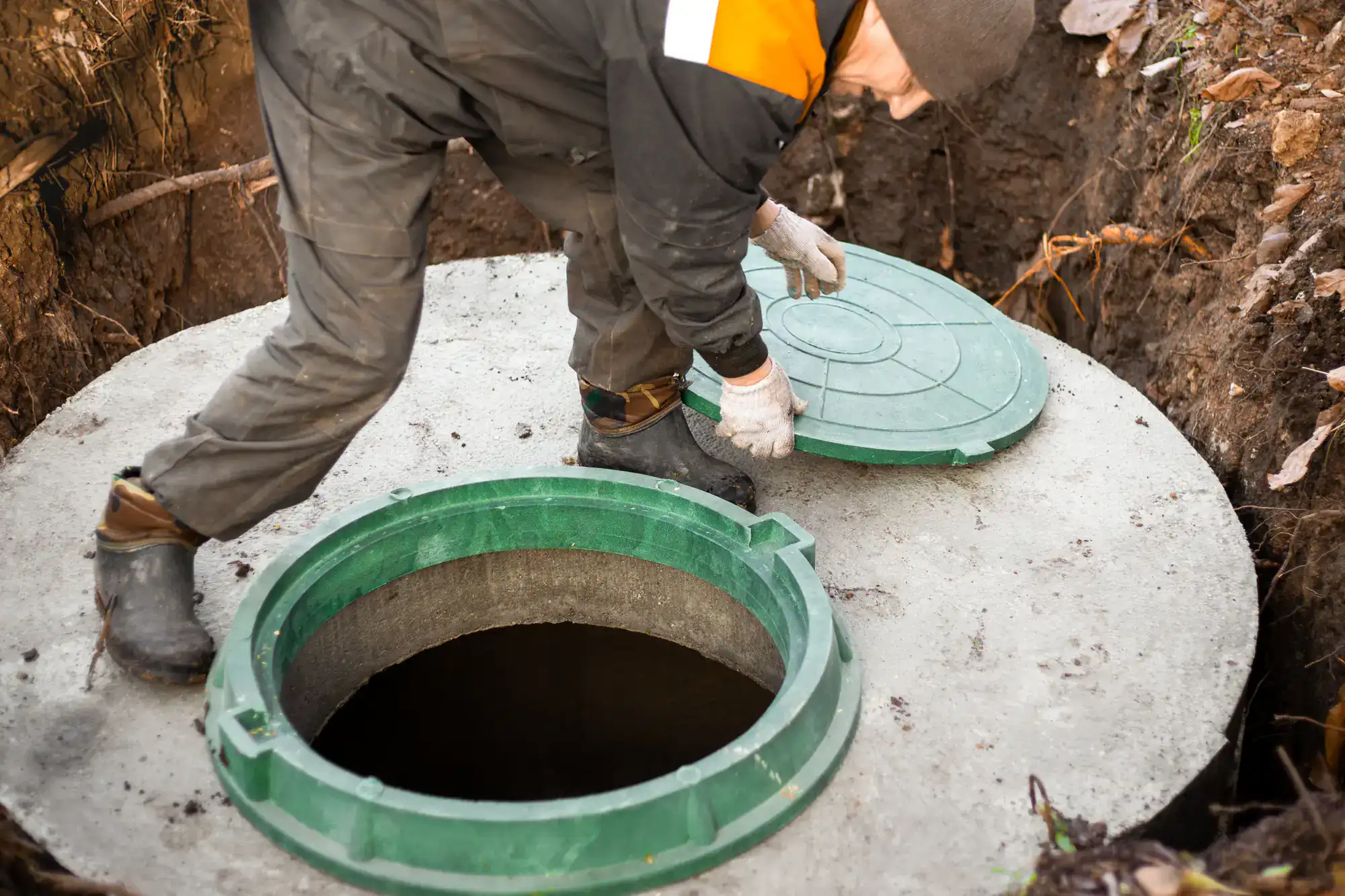
It starts with a free estimate not a sales call, but a real assessment of what your property needs. Our crew evaluates your existing system, identifies its condition and location (including hard-to-find systems with no records), and walks you through what the replacement involves before any commitment is made. For Islip Terrace homes built in the 1950s, this step often uncovers things you never knew were there.
From there, we handle the SCDHS permit application. Suffolk County requires engineered plans, soil evaluation results, and documented setback distances before any work can begin and permit processing typically takes two to four weeks. Skipping that step is not an option; unpermitted installations can void your certificate of occupancy and leave you liable for violations. We manage all of it so you are not coordinating with the health department on your own.
Once permits are approved, the installation moves quickly. Most residential jobs in Islip Terrace take one to five days depending on system complexity. The full scope excavation, tank installation, leaching pool setup, connection to your home’s sewer line, backfill, and site restoration is handled by one team, start to finish. After the final SCDHS inspection clears, you have a compliant, documented system and a yard that looks like a crew was never there.

Ready to get started?
Cesspool installation in Islip Terrace is not a single-step job, and the scope of what is included matters more than most homeowners realize when comparing quotes. We cover the complete process: permit application and coordination with SCDHS, excavation, old system decommissioning, new tank and leaching pool installation, connection to your existing sewer line, backfill, and final grade restoration. There are no handoffs to subcontractors and no portions of the job left for you to manage.
Since July 2019, Suffolk County law prohibits replacing a cesspool with a cesspool. Any replacement system must include at minimum a septic tank preceding the leaching structure. For newer construction in Islip Terrace, the county now requires Innovative and Alternative Onsite Wastewater Treatment Systems I/A OWTS which reduce nitrogen output by 70 to 90 percent compared to conventional cesspools. This matters in Islip Terrace specifically because the sandy South Shore soil moves effluent directly toward the groundwater table with minimal natural filtration.
If you qualify for the Suffolk County Septic Improvement Program, eligible homeowners can access combined State and County grant funding of up to $45,000 for I/A OWTS installations as of July 2025. That funding is disbursed directly to us after final inspection you pay only the remaining balance. Grant funding operates on a first-come, first-served basis, so timing matters. We can walk you through what you need to qualify and how to get your application moving.