Useful Links
Other Services we provide in Patchogue
This is one of the most common calls we get from Patchogue homeowners, and the answer almost always comes back to groundwater. In many parts of the village particularly in the lower-lying neighborhoods near the Great South Bay and the Patchogue River corridor the water table sits less than 10 feet below the surface. When significant rain hits or a nor’easter pushes tidal water inland, that water table rises. When it rises high enough, it pushes back against your cesspool’s drainage capacity from below, effectively filling the system from the outside.
The cesspool isn’t broken in the traditional sense it’s being overwhelmed by the groundwater it was never adequately designed to handle. Repeated emergency pump-outs without addressing the underlying system design are a short-term patch on a long-term problem. A properly sized and positioned replacement system one we design with Patchogue’s actual groundwater depth and seasonal behavior in mind is what stops the cycle. That’s why local experience matters here more than it does in an inland community.
No and this catches a lot of homeowners off guard. As of July 1, 2019, Suffolk County banned cesspool-only replacements. If your existing system fails and needs to be replaced, the new installation must include at minimum a septic tank preceding the leaching structure. You can no longer swap one cesspool for another and call it done.
For properties where new single-family construction began after July 1, 2021, the requirements go further those homes must install an Innovative and Alternative Onsite Wastewater Treatment System, known as an I/A OWTS, which is a nitrogen-reducing system that treats wastewater more thoroughly before it reaches the soil. These systems remove 70 to 90 percent of nitrogen compared to conventional cesspools, which is a meaningful difference in a community like Patchogue where that nitrogen is draining directly toward the Great South Bay. All installations in the village must meet Suffolk County Department of Health Services standards, and the Village of Patchogue’s own code (Chapter 353) requires compliance with the latest SCDHS standards for any cesspool or septic work within village limits.
There’s no single number that covers every situation, and any contractor who quotes you a firm price over the phone before seeing your property is skipping steps that matter. What drives the cost in Patchogue specifically includes your lot size and access, the depth and behavior of your water table, whether the old system needs to be decommissioned before the new one goes in, what type of system is required under current Suffolk County regulations, and whether you’re doing a conventional replacement or upgrading to an I/A OWTS nitrogen-reducing system.
What we offer is a free, written, itemized estimate given to you before any work begins, so you know exactly what you’re paying for and why. If you’re eligible for the Suffolk County Septic Improvement Program, which currently offers combined State and County grants of up to $45,000 for qualifying I/A OWTS installations, that number can change significantly. Grant funding is first-come, first-served, so it’s worth understanding your eligibility early rather than after the funding window closes.
Yes, without exception. All cesspool installations and replacements in Patchogue require a permit from the Suffolk County Department of Health Services. The application needs to include engineered plans, soil testing results, and documentation of setback distances from wells, property lines, and water bodies which is a real consideration in Patchogue given how many properties sit close to the Patchogue River or the Great South Bay.
Permit processing typically takes two to four weeks, and no work should begin before approval comes through. Skipping the permit process isn’t just a regulatory risk it creates real financial exposure. Unpermitted work can void your certificate of occupancy, complicate or kill a home sale, and leave you personally liable for any violations that surface later. In a village where homes are selling in around 18 days and buyers are doing their due diligence carefully, unpermitted cesspool work is the kind of thing that derails a transaction at the worst possible moment. We handle the permit application as part of the job, so you’re not navigating that process alone.
It depends entirely on where your property sits relative to the current expansion footprint and for most Patchogue homeowners, the honest answer is that waiting isn’t a safe plan. The village’s sewer expansion is real and ongoing, backed by a $10 million Suffolk County grant announced in April 2023 and targeting specific streets including Campbell Street, Argyle Lane, Smith Street, and Pine Boulevard. A broader project to connect 648 parcels in the Patchogue River Watershed is also in the planning phase.
But the expansion is proceeding block by block over years. If your property isn’t on the current list and the majority of Patchogue’s roughly 5,300 housing units are not you need a functioning, code-compliant system today. A failing cesspool doesn’t pause while you wait to see if the sewer reaches your street. It fails on its own schedule, often at the worst possible time, and emergency replacement is always more expensive than planned replacement. We can help you understand your current situation and give you a clear picture of your options without pressure.
This is a more common situation than most people realize in Patchogue. The village has housing stock going back to the 1880s, and many of those older homes particularly the Victorian-era properties near Main Street and the interwar colonials filling mid-village blocks have no documentation of where the cesspool is located. No records, no map, no prior service history. Homeowners sometimes discover this for the first time when a contractor shows up and doesn’t know where to start.
We specialize in locating hard-to-find cesspools, which is a specific skill that saves you from unnecessary excavation and the cost of a crew that charges you for time spent guessing. The process involves a combination of site evaluation, probing, and the kind of pattern recognition that comes from decades of working on South Shore properties with exactly this problem. Once the system is located, the rest of the process assessment, permit application, installation or replacement proceeds from there. If you’re not sure what you have or where it is, that’s exactly the kind of call worth making before anything goes wrong.
Hear from Our Customers

Patchogue isn’t like most Long Island towns. The South Shore’s shallow water table documented at less than 10 feet in many village neighborhoods means a cesspool that works fine in an inland community can fail here after a single heavy rain or a nor’easter pushing water in from the Great South Bay.
When we install a properly sized system, positioned for your actual soil and groundwater conditions, you stop rationing water use to avoid an emergency pump-out. You stop watching your yard go wet after a storm. You stop wondering whether your system is going to hold.
There’s also a real estate side to this that Patchogue homeowners can’t ignore. With median home values around $517,000 and homes moving in roughly 18 days, a non-compliant or improperly installed cesspool is a transaction-stopper. Suffolk County now requires pumping records at property transfer. A system we install to code permitted, inspected, and built for Patchogue’s specific groundwater environment protects the equity you’ve built in a village that’s been rising in value for over a decade.
Beyond your property line, the Great South Bay has lost 93% of its clam harvest over the past 25 years because of nitrogen draining from aging cesspools in communities exactly like Patchogue. When we install a new, code-compliant system or upgrade to a nitrogen-reducing I/A system your household stops contributing to the problem your neighbors, your waterfront, and your village are actively trying to fix.
We’re a family-owned, fully licensed, insured, and bonded cesspool company based in West Babylon about 15 miles west of Patchogue along the same South Shore corridor. Our license #LW-63684, issued by Suffolk County Consumer Affairs, is posted on every page because it matters and because you should be able to verify it.
Our 30-plus years of experience aren’t generic Long Island tenure. They’re years spent working in the same groundwater conditions, the same SCDHS permit environment, and the same South Shore soil that runs from West Babylon through Bayport and Oakdale right into Patchogue. We’ve handled everything from Victorian-era homes near Patchogue’s Main Street where cesspools have no records and no maps to newer canal-front properties near the bay where the water table makes every installation a careful calculation.
We’re not a franchise. There’s no national call center deciding who gets dispatched to your address. When you call, you’re reaching a local operation that has built its reputation one South Shore job at a time.
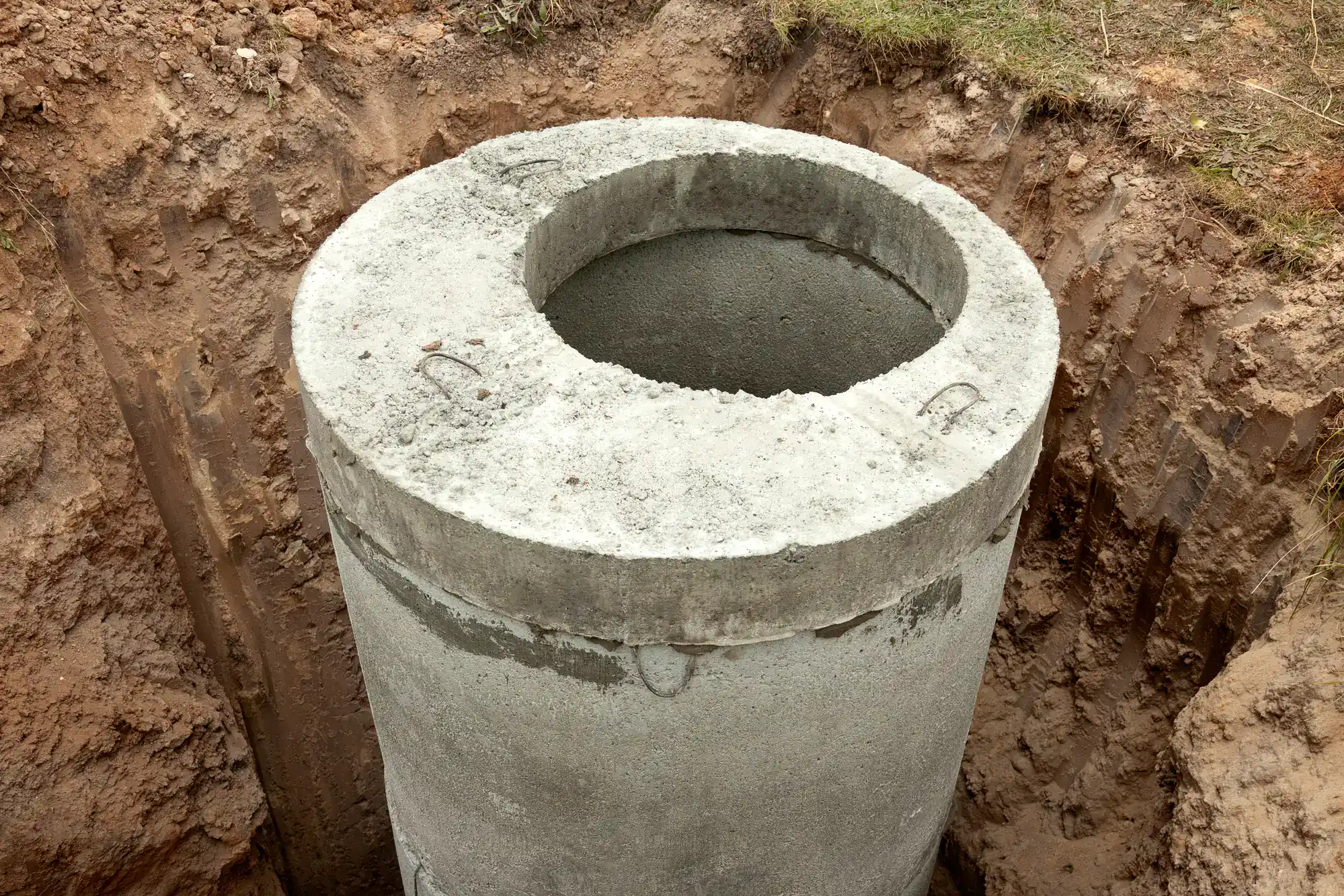
It starts with a free estimate written, itemized, and given to you before any equipment shows up on your property. For Patchogue homes, that first conversation includes a real look at your lot: where the system is located (or where it needs to be found, if there are no records), what your groundwater depth means for system design, and whether your property falls within the village’s active sewer expansion footprint.
If you’re on a street targeted by the current expansion Campbell Street, Argyle Lane, Smith Street, Pine Boulevard that’s worth knowing before you invest in a new system. If you’re not, you need one that works.
Once the scope is clear, we handle the permit application with the Suffolk County Department of Health Services. Since July 2019, you can no longer replace a cesspool with a cesspool in Suffolk County any replacement must include at minimum a septic tank preceding the leaching structure, and newer construction triggers additional I/A OWTS requirements. We navigate that correctly as part of the job, not as an add-on. Permit processing typically takes two to four weeks, and the work doesn’t start until everything is approved.
The installation itself excavation, tank placement, leaching pool setup, connection to your home’s line, backfill, and site restoration is handled by one crew from start to finish. Most residential jobs take one to five days depending on system complexity and soil conditions. When the work is done, the system goes through final SCDHS inspection before it’s considered complete. You get a functioning, code-compliant system and the documentation to prove it.

Ready to get started?
Cesspool installation in Patchogue covers more ground than it does in most Suffolk County communities, and the scope of what we handle reflects that. Beyond standard new cesspool installation, we regularly handle leaching pool and drywell installation, cesspool ring replacement, full cesspool-to-septic conversions, and complete system replacements where the old structure needs to be decommissioned before the new one goes in. We work on residential and commercial properties.
For Patchogue specifically, the high water table and coastal flood exposure mean that system design can’t be generic. The depth and positioning of leaching pools and drywells have to account for seasonal groundwater behavior what works on a dry summer day can fail in March after a week of rain. We also specialize in locating cesspools on older properties where no documentation exists. In a village with housing stock going back to the 1880s, that’s not an edge case it’s a regular part of our work.
If you’re considering an upgrade to an I/A OWTS nitrogen-reducing system, Suffolk County’s Septic Improvement Program currently offers combined State and County grants of up to $45,000 for eligible installations. For a Patchogue property draining toward the Great South Bay watershed, this program is directly relevant. We can walk you through what eligibility looks like and give you a clear picture of your out-of-pocket cost after any grant funding before you commit to anything.