

Useful Links
Other Services we provide in Wheatley Heights
No and this is one of the most common misconceptions we run into. As of July 1, 2019, Suffolk County banned cesspool-only replacements entirely. If your system fails and needs to be replaced, you cannot simply install a new cesspool in its place. At minimum, the new system must include a septic tank preceding any leaching structure. For new construction since July 1, 2021, the requirement goes further Innovative and Alternative Onsite Wastewater Treatment Systems, known as I/A OWTS, are required for new single-family homes.
This matters for Wheatley Heights homeowners because many of the systems in this neighborhood are old enough that replacement is a real near-term possibility, and the assumption that it’s a straightforward swap is incorrect. Understanding what Suffolk County actually requires before you’re in an emergency situation gives you time to plan, budget, and potentially access grant funding that can offset a significant portion of the cost.
Yes, and they’re worth looking into seriously. Suffolk County’s Septic Improvement Program offers combined State and County grants of up to $45,000 for eligible I/A OWTS installations as of July 2025. Grant payments are also tax-free under IRS Announcement 2022-26, and they’re paid directly to the certified installer after final inspection meaning you pay only the remaining balance out of pocket, not the full amount upfront.
The catch is that this funding operates on a first-come, first-served basis. There’s no guarantee the funding level stays where it is, and waiting until your system fails completely means you’re replacing it under emergency conditions with no time to apply. For a Wheatley Heights homeowner whose home has appreciated significantly in recent years, understanding what you might qualify for before you need it is a straightforward way to protect yourself financially. Ask about eligibility when you call for your free estimate.
Most residential installations take somewhere between one and five days once our crew is on-site and work begins. Simpler jobs where the old system is accessible, the soil cooperates, and the new system is straightforward can be done in a day or two. More complex situations take longer.
In Wheatley Heights specifically, the clay-heavy soil in the lower Half Hollow Hills can introduce variables that sandier parts of Long Island don’t face. Clay restricts drainage, which affects how the leaching components are sized and positioned. It also means that what the ground looks like once excavation starts doesn’t always match what it looked like from the surface. We’ve been installing systems in this neighborhood long enough to know how to adapt to what the soil actually is, not what we expected it to be.
The permit process through SCDHS adds two to four weeks before work can begin, so total timeline from first call to completed installation is typically a few weeks to a month depending on when you start.
A complete cesspool failure sewage backing up into the home, surfacing in the yard, or both is an emergency situation, and we treat it as one. We offer 24/7 emergency service, every day of the week. If this happens to you on a weekend or in the middle of the night, you’re not waiting for business hours.
The practical reality of an emergency replacement versus a planned one is that you lose your ability to compare options, apply for grant funding, or take the time to make sure you’re getting the right system for your property. Emergency pricing is also typically higher than scheduled work. In Wheatley Heights, where the median cesspool is already past its expected lifespan, the difference between a planned replacement and an emergency one often comes down to whether you acted before the system told you it was done. If you’re already noticing slow drains, gurgling toilets, or wet spots in the yard, those are the warning signs not the failure itself.
Yes, a permit is required for every cesspool replacement in Suffolk County no exceptions. The permit application goes through the Suffolk County Department of Health Services and requires engineered plans, soil testing results, and documentation of setback distances from wells, property lines, and any nearby water features. Skipping this process doesn’t make the project cheaper in the long run. Unpermitted work can result in fines, a mandatory redo, and critically a voided certificate of occupancy that surfaces when you try to sell.
We handle the permit coordination as part of the job. You don’t need to figure out the SCDHS process on your own or track down an engineer separately. This is included in what we manage from start to finish. Processing typically takes two to four weeks, which is another reason to start the conversation before you’re in a crisis. For Wheatley Heights homeowners with homes now valued well above $500,000, having a properly permitted system on record is a straightforward protection of that asset.
That’s exactly what the free estimate is for. A technician comes out, assesses the existing system, and gives you a straight answer about what’s actually going on not a worst-case pitch designed to sell you the most expensive option. Sometimes the tank structure is still sound and only specific components need replacing, like cesspool rings or a deteriorated leaching pool. Other times, the system is too far gone for partial repairs to make sense.
In Wheatley Heights, where the majority of homes were built in the 1960s and early 1970s, the age of the system alone doesn’t automatically mean full replacement but it does mean the assessment matters more. Pipes installed in that era used materials and methods that weren’t designed to last indefinitely, and ground movement from decades of freeze-thaw cycles in the clay-heavy soil here puts real stress on joints and connections over time. A technician who knows what to look for in a system of this age can tell you honestly whether you’re looking at a targeted repair or a full installation. That conversation starts with a call and a free on-site estimate no obligation, no pressure.
Hear from Our Customers
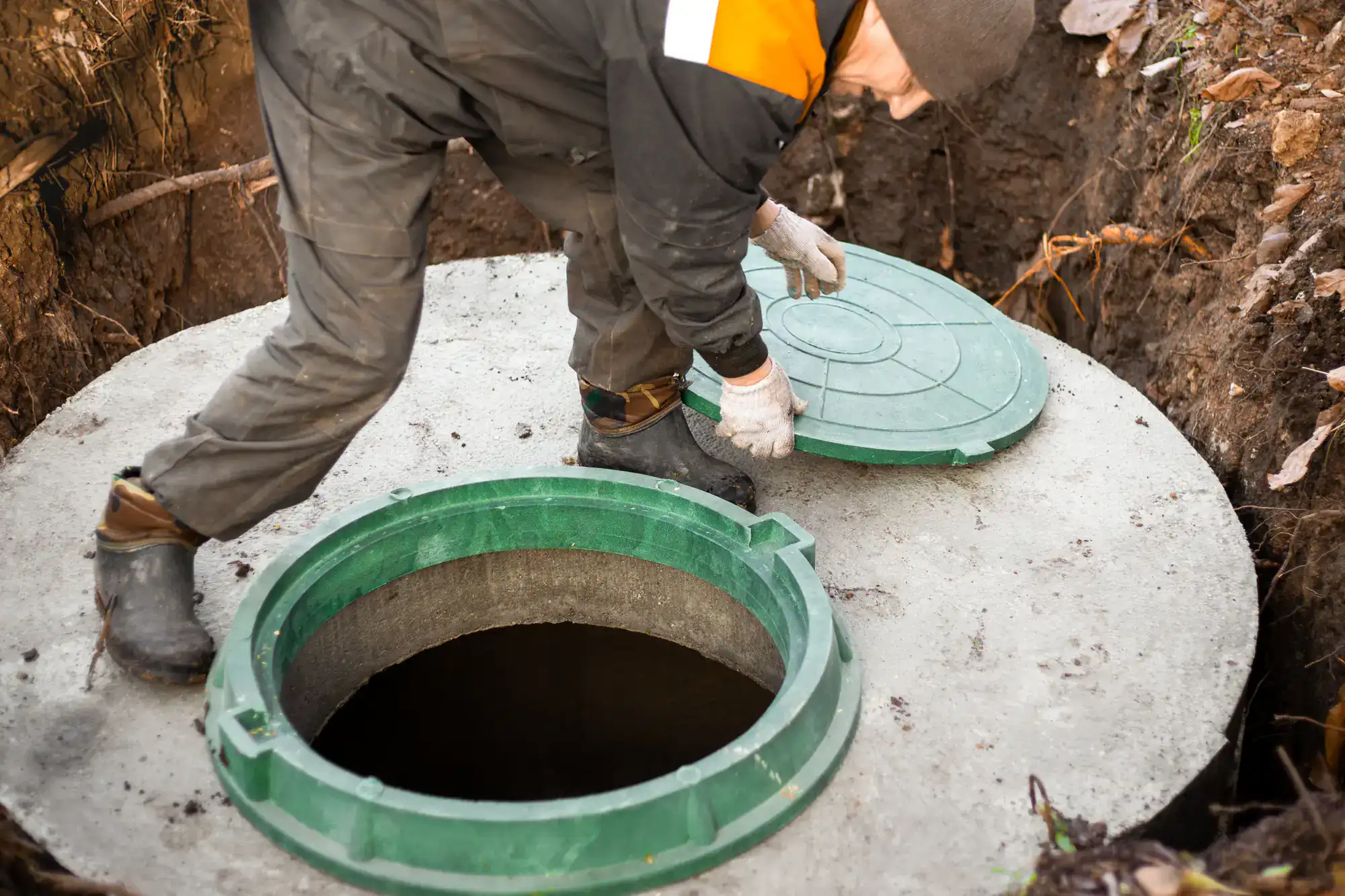
When a properly installed system goes in, the most immediate thing you notice is what stops happening. No more slow drains that back up after a heavy rain. No more wet patches in the yard after a storm. No more wondering whether that smell is something you should be worried about.
For Wheatley Heights homeowners specifically, that relief carries extra weight. The homes here were built during the post-war boom, mostly in the 1960s, on soil with significant clay content running through the lower Half Hollow Hills. Clay doesn’t drain the way sandy soil does. It holds moisture. It concentrates the stress that freeze-thaw cycles put on aging pipes. It accelerates failure in systems that were already built to last 30 to 40 years not 55 or 60.
A new system installed correctly for clay-heavy soil performs differently than one that was dropped in during a different era under different standards. The difference isn’t theoretical it’s the difference between a system that works and one that doesn’t.
Beyond the immediate fix, there’s the longer-term picture. Your home in Wheatley Heights has likely gained significant value in recent years. A permitted, code-compliant cesspool system is a selling point. An aging, unpermitted one is the thing that kills a deal during inspection. Getting this done now, on your terms, with time to plan it properly, is a different experience than scrambling to replace a system after it fails completely.
We’re based in West Babylon same Town of Babylon as Wheatley Heights, roughly 8 to 10 miles away. We’ve been doing cesspool work across Nassau and Suffolk Counties for over 30 years, which means we’ve been working in communities built during exactly the same post-war boom that shaped Wheatley Heights. We know what a 1960s-era system looks like when it comes out of the ground, and we know what goes back in has to meet today’s Suffolk County code not yesterday’s.
We’re family-owned, fully licensed under Suffolk County Liquid Waste License #LW-63684, and insured and bonded. These aren’t just credentials to list they’re what protect you if something unexpected comes up mid-job. We handle both residential and commercial installations, which matters in a community where Colonial Springs Road runs institutions like the Henry Kaufmann Campgrounds alongside single-family streets.
One crew. One point of contact. No handoffs.
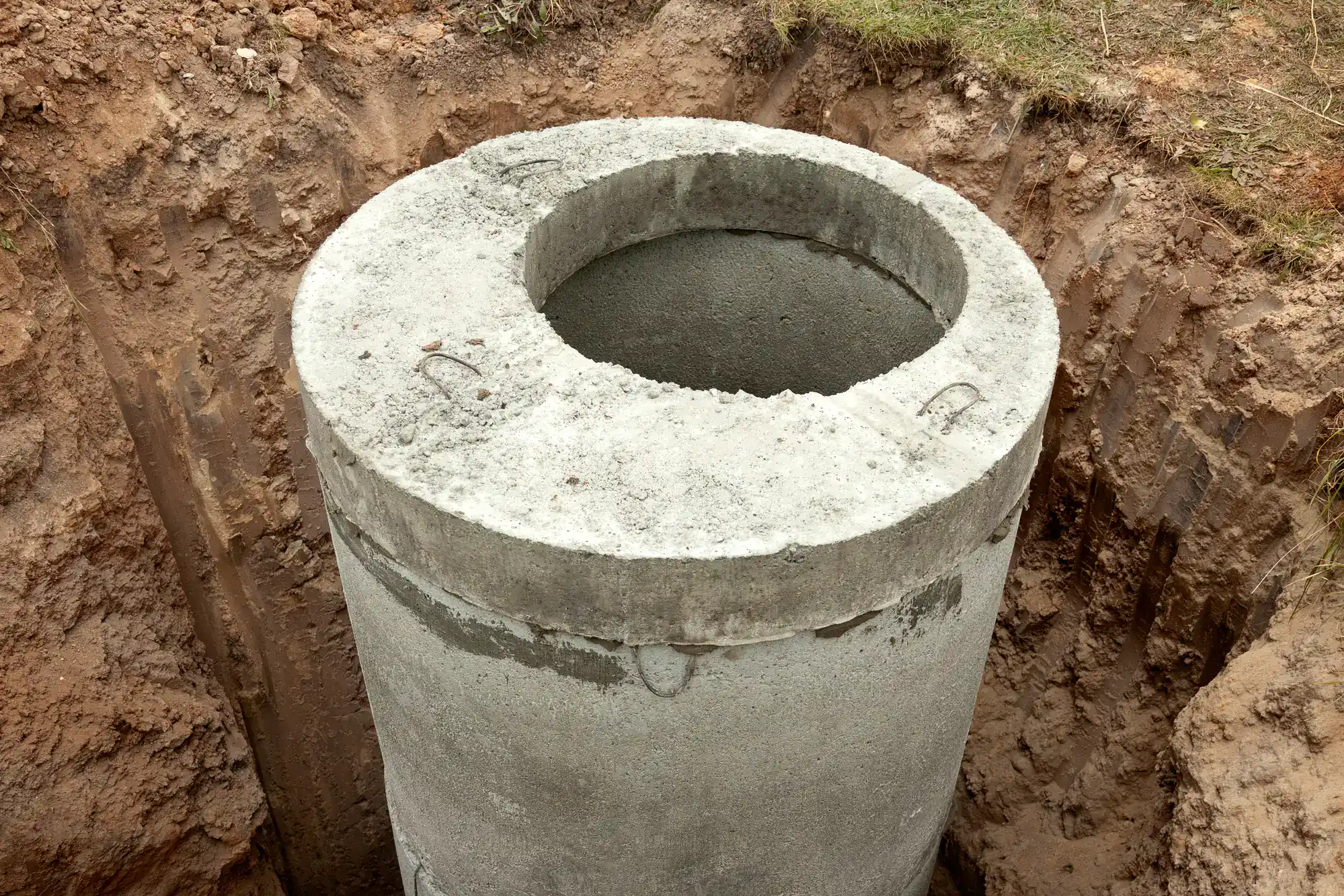
It starts with a free estimate. A technician comes out, assesses your property, evaluates the existing system, and tells you what you’re actually dealing with including whether the full system needs to come out or whether part of it can stay.
In Wheatley Heights, where many homes have no documentation of where the original system was installed or what condition it’s in, this step matters more than people expect. We specialize in locating cesspools that have no records a real issue in a neighborhood built 50-plus years ago where landscaping, additions, and driveway work have buried the evidence.
Once the assessment is done, permitting comes next. In Suffolk County, every cesspool replacement requires a permit through the Suffolk County Department of Health Services. That means engineered plans, soil testing, and documentation of setback distances from wells and property lines. We coordinate that process you don’t have to navigate the SCDHS on your own. Permit processing typically takes two to four weeks, so starting before you’re in an emergency situation gives you options.
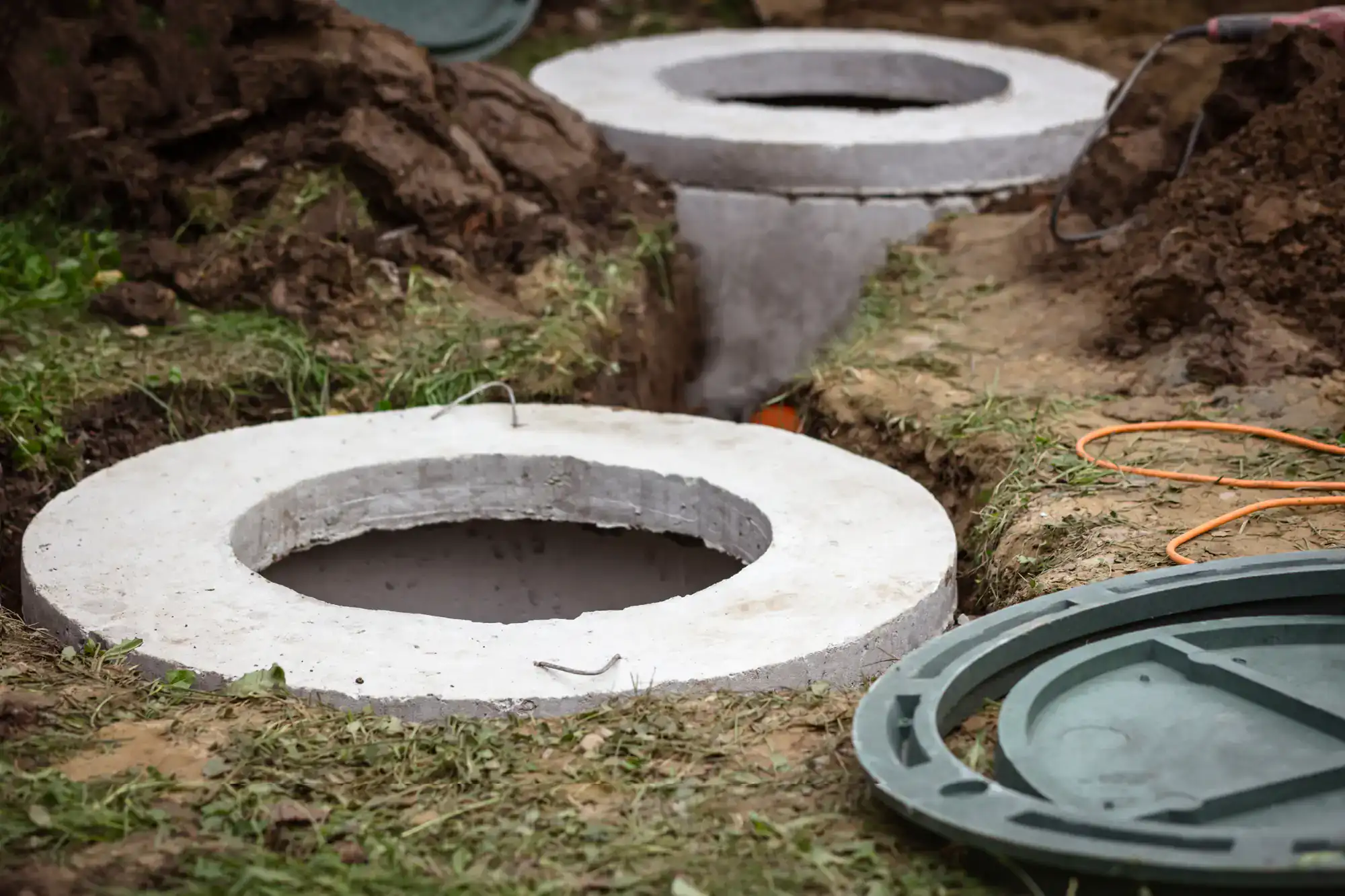
When permits are approved, our crew handles excavation, decommissioning of the old system, installation of the new one, connection to your home’s sewer line, backfill, and site restoration. Most residential jobs in this area take one to five days depending on system complexity and what the soil reveals once we’re in the ground. You’ll know what to expect before we start.
Ready to get started?
Cesspool installation isn’t one thing it’s a sequence of connected work that has to be done in the right order, by a licensed contractor, and signed off by the county before the system goes live. We handle the full scope: site evaluation, permit coordination with SCDHS, excavation, removal and proper decommissioning of the old system, new tank installation, leaching pool and drywell installation, connection to your existing sewer line, and final inspection coordination.
Nothing gets handed off to someone else.
One thing worth knowing if you’re in Wheatley Heights: since July 1, 2019, Suffolk County no longer allows a cesspool to be replaced with another cesspool. At minimum, a septic tank must precede any leaching structure. This catches a lot of homeowners off guard they assume they’re getting a like-for-like replacement and find out mid-process that the rules changed. We know the current code and install accordingly, so there are no compliance surprises after the job is done.
If your system assessment shows that only certain components need replacing rings, a leaching pool, or a drywell that’s addressed in the estimate. Not every situation requires a full system replacement, and an honest assessment tells you which is which. For homes on the older end of Wheatley Heights’ housing stock where the drywells installed in the 1960s are now pushing 60 years of use, partial replacement is sometimes the right answer. Sometimes it isn’t. You’ll get a straight answer either way.
