By submitting you consent to receive service-related texts from Drastic Drainage. Reply STOP to opt out. Msg & data rates may apply. Consent not required to book service.
Useful Links
Most Blue Point homeowners don’t think about their cesspool until there’s a smell coming from the drain or water pooling somewhere it shouldn’t. By that point, you’re not dealing with a maintenance issue anymore you’re dealing with an emergency. Getting ahead of it means you stay in control of the timeline, the cost, and the outcome.
Here’s what makes Blue Point different from inland Suffolk towns: the water table is never far below your yard. After a hard rain or a wet spring, groundwater rises and puts pressure on your leaching field from the outside in. Your system can appear full or start behaving like it is even when usage hasn’t been heavy. That’s not a sign of a failing system; it’s a sign of where you live. But it does mean the standard “pump every few years” rule doesn’t always hold here the way it does in higher-elevation communities.
Add to that the fact that most homes in Blue Point were built around 1960, which means the cesspool underneath your property is likely over six decades old. It was installed before modern documentation requirements, possibly before anyone thought to record its exact location. Regular pumping and inspection is what keeps a system that old functional and keeps a problem from becoming a very expensive surprise, especially in a market where homes are valued well above $650,000.
The general guideline for Long Island cesspools is every one to three years, but that range assumes average conditions and Blue Point doesn’t have average conditions. At 9.8 feet above sea level with a persistently high water table, cesspools in this hamlet work harder than systems in higher-elevation, inland Suffolk communities. Groundwater infiltration during wet seasons can reduce your system’s effective capacity without any change in your household usage, which means a system that looked fine in October can be under real stress by April.
If your Blue Point home was built in the 1960s which describes most of the housing stock here your cesspool is likely a single-chamber system without the drainage efficiency of a modern septic tank. Those systems fill faster and need more frequent attention. A good rule of thumb for a home like this: have it inspected every one to two years and pumped when the technician recommends it based on what they actually see, not just a calendar schedule.
Pumping removes the liquid waste and floating solids sitting in your cesspool at the time of service. It’s the most common service and what most homeowners are scheduling when they call. Cleaning is a more thorough process it involves breaking up and removing the hardened sludge that accumulates along the bottom and walls of the tank over time, along with a closer look at the structural condition of the system itself.
The distinction matters because a pump-out alone doesn’t remove everything. If a system hasn’t been serviced in several years, or if it’s an older single-chamber cesspool common to Blue Point’s pre-1973 homes, there may be significant buildup that pumping alone won’t address. When we assess your system on-site, we’ll tell you clearly which service it actually needs not just what’s easiest to schedule. You shouldn’t have to guess what you’re paying for.
This is one of the most relevant questions for anyone living on the South Shore, and it’s one that doesn’t get asked enough. When the water table rises after significant rainfall, spring snowmelt, or a storm surge event groundwater can infiltrate your cesspool from the outside. This is called hydraulic loading, and it’s more common in low-elevation communities like Blue Point than most homeowners realize.
When this happens, your system can appear full even though your household hasn’t been generating excessive waste. You might notice slow drains, gurgling sounds, or odors that weren’t there before the rain. That’s not necessarily a sign of a failing system it can be a sign of where you live. Blue Point’s history with nor’easters and its documented moderate flood risk make this a real seasonal concern. If you experienced flooding near your property, getting the cesspool checked shortly afterward is a smart move.
Yes, and this comes up more in Blue Point than you might expect. Most homes in this hamlet were built in the 1950s and 1960s, before Suffolk County required detailed documentation of cesspool locations. Covers get buried under decades of landscaping, additions, and general yard work. New homeowners inherit systems with no records, no maps, and no idea where to start looking.
Locating hard-to-find cesspools is something we do regularly it’s listed as a specific specialty for good reason. We use experience and equipment to find systems that haven’t been accessed in years. You don’t need to dig up your yard on a guess before calling us. We’ll locate it, assess it, and service it in one visit when possible. If you’ve recently purchased a home in Blue Point and have no maintenance history on the property, getting the system located and inspected is one of the most useful things you can do early on.
For a standard residential cesspool pump-out in Suffolk County, the typical range is $300 to $600. Where your job lands in that range depends on a few factors: the size of your tank, how accessible the cover is, how much has accumulated since the last service, and whether any additional work is needed during the visit like locating a buried cover or addressing a specific issue the technician identifies on-site.
Emergency calls when something has already backed up or you’re dealing with an active problem will generally cost more than a scheduled service. That’s true across the industry, not just with us. The most reliable way to keep costs predictable is to stay on a reasonable maintenance schedule so you’re not calling in crisis mode. What we tell you on the phone is what you pay.
It does, in more ways than one. The practical side is what we’ve already covered low elevation, high water table, and coastal soil conditions that affect how your system drains and how quickly it fills. But there’s a regulatory and environmental dimension that’s worth understanding too, especially if you live close to the water.
Nitrogen from cesspools and septic systems has been identified as the primary driver of water quality degradation in the Great South Bay the same bay that made Blue Point famous for its oysters. Suffolk County has responded with the 2019 ban on new traditional cesspool installation and the 2024 Suffolk Water Quality Restoration Act, which expanded support for I/A OWTS upgrades. Properties near the bay are in a priority zone for these programs, which means Blue Point homeowners may be eligible for county subsidies if a system replacement becomes necessary. Regular pumping reduces the nitrogen your system discharges into the groundwater it’s not a complete solution, but it’s the most direct maintenance action available to you right now, and it keeps your system from reaching a point where a full replacement becomes the only option.
Free, no-obligation estimates on cesspool, sewer, and drain work.
We get there quickly. No waiting days for a callback.
Backups don’t wait for business hours. Neither do we.
Fully licensed and insured across Long Island.
Up-to-date trucks and tools for cleaner, faster jobs.
Straight quotes, no surprises on the bill.
Hear from Our Customers
Most Blue Point homeowners don’t think about their cesspool until there’s a smell coming from the drain or water pooling somewhere it shouldn’t. By that point, you’re not dealing with a maintenance issue anymore you’re dealing with an emergency. Getting ahead of it means you stay in control of the timeline, the cost, and the outcome.
Here’s what makes Blue Point different from inland Suffolk towns: the water table is never far below your yard. After a hard rain or a wet spring, groundwater rises and puts pressure on your leaching field from the outside in. Your system can appear full or start behaving like it is even when usage hasn’t been heavy. That’s not a sign of a failing system; it’s a sign of where you live. But it does mean the standard “pump every few years” rule doesn’t always hold here the way it does in higher-elevation communities.
Add to that the fact that most homes in Blue Point were built around 1960, which means the cesspool underneath your property is likely over six decades old. It was installed before modern documentation requirements, possibly before anyone thought to record its exact location. Regular pumping and inspection is what keeps a system that old functional and keeps a problem from becoming a very expensive surprise, especially in a market where homes are valued well above $650,000.
Drastic Drainage Long Island has been working on Nassau and Suffolk County cesspools for over 30 years. That’s not a number we throw out to sound impressive it’s the reason we understand what a coastal, low-elevation community like Blue Point actually puts a cesspool through. The sandy soil, the high water table, the proximity to the Great South Bay these aren’t abstract conditions. They’re what we’ve been working around for decades, in neighborhoods exactly like this one.
We’re a family-owned operation, which means the people answering your call and the people showing up at your property are the same crew that built this business on word-of-mouth. In a close-knit hamlet like Blue Point, a bad job follows you. We don’t subcontract, we don’t cut corners, and we’re available 24 hours a day, every day, because cesspool problems don’t wait for business hours.
We also specialize in locating hard-to-find cesspools. If your Blue Point home was built in the 1950s or 1960s and you have no idea where your system is, that’s not unusual and it’s not a problem we haven’t solved before.
When you call Drastic Drainage Long Island, a real person picks up. We’ll ask a few straightforward questions when the system was last serviced, whether you’re having any active symptoms, and whether you know where the access cover is located. If you don’t know where the cover is, that’s fine. Locating hard-to-find cesspools is something we do regularly, and it’s especially common in Blue Point’s older housing stock where records simply don’t exist.
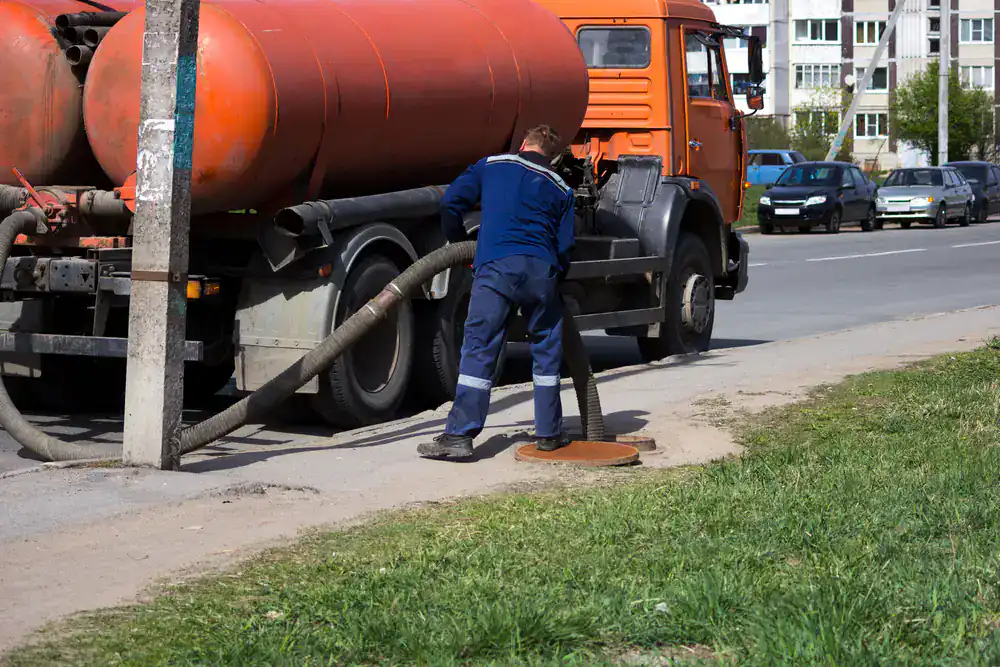
Once we’re on-site, we locate and open the access point, assess the system’s current condition, and pump out the accumulated waste using our equipment. We’re not just pulling liquid we’re looking at what the system is telling us. If there’s something worth noting, we’ll tell you plainly, without pressure. You’ll know what we found, what we did, and what the system looks like now. We provide written documentation after every job, which matters more than most people realize when it comes to home sales or county compliance records.
In Blue Point specifically, we pay attention to signs of hydraulic loading groundwater infiltrating the system from outside which is more common here than in inland communities due to the low elevation and proximity to the bay. If your system is showing signs of that kind of stress, we’ll explain what you’re looking at and what the realistic options are, including what Suffolk County now requires for any replacement system under the 2019 I/A OWTS regulations.

Ready to get started?
Cesspool pumping and cesspool cleaning are not the same thing, and it’s worth understanding the difference before you book anyone. Pumping removes the liquid and floating solids from your system. Cleaning goes further it includes more thorough removal of hardened sludge that has built up along the walls and bottom of the tank, along with a closer inspection of the system’s interior condition. Many homeowners assume they’re getting a full cleaning when they’re only getting a pump-out. We’ll tell you upfront which one your system needs and why.
For Blue Point residents, the cesspool pumping cost in Suffolk County typically runs $300 to $600 for a standard residential service, depending on tank size, access conditions, and how much has accumulated. Emergency calls, complex access situations, or systems that haven’t been serviced in many years can move that number. We don’t quote one price on the phone and show up with another what we tell you is what you pay, and we put it in writing.
Because Blue Point sits in a priority zone for the Suffolk County Clean Water program given its direct proximity to the Great South Bay homeowners here may also be eligible for county subsidies toward an I/A OWTS upgrade if a full system replacement becomes necessary. That’s a conversation worth having if your system is aging and showing signs of stress. We can walk you through what that process looks like and what it means for your property.