Useful Links
Other Services we provide in Eastport
The general guidance for Long Island cesspools is every one to three years, but Eastport’s specific conditions push that toward the more frequent end of that range for many homeowners. The shallow water table in neighborhoods close to Moriches Bay means your system has less soil absorption capacity than an inland property, and it fills faster as a result. After a heavy rain season or a coastal storm, that timeline can compress further.
If you’ve recently moved to Eastport from an area with municipal sewers, you may not have any history on the system at all. In that case, the right starting point is a service call to assess the current condition and establish a baseline. From there, a one-to-two-year schedule is a reasonable target for most Eastport households, particularly those in lower-lying areas near the bay. Household size also factors in more people means more water usage, which means faster fill rates.
The most obvious signs are the ones you notice inside the house first. Drains that are slow across multiple fixtures not just one sink, but the tub, the toilet, and the kitchen drain all sluggish at the same time point to a system that’s full or backing up. A sewage smell coming through your drains or from your HVAC vents is another clear signal. Outside, look for soft or wet ground near where the system is buried, even when it hasn’t rained recently.
In Eastport specifically, it’s worth paying attention after any significant storm or stretch of heavy rain. When the water table rises near the bay, it can push back into the system and cause backup symptoms even if the tank isn’t technically full. That’s a different problem than a simple overflow, and it’s worth having a technician take a look rather than assuming it will clear on its own. Waiting it out tends to make the situation worse, not better.
Pumping removes what’s liquid and floating in the tank at the time of service. It’s the baseline necessary, but not always sufficient on its own. Cleaning goes deeper, addressing the layer of hardened sludge that accumulates along the bottom and walls of the system over months and years. If a system hasn’t been serviced in a long time, pumping alone may not get it back to a healthy state.
For Eastport homeowners with older systems and a lot of the housing stock here dates to the 1960s and 70s, which means cesspools that are decades old cleaning is often the more appropriate service. A system that’s been sitting untouched for five or ten years has buildup that won’t come out with a standard pump. We perform thorough cesspool cleaning as part of our service, not just a liquid removal. You’ll know what condition the system is in after the job, not just that something was removed from it.
Suffolk County does have regulatory requirements around cesspool and septic system maintenance, and the consequences for ignoring them are real. New York State fines for missed pump-outs or failed compliance documentation range from $250 to $2,000. Beyond the fines, if a system is found to be failing, the county can require you to replace it and since 2019, any new or replacement system in Suffolk County must be an Innovative/Alternative Onsite Wastewater Treatment System, which runs significantly higher in cost than a conventional cesspool.
For Eastport homeowners near Moriches Bay, there’s an added layer of scrutiny. Waterfront and bay-adjacent communities are a priority focus under the 2024 Suffolk Water Quality Restoration Act, which expanded both enforcement and grant programs for system upgrades. Staying current on maintenance and keeping documentation of every service call is the straightforward way to stay on the right side of those requirements. It also protects you during a home sale, when buyers and their attorneys will ask about cesspool service history.
This is more common than most new homeowners realize, especially in Eastport where a significant portion of the housing stock was built in the 1960s and 70s. Records from that era were inconsistently kept, and in many cases the original documentation simply doesn’t exist. If the previous owners didn’t leave you anything, or if the real estate transaction didn’t surface a recent service record, you’re starting from zero which is a completely workable situation.
We specifically handle hard-to-find cesspools. Locating a system with no documentation, no visible cover, and no known history is a routine part of the job. Our technician will locate the system, assess its current condition, pump and clean it as needed, and give you a clear picture of what you’re working with. From that point, you have a baseline you know where the system is, what shape it’s in, and when it should next be serviced. That’s the right starting point for any new homeowner in Eastport.
It’s a direct connection, and it’s one that’s worth understanding if you live here. A conventional cesspool releases approximately 40 pounds of nitrogen per household per year into the groundwater beneath your property. That groundwater flows toward Moriches Bay. Multiply that across the hundreds of homes in and around Eastport, and the cumulative effect on bay water quality is significant cesspools and septic systems account for roughly 70% of the nitrogen entering Long Island’s South Shore bays.
Regular pumping reduces the nitrogen load your system contributes. It doesn’t eliminate it entirely that’s what system replacement programs are designed to address over time but it meaningfully reduces what’s leaching out between service intervals. For Eastport residents who chose this community partly because of the bay, routine cesspool maintenance is one of the few direct actions available to an individual homeowner. Suffolk County’s sole-source aquifer supplies 100% of Long Island’s drinking water with no backup source, which is the larger context for why this matters beyond just the bay itself.
Hear from Our Customers
Most Eastport homeowners don’t think about their cesspool until something goes wrong. A slow drain, a smell coming through the vents, standing water in the yard after a rainstorm. By that point, you’re not dealing with a maintenance issue anymore you’re dealing with a problem that costs significantly more to fix than it would have cost to prevent.
Eastport’s position along Moriches Bay changes the math on cesspool maintenance in a way that doesn’t apply to inland towns. The water table here runs shallow, especially in neighborhoods closest to the bay. When that table rises after a wet spring or a coastal storm, cesspools in this area fill faster and fail sooner than they would on higher ground. Pumping on a regular schedule isn’t just about protecting the pipes it’s about staying ahead of conditions that are working against you year-round.
There’s also the property value side of this. The median home in Eastport is worth over $665,000. A cesspool that hasn’t been serviced becomes a liability the moment you’re thinking about selling inspections turn up problems, closings get delayed, and buyers get nervous. Routine cesspool pumping, done on schedule, keeps that off the table entirely.
We’ve been working on cesspools across Nassau and Suffolk Counties for over 30 years. That’s not a tagline it’s the difference between a technician who knows how South Shore soil and water table conditions affect a system, and one who’s applying general knowledge to a very specific environment.
Eastport sits in the Town of Southampton, and the homes here tell a story. Most of the housing stock was built after 1960, which means a lot of these cesspools are 40 to 60 years old. Many of them have no documentation no record of where the system is located, no history of when it was last pumped. We specifically handle hard-to-find cesspools, which is exactly the situation a lot of Eastport homeowners are in when they call.
We’re available 24 hours a day, every day of the week. When a coastal storm pushes the water table up and a system backs up on a Sunday night, there’s a real person answering the phone.

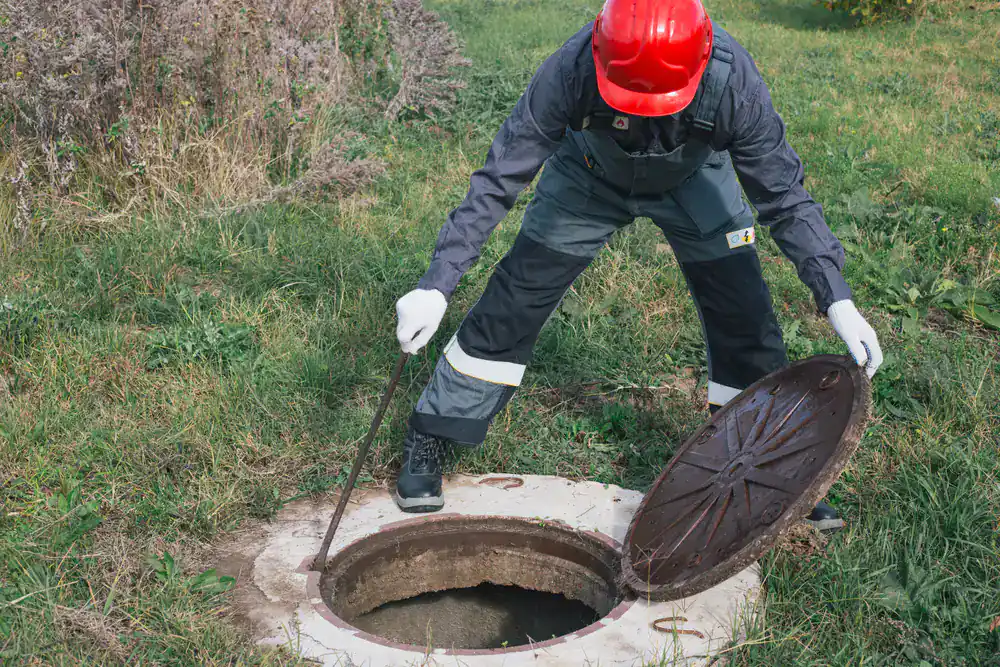
The first thing that happens is locating the system. In older Eastport homes particularly the Cape Cods and colonials built throughout the 1960s and 70s this isn’t always straightforward. If you don’t have a record of where your cesspool is, that’s not unusual, and it’s not a problem. We’ve located countless systems across Suffolk County with no documentation.
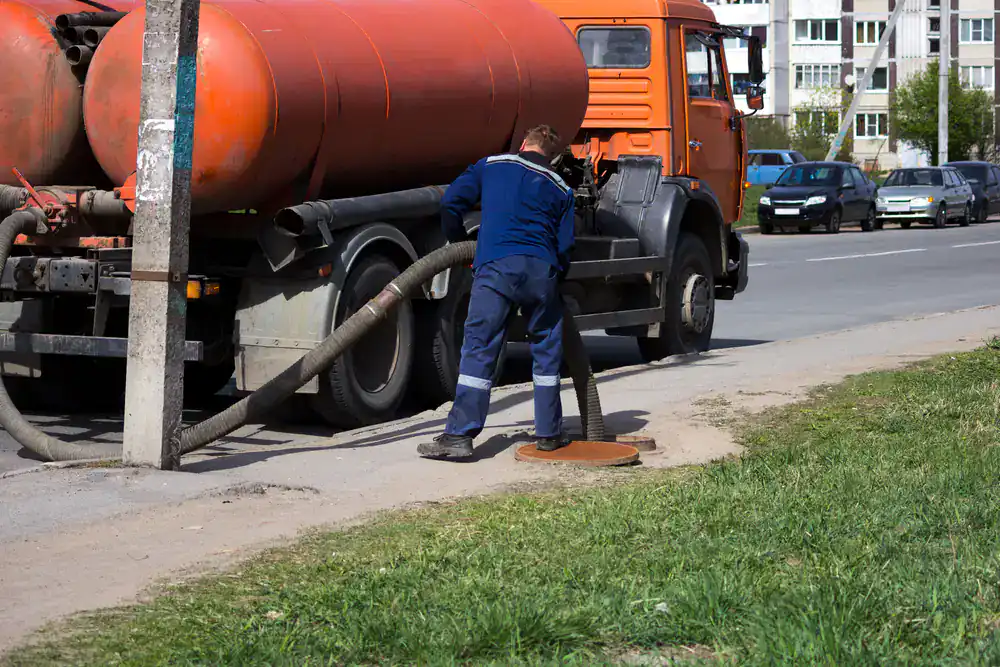
Once the system is located and the cover is accessed, we assess what’s inside before anything else. How full is it? What’s the condition of the walls? Are there signs of a more serious issue that pumping alone won’t resolve? You’ll know what we find before any work begins. The pump-out itself removes the accumulated waste liquid and solids from the tank. After that, we walk you through what we observed and what, if anything, warrants attention going forward.
In Eastport, timing matters. Spring is when the water table is at its highest after winter runoff and coastal rain, which is when systems here are under the most stress. If you haven’t had your cesspool pumped in the last one to three years, scheduling before or right after the wet season is the right move. After the job, you’ll have documentation of the service something that matters when it comes time to sell your home or respond to a county compliance request.
Ready to get started?
Cesspool pumping and cesspool cleaning aren’t the same thing, and it’s worth knowing the difference before you book. Pumping removes the liquid and floating solids from the tank. Cleaning goes further it addresses the hardened sludge that builds up along the walls and floor of the system over time. We perform thorough cesspool cleaning, not just a basic pump-out, which matters for older systems that may have years of buildup.
Every service call includes a system inspection. Given that many Eastport homes sit near Moriches Bay, where setback requirements from tidal water are stricter than inland properties, understanding the condition of your existing system is especially important. If the system is showing signs of failure, you’ll want to know that before Suffolk County requires you to replace it because any replacement in this county now requires an Innovative/Alternative Onsite Wastewater Treatment System, which is a significantly larger investment than routine maintenance.
If your system is hard to locate, buried without a visible cover, or hasn’t been touched in years, that’s handled as part of the job. We also service commercial properties in addition to residential, so if you’re running a business along Montauk Highway or managing a rental property in Eastport, the same 24/7 availability applies. Pricing for a standard residential pump-out in Suffolk County typically runs between $200 and $500, depending on tank size, access, and waste volume at the time of service.