Useful Links
Other Services we provide in Manorville
For most Manorville homeowners, the realistic answer is every one to three years and that’s a tighter window than what you’ll see in national guidelines, which often cite three to five years. The difference comes down to local conditions. Manorville’s sandy Pine Barrens soil drains quickly, which sounds like an advantage until you realize it also means solids that escape an overfull system reach groundwater faster than in areas with denser, clay-heavy soil. Add in the fact that many Manorville homes are larger than average four to six bedrooms, multiple bathrooms, higher daily water usage and you have systems that fill up faster than a typical suburban setup.
The other factor is system age. The median Manorville home was built around 1991, which puts most cesspools in the 30 to 35-year range. Homes from the 1970s and early 1980s have systems approaching 40 to 50 years old. Older systems don’t have the same capacity margins they had when new, and they need more consistent attention to stay functional. If you’re not sure when your system was last serviced, that uncertainty is itself a reason to schedule a pump-out now rather than wait for a symptom to force your hand.
For a standard residential pump-out in Suffolk County, the typical range runs from $200 to $500, with larger or more complex systems landing at the higher end of that range or above it. A 1,000-gallon tank generally runs between $225 and $400. A 2,000-gallon tank is typically $400 to $600 or more. Emergency service, which bypasses the scheduling queue and gets a crew to your property the same day, commands a meaningful premium over a planned appointment.
In Manorville specifically, the size of the home matters a lot. Large-lot properties with four or more bedrooms often have larger-capacity systems, and the cost reflects that. What you want to avoid is the pattern that shows up in complaints across this industry a low number quoted over the phone that jumps significantly once the crew is on-site. The right move is to describe your home size, system history, and access situation honestly when you call, so the estimate you receive is one you can actually count on. Written documentation of the service is included that’s not an upsell, it’s standard.
The clearest sign is sewage odor either inside the house near drains or outside in the yard near where the system is located. In Manorville’s warmer months, when residents are spending more time outdoors on larger properties, this is often how homeowners first notice a problem. Slow drains throughout the house not just one fixture, but multiple are another reliable indicator. If your toilets are gurgling when you run the sink, or your bathtub drains slowly every time someone showers, the system is telling you something.
Standing water or unusually green, soggy patches of grass above the cesspool’s location are a more advanced warning sign that typically means the system is already at or past capacity and effluent is surfacing. At that point, you’re past routine maintenance and into emergency territory. The cost difference between a scheduled pump-out and an emergency call is significant, and the risk of property damage or county compliance issues goes up considerably once the system is actively backing up. If you’re noticing any of these signs, don’t wait to see if they resolve on their own. They won’t.
Yes, and it’s not something to leave until the last minute. Suffolk County requires cesspool inspections every three years, and when you sell a home in Manorville, buyers, lenders, and real estate attorneys will want to see current documentation of the system’s condition. If your records are missing or outdated, it can delay the closing process by weeks and give the buyer leverage to renegotiate terms in a market where Manorville homes are selling in the $630,000 to $870,000 range, that’s a meaningful financial exposure.
The practical step is to have your cesspool pumped and inspected before you list the property, not after an offer comes in. This gives you a clean service record to present, removes a potential objection from the buyer’s side, and protects you from the scenario where an inspection reveals a problem that has to be disclosed or resolved under time pressure. We provide written documentation after every service the kind of paper trail that holds up when a real estate attorney or county inspector asks for it.
Pumping removes the liquid waste and floating solids from the tank. It’s the core service, the one most homeowners mean when they call for cesspool service, and it’s what keeps the system from reaching capacity between scheduled visits. Cleaning goes further it involves more thorough removal of hardened sludge that accumulates at the bottom of the tank over time, along with an inspection of the system’s interior walls and components. A cesspool that has only ever been pumped but never properly cleaned may have significant sludge buildup that pumping alone won’t address.
The reason this distinction matters is that many homeowners assume they’re getting a full cleaning when they’re only getting a pump-out, or vice versa. Before any work begins, it’s worth asking specifically what the service includes. For Manorville’s older systems many of which are 30 to 50 years old and may not have had thorough maintenance throughout their lifespan knowing the condition of the tank walls and baffles is genuinely useful information, not just a sales angle. A company that explains the difference clearly before starting the job is one worth trusting.
No and this is one of the most persistent misconceptions in the cesspool industry. Commercial additives and biological treatments do not remove the physical solids that accumulate in your tank over time. They can’t. Your cesspool already contains naturally occurring bacteria that break down organic material as well as any additive will. What no biological product can do is physically extract the sludge and solids that build up at the bottom of the tank that requires a pump truck and a licensed crew.
This matters specifically for Manorville homeowners because the Pine Barrens soil environment already creates conditions where wastewater moves through the ground quickly and with less natural filtration. A system that’s been managed with additives instead of actual pump-outs is a system that’s likely closer to capacity than the owner realizes and in a zone that sits directly above the Peconic River watershed, an overloaded cesspool isn’t just a property problem, it’s a groundwater problem. The only thing that resets your system’s capacity is pumping. Additives are not a substitute, and any product marketed as one isn’t being straight with you.
Hear from Our Customers
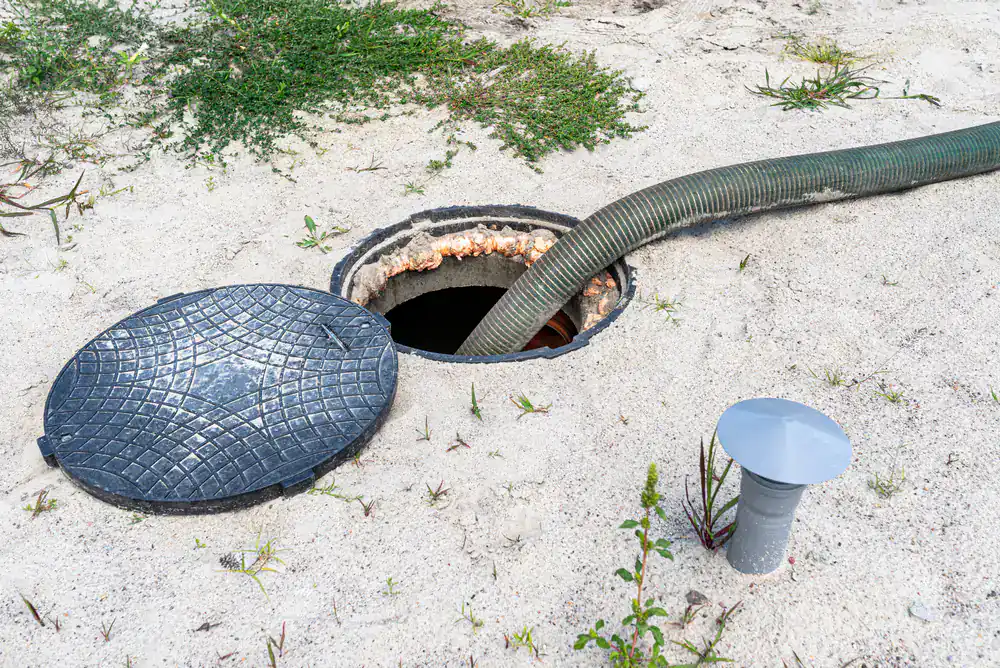
Manorville is one of the few places on Long Island where the rural character isn’t just a selling point it’s the reality. Large lots, wooded properties, no municipal sewer, and a housing stock that was largely built in the 1970s through the 1990s. That means the typical cesspool out here is somewhere between 30 and 50 years old, handling more daily volume than most systems were originally designed for, and doing it through sandy Pine Barrens soil that drains fast and filters slow.
When your cesspool is pumped on a proper schedule, the immediate difference is obvious no odors, no slow drains, no standing water near the tank. But the longer-term outcome is what actually matters for a Manorville homeowner. You’re protecting a system that, if it fails, has no easy workaround. You’re keeping your property in the kind of condition that holds up during a home sale inspection. And you’re preventing the kind of nitrogen runoff that moves quickly through Pine Barrens soil straight into the Peconic River watershed the same groundwater your household depends on.
A cesspool that gets pumped regularly every one to three years stays manageable. One that gets ignored until something backs up is a completely different conversation and a much more expensive one.
We’ve been serving Nassau and Suffolk County homeowners for over 30 years. That tenure means we’ve seen what aging cesspools look like on large Manorville lots, what sandy soil does to a system’s fill rate, and what happens when a homeowner in the Pine Barrens zone waits a season too long.
We’re a family-owned operation. The people who answer the phone are connected to the people who show up at your property. Our technicians are available 24 hours a day, seven days a week including genuine emergencies, not just scheduled appointments. Real customers have praised getting a live person on the phone and a crew that showed up when we said we would, explained what we were doing, and didn’t manufacture problems to pad the bill.
Manorville’s large-lot properties and older housing stock require a company that’s actually worked on systems like yours before. That’s what 30 years on Long Island gets you.
It starts with a real person picking up the phone. You describe what’s going on whether that’s a smell, a slow drain, a backup, or just a system that hasn’t been serviced in a few years and you get a straight answer about what to expect, including timing and what the job will involve.
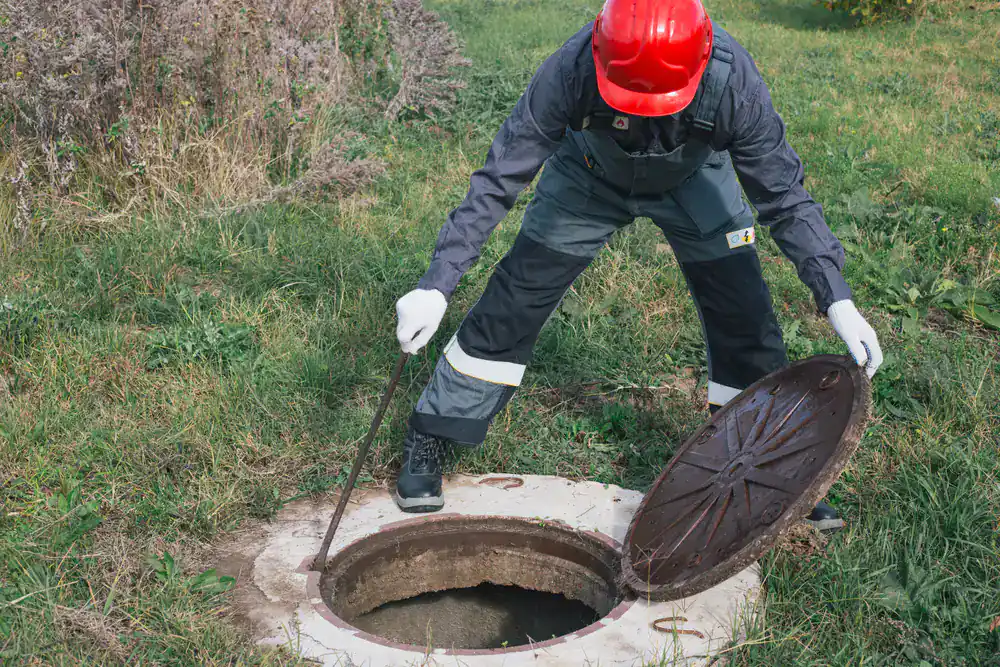
When our crew arrives, the first step is locating the cesspool. On Manorville’s larger, wooded lots, this isn’t always straightforward. Older systems installed in the 1970s and 1980s sometimes have covers that are buried, unmarked, or simply unknown to the current owner. We have specific experience locating hard-to-find cesspools it’s not an add-on, it’s part of knowing how to work on properties like the ones out here.
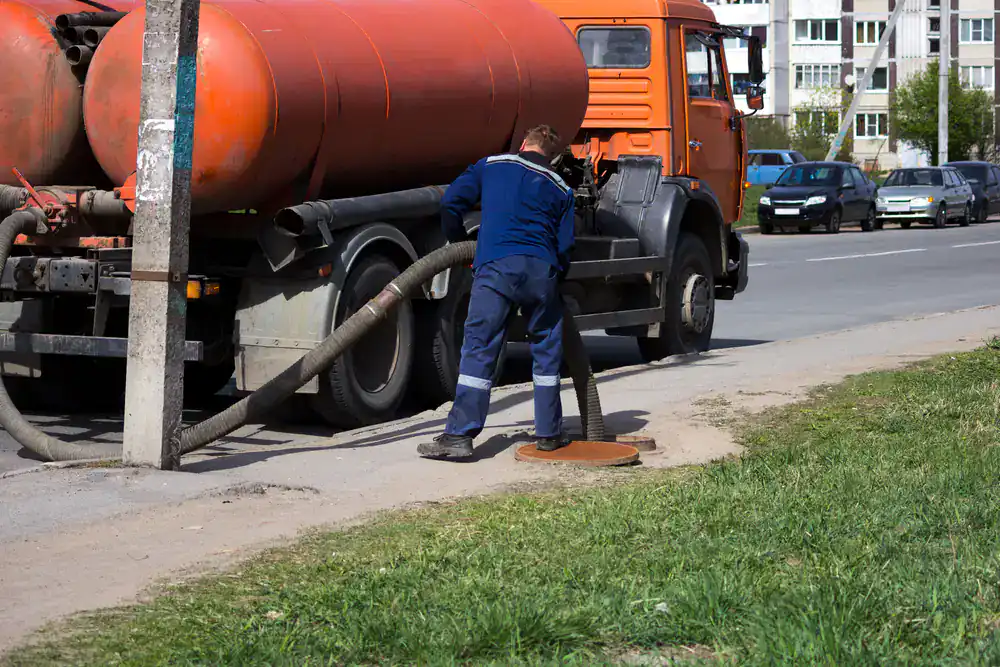
Once the system is located and accessed, we pump the tank fully and transport and dispose of the waste in compliance with Suffolk County and New York State regulations. After the work is done, you receive written documentation of the service. This matters more than most people realize until they’re selling a home or dealing with a county compliance question. Suffolk County requires cesspool inspections every three years, and having a clean paper trail from a licensed contractor protects you when those conversations come up. The job isn’t finished until that documentation is in your hands.
Ready to get started?
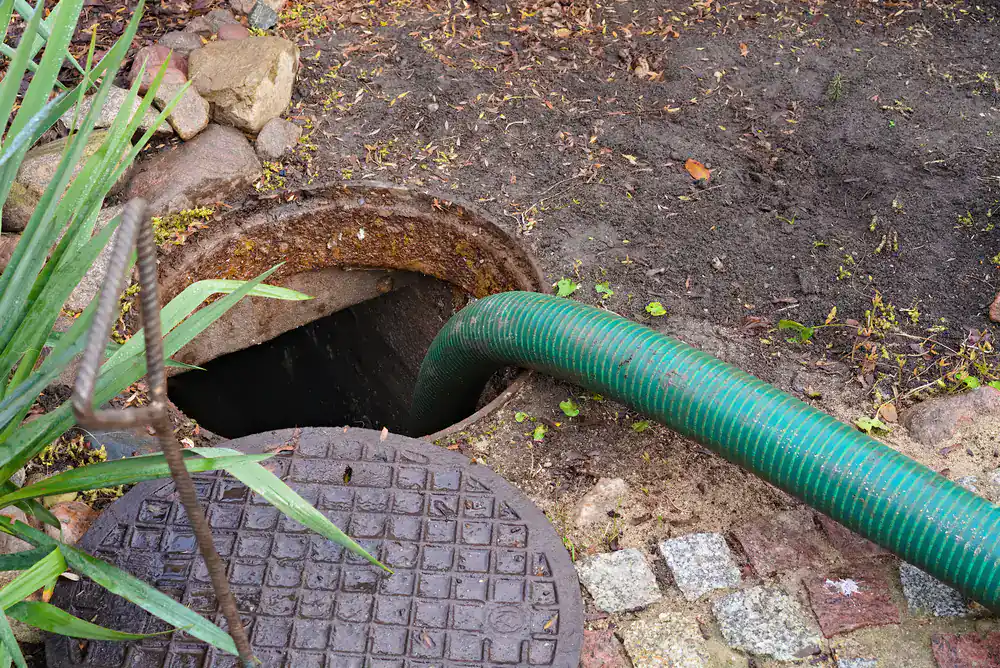
Cesspool pumping and cesspool cleaning are not the same thing, and it’s worth understanding the difference before you book. Pumping removes the liquid and floating solids from the tank. Cleaning goes further it involves more thorough removal of hardened sludge and an inspection of the system’s interior condition. Many homeowners don’t know which one they’re getting until the truck pulls away. We make that clear upfront.
For Manorville residents, our service scope accounts for local conditions that affect how the job gets done. Sandy Pine Barrens soil means systems can fill faster than the national average suggests, especially in larger homes with multiple bathrooms which is common in this hamlet. Homes in the Greenwood Village 55+ community, the Silver Ponds townhouse development, and the larger estate-style properties throughout Manorville all have different system sizes and access conditions. We adapt to what’s actually in front of us, not a one-size-fits-all approach.
Beyond routine pumping, we handle the full range of cesspool needs from inspection and locating to repair and full system installation. If a pump-out reveals something that needs attention, you’ll hear about it plainly and honestly, not as a pressure tactic. That’s the kind of transparency that matters when you’re dealing with a system this critical to your property.