Useful Links
Other Services we provide in Sayville
The honest answer is: it depends on your system type, your household size, and the specific conditions on your property and in Sayville, those conditions matter more than the national average suggests. The standard guidance of every three to five years applies to modern septic systems. If your home was built before 1973, which covers a significant portion of Sayville’s housing stock, you likely have a single-chamber cesspool that fills faster and needs service every one to three years.
Add in Sayville’s proximity to the Great South Bay and the elevated water table that comes with South Shore geography, and the fill rate on your system during a wet year can be meaningfully higher than what a generic schedule would predict. A household of four in a pre-1973 Sayville home near the water is not operating under the same conditions as a household in a newer inland community. The safest approach is to have the system inspected if you don’t have a clear service history, and then build a schedule from what the technician actually observes not from a chart.
For a standard residential pump-out in Suffolk County, the typical range runs from $200 to $500. Larger tanks, more complex access situations, or systems that haven’t been serviced in a long time can push the cost higher the full range for more involved jobs runs from around $308 to $1,234 depending on tank size and conditions. A 1,000-gallon tank generally falls in the $225 to $400 range; a 2,000-gallon tank runs $400 to $600 or more.
What drives cost up more than anything else is deferred maintenance. A system that’s pumped on schedule is a straightforward job. A system that hasn’t been touched in years, or one where the access point is buried and needs to be located first, takes more time and equipment. Emergency service when sewage is already backing up commands a significant premium over scheduled work. The math on routine pumping at $200 to $500 versus an emergency repair or full system replacement, which can run $20,000 to $40,000 under Suffolk County’s current I/A OWTS requirements, is not a close comparison.
The most obvious signs are the ones you can’t ignore: sewage backing up into your drains or toilets, a persistent smell of rotten eggs or sewage coming from your yard or your drains, or standing water in the area above where your cesspool is located. Gurgling sounds from your plumbing when nothing is running is another early indicator that the system is under pressure.
The signs worth paying attention to before you reach that point are subtler. Drains that are slower than usual across multiple fixtures not just one sink, but several suggest the system is struggling to process outflow. Unusually lush, green grass directly above the cesspool location can indicate the system is leaching more than it should. In Sayville, where the water table is already elevated near the bay and creek corridors, these early signs can escalate quickly after a heavy rain event. By the time you’re dealing with a backup, the system is already in distress. The warning signs before that point are worth acting on.
They’re related but not the same, and the difference matters depending on your system’s condition. Pumping removes the liquid waste and floating solids from your cesspool it’s the standard service and what most homeowners mean when they call for routine maintenance. Cleaning is more thorough: it involves removing the hardened sludge that settles at the bottom of the tank over time and can’t be extracted through pumping alone.
For a system that’s been on a regular pumping schedule, routine pumping is usually sufficient. For a system that hasn’t been serviced in several years or one you’ve inherited with an unknown history, which is common when buying older Sayville homes a more thorough cleaning may be what’s actually needed to restore the system to proper function. The distinction also matters for your service records: if a Suffolk County health department review or a home sale inspection asks about your maintenance history, knowing what service was performed and when is more useful than a vague entry that just says “cesspool service.” Ask specifically what’s being done, and make sure it’s documented.
When a nor’easter or extended heavy rain event saturates the ground and raises the water table, your cesspool loses some of its ability to drain. The system works by allowing liquid to slowly leach out through the surrounding soil but when that soil is already saturated, there’s nowhere for the liquid to go. The result is a system that fills faster than normal household use would cause, sometimes significantly so.
For Sayville specifically, this effect is more pronounced than in inland communities. The hamlet sits between two creek corridors and directly on the Great South Bay, and the sandy coastal soil that makes drainage efficient in dry conditions becomes a limiting factor when the water table is already elevated. A system that’s at 60% capacity before a major storm can be at or near full capacity after it. Homeowners who are already overdue for a pump-out going into storm season are the ones most likely to end up with a backup. Scheduling service before the heavy rain seasons late fall before the ground freezes, and early spring before the South Shore storm pattern picks up is the practical way to stay ahead of it.
Yes, and this comes up more often than sellers expect. Suffolk County health departments track cesspool maintenance history, and those records are frequently requested during the home sale process by buyers, their attorneys, and home inspectors. In a market like Sayville, where homes regularly sell at or above $637,000, buyers are thorough and their representatives know what to ask for.
A documented service history from a licensed cesspool contractor demonstrates that the system has been maintained, that it was functioning properly at the time of service, and that there are no unresolved compliance issues. The absence of records doesn’t automatically kill a deal, but it creates uncertainty that buyers use as leverage. Having clean, written documentation from every pump-out and cleaning including the technician’s observations about system condition is one of the simplest ways to protect your sale price and avoid last-minute renegotiations. If you’re preparing to list a Sayville property and don’t have recent cesspool service records, getting the system pumped and documented before you go to market is worth doing early in the process.
Hear from Our Customers
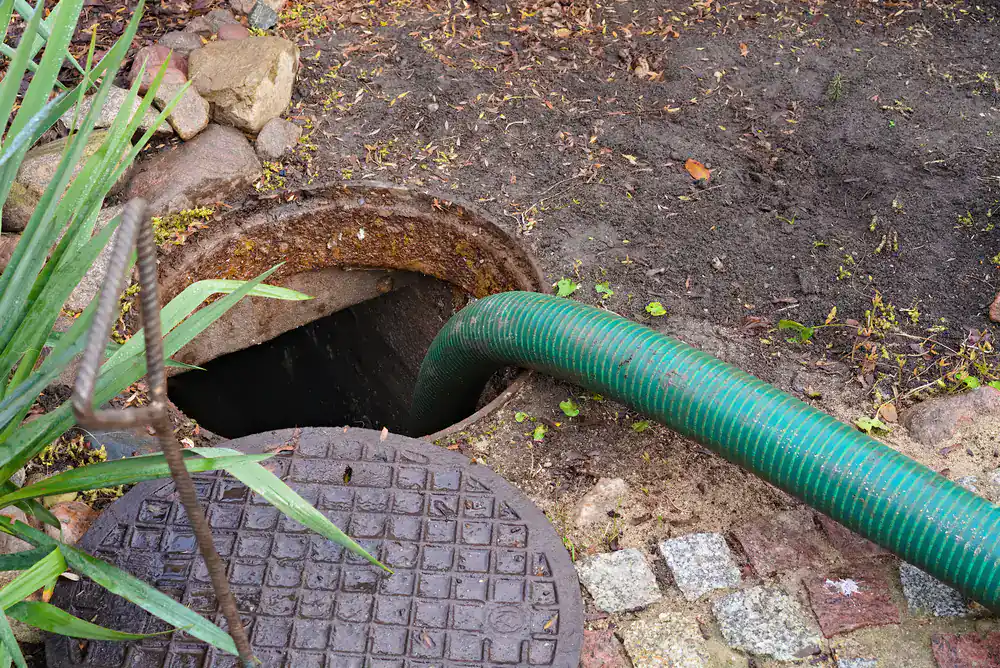
When your cesspool is on a proper service schedule, the first thing you stop doing is worrying. No more wondering if that slow drain is just a slow drain, or if the faint smell coming from the yard is something you should have dealt with six months ago. A system that’s pumped on time runs quietly in the background which is exactly where it belongs.
For Sayville homeowners specifically, that peace of mind carries real financial weight. With median home values approaching $690,000, a cesspool problem that surfaces during a sale inspection isn’t just an inconvenience it’s a negotiating liability. Buyers and their attorneys ask for maintenance records. Having documented, professional service on file protects your asking price in a way that skipping the pump-out simply doesn’t.
There’s also something worth understanding about how Sayville’s geography affects your system. The hamlet sits between Brown Creek to the east and Greenes Creek to the west, directly on the Great South Bay. The water table in this area rises measurably after the nor’easters and heavy rain events that hit the South Shore regularly. When that happens, cesspools lose drainage capacity from the bottom up meaning your system can fill faster than household use alone would predict. Following a national pumping schedule without accounting for local hydrology is how Sayville homeowners end up with an emergency on a Sunday night.
We’re a family-owned cesspool and drainage company based in West Babylon, roughly ten miles west of Sayville along the same South Shore corridor. That proximity matters not just for response time, but because the soil conditions, water table behavior, and housing stock along this stretch of the South Shore are things we’ve learned over decades of working here, not from a manual.
We’ve been operating for over 30 years, and that experience is specific to Long Island. The sandy, porous soil near the bay. The older homes between Sunrise Highway and River Road that were built long before Suffolk County began formally regulating cesspool construction. The systems that haven’t been touched in years because the previous owner never left records. These are the jobs we handle routinely including cesspools that are genuinely hard to locate, which is more common in Sayville’s older neighborhoods than most homeowners realize until they’re standing in the yard trying to figure out where to start.
It starts with a phone call, and an actual person answers. You describe what’s going on routine service, a backup, a smell, or you just bought an older Sayville home and have no idea when it was last pumped. From there, a time is confirmed and a technician is dispatched. No voicemail, no waiting until Monday.
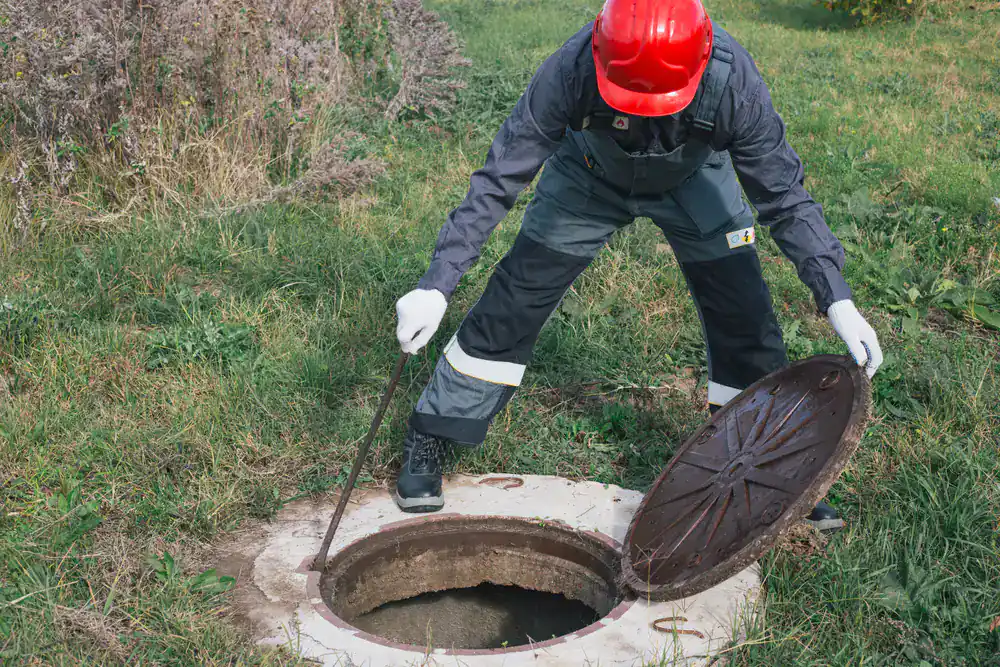
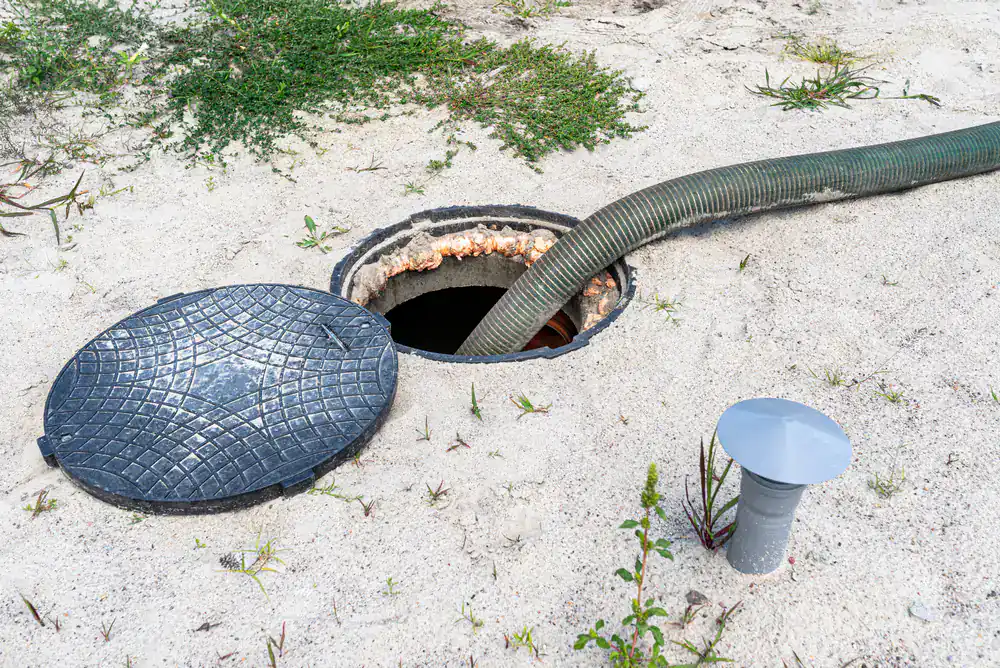
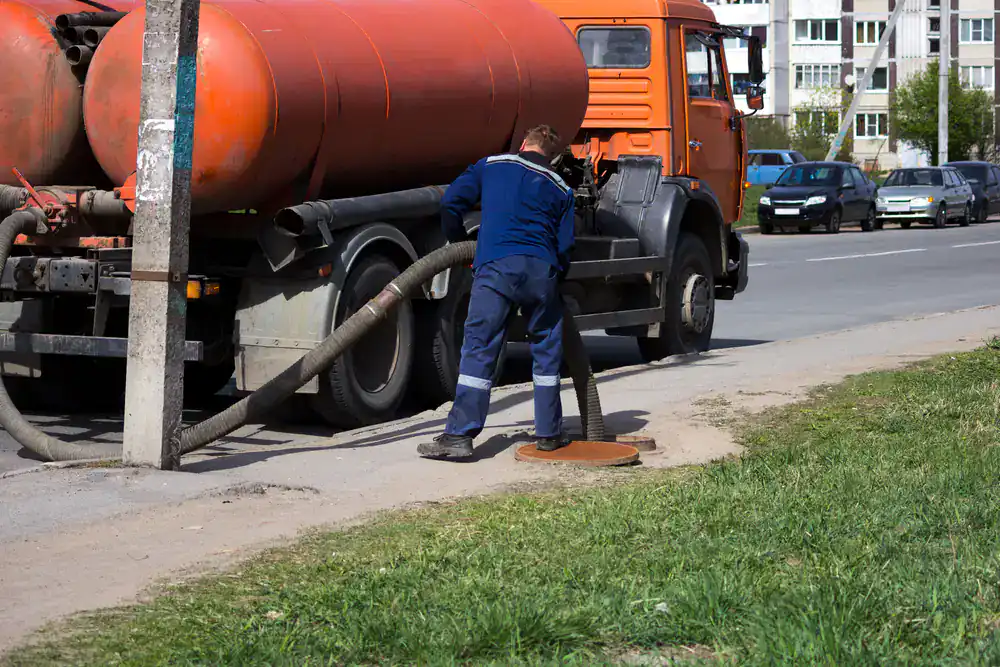
When our crew arrives, the first step is locating the cesspool access point. In newer homes this is straightforward. In older Sayville properties particularly those built before 1973 the cover may be buried, unmarked, or simply unknown to the current owner. We have the experience to locate hard-to-find systems without turning your yard into a guessing game. Once access is established, the tank is pumped using a vacuum truck that removes accumulated liquid and solids. The technician inspects what they can see during the process condition of the walls, signs of structural concern, how quickly the system was filling and communicates that to you plainly before they leave.
You receive written documentation of the service. That record matters in Suffolk County, where maintenance history is requested during home sales and where county compliance standards apply to every residential system in Sayville. If the inspection turns up something that needs attention beyond routine pumping a repair, a more thorough cleaning, or a conversation about system condition you’ll hear about it directly, not buried in paperwork.
Ready to get started?
Cesspool pumping and cesspool cleaning are not the same thing, and most homeowners don’t know that until they’re trying to figure out what they actually paid for. Pumping removes the liquid and floating solids from your system. Cleaning goes further it involves more thorough removal of hardened sludge that has accumulated along the bottom and walls over time. We handle both, and we’ll tell you which one your system actually needs rather than defaulting to the more expensive option.
For Sayville residents, the frequency question is worth taking seriously. Homes built before 1973 and there are many of them on the streets between Montauk Highway and the bay are most likely to have single-chamber cesspools that require service every one to three years. That’s more frequent than the three-to-five year guidance that applies to modern septic systems, and it’s a distinction that matters when you’re trying to stay ahead of a problem rather than respond to one. The South Shore water table conditions discussed earlier only accelerate that timeline in wet years.
Beyond pumping and cleaning, we offer the full scope of cesspool services: septic pumping, drain cleaning with sewer inspection, and complete system installation. Suffolk County’s 2019 ban on new cesspool construction means any replacement system in Sayville must meet current I/A OWTS standards and if your system is approaching the end of its useful life, having one company that can handle the full process from evaluation through installation simplifies what can otherwise be a complicated and expensive project.