Useful Links
Other Services we provide in Calverton
No and this is one of the most common misconceptions among homeowners in Calverton’s older manufactured home communities. Suffolk County banned new cesspool-only installations effective July 1, 2019. That means if your cesspool fails or needs replacement, you cannot simply swap it out for a new one. Any replacement must meet modern septic system standards at minimum, and depending on your property’s design flow and location, you may be required to install an I/A OWTS nitrogen-reducing system.
This matters especially in Calverton because many of the cesspools in communities like Calverton Meadows and Lakewood were installed in the 1960s and 1970s decades before any of these requirements existed. If you’ve been told by a neighbor or a contractor that you can just put in a new cesspool, that advice is outdated. We assess your property, confirm what Suffolk County’s current Article 6 requirements mean for your specific lot, and give you a clear picture of your options before any work begins.
The honest answer is that costs vary significantly depending on what your property needs. A complete septic system replacement in Suffolk County typically falls in the $20,000 to $40,000 range, with some projects running higher depending on lot conditions, system type, and whether an I/A OWTS nitrogen-reducing system is required. Calverton’s sandy Pine Barrens soil generally allows for good drainage, which can work in your favor during drain field design but larger rural lots may involve more excavation than a compact suburban property.
What changes the financial picture for many Calverton homeowners is the Suffolk County Septic Improvement Program. As of July 2025, combined state and county grants of up to $45,000 are available for qualifying I/A OWTS installations. For residents in Calverton’s 55-plus communities where fixed incomes are common and a $25,000 surprise isn’t something you can absorb that grant can cover most or all of the replacement cost. The critical detail: you must apply for and receive your grant certificate before installation begins. Once the work is done, you cannot retroactively qualify. Getting a written estimate and understanding your grant eligibility before signing anything is the right first step.
I/A OWTS stands for Innovative/Alternative Onsite Wastewater Treatment System. These are advanced septic systems designed to remove nitrogen from household wastewater before it reaches the soil unlike a conventional septic tank or cesspool, which releases nitrogen directly into the ground. In Calverton, which sits at the edge of the Central Pine Barrens and directly over one of Long Island’s primary aquifer recharge zones, that nitrogen reduction is particularly significant. The sandy soil here filters very little on its own, so what goes into the ground moves quickly toward the water supply.
Whether you specifically need an I/A OWTS depends on your property’s design flow, the type of replacement being done, and where your lot falls within Suffolk County’s regulatory framework. New construction and major renovations in Suffolk County now require I/A OWTS systems, and many replacement projects trigger the same requirement. We assess your situation and tell you exactly what applies to your property not a general answer, but one based on your specific lot, your existing system, and what the SCDHS permit process will require for your address.
The Suffolk County Septic Improvement Program commonly called the SIP provides grant funding to help homeowners replace outdated cesspools and conventional septic systems with modern I/A OWTS nitrogen-reducing systems. As of July 2025, the combined state and county grant can cover up to $45,000 of the installation cost. Calverton falls within Riverhead Town, and the program is fully available to qualifying homeowners here.
The process works like this: you apply for a grant certificate through the Suffolk County SIP portal before any installation work begins. Once your certificate is issued, you hire a contractor from the SIP Approved Installer list this is a separate list from general licensing, and not every licensed contractor is on it. The grant funds are paid directly to the approved installer, not reimbursed to you after the fact. This means the contractor you choose needs to be both qualified to do the work and approved to receive the grant funds. As of July 2025, Riverhead Town had 65 SIP grant certificates awarded but only 47 completed installations meaning 18 homeowners have grants sitting unused, most often because they haven’t connected with a contractor who can take the project through to completion.
The active installation work on most residential jobs takes one day. That’s the excavation, system installation, and proper abandonment of the old system all typically completed in a single visit. For homeowners in Calverton’s manufactured home communities, where lots are close together and neighbors are nearby, a one-day turnaround makes a real practical difference.
The longer part of the timeline is what happens before the crew shows up. After your site assessment and written estimate, the permit application goes to the Suffolk County Department of Health Services. A perc test may need to be conducted and submitted as part of that application. The permit review process typically adds a few weeks before work can begin. If you’re working with an active SIP grant certificate, the permit needs to be in place before installation, so starting the assessment and application process early matters. Spring and fall tend to be busy seasons for septic installation across Suffolk County, so scheduling earlier rather than later is generally the better move. If you have an urgent situation a failing system, a real estate transaction with a deadline that’s worth mentioning when you call so the timeline can be prioritized accordingly.
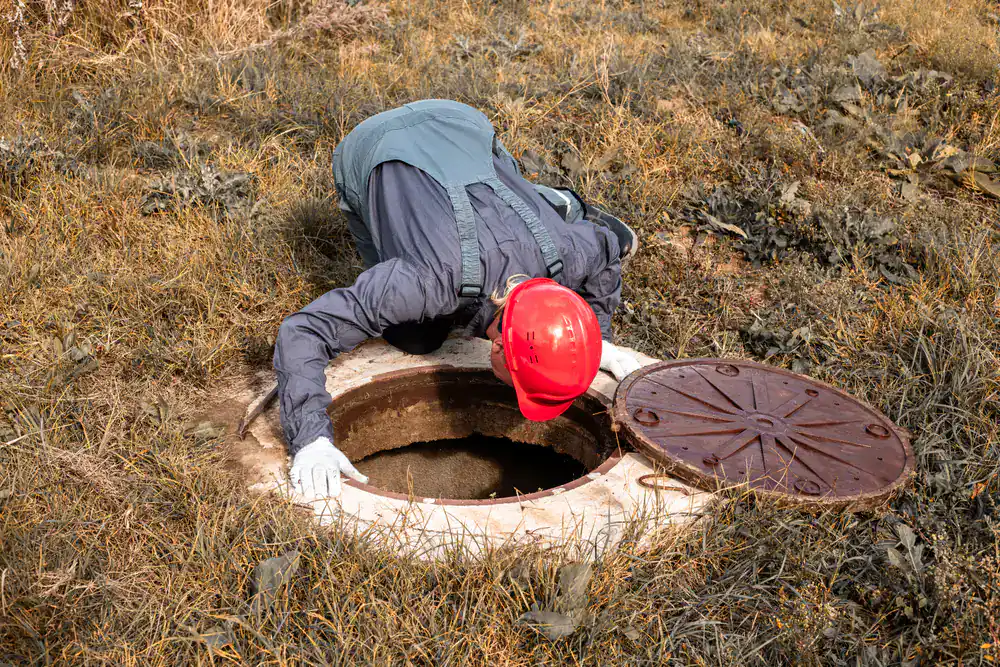
The old system doesn’t just get left in the ground and forgotten. Proper abandonment is a required part of any cesspool or septic replacement in Suffolk County. The process involves pumping out any remaining waste, then either crushing the existing structure and filling it with clean material, or capping and filling it in a way that prevents future collapse or contamination. The work is documented and the records are filed as part of the overall permit closure with SCDHS.
This matters for Calverton homeowners for a practical reason: many of the older cesspools in this area particularly in communities built in the 1960s and 1970s were installed without detailed records, and some properties have systems in locations that weren’t clearly documented. Part of the pre-installation process is locating the existing system accurately before any excavation begins. We handle cesspool location as part of the overall service, which means you’re not left guessing about what’s underground or where it is before the crew starts digging. Once the job is complete, you receive installation records for the new system documentation you’ll want to keep on file for future inspections, property sales, or any work that touches the system down the road.
Hear from Our Customers
When your septic system is done right, you stop thinking about it. No wet patches in the yard. No sewage smell creeping in on a warm morning. No phone call from a neighbor wondering what’s going on.
For Calverton residents specifically, that outcome matters more than it does in most places on Long Island. The hamlet sits at the edge of the Central Pine Barrens, right where the ground transitions to sandy, porous soil that drains fast and filters very little. What goes into the ground here moves quickly toward the aquifer that supplies all of Long Island’s drinking water. A modern I/A OWTS system reduces nitrogen pollution by up to 70% compared to a conventional cesspool a real difference in what ends up in the water table beneath your property.
The financial picture has also shifted significantly. Suffolk County and New York State currently offer combined grants of up to $45,000 toward qualifying I/A OWTS installations. For the many Calverton homeowners on fixed or semi-fixed incomes particularly in communities like Calverton Meadows, Foxwood Village, and Lakewood that offset changes whether a replacement is feasible at all. The key is knowing what you qualify for before any work begins, because grants must be in place before installation starts.
We’re a family-owned company based in West Babylon, serving both Nassau and Suffolk Counties. Our team has been doing this work on Long Island for over 30 years building real knowledge of local soil conditions, SCDHS permit requirements, and the regulatory changes that have reshaped this industry since Suffolk County’s 2019 cesspool ban.
Calverton is a specific kind of market. The manufactured home communities along Fresh Pond Avenue and Middle Road have tight lot spacing, older infrastructure, and residents who deserve straight answers not pressure tactics or vague verbal quotes that change when the truck pulls up. We operate the opposite way: real estimates in writing, real arrival windows, and real explanations of what the work involves.
Calverton sits within Riverhead Town, which means the permit process runs through the Suffolk County Department of Health Services under Article 6 of the Suffolk County Sanitary Code. That’s not new territory for us it’s the same process we’ve navigated on hundreds of jobs across eastern Suffolk.
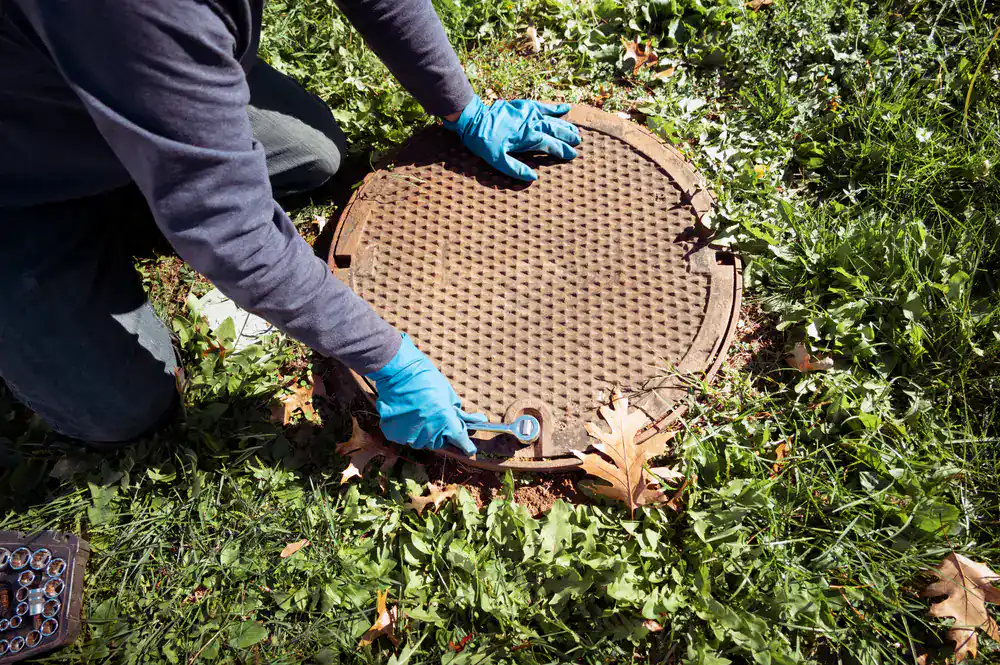
The process starts with a site assessment. Before anything else, we evaluate your property lot size, existing system location, soil conditions, and what Suffolk County’s Article 6 requirements mean for your specific situation. In Calverton, where sandy Pine Barrens soil is the norm, that soil evaluation directly shapes what kind of system gets designed and where the drain field gets placed. A perc test is typically required as part of the SCDHS permit application, and the results influence the final system design.
Once the assessment is complete, you get a written estimate. From there, the permit application goes to the Suffolk County Department of Health Services. Most residential permits take a few weeks to process, so if you’re working with an active SIP grant certificate and Riverhead Town currently has 18 grant awards that haven’t yet turned into completed installations timing matters. The sooner the permit is filed, the sooner work can begin.
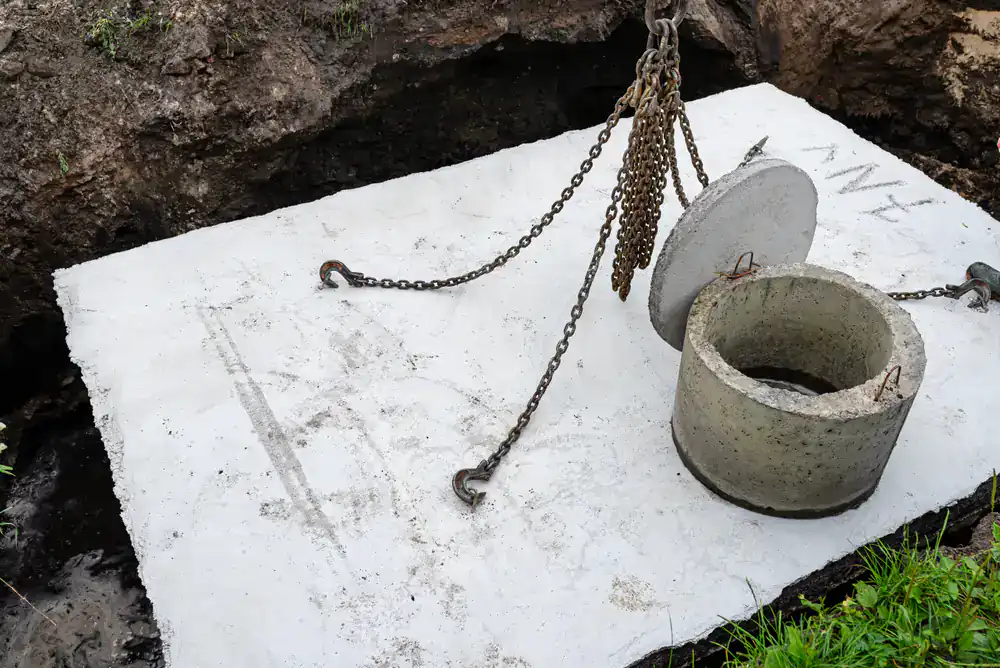
Installation day is where things move. Most residential jobs are completed in a single day, which matters in Calverton’s manufactured home communities where neighbors are close and an open excavation isn’t something anyone wants sitting for a week. The old system gets properly abandoned pumped, documented, and filled and the new system goes in. After installation, a final SCDHS inspection closes out the permit. You receive documentation of the completed work, and the system is ready to go.

Ready to get started?
A complete septic installation through us covers the full scope site evaluation, permit filing with SCDHS, excavation, system installation, proper abandonment of the old cesspool or septic system, and coordination of the final inspection. Nothing gets handed off to another contractor mid-job. One crew, one point of contact, start to finish.
For Calverton properties that qualify for the Suffolk County Septic Improvement Program, we work through the SIP framework so the grant funds are applied correctly. The grant money is assigned directly to the approved installer it doesn’t pass through you as a homeowner which means choosing a contractor who understands the program is the difference between the grant working and the grant sitting unused. As of July 2025, there are 18 uncompleted SIP grant awards in Riverhead Town alone. Those homeowners did the hard part. They just need a contractor who can close the loop.
For properties requiring an I/A OWTS nitrogen-reducing system which applies to many Calverton lots given the Pine Barrens groundwater sensitivity and current Suffolk County regulations the installation includes a system design that meets SCDHS approval standards. I/A OWTS systems also require annual maintenance contracts after installation, and we’ll walk you through what that looks like before the job is done so there are no surprises down the road.