Useful Links
Other Services we provide in Hauppauge
Possibly, and it’s worth finding out before you do anything else. The Suffolk County Septic Improvement Program offers up to $45,000 in combined state and county grant funding for homeowners who replace qualifying systems with an I/A OWTS nitrogen-reducing system. The program is open to owner-occupied residential properties in Suffolk County, which covers all of Hauppauge’s residential areas regardless of whether your address falls within the Town of Smithtown or Town of Islip portion of the hamlet.
There are eligibility requirements the property needs a valid certificate of occupancy, no outstanding tax liens, and the existing system must be abandoned as part of the project. The most important thing to understand is timing: the grant certificate has to be issued before installation begins. If you move forward with a contractor before applying, you forfeit the funding. The other piece is contractor eligibility only installers on the SIP approved installer list can accept grant funds on your behalf. Starting with a phone call to confirm eligibility and installer status is the right first step.
A cesspool is essentially a pit in the ground. Waste goes in, liquids seep out into the surrounding soil, and solids accumulate at the bottom until the system is pumped. There’s no treatment happening raw waste is simply dispersing into the earth. A septic system is more sophisticated: it separates solids from liquids in a tank, and the liquid effluent flows into a leaching field where it’s filtered through the soil before reaching groundwater.
The distinction matters for a few reasons. First, Suffolk County banned new cesspool-only installations in 2019 so if your system needs replacing, a like-for-like cesspool swap is no longer an option. Second, in Hauppauge, where the water table can run relatively shallow in areas near the Nissequogue River headwaters and the aquifer supplies local drinking water, the difference between a cesspool leaching untreated waste and a properly functioning septic system is not abstract. It’s a real difference in what’s entering the ground beneath your neighborhood.
The honest answer is that it varies, and anyone who gives you a firm number before seeing your property is guessing. A full septic system replacement in Suffolk County typically runs somewhere in the range of $20,000 to $40,000, depending on system type, lot conditions, soil evaluation results, and whether you’re installing a conventional system or an I/A OWTS. The perc test alone usually costs between $500 and $1,500, and SCDHS permits run $200 to $500 depending on system size.
For Hauppauge homeowners considering an I/A OWTS upgrade, the SIP grant program changes the math significantly. With up to $45,000 in combined state and county grant funding available, many homeowners end up with little to no out-of-pocket cost for a compliant nitrogen-reducing system. The grant is assigned directly to the approved installer it doesn’t come to you as a reimbursement so the effective cost to you depends heavily on what your property qualifies for and which system design fits your lot. A proper site assessment is the only way to get a real number.
The active installation work excavation, system installation, abandonment of the old system, and site restoration typically takes one to three days once permits are in hand. That’s the part most homeowners are thinking about when they ask this question. The longer part of the timeline is the permitting process, which involves submitting plans and a perc test to the Suffolk County Department of Health Services and waiting for approval under Article 6 of the Suffolk County Sanitary Code.
In Hauppauge specifically, there’s an added layer to be aware of: because the hamlet straddles both the Town of Smithtown and the Town of Islip, some projects require coordination with two different municipal offices depending on where your property sits. A contractor who doesn’t account for this can file paperwork with the wrong town and add unnecessary weeks to your timeline. Working with someone who already knows which jurisdiction your address falls under and what that means for your permit sequence keeps the process moving without avoidable delays.
If your home was built in the 1960s, your cesspool is somewhere between 55 and 65 years old. The design life of a conventional cesspool under normal conditions is roughly 25 to 40 years. So the short answer is: if it hasn’t been replaced yet, it’s operating well past what it was built to handle.
That doesn’t mean it’s collapsed some older systems hold on longer than others depending on usage, soil conditions, and maintenance history. But many failing systems show no obvious above-ground signs until something goes wrong. You might notice slow drains, a persistent odor in the yard, or wet patches in areas that shouldn’t be wet. Sometimes there are no visible signs at all until the system backs up completely. A professional inspection is the only reliable way to know where your system actually stands. Given that most of Hauppauge’s residential housing stock dates to the same postwar build-out period, this is not a hypothetical concern it’s a community-wide infrastructure reality that a lot of homeowners are dealing with right now.
Yes. We serve both residential and commercial clients, which is relevant in Hauppauge given the scale of the Long Island Innovation Park. The park spans roughly 1,400 acres and houses more than 1,300 businesses many of them operating on private wastewater systems that aren’t connected to municipal sewer. As those properties age, change use, or undergo renovation, their wastewater systems may need to be upgraded to meet current SCDHS commercial standards.
Commercial septic installations involve higher design flow requirements and more detailed SCDHS oversight than residential projects. The permit process is more involved, and the system specifications depend on the type of business, the volume of wastewater generated, and the specific conditions of the property. For businesses along Veterans Memorial Highway or within the industrial park looking at a system upgrade or new installation, working with a contractor who has experience on the commercial side not just residential makes a real difference in how smoothly the project goes from permit filing to final inspection sign-off.
Hear from Our Customers

When a septic system is installed correctly, you stop thinking about what’s underneath your yard. No more slow drains creeping up on you, no sewage smell when you open the back door, no wet patches appearing in places they shouldn’t. That’s the outcome and it’s more straightforward to get there than most people expect.
For Hauppauge homeowners specifically, the stakes are higher than average. Median home values here range from $617,000 to over $790,000. A failed or improperly installed system doesn’t just create a mess it creates a problem that shows up during a home inspection, complicates a sale, or triggers costly re-excavation. Getting the installation done right the first time protects your property and your equity.
There’s also the groundwater angle. Hauppauge sits over the same sole-source aquifer that supplies drinking water across central Suffolk County. The Nissequogue River’s headwaters originate right in this area, and the water table in parts of the hamlet can run shallow especially in spring. A conventional cesspool leaching raw waste into that soil isn’t just a compliance issue. It’s a real, local concern that a properly installed modern system directly addresses.
We’re a family-owned and operated company based in West Babylon, about 12 to 15 miles from Hauppauge via the Long Island Expressway. We’ve been doing this work on Long Island for over 30 years which means we’ve been replacing 1960s-era cesspool systems in Hauppauge and communities like it long before it became a regulatory requirement to do so.
What that experience looks like in practice: we know what a postwar cesspool looks like when it’s at the end of its life, we know how Suffolk County’s Article 6 permitting process works, and we know that Hauppauge’s dual-town structure straddling both the Town of Smithtown and the Town of Islip can create permit complications that catch unprepared contractors off guard. That kind of local knowledge isn’t something you pick up from a training manual.
We serve both residential and commercial clients, which matters in Hauppauge given the scale of the Long Island Innovation Park and the number of businesses in the area operating on private wastewater systems. Whether it’s a home on a residential street or a property near Veterans Memorial Highway, the same crew shows up with the same level of care.
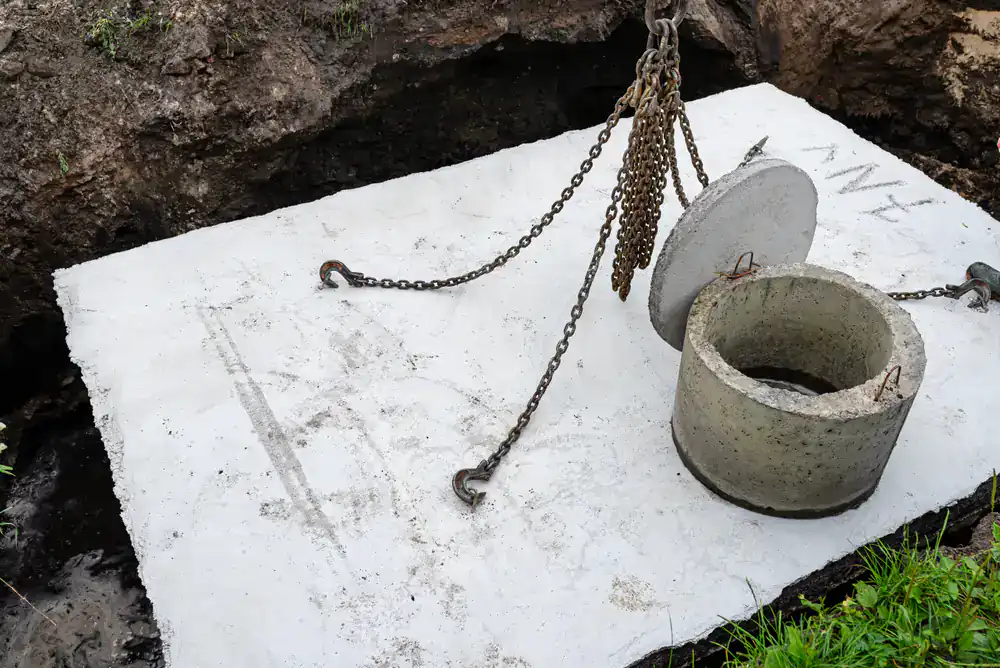
It starts with a site assessment. Before any design is drawn up or any equipment is scheduled, the ground beneath your property needs to be evaluated. That means a soil percolation test commonly called a perc test to understand how the soil drains and what system design will work for your lot. In Hauppauge, where soil conditions and water table depth can vary across the hamlet, this step isn’t a formality. It directly shapes what gets installed and where.
From there, the appropriate system is designed and submitted to the Suffolk County Department of Health Services for permitting under Article 6 of the Suffolk County Sanitary Code. This is where Hauppauge’s dual-town status becomes relevant. Depending on whether your address falls within the Town of Smithtown or the Town of Islip portion of the hamlet, there may be additional municipal coordination required alongside the SCDHS filing. A contractor who doesn’t know this can file with the wrong office and push your timeline back by weeks. We know the territory.
Once permits are in hand, most residential installations take one to three days of active work. The old system is properly abandoned pumped, documented, and filled and the new system goes in. You get installation records for the new system, and the site is restored. No lingering mess, no open questions about what’s underground.

Ready to get started?
Since July 2019, Suffolk County has banned new cesspool-only installations. Any replacement has to meet modern septic standards at minimum and in many cases, the right choice is an I/A OWTS system, which stands for Innovative and Alternative Onsite Wastewater Treatment. These nitrogen-reducing systems are what the Suffolk County Septic Improvement Program was built around, and they’re what most Hauppauge homeowners with aging systems are moving toward.
The reason the SIP grant program matters here more than almost anywhere else in Suffolk County: the office that administers it the Suffolk County Department of Health Services is headquartered right here in Hauppauge, on Veterans Memorial Highway. The county announced its most recent round of streamlined grant applications, offering up to $45,000 in combined state and county funding, from this town. If your home qualifies, that grant can cover the majority of what a new I/A OWTS system costs. The critical detail most homeowners miss: the grant has to be issued before installation begins, not after. If you hire a contractor who isn’t on the SIP approved installer list, you lose access to that funding entirely.
We handle both residential and commercial septic installations across Nassau and Suffolk Counties. For Hauppauge properties, that includes full-service coordination from the initial perc test and SCDHS permit filing through to installation and post-installation documentation so you have a complete record of what was installed and when.