Useful Links
Other Services we provide in West Bay Shore
No and this catches a lot of West Bay Shore homeowners off guard. Suffolk County banned all new cesspool-only installations effective July 1, 2019. That means if your existing cesspool fails or needs to be replaced, you cannot simply put a new cesspool in its place. Any replacement must meet modern septic system standards at minimum, and depending on your property’s location and the scope of the project, an I/A OWTS nitrogen-reducing system may be required.
For West Bay Shore specifically, this matters more than it might in an inland community. Properties this close to the Great South Bay are under closer regulatory scrutiny, and the environmental case for advanced treatment systems is particularly strong here given how directly groundwater from this area flows toward the bay. If you’re not sure what your property requires, a site assessment is the right first step not a phone quote from a contractor who hasn’t seen your lot.
The honest answer is that it depends on the system type, your lot conditions, and what the site assessment turns up. A complete septic system replacement in Suffolk County typically ranges from $20,000 to $40,000, depending on whether a conventional system or an I/A OWTS advanced treatment system is required. The average I/A OWTS installation runs approximately $25,000.
What changes the number significantly is your site. In West Bay Shore, where the water table is shallow and lots are bay-adjacent, the system design may require additional engineering considerations that affect the final cost. That’s why a written estimate after a site visit is the only number worth trusting. Anyone quoting a firm price over the phone before seeing your property is guessing and in this industry, guesses have a way of becoming disputes once the excavator is already in your yard.
West Bay Shore is fully within Suffolk County’s Septic Improvement Program eligibility area, which means you may qualify for combined state and county grant funding of up to $45,000 as of July 2025 to offset the cost of an I/A OWTS installation. Given that the average installation costs approximately $25,000, many West Bay Shore homeowners could have their entire cost covered.
The part that trips people up is the timing. You must apply for and receive a grant certificate before installation begins not after. The grant funds are also paid directly to the approved installer, not reimbursed to you as the homeowner. That means the contractor you hire needs to be on the SIP approved installer list. If you’re thinking about a system replacement, the grant conversation should happen before you schedule anything else, because starting work before the grant is approved means losing the funding entirely.
The permit process is where most of the waiting happens. Once a site assessment is complete and the SCDHS application is filed, the permit review typically adds a few weeks before work can begin. That lead time is built into the process and isn’t something a contractor can shortcut it’s a Suffolk County requirement, not a scheduling issue.
The active installation itself, once permits are in hand, is generally completed in a single day for most residential properties. The old system is pumped and properly abandoned, the new system is installed, and the site is restored. West Bay Shore homeowners who are concerned about their yard and in a community that takes its property seriously, that’s a reasonable concern can expect professional excavation practices and a finished site that doesn’t look mid-project. The disruption is real but measured in hours, not weeks.
I/A OWTS stands for Innovative and Alternative Onsite Wastewater Treatment System. In plain terms, it’s a septic system that goes beyond basic waste separation and actively removes nitrogen from wastewater before it reaches the soil. Conventional cesspools release approximately 40 pounds of nitrogen per household per year into the ground. An I/A OWTS system reduces that by up to 70%.
Whether you need one in West Bay Shore depends on your specific situation the age of your current system, the scope of any renovation work on your property, and what SCDHS determines during the permit review. That said, West Bay Shore’s proximity to the Great South Bay makes this a particularly relevant question. The bay has been declared an impaired water body, and the groundwater in low-elevation South Shore communities like this one flows directly toward it. Beyond the regulatory question, an I/A OWTS is also the only type of system that qualifies for SIP grant funding which is a significant financial consideration given the grant amounts currently available.
The most common mistake homeowners make is assuming that no visible problem means no problem. A lot of West Bay Shore’s housing stock was built between 1950 and 1980, which means cesspools installed during that era are now 45 to 75 years old well past their designed lifespan. Many of these systems show no obvious above-ground signs of failure until they collapse or back up into the house.
The warning signs worth taking seriously include slow drains throughout the house, sewage odors in the yard, wet or unusually green patches of grass over the system area, or a home inspection report that flags the system’s age or condition. But the only reliable way to know is a professional assessment. If you’re planning to sell your home in the next few years and in a market where West Bay Shore homes are transacting at $485,000 to $750,000, that’s a meaningful decision getting ahead of a potential defect disclosure is far better than discovering it during a buyer’s inspection when you have less control over the outcome.
Hear from Our Customers

When you replace an aging cesspool with a properly installed septic system, you stop managing a slow-motion problem and start owning a home that’s actually in compliance. No more wondering what’s happening underground. No more hoping the system holds through another wet spring. You get a documented, permitted installation that meets current Suffolk County standards and one that holds up when a buyer’s attorney or home inspector starts asking questions.
West Bay Shore sits at 13 feet above sea level on the shore of the Great South Bay. That’s not just a scenic detail it means the water table here is shallow, and what your cesspool leaches doesn’t travel far before it reaches groundwater that flows directly toward the bay. An I/A OWTS nitrogen-reducing system cuts that nitrogen output by up to 70%. For a community that can see the Great South Bay from Gardiner County Park, that’s a measurable local difference.
With homes in West Bay Shore selling in the $485,000 to $750,000 range and a homeownership rate of 95.4%, your property is a serious financial asset. A failed or out-of-compliance cesspool is a disclosed defect in a real estate transaction. Getting ahead of it on your timeline, not under emergency conditions means you protect what you’ve built here.
We’re headquartered in West Babylon the community directly to the west of West Bay Shore along the South Shore. That proximity isn’t a coincidence. We’ve been working in these conditions for over 30 years: the shallow water table, the sandy loam, the low-elevation lots that back up against the bay. When a contractor from the middle of Suffolk County shows up in West Bay Shore, they’re learning on the job. We already know this ground.
We’re family-owned and operated, which means accountability isn’t routed through a corporate complaint department. Real people answer the phone, give you a real arrival window, and show up when we say we will. That’s not a given in this industry and it’s something our customers consistently call out when they review their experience.
From your first call through final documentation, one team handles the process. No hand-offs, no gaps, no surprises once the excavator arrives.
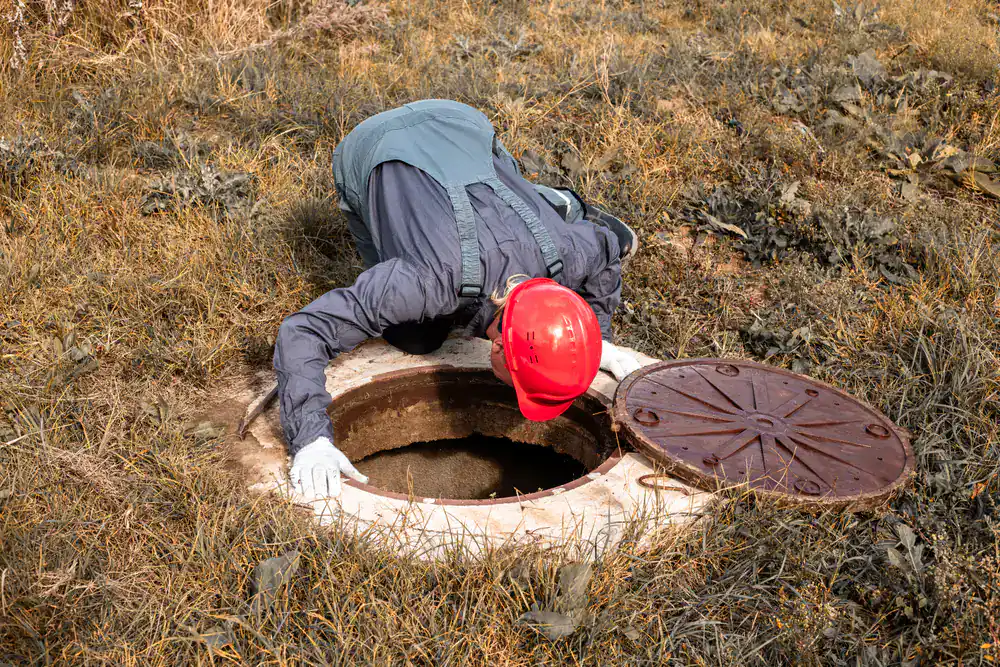
It starts with a site assessment. Before any pricing, before any permits, someone comes out to evaluate your property lot size, soil conditions, proximity to the water table, and the current state of your existing system. In West Bay Shore, that water table assessment matters more than it does in inland Suffolk County communities. At 13 feet above sea level, the vertical separation between a leaching field and the seasonal high groundwater mark is a real engineering variable, not a formality. The system design has to account for it.
Once the site is assessed, the permit process begins. All septic installation in West Bay Shore falls under Article 6 of the Suffolk County Sanitary Code, which requires a SCDHS permit before any work starts. If you’re pursuing an I/A OWTS system and applying for Suffolk County’s Septic Improvement Program grant which as of July 2025 can cover up to $45,000 in combined state and county funding that application also needs to be filed and approved before installation begins. The grant doesn’t come to you after the fact; it goes directly to the installer. Getting the sequence right matters, and we handle that on your behalf.
Once permits are in hand, most residential installations are completed in a single day of active work. The old system is properly abandoned pumped, documented, and filled and the new system goes in. Post-installation, SCDHS inspection is coordinated and installation records are provided. You’re not left wondering what was done or where.

Ready to get started?
Septic system installation in West Bay Shore isn’t a one-size job. The system design depends on your lot, your soil, your water table depth, and what Suffolk County’s current regulations require for your specific situation. We work through all of that before a price is quoted because a number given over the phone without a site visit isn’t a real estimate.
For West Bay Shore homeowners whose properties sit in low-elevation, bay-adjacent conditions, I/A OWTS nitrogen-reducing systems are often the right call both from a regulatory standpoint and from a practical one. These systems are engineered to perform in high-water-table environments and are specifically required in many replacement scenarios under Suffolk County’s post-2019 rules. They’re also the systems that qualify for SIP grant funding, which can offset a significant portion of the installation cost. If you haven’t applied for the grant yet, that conversation happens early before any work is scheduled because eligibility requires the application to be approved first.
We cover the full scope: site assessment, permit filing with SCDHS, excavation, system installation, proper abandonment of the existing cesspool, and post-installation documentation. Both residential and commercial properties are served. If your property is near Montauk Highway or in the older ranch-home neighborhoods closer to Gardiner County Park, the process is the same thorough, permitted, and completed without unnecessary delays or add-ons you didn’t ask for.