Useful Links
Other Services we provide in Asharoken
The Village of Asharoken has its own Health and Sanitation code that requires all cesspools and septic tanks to be cleaned at least once a year, or more often if the Board of Health directs. That’s a local ordinance specific to Asharoken stricter than the general Suffolk County guidance, which typically points to every one to two years for cesspools and every three to five years for conventional septic tanks depending on household size and tank capacity.
For Asharoken properties specifically, annual pumping makes practical sense beyond the code requirement. The homes here are predominantly 60-plus years old, the systems were designed for smaller households, and the coastal environment low elevation, shallow water table, proximity to Northport Bay means there’s less margin for error than you’d have on an inland property. After a major storm event, it’s worth having the system checked even if you’re not due for a scheduled pump-out, since storm surge and groundwater infiltration can stress a system faster than normal use would.
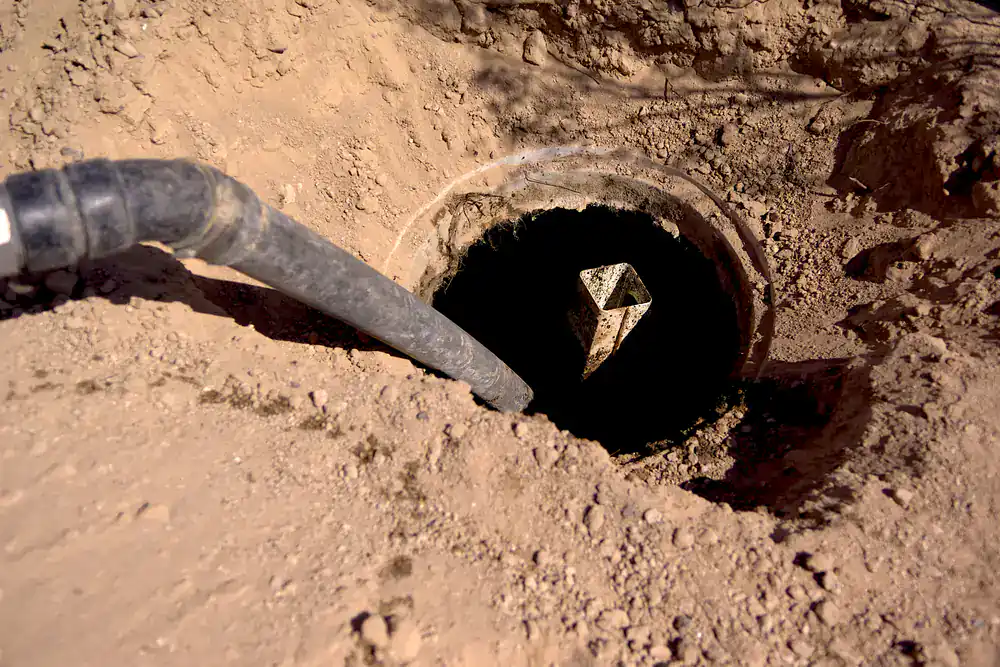
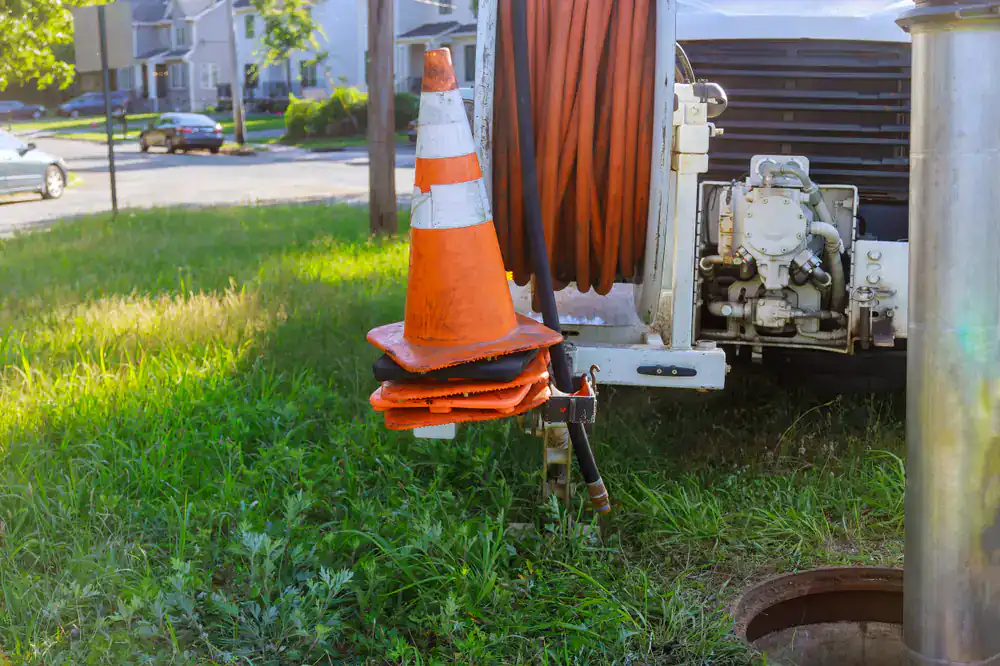
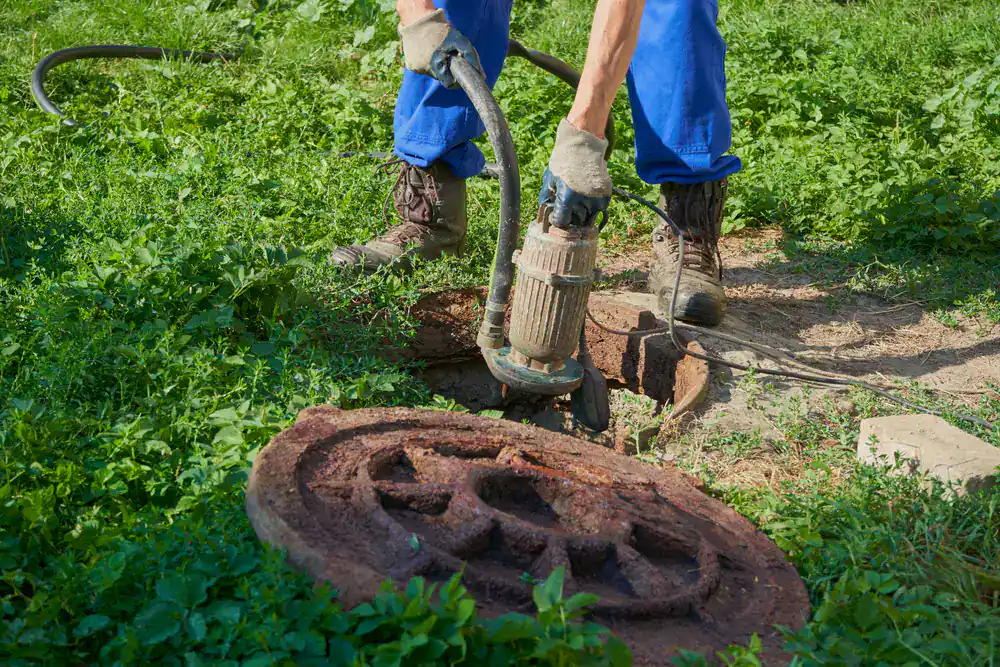
A proper pump-out removes all accumulated sludge and waste from the tank, not just the material floating near the top. This matters because partial pump-outs leave solids behind that continue breaking down and stressing the system. We locate the tank, access the lid which on older Asharoken properties is often buried under years of soil and landscaping and use a vacuum truck to fully empty the tank.
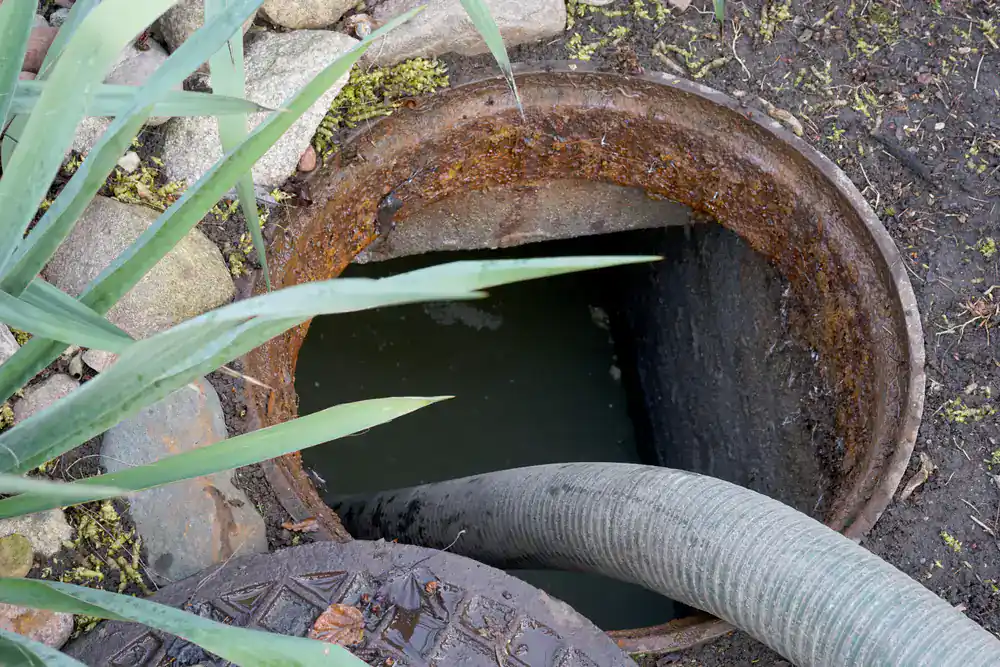
After the pumping is done, we inspect the system’s condition: checking baffles, looking for signs of cracking or infiltration, and assessing whether the system is functioning as it should. You’ll receive a plain-language explanation of what we found. If there’s a problem, you’ll hear about it before any additional work is proposed and you’ll have the opportunity to ask questions and approve any next steps. All septage removed from the tank is transported and disposed of at a licensed facility, as required by New York State law.
Yes, and this is more common than most people expect especially on properties built in the 1960s, which describes most of Asharoken. Over the decades, lids get buried under sod, garden beds, added soil, and renovation work. Records from the original installation may not exist or may not be accurate. In some cases, homeowners have lived on a property for years without knowing exactly where the tank is located.
We specialize in locating hard-to-find cesspools and septic tanks. The process involves using the property layout, any available records, and hands-on experience with how systems were typically installed in this era and on this type of coastal North Shore property. Lid excavation, when needed, is part of the service and if excavation is required, you’ll be told the cost before any digging begins. On a property where the system hasn’t been serviced in years, locating and accessing the tank is the first step, and it’s one we handle routinely.
Yes. The Village of Asharoken has its own Health and Sanitation code that requires all cesspools, septic tanks, and sewage disposal systems within the village to be cleaned at least once a year, or more frequently if directed by the Board of Health. The code also prohibits any system from being maintained in a way that allows its contents to escape and pollute soil near drinking water sources or release hazardous gases which is particularly relevant given Asharoken’s position on a narrow isthmus above Long Island’s sole-source aquifer.
On top of the village code, Suffolk County’s regulations apply in full. Since 2019, Suffolk County no longer allows failed cesspools to be replaced in kind any system that needs replacement must be upgraded to a more advanced standard. Licensed contractors are also required to report all pumping activity to the county. This means the provider you hire needs to hold a valid Suffolk County Liquid Waste License and operate in full compliance with county reporting requirements. Working with an unlicensed or non-reporting operator isn’t just a quality risk it’s a compliance issue.
Asharoken Avenue is the only road into and out of the village, and it has been closed during significant storm events including Hurricane Sandy and the 1992 nor’easter due to storm surge flooding. When the ground around a septic system becomes saturated or inundated, a few things can happen. Groundwater can infiltrate the tank, diluting its contents and reducing its effective capacity. The bacterial balance inside the tank can be disrupted. And in severe cases, rising water tables can cause physical stress on older tank structures.
After a major storm, it’s worth having your system checked even if you’re not due for scheduled service. Symptoms to watch for include slow drains, gurgling sounds from toilets or sinks, odors in the yard, or wet spots near the tank or drainfield. These can appear days after a storm event as the system works through the disruption. We’re available 24 hours a day, seven days a week including after storm events so if you’re seeing signs of a problem, you don’t have to wait for business hours to get someone out.
It matters quite a bit, and the confusion is genuinely common especially in a village like Asharoken where most of the housing stock dates to the 1960s. A cesspool is a simpler, older system: a buried chamber that collects waste and allows liquids to seep out through its walls into the surrounding soil. A septic tank is a two-stage system that separates solids from liquids before the liquid portion flows to a drainfield. The distinction affects how often the system needs to be pumped, what kind of maintenance it requires, and what your options are if it fails.
Cesspools on Long Island typically need pumping every one to two years. Septic tanks, because they separate waste more efficiently, generally go three to five years between pump-outs for an average household. If you’re not sure which system you have, a technician can identify it during a service visit it’s usually apparent once the lid is accessed. Given Suffolk County’s post-2019 regulations requiring any failed cesspool to be upgraded rather than replaced in kind, knowing what you have is also important for planning purposes, particularly if you’re considering selling a property in Asharoken’s active luxury real estate market where buyers at the $1 million-plus level routinely ask about system type and condition.
Hear from Our Customers
When your septic tank is pumped on schedule, you’re not thinking about it and that’s exactly the point. No slow drains. No odor creeping into the yard. No soggy patches showing up in the lawn between your house and the water. For a home in Asharoken, where Northport Bay is right there on one side and Long Island Sound on the other, a system that’s working quietly in the background is the only acceptable outcome.
The average Asharoken home was built around 1962. That means most of the septic systems and cesspools on this peninsula are well over 60 years old designed for smaller households, lower water use, and a time when nobody was tracking nitrogen runoff into North Shore bays. Regular pumping keeps those aging systems functional and keeps what’s underground from becoming a problem above it.
There’s also the access reality. Asharoken Avenue floods in major storms. After a significant nor’easter or a storm surge event, septic systems in low-lying coastal areas like this one can take on groundwater, disrupt their bacterial balance, and need attention faster than the regular schedule calls for. Having a provider you can reach at any hour one who already knows Asharoken means you’re not scrambling when it matters most.
We’ve been operating in Suffolk County since 2002, and the experience behind our crew goes back more than 30 years. That’s not a number pulled from a brochure it reflects time spent working on Long Island’s actual conditions: shallow water tables, coastal soil, older housing stock, and cesspools buried under decades of landscaping that nobody bothered to map.
Asharoken sits in the Town of Huntington, and the homes here aren’t generic suburban builds. They’re waterfront properties with aging systems, some of which haven’t been properly serviced in years. We handle exactly that including hard-to-find cesspools on older properties where the lid hasn’t seen daylight in a long time.
Our approach is straightforward: show up, assess honestly, do the job completely, and tell you what you need to know without padding the bill. If a simple pump-out is all that’s required, that’s what you’ll get. No manufactured urgency, no unnecessary add-ons.

It starts with locating the tank. On a property built in 1962, that’s not always obvious. Lids get buried under years of soil, sod, and landscaping work. We specialize in finding hard-to-locate cesspools and septic tanks so if you’re not sure exactly where yours is, that’s a normal starting point, not a complication.
Once the tank is located and the lid is accessed, the pump-out begins. Our vacuum truck removes all of the accumulated sludge and waste from the tank not just the surface layer, but everything that’s built up. A partial pump-out might look the same from the outside, but it doesn’t do the same job.
After pumping, we check the system’s condition: baffles, inlet and outlet, signs of infiltration, anything that warrants attention. You’ll hear what we found and what, if anything, it means for the system going forward. In Asharoken specifically, the Village’s own Health and Sanitation code requires that cesspools and septic tanks be cleaned at least once a year. That’s a local ordinance not just a general recommendation. Scheduling annual service keeps you compliant with village requirements and ahead of the kind of problems that show up without warning on a coastal property with a 60-year-old system.
All waste is transported and disposed of legally, in full compliance with Suffolk County and New York State requirements.
Ready to get started?
Standard residential septic tank pumping in Suffolk County runs $225 to $600 depending on tank size and access. That range is real, and it’s driven by factors like how large the system is, whether the lid needs to be excavated, and how long the system has gone between service visits. What it should never be driven by is a provider who quotes one number over the phone and shows up with a different one.
We give you a free estimate upfront. The price you hear before the truck arrives is the price you pay, and if something unexpected comes up a buried lid that needs excavation, a baffle that’s failing you’ll be told about it and asked before anything additional is done. That’s not a policy statement, it’s just how we run the job.
Beyond pumping, we handle the full range of septic and drainage needs: cesspool cleaning, septic system installation, drain cleaning, drywell service, house trap replacements, and main sewer line work. For Asharoken homeowners dealing with an aging system that may be approaching the end of its useful life, having one provider who can assess, pump, and advise on whether a repair or replacement makes sense without a financial interest in pushing the more expensive option is worth a lot more than the lowest teaser price on the market.