Useful Links
Other Services we provide in Deer Park
For most Deer Park homeowners, the answer depends on what type of system you have. Cesspools which are the most common setup in Deer Park’s post-war housing stock typically need pumping every one to two years. They don’t separate solids from liquids the way a true septic tank does, so waste accumulates faster. A conventional septic tank, by contrast, generally needs pumping every three to five years, with a family of four and a 1,000-gallon tank landing around every three to four years under normal use.
The reason Deer Park properties often trend toward the more frequent end of that range comes down to the age of the systems and the soil conditions. Sandy pine barrens soil drains quickly, which can stress an older cesspool that’s already dealing with accumulated sludge. If your home was built between the 1940s and 1960s and you’re not sure when the system was last serviced, treating it as overdue and scheduling a pump-out is the right call. A technician can assess the current state and give you a realistic maintenance schedule from there.
Standard residential septic tank pumping in Suffolk County runs between $225 and $600, depending on the size of the tank. A 1,000-gallon tank typically falls in the $225 to $400 range, while a 2,000-gallon system runs closer to $400 to $600. Those figures reflect what a legitimate, fully equipped service call should cost when pricing is transparent upfront.
Where homeowners get surprised is with add-ons that low-price competitors don’t mention until they’re on-site. Lid excavation which is common in Deer Park’s older neighborhoods where lids have been buried under years of soil can add anywhere from $300 to $1,200 depending on depth and access. A quote that doesn’t account for that possibility isn’t really a complete quote. We take an upfront approach to pricing, which means you know what you’re looking at before anyone shows up. That matters in a market where the phone-to-door price discrepancy is one of the most common complaints homeowners have about this industry.
This is genuinely one of the most common questions on Long Island, and Deer Park is a good example of why. The hamlet’s housing stock was built primarily in the 1940s through 1960s, when cesspools were the standard and often only wastewater solution available. If your home was built during that era and has never had a system replacement or upgrade, there’s a strong chance you have a cesspool rather than a modern septic tank.
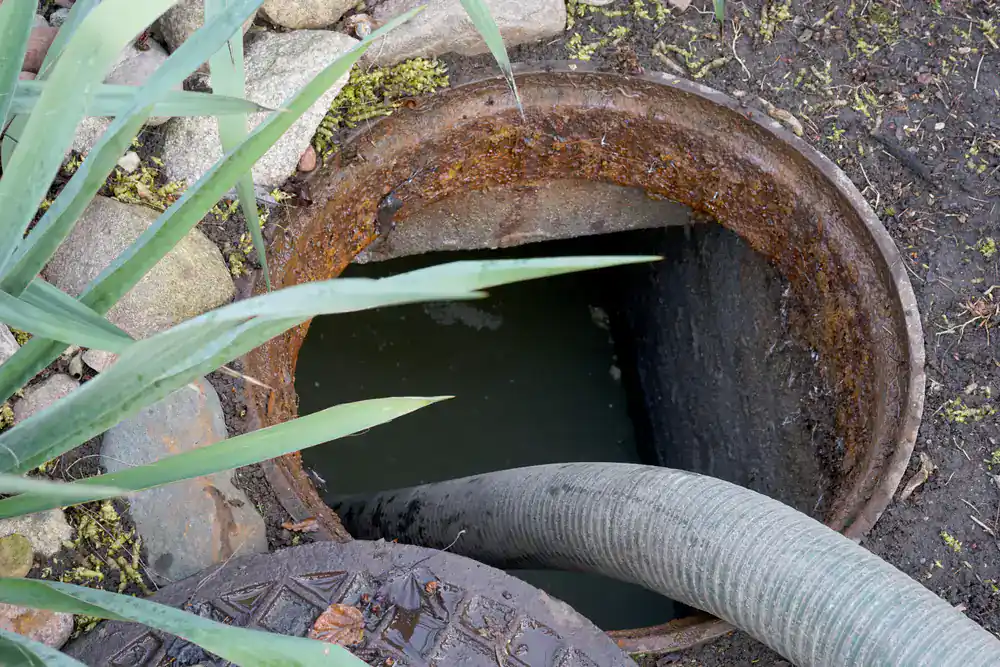
The practical difference matters for maintenance. A cesspool is a simpler structure essentially a buried concrete ring that collects waste and allows liquid to seep into the surrounding soil, without any separation of solids. A septic tank has a two-compartment design that separates solids from liquids before the liquid moves to a drainfield. Cesspools need more frequent pumping as a result. If you don’t have documentation from a previous pump-out or inspection, a technician can identify the system type when they come out and that information should inform your maintenance schedule going forward.
The Town of Babylon is actively working to bring sewer infrastructure to the Deer Park Avenue corridor as part of its Downtown Deer Park Revitalization initiative, and Suffolk County’s Water Quality Restoration Act approved by voters in November 2024 creates long-term funding to support that work. So the question is fair. But the timeline matters here: sewer expansion is a multi-year, multi-phase undertaking that will prioritize the commercial corridor first. The vast majority of Deer Park’s residential properties will remain on cesspool and septic systems for years, and in many cases, for decades.
A neglected cesspool doesn’t wait for the sewer line to arrive. A system that fails in the meantime especially one that requires a full replacement under Suffolk County’s current rules means an upgrade to a more advanced system rather than a simple swap. That can run well into five figures. Keeping your current system properly maintained costs a fraction of that and keeps you in control of the timeline rather than reacting to an emergency. When sewer connections do become available for residential properties, you’ll have the option to connect but that’s a future decision, not a reason to defer maintenance today.
The most obvious signs are slow drains throughout the house, gurgling sounds in the plumbing, sewage odors near the tank area or inside the home, and wet or unusually green patches of grass over where the system is buried. Any one of these is worth taking seriously. Multiple signs at the same time usually means the system is already under stress and needs attention quickly.
In Deer Park specifically, there’s a seasonal factor worth knowing. After heavy rainfall the kind that comes with nor’easters or tropical storm remnants older cesspools in lower-lying parts of the hamlet can experience reduced absorption capacity when the water table rises. What looks like a system problem right after a storm sometimes has a groundwater component. That said, if the symptoms persist after the ground dries out, the system itself is likely the issue. The safest approach is to have it assessed rather than wait and see. A system that’s already showing signs of stress in Deer Park’s sandy soil can deteriorate faster than homeowners expect once it starts to go.
Routine septic tank pumping and cesspool pumping in Deer Park does not require a permit. It’s a maintenance service, and a licensed contractor can perform it without prior approval from the Town of Babylon or Suffolk County. What does require proper licensing is the contractor performing the work in Suffolk County, that means holding a Liquid Waste License issued under Chapter 563, Article VII of the county code. That license requires at least five years of verified trade experience and ownership of a dedicated pump truck. It’s not a formality it’s the credential that separates legitimate operators from low-price competitors who may not be disposing of waste legally.
Where permitting does come into play is if your system needs significant repair or full replacement. Any new installation or major repair in Deer Park requires approval from the Suffolk County Department of Health Services, and any excavation work falls under the Town of Babylon Building Department’s jurisdiction. If you’re selling your home, cesspool certification with dye testing is also a standard part of the transaction process in Suffolk County something worth scheduling well before you list, not as a last-minute item before closing.
Hear from Our Customers
When a septic or cesspool system is running the way it should, you don’t think about it. No slow drains, no soggy patches in the yard, no smell creeping into the house. That’s the goal and it’s a realistic one when the system gets the attention it needs on a regular schedule.
For Deer Park homeowners, the stakes are higher than average. The hamlet sits within the Long Island Pine Barrens, where the sandy, fast-draining soil doesn’t slow down what escapes from a failing system. When a cesspool starts to go, effluent moves quickly through that substrate toward the aquifer below the same sole-source aquifer that supplies Long Island’s drinking water. Routine pumping isn’t just about avoiding a backup. It’s about keeping a problem contained before the soil does the rest.
There’s also the housing stock to consider. The majority of Deer Park’s homes were built between 1940 and 1969, which means a lot of cesspools that are now 60 to 70 years old. At that age, regular pumping is one of the few tools you have to extend a system’s life before it reaches the point where Suffolk County’s current rules require a full upgrade rather than a simple fix. Staying on top of it now is the difference between a manageable maintenance cost and a five-figure replacement.
We’re based in West Babylon about four miles down Deer Park Avenue from the center of the hamlet. That’s not a coincidence. The same road corridor that runs through Deer Park’s commercial strip connects directly to the team that shows up when you call. This isn’t a company dispatching from Nassau County or routing calls through a national center. We’re a locally operated business in the same Town of Babylon community.
Our team brings over 30 years of hands-on Long Island experience to every job experience that covers the exact generation of post-war cesspool systems that are still in the ground under Deer Park’s residential streets. We’ve worked on buried lids, aging concrete, root-invaded tanks, and systems that haven’t been touched in years. Whatever condition your system is in, it’s not a surprise to us.
Our approach is straightforward: assess what’s actually there, do what the system needs, and tell you honestly if something else requires attention. No recommended services you don’t need, no inflated charges for simple work. That’s what we stand behind, and it shows up in how our customers describe the experience.

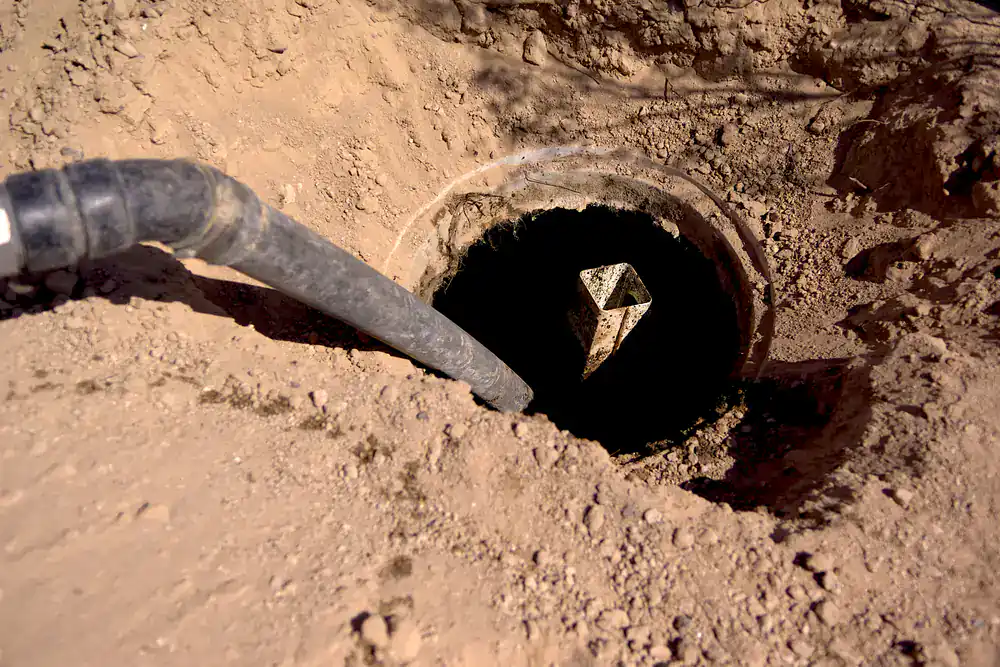
It starts with locating the system. In Deer Park’s older neighborhoods, cesspool lids are frequently buried under years of soil, landscaping, and lawn growth. If you don’t know where yours is, that’s not a problem we specialize in locating hard-to-find cesspools, which is a real and common issue on Long Island’s post-war housing stock. Once the lid is found and exposed, our technician can get to work.
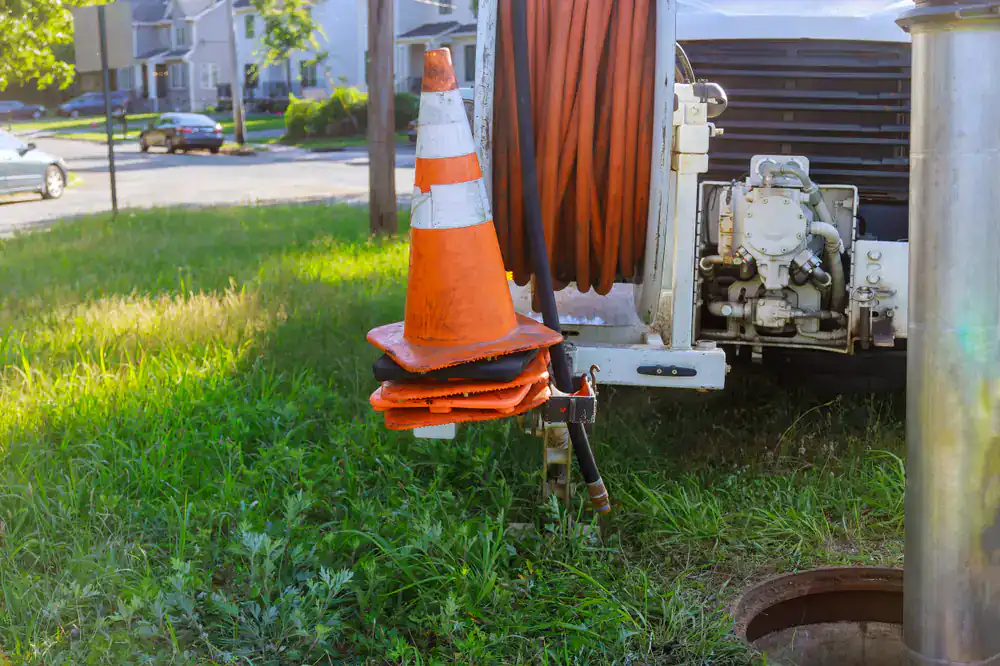
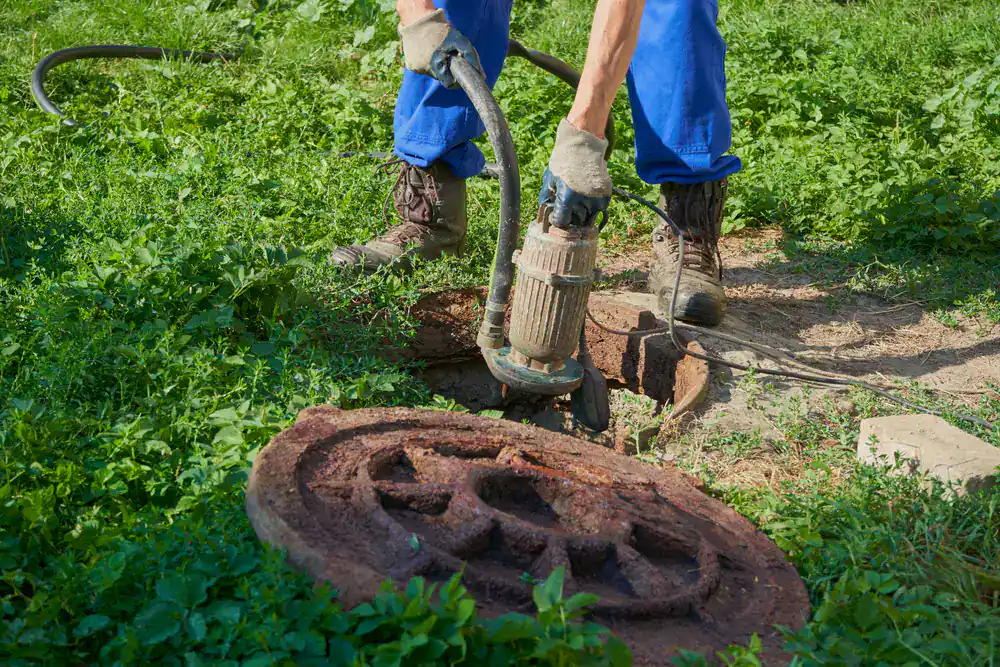
The actual pumping process uses a vacuum truck to remove all accumulated sludge and waste from the tank not just the surface layer. A thorough pump-out means the tank is fully emptied, not partially cleared. After that, we inspect the condition of the system: checking baffles, looking for signs of infiltration or structural wear, and assessing whether anything needs follow-up attention. If something looks off, you’ll hear about it clearly and without pressure.
Because Deer Park sits in the pine barrens, the sandy soil and occasionally high water table can affect how a system performs after heavy rainfall. A technician who knows this area understands that some of what looks like a system problem after a nor’easter is actually a temporary groundwater issue and some of it isn’t. That distinction matters, and it’s the kind of thing 30 years of Long Island experience helps sort out on the spot. Once the job is done, the area is cleaned up and you’re given a clear picture of where things stand.
Ready to get started?
Septic tank pumping is the core of what we offer, but the scope goes further than that for most Deer Park properties. We handle cesspool pumping, septic pumping, drain cleaning, drywell cleaning, house trap replacements, and main sewage line cleaning and replacements all under one call. For a community where the housing stock is 60 to 70 years old and systems haven’t always been well-documented, that full-service range matters. You may call about a pump-out and discover the real issue is a clogged main line or a failing drywell. Having a team that can address the whole system means you’re not making three separate calls to three separate companies.
For Deer Park homeowners thinking about a home sale, cesspool certification with dye testing is a standard part of real estate transactions in Suffolk County. With median home values in the $634,000 to $689,000 range, keeping your system documented and in good working order is a direct part of protecting what you’ve built in equity. A system that hasn’t been serviced in years can complicate or delay a closing in ways that are entirely avoidable.
Suffolk County’s current regulations also mean that any failed cesspool requiring replacement must be upgraded to a more advanced system not simply replaced in kind. That makes proactive maintenance even more important for Deer Park’s older properties. Regular pumping, done properly, extends system life and gives you time to plan rather than react.