By submitting you consent to receive service-related texts from Drastic Drainage. Reply STOP to opt out. Msg & data rates may apply. Consent not required to book service.
Useful Links
Most Dix Hills homes were built in the 1960s and 1970s, when cesspools and early septic systems were the standard. Decades of landscaping, lawn grading, and ownership changes later, a lot of homeowners have no idea what condition their system is in or even where the lid is buried. Getting your tank pumped on schedule means you’re not waiting for a backup to tell you something’s wrong.
When you’re sitting on a half-acre lot in a home worth seven figures, the cost of ignoring your septic system isn’t just an inconvenience. A neglected drainfield failure can run $10,000 to $15,000 or more to repair and that’s before you factor in landscaping restoration or the delay it causes if you’re in the middle of a sale. Routine pumping runs $300 to $600 for most Dix Hills homes. That math isn’t complicated.
There’s also the real estate side of it. Every home sale in Dix Hills involves a private septic or cesspool system there’s no municipal sewer here. Whether you’re listing a split-level off Half Hollow Road or just bought a colonial near Vanderbilt Parkway, having documented, current service on your system protects the transaction and gives you one less thing to worry about at closing.
It depends on what type of system you have. If your Dix Hills home was built before the early 1970s, there’s a good chance it has a cesspool rather than a modern septic tank. Cesspools don’t separate solids from liquids the way a septic tank does, so they fill faster most Long Island cesspools need pumping every one to two years. Septic tanks, which are more common in homes built after the mid-1970s, typically need pumping every three to five years depending on household size and water usage.
The size of your household matters too. A family of four or more in one of Dix Hills’ larger colonial or split-level homes puts more load on the system than a smaller household would. If you have no documentation of when the system was last serviced which is common with homes that have changed hands a few times the safest starting point is to get it pumped now and establish a baseline from there.
For most residential properties in Dix Hills, standard septic tank pumping runs between $300 and $600. Where you land in that range depends on the size of your tank, how full it is, and whether the lid needs to be excavated. If your lid is buried which is common on the larger, more established lots in Dix Hills excavation is an additional cost that varies based on how deep it is and how much digging is required.
What you want to watch for with any company is the gap between what’s quoted on the phone and what’s charged on arrival. We give you a free estimate upfront and don’t add surprise fees once the job is underway. The price you agree to before the truck shows up is the price you pay. That’s especially important for homeowners who’ve heard about bait-and-switch pricing in this industry it’s a real pattern, and it’s worth asking any company directly how they handle it before you book.
This is one of the most common issues on older Dix Hills properties. Homes built in the 1960s and 1970s on half-acre to full-acre lots have had decades of landscaping, lawn regrading, and garden work done on top of them. Lids that were originally at or near the surface can end up buried well below ground with no visible marker. If the home has changed hands more than once, the location may not have been documented or passed along.
We specifically list hard-to-find cesspools as a service specialty this isn’t a generic claim, it’s a real technical capability that directly applies to the kind of established, heavily landscaped lots that define Dix Hills. Our crew uses experience with Long Island’s soil conditions and system placement patterns to locate the tank, and we do it without unnecessary excavation. Once the lid is found and accessed, it’s worth noting the location so future service calls are faster and less disruptive to your yard.
Get it pumped and assessed as soon as you can, even if the inspection report came back clean. A pre-sale inspection tells you whether the system was functional at the time of inspection it doesn’t tell you when it was last pumped, how much sludge has accumulated, or whether the baffles are in good condition. In a home that may have been built in the 1960s or 1970s with the original cesspool still in place, that gap matters.
At $1 million or more for a Dix Hills home, you have every reason to want documented, current service on your system from day one. A pump-out shortly after closing gives you a clean baseline, lets our technician assess the system’s actual condition, and puts you on a proper maintenance schedule going forward. If anything does need attention, it’s far better to find it now when you have time to address it properly than to discover it during a backup or when you eventually go to sell.
A cesspool is a single underground chamber that collects all household waste. Solids settle to the bottom, and liquids slowly seep out through the walls and bottom into the surrounding soil. It’s a simpler system, but it fills faster and is more sensitive to overloading. A septic tank is a two-chamber system that separates solids from liquids before the liquid effluent flows out to a drainfield for further treatment. Septic tanks are more efficient and require less frequent pumping.
In Dix Hills, the answer often comes down to when your home was built. Homes constructed before the early 1970s were almost universally installed with cesspools. Homes built after that period more commonly have septic tanks, though there are exceptions. If you’re genuinely not sure, a technician can tell you during a service visit it’s one of the first things they can identify when they access the system. Knowing which type you have affects how often you should be pumping and what to expect in terms of long-term maintenance.
Routine pumping and maintenance don’t require a permit in Suffolk County you can schedule a pump-out without any paperwork on your end. What does require permits and county health department involvement is any installation, replacement, or significant repair of a system. If a technician finds during a pump-out that your system needs more than maintenance, that’s when the regulatory side comes into play.
One thing Dix Hills homeowners should be aware of is Suffolk County’s 2019 rule change: if a cesspool fails and needs to be replaced, it can no longer be swapped out for the same type of system. Any replacement now has to be upgraded to a more advanced Innovative/Alternative Onsite Wastewater Treatment System, which runs around $20,000 installed. The state and county do have grant programs to help offset that cost. This is exactly why keeping an older system properly maintained matters a functioning cesspool that gets pumped on schedule is far less disruptive than one that fails and triggers a mandatory, expensive upgrade.
Free, no-obligation estimates on cesspool, sewer, and drain work.
We get there quickly. No waiting days for a callback.
Backups don’t wait for business hours. Neither do we.
Fully licensed and insured across Long Island.
Up-to-date trucks and tools for cleaner, faster jobs.
Straight quotes, no surprises on the bill.
Hear from Our Customers
Most Dix Hills homes were built in the 1960s and 1970s, when cesspools and early septic systems were the standard. Decades of landscaping, lawn grading, and ownership changes later, a lot of homeowners have no idea what condition their system is in or even where the lid is buried. Getting your tank pumped on schedule means you’re not waiting for a backup to tell you something’s wrong.
When you’re sitting on a half-acre lot in a home worth seven figures, the cost of ignoring your septic system isn’t just an inconvenience. A neglected drainfield failure can run $10,000 to $15,000 or more to repair and that’s before you factor in landscaping restoration or the delay it causes if you’re in the middle of a sale. Routine pumping runs $300 to $600 for most Dix Hills homes. That math isn’t complicated.
There’s also the real estate side of it. Every home sale in Dix Hills involves a private septic or cesspool system there’s no municipal sewer here. Whether you’re listing a split-level off Half Hollow Road or just bought a colonial near Vanderbilt Parkway, having documented, current service on your system protects the transaction and gives you one less thing to worry about at closing.
We’re based in West Babylon directly connected to Dix Hills via Route 231, which runs north right into the I-495 interchange at the heart of the hamlet. That’s not a cross-county dispatch. That’s a local crew that knows western Suffolk County’s housing stock, knows how these 1960s and 1970s systems age, and has been working on them for over 30 years.
We’re locally owned and operated. When you call, you’re not reaching a national call center you’re reaching a team that has found buried lids on established Dix Hills lots, serviced original cesspools in homes that have changed hands three times, and done it without recommending a single dollar of unnecessary work. That’s not a slogan. It’s literally stated on our website, and it’s how we run.
We’re available 24 hours a day, seven days a week, including weekends and holidays. Emergencies don’t wait for Monday morning, and neither do we.

It starts with a free estimate. Before anyone shows up at your door, you’ll know what the job involves and what it costs. No vague quotes that balloon once the truck is in your driveway the price you hear is the price you approve before any work begins.
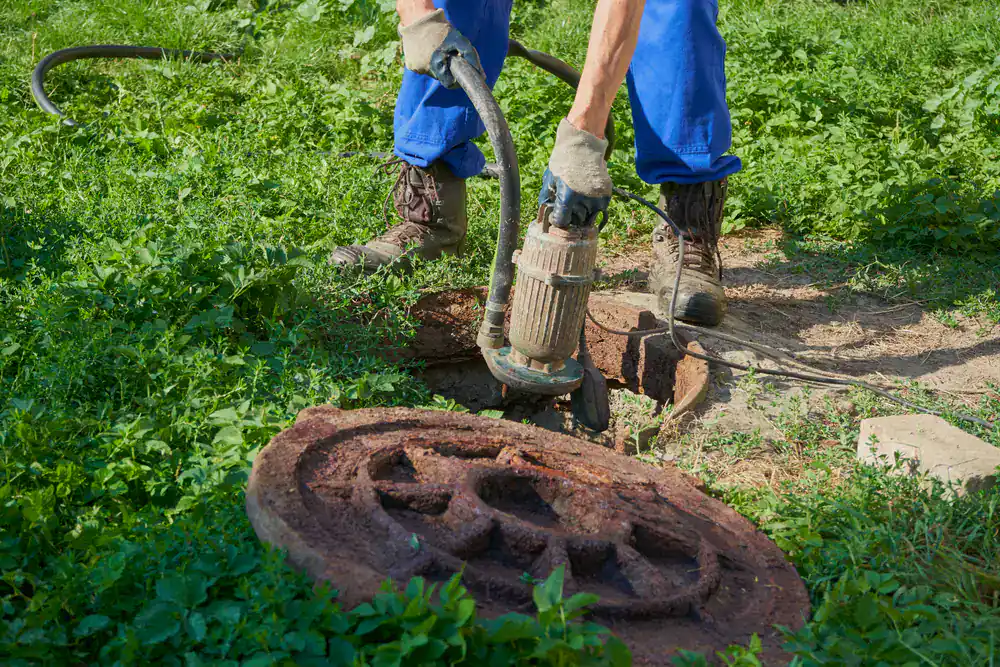
When our crew arrives, the first step is locating and accessing your tank. On a lot the size of most Dix Hills properties half an acre to a full acre, with decades of landscaping on top this isn’t always straightforward. We specifically list hard-to-find cesspools as a service specialty, and that matters here. If your lid is buried under years of soil and sod, we have the experience to find it without tearing up your yard unnecessarily.
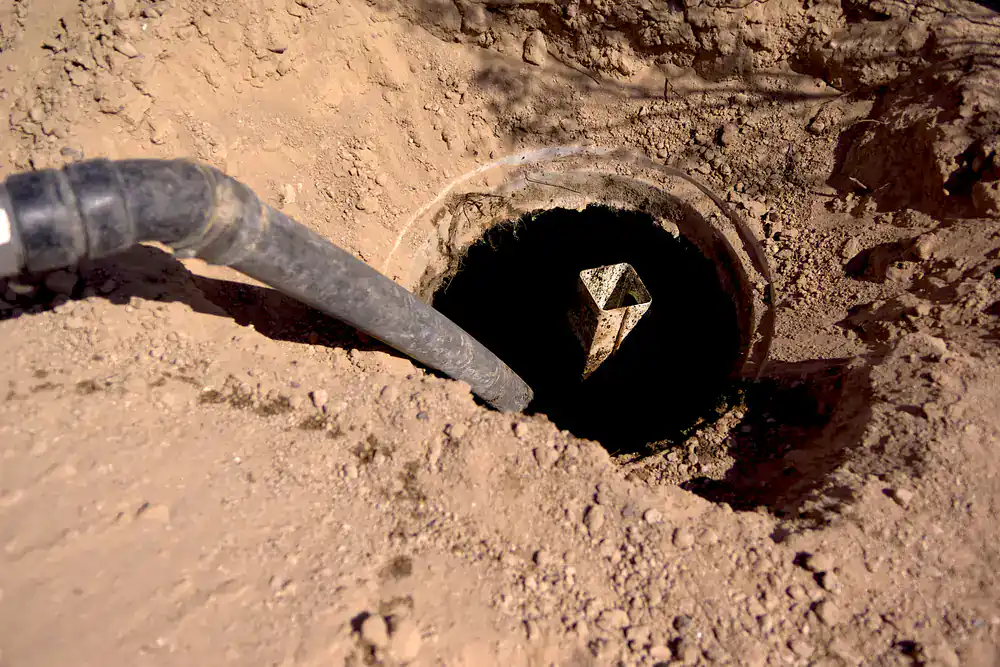
Once the tank is accessed, the full pump-out removes all accumulated sludge and waste not just the surface layer. After pumping, our technician assesses the system’s condition: checking baffles, looking for signs of infiltration or damage, and letting you know what we found in plain language. If something needs attention, we’ll tell you what it is and what it actually requires. If it doesn’t need anything beyond the pump-out, that’s exactly what you’ll hear.
Suffolk County’s regulations under Article VII govern how septage is legally transported and disposed of after the job we handle that correctly, every time.
Ready to get started?
Septic tank pumping is the core of what we offer, but it’s not the only thing we handle for Dix Hills homeowners. Cesspool pumping, drywell cleaning, drain cleaning, main sewer line cleaning and replacement, house trap replacements, and full system installation are all part of what one call can address. If a technician finds something during a routine pump-out that needs follow-up, you don’t have to schedule a second company and wait again.
For Dix Hills specifically, the aging housing stock matters. Homes built before 1970 were almost universally installed with cesspool systems rather than modern septic tanks. Many of those systems are still in operation functioning fine with proper maintenance, but overdue for service in a lot of cases. Cesspools on Long Island typically need pumping every one to two years because of how they’re designed. Septic tanks, which separate solids from liquids, generally run three to five years between pump-outs. If you’re not sure which system you have, that’s actually one of the first things our technician can tell you.
Suffolk County’s regulations are also worth knowing. Since 2019, any cesspool that fails and needs replacement cannot simply be replaced in kind it has to be upgraded to a more advanced system. That makes routine maintenance more important than ever, because keeping an older system functional is far less disruptive than triggering a mandatory upgrade. State and county grant programs exist to help offset the cost of those upgrades when the time comes, and we can walk you through what that looks like.