By submitting you consent to receive service-related texts from Drastic Drainage. Reply STOP to opt out. Msg & data rates may apply. Consent not required to book service.
Useful Links
If you are considering septic pumping in East Northport, here is what actually changes. When a septic system gets fully pumped not partially, not rushed you stop waiting for something to go wrong. Drains move the way they should. The yard stays dry. The smell that’s been lingering near the back of the property disappears. You go from quietly worrying about it to actually knowing where things stand.
For East Northport homeowners, that peace of mind carries real financial weight. With median home values approaching $675,000, a neglected cesspool or septic system isn’t just a nuisance it’s a liability. A failed system can cost $10,000 to $15,000 or more to replace, and it can derail a home sale entirely if it surfaces during a pre-closing inspection. Getting ahead of it with routine pumping is one of the simplest ways to protect what you’ve built here.
East Northport’s housing stock tells the story clearly. The median construction year for homes here is 1959, and most of those homes were built with cesspools systems that were never designed to last indefinitely. The sandy soil conditions common to the North Shore can accelerate wear on older systems. Regular pumping, done thoroughly, is what keeps a 65-year-old system manageable rather than a crisis waiting to happen.
The honest answer depends on what type of system you have. Most East Northport homes especially those built before 1973 have cesspools rather than modern septic tanks. Cesspools don’t separate solids from liquids the way a septic tank does, which means waste accumulates faster and they need pumping more frequently: typically every one to two years.
If your home has a true septic tank, the general recommendation is every three to five years, depending on household size and water usage. The sandy soil conditions common to the North Shore of Long Island can affect how quickly a system reaches capacity, and a home that hosts frequent gatherings or has higher-than-average water use may need service on the shorter end of that range.
If you don’t know when your system was last pumped or what type of system you have the safest starting point is a professional assessment. That gives you a real baseline instead of a guess.
Standard residential septic tank pumping in Suffolk County typically runs between $225 and $600, depending on the size of the tank. A 1,000-gallon tank generally falls in the $225 to $400 range; larger systems around 2,000 gallons tend to run $400 to $600. Those figures reflect a complete pump-out with legal septage disposal not a teaser rate that gets adjusted on arrival.
One cost that surprises a lot of East Northport homeowners is lid excavation. If your access point is buried which is common in homes built in the 1940s and 1950s locating and uncovering it can add to the total. That range varies based on depth and accessibility. The way to avoid surprises is to get a straight estimate before anyone shows up, and to confirm that the quote includes disposal. We provide free estimates and don’t add fees after the fact that weren’t discussed upfront.
This is one of the most common questions in East Northport, and the confusion is completely understandable. The simplest rule: if your home was built before 1973, it almost certainly has a cesspool. Suffolk County banned new cesspool construction that year, so any home built before that date was installed with a cesspool as the standard system. Given that the median construction year for East Northport homes is 1959, the majority of houses here fall into that category.
A cesspool is a single buried chamber that collects all household waste without separating solids from liquids. A septic tank, by contrast, separates solids, liquids, and scum into distinct layers before releasing treated effluent into a drainfield. The distinction matters because it affects how often your system needs pumping, what maintenance looks like, and what options are available if the system fails.
If you’re not sure which system you have, a technician can identify it during a service call it’s not something you need to figure out on your own before calling.
The short version: what starts as a $300 to $600 maintenance call can turn into a $10,000 to $15,000 repair or full system replacement. When a tank isn’t pumped on schedule, solids build up and eventually overflow into the drainfield clogging the soil and causing the system to fail. At that point, you’re not looking at pumping anymore; you’re looking at excavation, installation, and potentially a mandated upgrade under Suffolk County’s current regulations.
For East Northport homeowners, there’s an added layer of urgency around real estate. If you’re planning to sell or even refinance a system that hasn’t been maintained can surface during inspection and create complications at closing. In a market where homes are valued near $675,000, a failed septic inspection is not a minor issue. Routine pumping is the kind of maintenance that protects both the system and the asset it sits beneath.
If your home was built after 1973, it likely has a septic tank rather than a cesspool, which means a longer pumping interval typically every three to five years. But “newer” in East Northport is relative. A home built in 1985 is now 40 years old, and a system that was installed then and never replaced is well into the middle of its expected service life. Even properly maintained septic tanks have components baffles, inlet and outlet pipes that degrade over time and benefit from periodic inspection.
The other consideration is maintenance history. If you purchased the home and don’t have records showing when the system was last serviced, the responsible move is to get it pumped and assessed now. You’ll know the current condition, you’ll have a documented baseline, and you won’t be relying on the previous owner’s word about what was or wasn’t done.
Yes, and this comes up regularly in East Northport. Homes built in the 1940s and 1950s were often installed with lids that sat at or near grade level, and after decades of landscaping, lawn work, and soil movement, those lids end up buried well below the surface. Some homeowners have never seen their access point. Others know roughly where it is but can’t locate it precisely.
We specifically handle hard-to-find cesspools and buried access points. Locating the lid is part of the service, not a separate problem you need to solve before calling. Our crew has the experience to find systems on older properties throughout western Suffolk County, including the Elwood section of East Northport where much of the housing stock dates to the 1940s and 1960s. Once the lid is located, the access point can be marked or fitted with a riser for easier service in the future which saves time and cost on every subsequent visit.
Free, no-obligation estimates on cesspool, sewer, and drain work.
We get there quickly. No waiting days for a callback.
Backups don’t wait for business hours. Neither do we.
Fully licensed and insured across Long Island.
Up-to-date trucks and tools for cleaner, faster jobs.
Straight quotes, no surprises on the bill.
Hear from Our Customers

If you are considering septic pumping in East Northport, here is what actually changes. When a septic system gets fully pumped not partially, not rushed you stop waiting for something to go wrong. Drains move the way they should. The yard stays dry. The smell that’s been lingering near the back of the property disappears. You go from quietly worrying about it to actually knowing where things stand.
For East Northport homeowners, that peace of mind carries real financial weight. With median home values approaching $675,000, a neglected cesspool or septic system isn’t just a nuisance it’s a liability. A failed system can cost $10,000 to $15,000 or more to replace, and it can derail a home sale entirely if it surfaces during a pre-closing inspection. Getting ahead of it with routine pumping is one of the simplest ways to protect what you’ve built here.
East Northport’s housing stock tells the story clearly. The median construction year for homes here is 1959, and most of those homes were built with cesspools systems that were never designed to last indefinitely. The sandy soil conditions common to the North Shore can accelerate wear on older systems. Regular pumping, done thoroughly, is what keeps a 65-year-old system manageable rather than a crisis waiting to happen.
We’ve been working on Long Island’s cesspool and septic systems for over 30 years. That’s not a corporate tagline it’s what our crew brings to every job in East Northport and across western Suffolk County. The kind of experience that comes from spending decades under the ground in communities exactly like yours, where the houses went up fast after World War II and the original systems have been running ever since.
We’re locally owned and operated out of West Babylon, NY a real Suffolk County address, not a regional dispatch hub routing jobs from somewhere else. When you call, you’re reaching a team that knows East Northport’s regulatory environment, knows what aging cesspools in western Suffolk look like, and knows the difference between a system that needs maintenance and one that needs replacing.
Our approach is straightforward: assess what’s actually there, do what’s actually needed, and tell you what we found. No recommendations for work that isn’t necessary, no charges that weren’t discussed upfront. That’s how we’ve earned repeat customers across the Larkfield Road corridor and throughout the Elwood neighborhoods that make up so much of East Northport’s residential landscape.
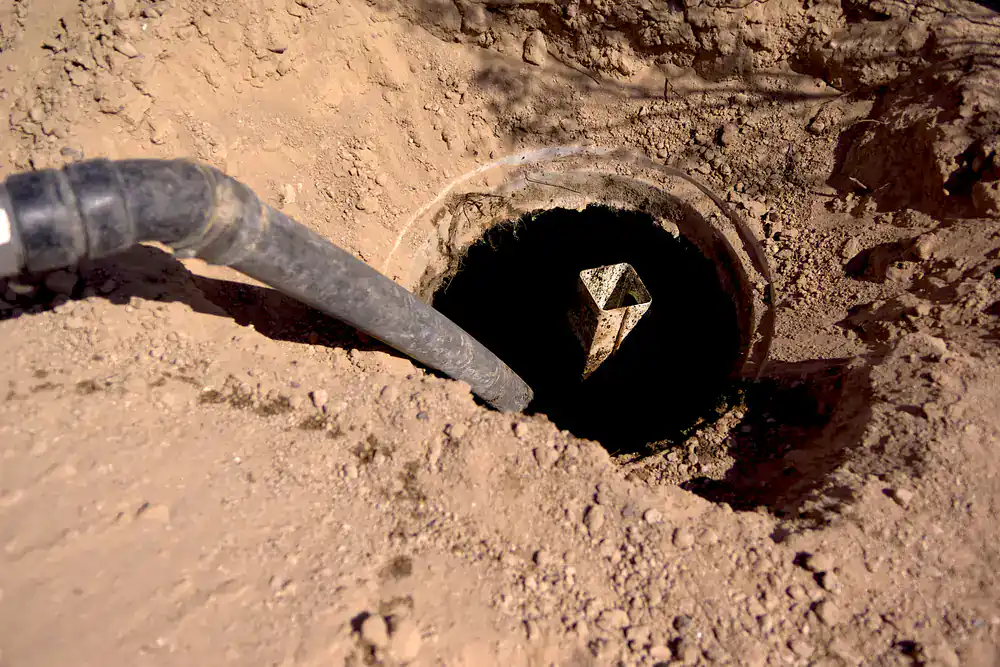
It starts with a call and a free estimate. You describe what you have, what you’ve noticed, and when it was last serviced or if you don’t know, that’s fine too. A lot of East Northport homeowners who’ve been in their homes for decades don’t have records, and plenty of people who recently bought an older home on Pulaski Road or off Elwood Road have no idea what’s underground. That’s exactly the kind of situation we handle every day.
Once on-site, the first step is locating the access point. In a community where many homes were built in the 1940s and 1950s, cesspool lids buried under years of soil and landscaping are common not an exception. We specialize in finding systems that aren’t easy to locate, so that part of the job doesn’t become a separate ordeal.
From there, the tank gets fully pumped all the sludge and accumulated waste removed, not just the surface layer. After pumping, our technician assesses the system’s condition: checking baffles, looking for signs of infiltration, and giving you an honest read on what the system needs next. You’ll know what was found, what was done, and what if anything warrants attention. No vague follow-up calls, no manufactured urgency.
Suffolk County’s licensing requirements exist for a reason, and working with us means the waste gets transported and disposed of legally not cut corners on to save time.
Ready to get started?
We handle the full range of what East Northport homeowners actually need: septic tank pumping, cesspool pumping, drain cleaning, drywell cleaning, house trap replacements, and main sewage line cleaning and replacement. For properties where the system has reached the end of its useful life, we also handle cesspool and septic installation including the upgrades now required under Suffolk County’s post-2019 regulations, which no longer allow a failed cesspool to be replaced in kind. Any failed system must now be brought up to current standards, and that’s work we’re equipped to handle from assessment through installation.
For East Northport specifically, the aging housing stock means the scope of a service call can vary. Some homes need a straightforward pump-out. Others have systems that haven’t been touched in years, with buried lids and accumulated solids that require more time and care. The estimate you receive reflects what your system actually needs not a flat package applied to every address on the street.
We offer emergency service 24 hours a day, seven days a week, including weekends and holidays. That matters in a community of commuters where a backup that surfaces on a Saturday morning can’t wait until Monday. One call reaches the same experienced team regardless of when you call no answering service, no delayed dispatch.