
Useful Links
Other Services we provide in East Patchogue
The honest answer depends on what type of system you have. East Patchogue homes especially those built before 1980 are more likely to have a cesspool than a true septic tank. Cesspools are simpler systems with no waste separation, and they need pumping more frequently: typically every one to two years.
A conventional septic tank, which separates solids from liquids before effluent drains into the soil, generally needs pumping every three to five years depending on household size.
The South Shore’s shallow water table is a real factor here in East Patchogue. Slower soil percolation means effluent doesn’t move through the ground as efficiently as it would in higher-elevation parts of Suffolk County, which puts more stress on the system between service intervals. If your home sits in a lower-lying part of East Patchogue closer to the bay side that’s worth factoring into your schedule. When in doubt, a system assessment will tell you what you’re working with and how often it realistically needs attention.
Standard residential septic tank pumping in Suffolk County runs between $225 and $600, depending primarily on the size of the tank. A 1,000-gallon tank typically falls in the $225 to $400 range; a 2,000-gallon system runs closer to $400 to $600. Those figures assume the lid is accessible.
If the lid is buried which is common in East Patchogue’s older housing stock, particularly in the Hagerman area where homes have been sitting since the mid-20th century excavation to reach it adds to the cost.
What drives the real price surprises is when a company quotes low on the phone and adds fees at the door: environmental disposal charges, trip fees, or equipment surcharges that weren’t mentioned upfront. We give you a clear estimate before the job starts and stick to it. The work that needs to be done gets done; the work that doesn’t, doesn’t get recommended.
This is one of the most common questions from homeowners in this part of Suffolk County, and it’s a fair one. If your home was built before the mid-1970s, there’s a strong chance you have a cesspool. Cesspools were the standard installation in East Patchogue and throughout the South Shore during the post-war housing boom that shaped most of this community.
A true septic tank with a separate tank, a distribution box, and a leaching field became more common in newer construction.
The practical difference matters for maintenance. Cesspools need more frequent pumping, they’re more sensitive to household water use spikes, and they’re the systems most likely to be affected by Suffolk County’s 2019 rule change, which prohibits in-kind replacement if one fails. If you’re not sure what you have, a technician can identify the system type during a service call or assessment visit no guesswork required.
The system doesn’t announce when it’s approaching failure it just keeps filling. When the tank or cesspool reaches capacity, solids start moving where they shouldn’t: into the drain field or leaching area, which clogs the soil and shuts down the system’s ability to process effluent.
At that point, you’re not looking at a pump-out. You’re looking at a repair or replacement that can run $10,000 to $15,000 or more, plus potential Suffolk County fines and under the 2019 regulations a mandatory upgrade to a modern compliant system rather than a simple swap.
For East Patchogue homeowners, that risk is compounded by the age of the housing stock. A system that’s been in the ground since 1968 has less margin for error than a newer installation. Routine pumping on schedule is genuinely the cheapest form of insurance available for a home in this community.
Get it assessed before something forces your hand. East Patchogue homes sell quickly around 45 days on average and it’s not unusual for buyers to close without a complete picture of the septic or cesspool system’s history. Previous owners may not have kept records, or the system may not have been serviced in years.
A service call from us can tell you what type of system you have, roughly when it was last pumped based on the sludge level, what condition the baffles and tank are in, and what maintenance schedule makes sense going forward. That’s information worth having early not after a backup sends sewage into your basement six months after you moved in. It’s a straightforward visit that gives you a real baseline, and it’s far less stressful than finding out the hard way.
Almost certainly not. The sewer extension project funded in part by a $10 million Suffolk County grant in 2023 is a $22 million effort that will connect approximately 100 homes and some commercial properties along the Montauk Highway corridor to a new sewage line. East Patchogue has roughly 8,600 housing units. The math is straightforward: the overwhelming majority of homeowners here will remain on private septic or cesspool systems for the foreseeable future, and likely permanently.
If you’re unsure whether your property is included in the connection area, it’s worth checking with the Town of Brookhaven directly. But for most East Patchogue residents, the sewer project doesn’t change the maintenance picture at all. Your system still needs to be pumped on schedule, still needs to comply with Suffolk County Department of Health Services requirements, and still represents your primary line of defense against a costly failure.
Hear from Our Customers
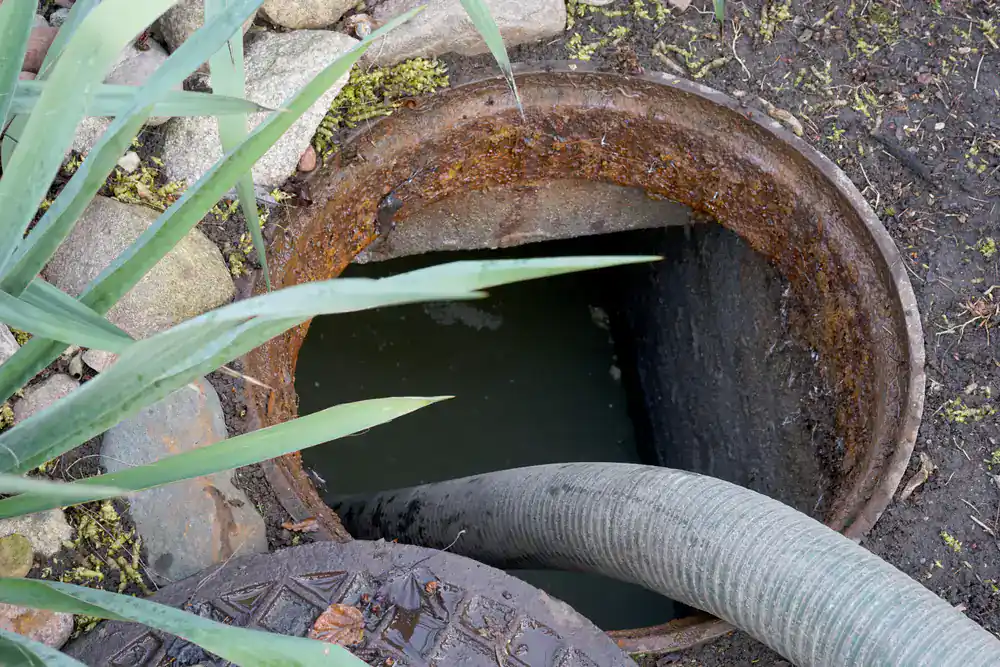
When a septic system is properly pumped on schedule, you stop reacting and start staying ahead. No sewage smell creeping into the yard. No slow drains turning into a full backup. No call to a contractor on a Saturday because something went wrong at the worst possible time.
East Patchogue’s housing stock makes this especially urgent. The median home here was built around 1970, which means most systems are more than 50 years old. They were installed under standards that no longer apply, designed for smaller households, and in many cases have never been serviced properly.
The flat South Shore terrain puts your system under more pressure than homes in higher-elevation parts of Suffolk County. The shallow water table slows how effluent drains and moves through the soil, which means systems fill faster and stress sooner. Add summer, when the house fills with guests heading out to the Patchogue ferry for Fire Island, and water use spikes hard. Staying on top of pumping isn’t just good practice in East Patchogue the local conditions make it a real necessity.
We’re based in West Babylon, which puts East Patchogue right in the middle of our regular service run a straight shot east along the South Shore. We know the older housing stock along Montauk Highway, the buried lids common to homes in the Hagerman area, and the kind of aging infrastructure that shows up in a community where most homes went up in the 1960s and 70s.
We’ve spent over 30 years working on exactly this kind of system not in a showroom, but in real yards, on real East Patchogue properties, dealing with the actual conditions that Long Island throws at you. We’re locally owned and operated, and the same crew that shows up is the crew that stands behind the work. When customers leave reviews, they name our technicians by name. That’s the kind of accountability that doesn’t come from a national chain.
It starts with a free estimate. You call, describe what you’re dealing with whether that’s a scheduled pump-out, slow drains, or something you noticed in the yard and get a clear picture of what to expect before anyone shows up. No vague ranges. No “we’ll figure it out when we get there.”
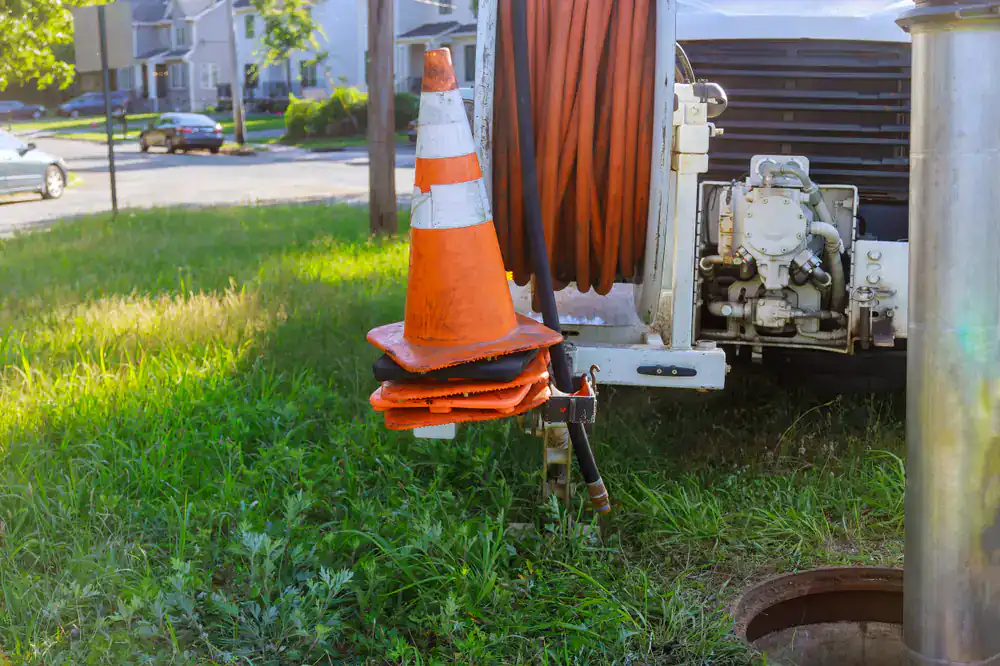
When our crew arrives, the first order of business is locating and accessing the tank. In East Patchogue, this step matters more than people expect. Homes built in the 1950s, 60s, and 70s which make up a big share of the housing stock here often have lids buried under years of soil and landscaping. We specialize in finding hard-to-locate cesspools and septic tanks, so you’re not paying for guesswork or unnecessary excavation.
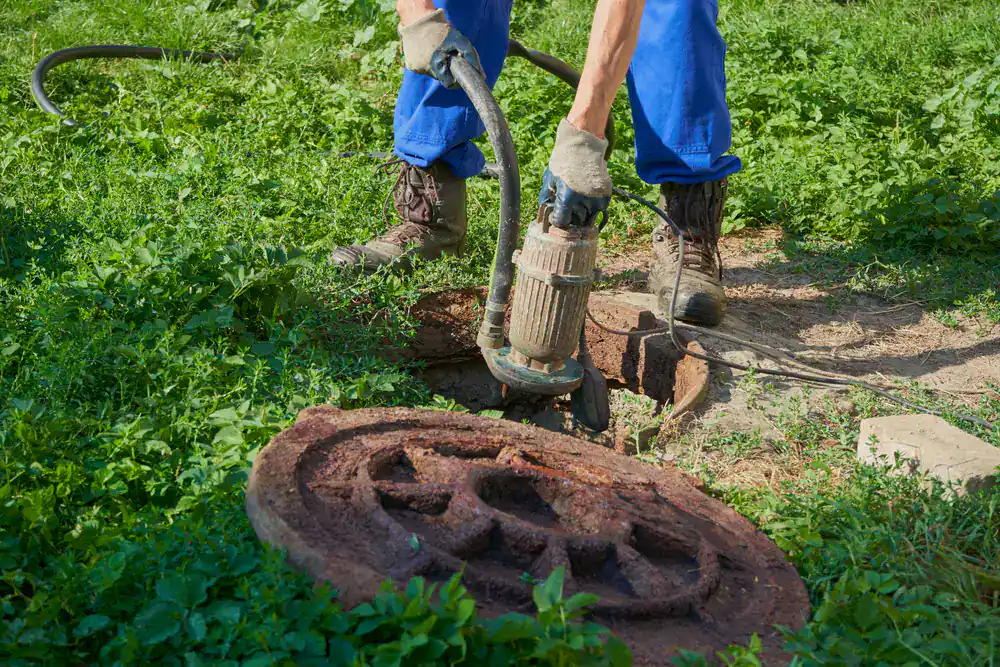
Once the lid is accessed, we fully pump out the tank not a partial job, but a complete removal of accumulated sludge and waste. After pumping, we assess the system’s condition: checking baffles, looking for signs of infiltration, and flagging anything that needs attention.
All septage is transported and disposed of legally at a licensed facility that’s required under Suffolk County’s Liquid Waste licensing rules, and it’s something not every low-price operator handles correctly. When the job is done, you know what was found, what was done, and what, if anything, to watch for next.
Ready to get started?
Septic tank pumping is the core of what brings most East Patchogue homeowners to call us, but it’s rarely the only thing a 50-year-old system needs. We handle the full picture: cesspool pumping, cesspool and septic installation, drain cleaning, drywell cleaning, house trap replacements, main sewage line cleaning and replacement, and holding tank pumping for commercial properties along the Montauk Highway corridor. One call covers whatever the system actually requires you’re not tracking down a second contractor for the drain issue we flagged.
For East Patchogue homeowners, a few things are worth knowing upfront. Suffolk County’s 2019 rule change means that if your cesspool fails and needs replacement, you can’t simply replace it in kind it must be upgraded to a compliant modern system. That makes keeping your existing system functional through proper maintenance genuinely important, not just a good idea. The cost of a routine pump-out is a fraction of what a forced system upgrade runs.
If you’re a new homeowner who bought without complete service records and East Patchogue homes move fast, often without that paperwork a system assessment is the right starting point. We can tell you what type of system you have, what condition it’s in, and what schedule makes sense going forward. No upsells, no unnecessary recommendations. That’s our stated policy, and it’s the reason customers come back.
