Useful Links
Other Services we provide in Eatons Neck
For most homes on Eatons Neck, the honest answer depends on what type of system you have and how many people are using it. If you have a conventional septic tank which separates solids from liquids before the effluent moves to a leaching field pumping every three to five years is the general guidance for a household of three to four people. If your home has a cesspool, which is simpler in design and doesn’t separate waste the same way, the timeline shortens to every one to two years.
What makes Eatons Neck worth factoring in specifically is the summer load. This is a waterfront community, and household occupancy tends to spike in the warmer months with family visits and guests. More people using the system over an extended period accelerates sludge buildup faster than the calendar alone would suggest. If your home sees heavier use in summer, leaning toward the shorter end of the pumping interval is the smarter call not because something is wrong, but because the system is working harder than average for part of the year.
Standard residential septic tank pumping in Suffolk County runs between $225 and $600, depending primarily on the size of the tank. A 1,000-gallon tank typically falls in the $225 to $400 range; a larger 2,000-gallon system runs closer to $400 to $600. Those figures reflect a complete pump-out with legal septage disposal which is what the price should include.
Where homeowners on Eatons Neck sometimes get surprised is lid excavation. On older properties and most of the homes on this neck were built in the 1960s the tank lid has often been buried under decades of soil and landscaping. If the lid needs to be dug out to access the tank, that’s an additional cost that can range from $300 to $1,200 depending on how deep it’s buried and how accessible the area is. We give you a complete, honest estimate upfront not after the truck is already in your driveway.
This is one of the most common questions on Long Island, and it’s especially relevant on Eatons Neck, NY where the housing stock dates largely to the post-war decades. A cesspool is a single buried chamber usually concrete rings that holds waste and allows liquid to slowly seep into the surrounding soil. A septic tank is a two-compartment system that separates solids from liquids before the effluent moves to a leaching field. They look similar from above and both have buried lids, but they function differently and require different service intervals.
The most reliable way to find out is to have a technician locate and inspect the system. If your home was built before 1970 and you don’t have any documentation from a previous service or inspection, there’s a reasonable chance you have a cesspool rather than a modern septic tank. Either way, the distinction matters cesspools need more frequent pumping, and under Suffolk County’s current regulations, a failed cesspool cannot be replaced in kind. It must be upgraded to a more advanced system, which is a significantly larger project. Knowing what you have now is far better than finding out when something goes wrong.
The short version: it gets expensive very quickly. A routine pump-out costs between $225 and $600. A failed drainfield or a collapsed cesspool that requires full system replacement can run $10,000 to $15,000 or more and since Suffolk County changed its regulations in 2019, a failed system on Eatons Neck cannot simply be swapped out for the same type. It has to be upgraded, which means the cost of a neglected system is now higher than it was even five years ago.
Beyond the repair cost, there’s the property value dimension. Homes on Eatons Neck regularly list above $1 million, and buyers at that level will have the system inspected before closing. A system that’s in distress or one with no service history can complicate or kill a sale. A health department flag on a failing system is a matter of public record and creates additional hurdles. The math is straightforward: regular maintenance costs a few hundred dollars every few years. Deferred maintenance on a high-value waterfront property is a risk that doesn’t scale proportionally with the savings.
Yes, and this comes up more than you might expect especially on older properties. On Eatons Neck, where most homes were built in the 1960s and some have changed hands multiple times without service records, it’s genuinely common for a homeowner to have no idea where the tank or cesspool is located. Lids get buried under years of soil, grass, and landscaping improvements, and the original installation records are long gone.
We locate hard-to-find cesspools and septic tanks as part of our service. The process typically involves probing the ground in the area where the system is most likely to be based on the home’s layout and plumbing configuration, and sometimes using a locating tool to trace the line from the house. Once the lid is found, it gets marked so future service visits don’t require starting from scratch. If excavation is needed to access a buried lid, that gets communicated and priced upfront not added as a surprise at the end of the visit.
It’s a fair question, and the honest answer is yes the location does raise the stakes. Eatons Neck is surrounded by Long Island Sound to the north, Huntington Bay to the west, and Northport Bay to the southwest. The soils on Long Island’s North Shore are largely sandy glacial outwash, which means they drain quickly and don’t filter nitrogen from septic effluent the way denser soils might. Groundwater from the peninsula flows directly into those coastal waters, and nitrogen loading from septic systems is a documented contributor to water quality degradation in Long Island Sound.
That’s just the reality of living on a peninsula where the water table and the coastline are closely connected. What it means practically is that a well-maintained, properly functioning septic system matters here more than it might in a landlocked neighborhood. A system that’s overdue for pumping and starting to fail doesn’t just create a problem in your yard it contributes to the water quality of the bays and sound that define this community. Regular service from a licensed operator who disposes of waste legally and completely is the most direct way to stay on the right side of that equation.
Hear from Our Customers

Most homeowners on Eatons Neck don’t think about their septic system until something goes wrong. By then, a straightforward pump-out has turned into an emergency and on a peninsula with one road in and one road out, that’s a problem that compounds fast. Getting your tank pumped on schedule means you’re not dealing with backups, soggy ground, or a health department flag when you least expect it.
The homes on Eatons Neck were mostly built in the 1960s. That means the original septic systems installed with those homes are now 55 to 60 years old, and many of them have never been fully assessed. Regular pumping doesn’t just remove waste it gives a trained technician the chance to look at what’s actually happening underground before a small issue becomes a five-figure repair.
There’s also the water to think about. Eatons Neck is surrounded by Long Island Sound, Huntington Bay, and Northport Bay on nearly every side. Groundwater from this peninsula flows directly into those coastal waters. A failing or neglected system doesn’t just affect your yard it affects the water your neighbors are on every weekend. Keeping your system maintained is the most direct thing you can do to protect both your property and the coastline that makes this community worth living in.
We’ve been working on Long Island’s cesspool and septic systems for over 30 years. That’s not a number pulled from a brochure it means our technicians have seen the same vintage of post-war systems that are buried under most of the homes on Eatons Neck. We know what a 1960s-era cesspool looks like after decades of use, and we know how to read it honestly.
We’re locally owned and operated out of West Babylon, NY a real Suffolk County address, not a regional dispatch center for a national chain. When you call, you reach people who work this island every day, including the North Shore communities along Huntington Bay. Our approach is straightforward: assess what’s actually there, do what needs to be done, and don’t recommend work that isn’t necessary. That last part matters more than most companies are willing to say out loud.
It starts with a call and a free estimate. Before anyone shows up at your property, you’ll know what the service covers and what it costs. No teaser pricing, no fees that appear after the truck arrives. For Eatons Neck properties, we factor in the drive through Asharoken Avenue the only land route onto the neck so arrival times are realistic, not optimistic guesses from a company that’s never been out here before.
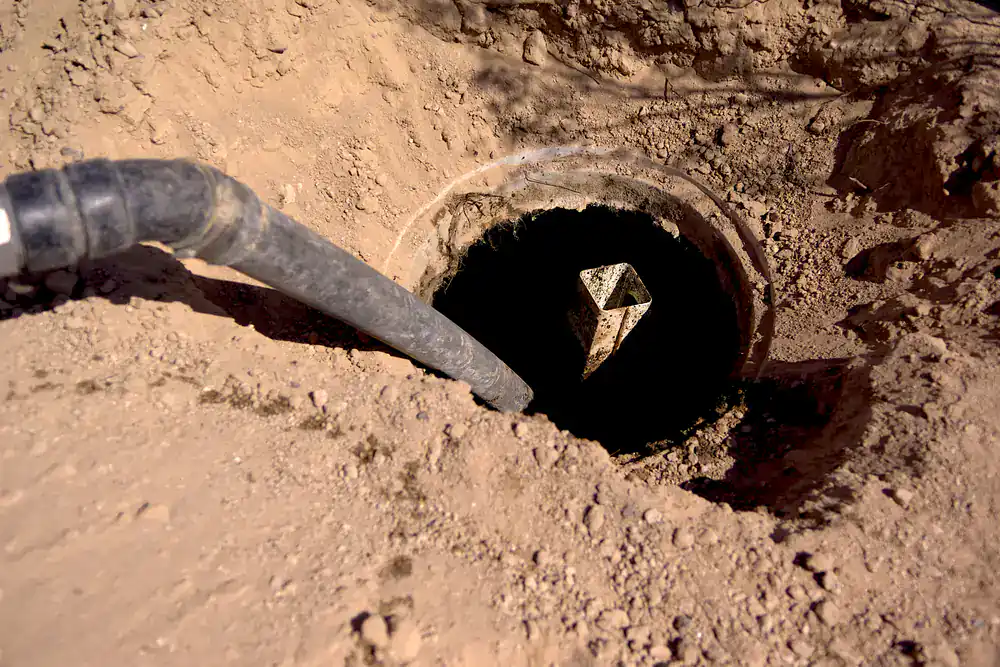
Once on-site, our technician locates the tank and accesses the lid. On older Eatons Neck properties, lids are often buried under years of soil and landscaping this is common on the neck, and we handle it regularly. If excavation is needed to reach the lid, that gets communicated upfront, not added to the bill at the end. The pump-out itself removes all accumulated sludge and scum from the tank not a partial pull, but a complete clean-out. After pumping, we inspect the baffles and overall condition of the system and walk you through what was found.
Under Suffolk County’s current regulations, any system that fails or requires major repair must be upgraded it cannot simply be replaced in kind. That’s been the rule since 2019. Knowing the current condition of your system before it reaches that point is the whole reason routine service exists. You leave with a clear picture of where things stand, and no pressure about what comes next.

Ready to get started?
Our septic tank pumping means a complete pump-out all of it, not a surface-level pull that leaves sludge behind. Waste is transported and disposed of at a licensed facility in full compliance with Suffolk County’s liquid waste regulations. That matters because not every low-price operator handles disposal legally, and the liability for improper disposal doesn’t stay with the contractor.
For Eatons Neck properties specifically, we account for the realities of older systems on a peninsula that sees real coastal weather. Nor’easters and storm surge events can saturate the ground around a leaching field, and summer occupancy on the neck tends to run higher than the rest of the year more people in the house, more water use, more load on the system. If you’ve had guests staying through the summer or you’re heading into fall, that’s exactly when a pump-out makes the most sense.
If your property is approaching a sale and on a neck where listings regularly run well above $1 million, that’s a meaningful event a documented, recently serviced system is not a minor checkbox. Buyers at that price point expect it, and their inspectors will look for it. We also handle drain cleaning, drywell service, and main sewer line work, so if the pump-out surfaces something else that needs attention, you’re not starting over with a different company.