
Useful Links
Other Services we provide in Fort Salonga
For most Fort Salonga homeowners with a conventional septic tank, every three to five years is the standard recommendation but that range shifts depending on household size and tank capacity. A family of four using a 1,000-gallon tank is typically looking at pumping every three to four years. Smaller households can often stretch to four or five years. Cesspools, which are more common in Fort Salonga’s older housing stock, work differently they don’t separate solids from liquids the way a septic tank does, so they fill faster and typically need pumping every one to two years.
The North Shore’s clay-influenced soils are also worth factoring in. Clay retains moisture and drains more slowly than the sandy soils found on the South Shore and East End, which can reduce your leaching pool’s absorption capacity over time and cause a system to reach capacity sooner than the standard timeline suggests. If you’ve purchased a home in Fort Salonga recently and have no documented service history, the right answer to “how often” starts with finding out what condition the system is actually in right now not guessing based on a general schedule.
Standard residential septic tank pumping in Suffolk County runs roughly $225 to $600 depending on tank size. A 1,000-gallon tank typically falls in the $225 to $400 range. Larger systems 2,000 gallons and up generally run $400 to $600. Those are the pumping costs themselves. What can change the final number is lid excavation, which is often necessary on older Fort Salonga properties where lids have been buried under years of soil and landscaping. Lid excavation adds $300 to $1,200 depending on how deep and how difficult the access is.
The most common source of sticker shock in this industry is undisclosed add-on charges. We’re straightforward about what’s included before anyone shows up. The free estimate offer exists precisely so you know the real number before committing, not after the truck is already in your driveway. For Fort Salonga homeowners on properties worth close to $1 million, the cost of routine pumping is genuinely minor compared to the $10,000 to $15,000-plus repair bill that comes with a drainfield failure from a neglected system.
This is one of the most common questions from Fort Salonga homeowners, especially those who have recently purchased a home. The confusion is completely understandable Long Island has a mix of both systems, and many homes built in the 1950s through 1970s have cesspools rather than conventional septic tanks. The key functional difference is that a septic tank separates solid waste from liquid before the liquid flows to a leaching field, while a cesspool is a single chamber that collects everything and relies on the surrounding soil to absorb liquid directly. Cesspools fill faster and need more frequent pumping.
If you have property records, the original building permit or a prior inspection report may specify which system was installed. If you don’t have those documents which is common with older Fort Salonga homes that have changed hands multiple times the most reliable way to find out is to have a technician locate and open the tank. The design will be immediately apparent once the lid is off. Knowing which system you have also tells you what the county’s current rules mean for your property: since 2019, Suffolk County no longer allows cesspools to be replaced in kind, so if yours fails, an upgrade will be required.
By the time you’re seeing soggy spots in the yard, smelling sewage near the tank area, or watching drains back up inside the house, the system is already in distress not approaching distress. Those are late-stage symptoms, not early warnings. A system that has been neglected to that point often has compacted sludge that has migrated into the leaching pool, which is far more expensive to address than a routine pump-out would have been. Drainfield restoration or full replacement in Suffolk County can run $10,000 to $15,000 or more, and that’s before factoring in landscaping damage and any county compliance requirements triggered by a system failure.
For Fort Salonga specifically, there’s an added dimension. Most properties here rely on private wells for drinking water, and the septic system and the well coexist on the same parcel. A failing system doesn’t just create a yard problem it creates a groundwater problem. The proximity to Long Island Sound and the Crab Meadow and Sunken Meadow watersheds means that effluent quality matters beyond the property line as well. Routine pumping on schedule is the simplest, cheapest thing you can do to avoid all of it.
Yes and it’s worth looking into if your Fort Salonga home has an aging cesspool or conventional septic system that may need replacement in the coming years. New York State has committed $30 million specifically to help Long Island homeowners replace outdated systems with Innovative/Alternative Onsite Wastewater Treatment Systems, known as I/A OWTS. These systems reduce nitrogen output by approximately 70%, which is directly relevant to Fort Salonga’s proximity to Long Island Sound and the county’s long-term water quality goals. Suffolk County also has its own grant and reimbursement programs layered on top of the state funding.
The installed cost of an I/A OWTS system runs approximately $20,000, which is a significant expense but grant funding can substantially offset that. The catch is that navigating the application process and understanding which systems qualify under Suffolk County’s Subwatersheds Wastewater Plan requires some familiarity with how the program works. If you’re in Fort Salonga and your system is aging or showing signs of trouble, it’s worth having a conversation about what your upgrade options look like and whether grant funding applies to your situation before you’re forced into a decision by a system failure.
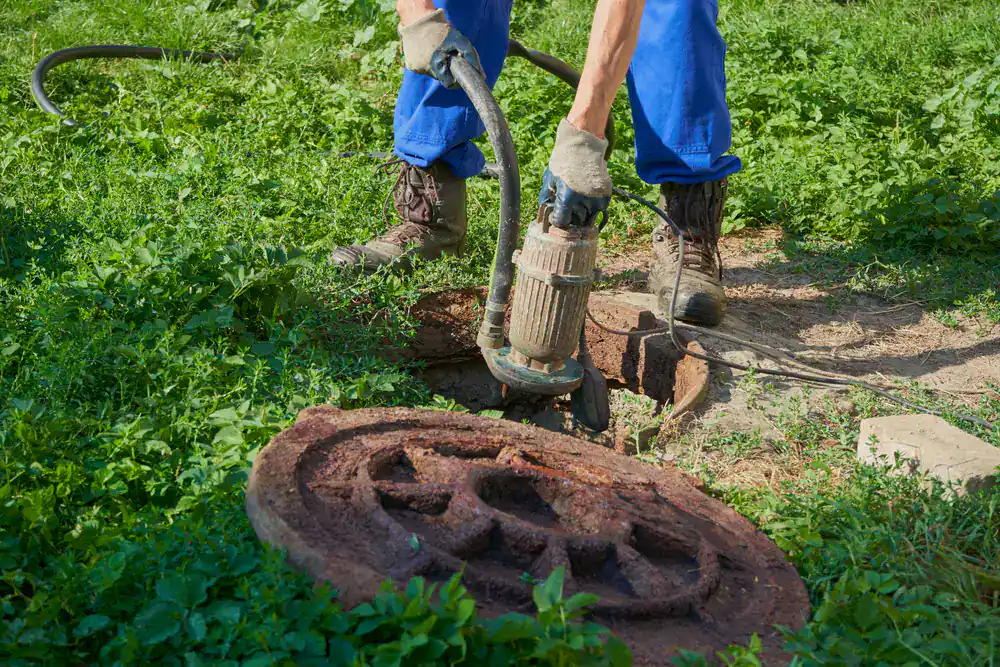
Not with us. Buried lids are extremely common on Fort Salonga’s older properties, particularly in Highview Estates and along the larger wooded lots throughout the hamlet. Homes built in the 1960s and early 1970s often have lids that have been covered by decades of soil, lawn growth, and landscaping sometimes several inches deep, sometimes more. We specifically handle hard-to-find cesspools and septic tanks as a regular part of our work, not as an unusual complication that delays the job or inflates the bill unexpectedly.
What you should expect is that lid location and excavation, if needed, will be discussed as part of the estimate rather than showing up as a surprise charge after the fact. The depth and difficulty of access does affect cost excavation can add anywhere from $300 to $1,200 depending on how buried the lid is but that’s a number you should have before the truck arrives, not after. If you genuinely don’t know where your tank is located on the property, that’s a normal starting point. We’ll locate it, and once it’s found and documented, future service calls become straightforward.
Hear from Our Customers
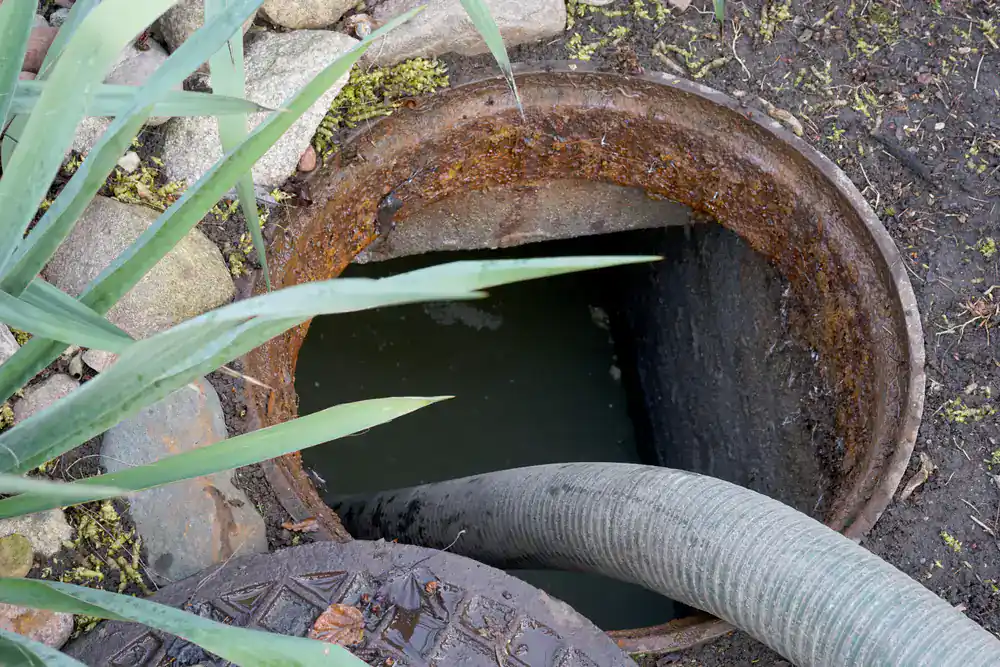
The median home in Fort Salonga was built in 1964. That means most of the septic systems and cesspools in this hamlet are pushing 60 years old well past the 25 to 30-year design life of a conventional system. Neighborhoods like Highview Estates, built in the late 1960s and early 1970s, are sitting on infrastructure that has been quietly working underground for decades, often without a full inspection or thorough pump-out in years. When that system finally shows signs of stress, it rarely gives you much warning.
What a proper pump-out actually gives you is information. A technician who removes all the sludge not just the surface layer and takes a few minutes to assess what they’re looking at can tell you whether your baffles are intact, whether the tank walls are holding, and whether your leaching pool still has life in it. That’s the difference between a service call and a real answer.
Fort Salonga’s large-lot character adds another layer to this. Most properties here run an acre or two, with private wells drawing from the same aquifer that your septic system discharges into. When a system is overdue, effluent quality drops and groundwater risk rises not in some abstract regulatory sense, but in a very direct way for anyone drinking well water on the same parcel. Keeping your system properly maintained is the most straightforward thing you can do to protect both your water quality and the Long Island Sound watershed that borders the community at Crab Meadow and Sunken Meadow State Park.
We’ve been working on Long Island septic systems and cesspools for over 30 years. That experience is specific it’s built on the older housing stock in Fort Salonga and throughout Suffolk County, the buried lids, the clay-influenced North Shore soils, and the regulatory environment that defines this market. It is not experience transplanted from somewhere else and applied generically to Long Island.
We’re locally owned and operated out of West Babylon, Suffolk County. No franchise, no regional dispatch hub, no call center routing your job to whoever is available. When you call, you’re reaching a real Long Island company that has worked in communities like Fort Salonga for decades and knows what to expect when we pull up to a home on Fort Salonga Road or off Sunken Meadow Road.
We’re direct about one thing: we don’t recommend unnecessary work, and we don’t charge high prices for simple tasks. That’s not a tagline it’s how we’ve kept customers coming back and referring their neighbors for over two decades.
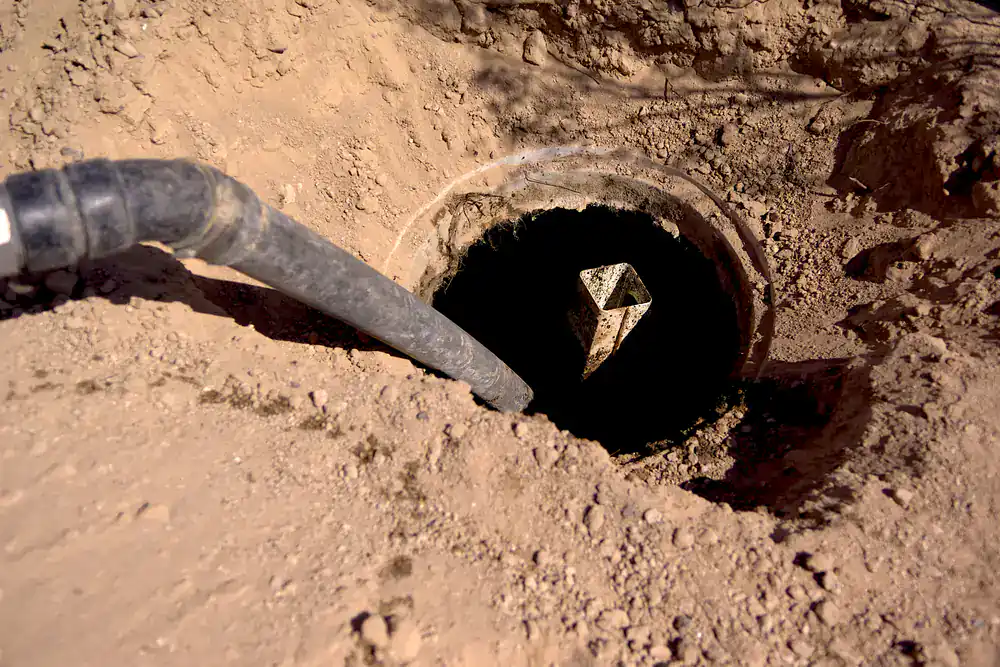
The first thing that happens is locating the tank. In Fort Salonga’s older homes especially those built in the 1960s and early 1970s lids are frequently buried under years of soil and landscaping. We specifically handle hard-to-find cesspools and septic tanks, so if you don’t know where yours is, that’s a normal starting point, not a complication.
Once the tank is located and the lid is accessed, we run the vacuum line and remove everything all of the accumulated sludge and scum, not just what’s easy to reach. A partial pump-out is one of the most common ways homeowners end up calling again six months later. A complete pump-out means the tank is actually empty when the truck leaves.
After pumping, we take a look at the condition of what’s there baffles, tank walls, signs of infiltration or damage. If something needs attention, you’ll hear about it clearly and honestly, with an explanation of what it means and what your options are. No pressure, no manufactured urgency. Fort Salonga homeowners who have purchased recently and have no documented service history on their system should expect this assessment to give them a real baseline not just a receipt for a pump-out.
Spring is typically the busiest season for service calls in this area. The North Shore’s clay-influenced soils retain moisture after winter snowmelt, which can cause systems to back up even before they’re technically full. Scheduling before the spring rush, or before a heavy storm season, means you’re not calling from a position of emergency.
Ready to get started?
Septic tank pumping is the core of what brings most Fort Salonga homeowners to the phone, but it’s rarely the only thing a 60-year-old system needs looked at. We handle the full picture cesspool pumping, septic pumping, drain cleaning, drywell service, main sewer line cleaning and replacement, house trap replacements, and full system installation when a system has reached the end of its life.
That last point matters more in Fort Salonga than in many other Suffolk County communities. Since 2019, Suffolk County has prohibited in-kind cesspool replacement. If a system fails and needs to be replaced, it must be upgraded not simply swapped out for the same type of system. For homeowners near sensitive water bodies like Long Island Sound, the county’s requirements may point toward an Innovative/Alternative Onsite Wastewater Treatment System. We understand Suffolk County’s regulatory environment and can walk you through what your situation actually requires, rather than leaving you to sort through county code on your own.
For Fort Salonga homeowners with properties near Crab Meadow or the Sunken Meadow State Park corridor, proper system maintenance is also directly connected to the watershed health of the Sound. Routine pumping and timely repairs are the practical side of that not a compliance exercise, but a straightforward way to keep a well-functioning system from becoming a much larger problem. Whether you need a standard residential pump-out or something more involved, we’re available 24 hours a day, seven days a week, including weekends and holidays.
