Useful Links
Other Services we provide in Holtsville
The honest answer depends on what type of system you have. If your Holtsville home has a cesspool which is common in central Suffolk County homes built in the 1970s you’re looking at pumping every one to two years. Cesspools don’t separate solids from liquids the way a true septic tank does, so they fill up faster and need more frequent attention. If you have a conventional septic tank, the general recommendation is every three to five years, though a household of four using a 1,000-gallon tank is typically better served by pumping every three to four years.
What complicates this for a lot of Holtsville homeowners is simply not knowing which system they have or when it was last serviced. If you bought your home and the previous owners didn’t leave records which is more common than you’d think the safest starting point is a pump-out and inspection so you actually know what you’re working with. From there, you can set a realistic schedule based on your household size, water usage, and the condition of the system.
For standard residential pumping in Suffolk County, the current market range runs from $225 to $600, depending primarily on tank size. A 1,000-gallon tank typically falls in the $225 to $400 range. A larger 2,000-gallon system is generally $400 to $600. Those figures reflect what a legitimate, licensed provider charges for a complete pump-out with proper septage disposal not a teaser price that excludes disposal fees or other line items added at billing.
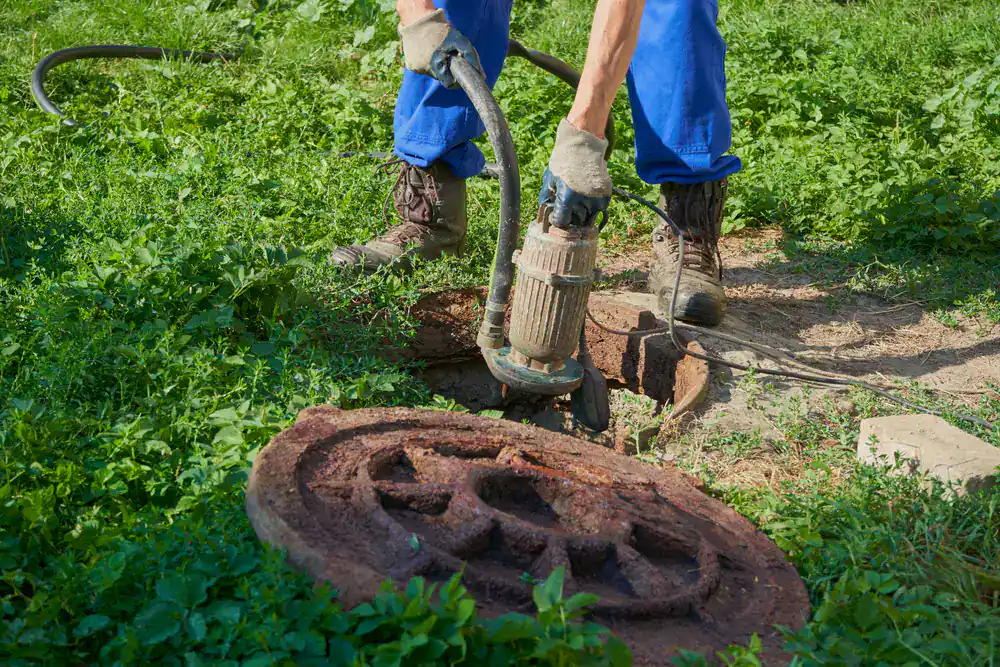
The number that surprises people most often isn’t the pumping cost itself it’s lid excavation. If your tank lid is buried, which is common on Holtsville properties built in the 1970s and 1980s, accessing it can add to the total. That cost should be disclosed before any work starts, not added to the bill afterward. With us, you get a free estimate upfront and the price is straightforward. There’s no reason to be caught off guard by what you owe at the end of a service call.
A few things are worth being prepared for. First, the lid may be buried. On homes built in Holtsville during the 1970s suburban build-out, it’s genuinely common for cesspool and septic lids to be covered by decades of soil settling and landscaping growth. That’s not a disaster it just means the technician needs to locate it before work can begin, and we specifically handle hard-to-find systems.
Second, a first pump-out on a long-neglected system often reveals more than just a full tank. Baffles degrade over time. Concrete tanks develop cracks. Leaching capacity diminishes as solids accumulate in the soil around the system. None of that means you’re automatically facing a major repair but it does mean the inspection that follows the pump-out matters. You want a technician who will tell you honestly what they found, explain what it means, and distinguish between what needs attention now versus what can wait. That’s the standard we hold our work to.
If your property is in the Town of Brookhaven portion of Holtsville which covers the majority of the hamlet then yes, current regulations under Chapter 78A of the Town Code require that any failed system requiring full replacement be upgraded to an Innovative/Alternative Onsite Wastewater Treatment System, commonly called an I/A OWTS. You cannot simply replace a failed conventional cesspool in-kind. The new system must discharge no more than 19 milligrams of nitrogen per liter of effluent, which is the standard set under Brookhaven’s Nitrogen Protection Zone.
This matters because Holtsville sits over Long Island’s sole-source aquifer the only source of drinking water for the entire region. Conventional cesspools have been identified as the primary source of nitrogen pollution in Long Island’s waterways, which is why the county and town-level regulations have moved in this direction. The good news is that New York State has active grant and loan programs through the Suffolk County Septic Improvement Program to help offset the cost of these upgrades. If your property is in the southwestern portion of Holtsville that falls within the Town of Islip, the regulatory framework is different another reason it helps to work with a contractor who knows the county.
Slow drains are one of the earlier warning signs that a septic or cesspool system is struggling, but they’re not always caused by the system itself. A single slow drain say, just the kitchen sink usually points to a localized clog in that drain line. When multiple drains in the house are slow at the same time, especially toilets and lower-level fixtures, that’s when the septic system becomes the more likely culprit.
Other signs that point more directly to a system issue include gurgling sounds from drains or toilets after flushing, sewage odors inside the house or near the tank area in the yard, and wet or soggy patches of grass over the leaching field even when it hasn’t rained. In Holtsville, where many systems are approaching 50 years old, these symptoms tend to develop gradually the system doesn’t fail all at once, it slows down over time. That’s actually useful, because it means catching the problem early is possible if you’re paying attention. If you’re seeing any combination of these signs, a pump-out and inspection is the right first step not a guess about what might be wrong.
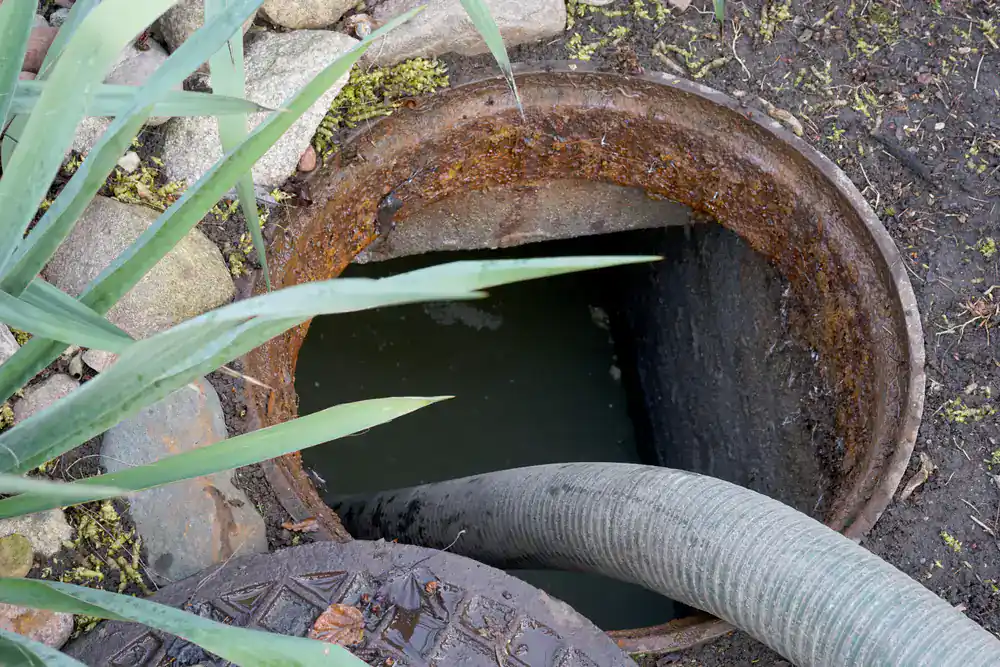
A cesspool is a single underground chamber that collects household waste and allows liquid to seep out through its walls and bottom into the surrounding soil. There’s no separation of solids from liquids everything goes into the same chamber. A septic tank, by contrast, is a two-stage system: solids settle to the bottom as sludge, liquids flow out to a separate leaching field, and a layer of scum floats on top. Septic tanks are generally more efficient and longer-lasting, but they’re also more common in newer construction.
In Holtsville, where most of the housing stock dates to the 1970s, cesspools are the more common system. They were standard construction practice on Long Island during that era, and many homes in Tara Estates, Parkland, and other Holtsville neighborhoods still have the original cesspool from when the house was built. The easiest way to find out which system you have is to have a technician inspect it during a service call the design is apparent once the lid is opened. Knowing which type you have matters because it affects how often you need pumping, what warning signs to watch for, and what your options are if the system ever needs replacement under current Suffolk County regulations.
Hear from Our Customers
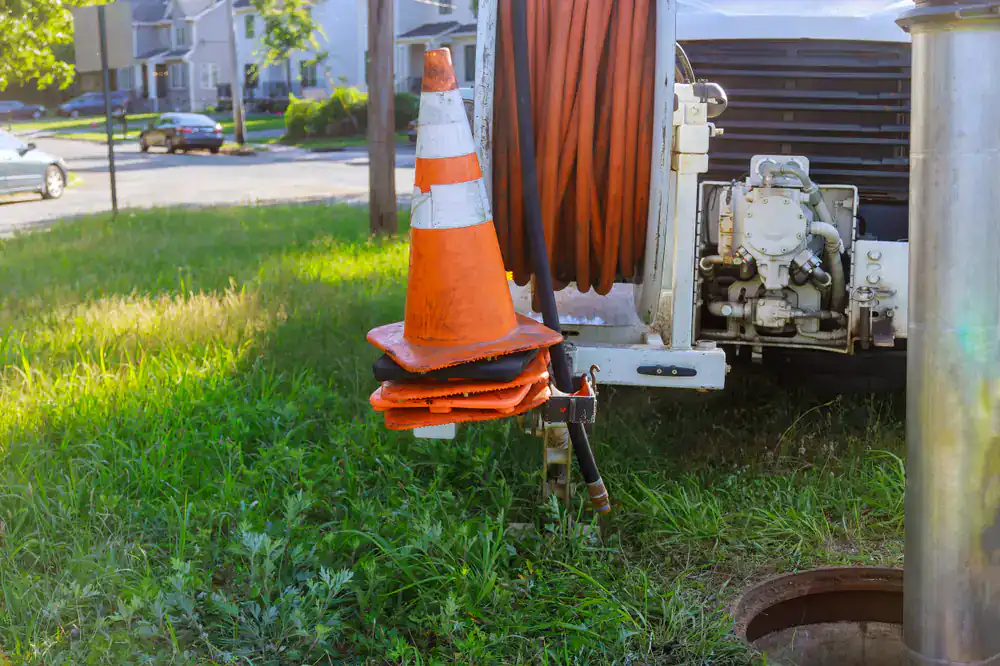
When your septic or cesspool system hasn’t been properly serviced in years or ever, as far as you know the biggest problem isn’t what’s already gone wrong. It’s not knowing what’s coming. A thorough pump-out changes that. You get a clear picture of where your system stands, what it needs, and what it doesn’t.
For Holtsville homeowners, that clarity matters more than it does in newer communities. The median home here was built in 1976, which means the average cesspool or septic tank in this hamlet is pushing 50 years old. These systems were installed during Long Island’s post-war suburban build-out, long before Suffolk County’s current nitrogen protection regulations existed. They weren’t designed for today’s household water usage, and they’ve been accumulating sludge and wear for decades.
Routine pumping is how you stay ahead of that not with a $15,000 drainfield repair, but with a scheduled service call that costs a fraction of that. Your home in Holtsville is worth somewhere around $560,000 to $590,000 right now. A properly maintained septic system is part of what keeps it that way. Skipping service doesn’t save money it defers a much larger bill.
We’re a locally owned and operated business based in West Babylon, NY, serving all of Suffolk County including Holtsville and the surrounding central Suffolk communities. Our team brings over 30 years of hands-on Long Island experience, which means we’ve worked on the same era of systems sitting under Holtsville’s neighborhoods: aging cesspools with buried lids, tanks that haven’t been touched in a decade, and systems that need a real evaluation, not a rushed visit.
What you won’t get is a technician who shows up looking for add-ons. Our approach is straightforward assess what’s actually happening, do what the system needs, and tell you honestly if something bigger is on the horizon. No pressure, no unnecessary recommendations, no surprise charges at the end.
We’ve been doing this work across Suffolk County long enough to know the difference between a system that just needs a pump-out and one that’s quietly heading toward a failure. That distinction is worth a lot when you’re sitting on a 50-year-old system in the Town of Brookhaven.
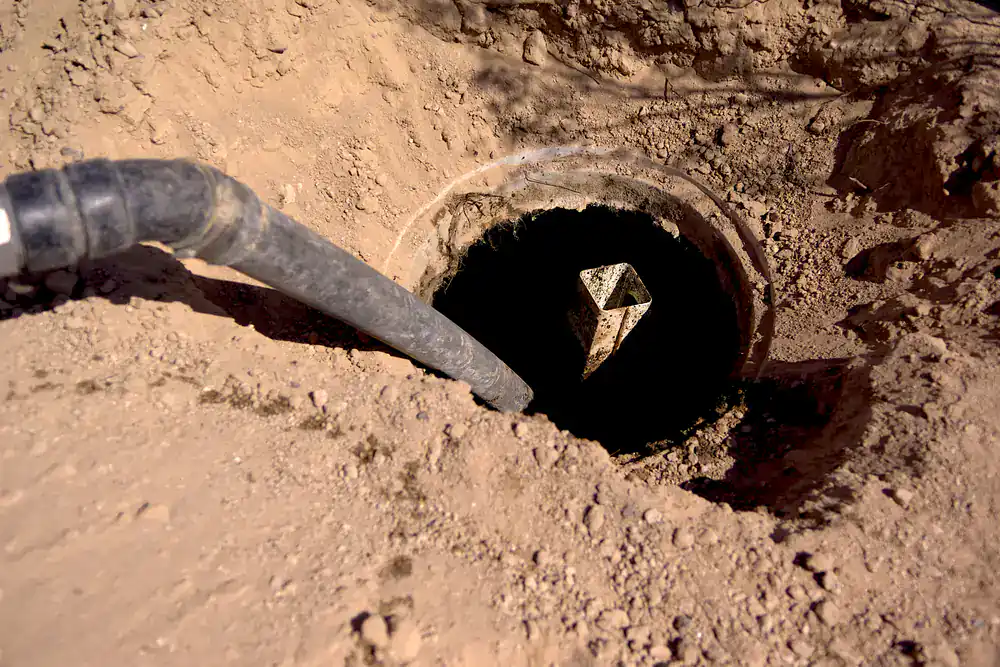
The first thing we do is locate your tank. In Holtsville, where a lot of homes have been in the same family for 20 or 30 years, it’s genuinely common for the lid to be buried under soil, landscaping, or years of lawn growth. We specialize in locating hard-to-find cesspools and septic tanks so if you don’t know exactly where yours is, that’s not a problem, and it won’t turn into an unexpected charge if it was disclosed upfront.
Once the tank is located and accessed, we perform a full pump-out not a partial one. That means removing all accumulated sludge and scum, not just what’s on top. After pumping, the system gets a visual inspection: baffles, tank condition, any signs of infiltration or damage. If something looks off, you’ll hear about it clearly and honestly, with an explanation of what it means and what your options are.
One thing worth knowing if your property is in the Town of Brookhaven portion of Holtsville: if your system ever needs full replacement rather than routine service, current regulations under Chapter 78A require an upgrade to an Innovative/Alternative system not a conventional in-kind replacement. That’s a conversation worth having before you’re in an emergency situation, and it’s something we can walk you through.

Ready to get started?
Septic tank pumping is the core of what brings most Holtsville homeowners to the phone, but it’s rarely the only thing a 50-year-old system needs attention on. We handle the full picture: cesspool pumping, septic pumping, cesspool and septic installation, drain cleaning, drywell cleaning, house trap replacements, and main sewer line cleaning and replacement. If your system has multiple components that need work or if a pump-out surfaces a problem that requires more you don’t have to call a different company for each piece.
For Holtsville properties, a few things come up more often than in newer communities. Buried lids are common on homes built in the 1970s and 1980s, where decades of landscaping have covered what was once accessible. Aging baffles are another frequent finding they degrade over time and, when they fail, solids can reach the leaching field and cause the kind of damage that turns a routine service call into a major repair. Catching that early is exactly what regular pumping is designed to do.
If you’re in the southwestern portion of Holtsville that falls within the Town of Islip, the regulatory path for any system work differs from the Brookhaven side. Either way, we serve all of Suffolk County and are familiar with both jurisdictions. You get a free estimate before any work starts, and the price you’re quoted is the price you pay.