
By submitting you consent to receive service-related texts from Drastic Drainage. Reply STOP to opt out. Msg & data rates may apply. Consent not required to book service.
Useful Links
Most Riverhead homeowners don’t think about their septic system until something goes wrong. A slow drain, a smell near the yard, or a soggy patch of grass that shouldn’t be there. By the time those signs show up, the system has usually been under stress for a while. Staying on a regular pumping schedule means you catch problems early before a $400 service call turns into a $10,000 drainfield repair.
Riverhead’s soil tells part of the story. The Haven-Riverhead sandy loam that runs through the North Fork hamlets drains fast, which sounds like a good thing until you realize it also means whatever leaves your tank moves quickly toward the groundwater. Aquebogue, Jamesport, Calverton, Wading River these areas sit in a watershed that feeds directly into the Peconic River and the estuary beyond it. A properly pumped and maintained system isn’t just protecting your property; it’s keeping your contribution to that waterway as clean as possible.
Then there’s the spring water table. Every year, snowmelt and rain push Riverhead’s water table higher, which puts pressure on systems that are already full or close to it. Getting pumped before that seasonal rise or right after is one of the most practical things you can do to protect your drainfield from the kind of saturation damage that’s expensive to fix and impossible to ignore.
For most Riverhead households, a septic tank needs pumping every three to five years depending on tank size and how many people are in the home. A family of four with a 1,000-gallon tank is typically looking at every three to four years. Smaller households can sometimes stretch to five years without issue, but that’s the outer limit not a target.
Cesspools are a different story. Because they don’t separate solids from liquids the way a septic tank does, they fill faster and typically need pumping every one to two years. A lot of Riverhead’s older properties especially in the hamlets are still on cesspools, so if you’re not sure which system you have, that’s worth finding out before you assume you’re on a longer schedule. Riverhead’s seasonal water table rise in the spring also puts additional stress on systems that are running full, which is one more reason not to push the timeline further than it needs to go.
Standard residential septic pumping in Suffolk County runs $225 to $600, with the range depending mainly on tank size. A 1,000-gallon tank typically costs $225 to $400 to pump; a 2,000-gallon system runs $400 to $600. Those numbers assume straightforward access to the lid.
If the lid is buried which is common across Riverhead’s older hamlets, where systems have been in the ground for decades and landscaping has grown over them excavation is an added cost. That varies based on how deep the lid is and how accessible the area is. The best way to avoid surprise charges is to get a clear estimate before any work starts, which is exactly how we operate. The number you’re quoted reflects the actual job, not a teaser price that grows once our crew is on your property.
The most obvious signs are slow drains throughout the house, gurgling sounds in the plumbing, sewage odors near the tank or drainfield area, and wet or unusually green patches of grass above where the system is buried. Any one of those is worth taking seriously. Multiple signs at the same time usually means the system is already under significant stress.
What’s worth understanding is that many systems show no visible symptoms until they’re in real trouble. The sludge layer builds slowly and silently, and by the time you notice something above ground, the tank may have been overdue for a while. In Riverhead specifically, the spring water table rise can push a borderline situation into a visible problem faster than homeowners expect a system that seemed fine in November can back up in April when the ground is saturated. Staying on a regular schedule is the most reliable way to avoid that scenario entirely.
This is one of the most common situations that comes up on the North Fork. A lot of buyers relocating from New York City purchase older properties in Calverton, Jamesport, or Wading River and have no prior experience with private septic systems and no records from the previous owners to go on. Suffolk County doesn’t maintain a centralized pumping history that homeowners can easily access, so if the previous owner didn’t keep records, there may simply be none.
The practical answer is to schedule a pump-out and inspection as soon as you’re settled in. That gives you a baseline you’ll know exactly what condition the system is in, where the tank is located, what type of system it is, and what it’s going to need going forward. It’s also worth knowing that Suffolk County requires professional inspections every three years for certain systems, so getting on record with us early keeps you compliant and removes the guesswork from your maintenance schedule.
Yes, and this is something Riverhead homeowners should understand clearly. Since July 2019, Suffolk County has prohibited replacing a failed cesspool with the same type of system. If your cesspool fails and needs to be replaced, it has to be upgraded to a more advanced system specifically an Innovative/Alternative Onsite Wastewater Treatment System, or I/A OWTS. These systems reduce nitrogen output significantly, which is directly relevant in Riverhead given the town’s proximity to the Peconic River and the estuary.
The cost of an I/A OWTS installation runs approximately $20,000, but state and county grant programs can offset a substantial portion of that for eligible homeowners. Several Riverhead neighborhoods are officially designated as priority areas for these upgrades, which improves eligibility for financial assistance. If you’re in a situation where your system is aging and you’re wondering whether it makes sense to be proactive about an upgrade, getting a current assessment from us is the right first step it tells you what you’re working with before any decisions need to be made.
Yes, and this comes up regularly in Riverhead. Properties in Jamesport, Wading River, and older parts of Calverton often have systems that were installed decades ago with no documentation, and lids that have been buried under soil, grass, or landscaping for years. Some homeowners have had decks or additions built without anyone knowing the tank was underneath. It’s more common than most people realize.
Locating hard-to-find cesspools is something we specifically handle. The process involves using the available property layout, inspection of the plumbing exits from the house, and in some cases physical probing to identify where the tank sits. Once it’s located, the lid can be excavated and the system can be accessed for pumping and assessment. If the lid is buried deep enough that it becomes a recurring access issue, we can also discuss options for bringing the riser up to grade so future service calls are more straightforward.
Free, no-obligation estimates on cesspool, sewer, and drain work.
We get there quickly. No waiting days for a callback.
Backups don’t wait for business hours. Neither do we.
Fully licensed and insured across Long Island.
Up-to-date trucks and tools for cleaner, faster jobs.
Straight quotes, no surprises on the bill.
Hear from Our Customers
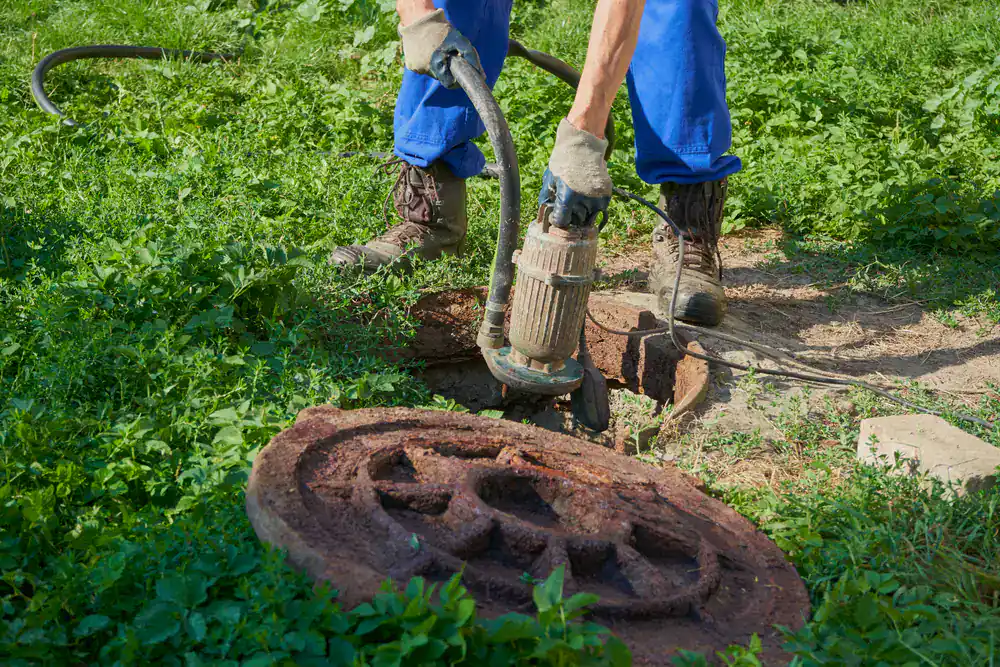
Most Riverhead homeowners don’t think about their septic system until something goes wrong. A slow drain, a smell near the yard, or a soggy patch of grass that shouldn’t be there. By the time those signs show up, the system has usually been under stress for a while. Staying on a regular pumping schedule means you catch problems early before a $400 service call turns into a $10,000 drainfield repair.
Riverhead’s soil tells part of the story. The Haven-Riverhead sandy loam that runs through the North Fork hamlets drains fast, which sounds like a good thing until you realize it also means whatever leaves your tank moves quickly toward the groundwater. Aquebogue, Jamesport, Calverton, Wading River these areas sit in a watershed that feeds directly into the Peconic River and the estuary beyond it. A properly pumped and maintained system isn’t just protecting your property; it’s keeping your contribution to that waterway as clean as possible.
Then there’s the spring water table. Every year, snowmelt and rain push Riverhead’s water table higher, which puts pressure on systems that are already full or close to it. Getting pumped before that seasonal rise or right after is one of the most practical things you can do to protect your drainfield from the kind of saturation damage that’s expensive to fix and impossible to ignore.
We’ve been working across Suffolk County for over 30 years. That’s a long time on Long Island, and a lot of it has been spent dealing with exactly the kind of systems you find in Riverhead older properties in Jamesport and Wading River with buried lids and no service records, large-lot homes in Calverton where the tank location is anyone’s guess, and everything in between. Locating hard-to-find cesspools is actually something we specialize in, which matters when you’re dealing with a farmhouse that predates modern records.
What you won’t get is a technician who shows up, finds something minor, and suddenly has a list of expensive fixes you didn’t ask about. Our approach is straightforward: assess what’s actually there, pump what needs to be pumped, and tell you honestly what the system needs next. That’s it. Free estimate before any work starts, and the number you’re quoted is the number you pay.
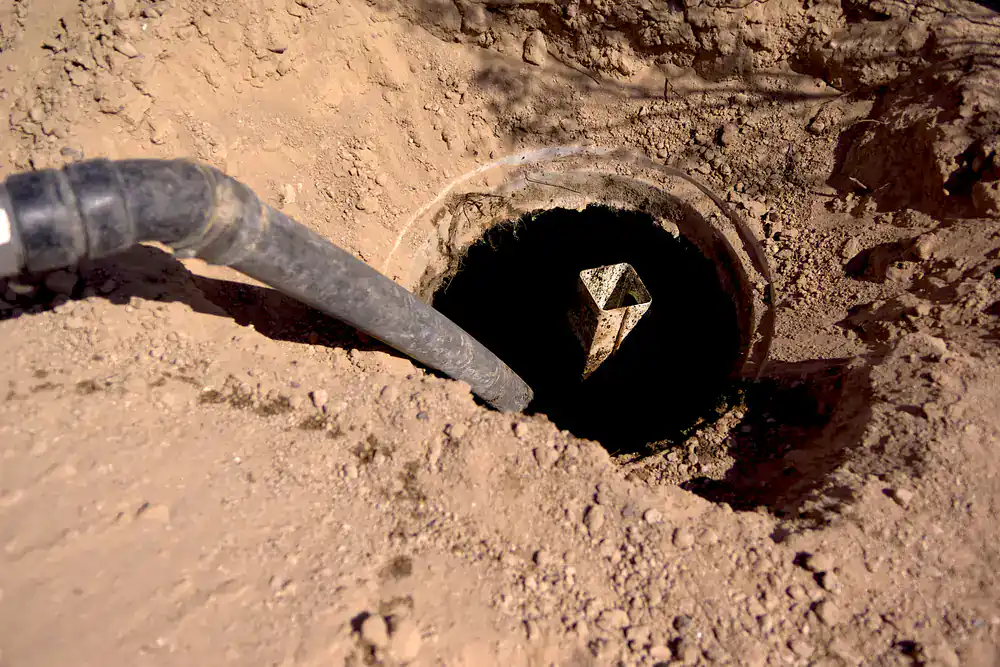
When you call for a free estimate, the first thing that gets sorted out is what type of system you have. A lot of Riverhead homeowners especially those who relocated from the city in the last few years and bought older properties on the North Fork aren’t sure whether they’re on a cesspool or a septic tank. That distinction matters because it affects how often you need service and what our technician is looking for when they arrive.
Once our crew is on-site, we locate the access point. On older properties throughout Riverhead’s hamlets, that lid is often buried under years of soil and landscaping, which is why lid location is part of the job, not an afterthought. After access is confirmed, the tank gets fully pumped not a partial pull, but a complete removal of the accumulated sludge and waste. Our technician then checks the condition of the baffles and looks for signs of infiltration, cracking, or anything that warrants attention.
After the pump-out, you’ll get a clear picture of where things stand. If there’s something that needs follow-up a drain line issue, a drywell that’s due for cleaning, a main line that’s running slow you’ll hear about it honestly, with no pressure to act on anything that isn’t urgent. Suffolk County also requires professional septic inspections every three years for certain systems, so if you’re approaching that window, we can flag it while we’re already on-site.
Ready to get started?
Standard residential septic tank pumping in Suffolk County runs $225 to $600 depending on tank size. A 1,000-gallon tank typically falls in the $225 to $400 range; larger systems run $400 to $600. If the lid is buried which is common on older Riverhead properties, particularly in Jamesport and Wading River excavation adds to the cost, and that range varies based on depth and access. What doesn’t happen here is a low number on the phone and a different number on the invoice.
Beyond pumping, we handle the full scope of what a septic or cesspool system might need: drain cleaning, drywell cleaning, house trap replacements, main sewage line cleaning and replacement, cesspool aeration, and full system installation when a replacement is required. That matters in Riverhead specifically because Suffolk County no longer allows in-kind cesspool replacement any failed system that needs to go in the ground has to meet current standards, including the nitrogen-reducing I/A OWTS requirements that now apply across the county.
If your property sits in one of Riverhead’s designated priority areas near the Peconic River watershed, you may also qualify for state and county grant funding toward an advanced system upgrade. We can pump and assess your current system as a starting point for that process giving you an honest picture of where things stand before any decisions about upgrades get made. Service is available 24 hours a day, seven days a week, including weekends and holidays.
