By submitting you consent to receive service-related texts from Drastic Drainage. Reply STOP to opt out. Msg & data rates may apply. Consent not required to book service.
Useful Links
A lot of Rocky Point’s housing stock started life as seasonal beach cottages built light, built small, built for a few warm months a year. Over the decades, those same homes got additions, extra bathrooms, full-time families, and year-round use. The septic systems underneath them, though? Many were never upgraded to match.
If you’re living in one of those homes and you can’t remember the last time the system was serviced or you genuinely don’t know when it was last pumped that’s not unusual here. It’s one of the most common situations we run into on the North Shore.
Getting your tank properly pumped and assessed means you’re not flying blind anymore. You’ll know what’s in the ground, what shape it’s in, and whether it’s keeping up with the load being placed on it. That matters even more in Rocky Point, where the sandy, porous soils of the Pine Barrens region drain quickly which sounds like a good thing until you realize that a failing system in this kind of soil sends waste toward the groundwater below with very little filtration in between.
The outcome you’re after isn’t just an empty tank. It’s confidence that your system is working the way it should, that nothing is being missed, and that you’re not going to get a call from a technician six months from now telling you the drainfield is gone.
For most Rocky Point homeowners, the honest answer depends on what type of system you have and how many people are using it. If you have a conventional septic tank, the general guidance is every three to five years for an average household. If you have a cesspool which is common in older Rocky Point properties, especially those built before the 1970s you’re looking at every one to two years, because cesspools don’t separate solids the way a septic tank does and fill up faster.
What complicates things in Rocky Point specifically is the housing stock. A lot of homes here started as seasonal summer cottages with systems sized for light, part-time use. If that same system is now running under full-time, year-round household demand, it’s working harder than it was designed to. In that situation, pumping on the shorter end of the recommended range and having the system assessed each time is the smarter approach. If you genuinely don’t know when yours was last pumped, treat that as a signal to schedule one now rather than wait for symptoms to show up.
Standard residential septic tank pumping in Suffolk County runs between $225 and $600, depending primarily on the size of the tank. A 1,000-gallon tank typically falls in the $225 to $400 range; a 2,000-gallon system runs closer to $400 to $600. Those are the real numbers for this market in 2024 and 2025 not a teaser rate, not a bait-and-switch starting point.
Where homeowners sometimes get surprised is with lid excavation. If your lid is buried and in Rocky Point, on the older wooded lots north of Route 25A, that’s not uncommon accessing the tank can add to the cost depending on how deep it is and how much work is involved. We’ll tell you about that upfront before anyone starts digging, not after the job is done. Our approach is to give you a straight estimate before work begins, so you know what you’re agreeing to. No surprises on the invoice.
This is one of the most common questions on Long Island, and Rocky Point is no exception. The short version: if your home was built before the mid-1970s, there’s a reasonable chance you have a cesspool rather than a conventional septic tank. Cesspools are older, simpler systems essentially a buried concrete ring that collects waste and allows liquid to seep out through the walls and bottom into the surrounding soil. They have no separation of solids and liquids, which is why they need pumping more frequently.
A conventional septic tank, by contrast, has a two-chamber design that separates solids from liquids before the liquid effluent moves to a drainfield. It’s a more effective system, which is why Suffolk County now requires upgrades to conventional or advanced systems when an old cesspool fails. If you’re not sure which you have, a technician can tell you during a service visit. It matters for understanding your pumping schedule, your maintenance costs, and what your options are if the system ever needs to be replaced under current Suffolk County regulations.
The problem with waiting for visible symptoms is that by the time they appear slow drains, sewage smell in the yard, soggy patches in the lawn, backups in the house the system is already in distress. What starts as a full tank that needed pumping can turn into a clogged or failed drainfield, and that’s a completely different category of repair.
A drainfield failure can cost $10,000 to $15,000 or more to address. Routine pumping costs a fraction of that. In Rocky Point, this risk is compounded by the sandy, fast-draining soils common to the Pine Barrens region. Systems in sandy soil don’t always show obvious surface warning signs the way systems in clay-heavy soil might. The ground absorbs and disperses moisture quickly, so a failing system can be degrading for a long time before you see anything in the yard. That’s why staying on a maintenance schedule matters more than relying on visible symptoms to tell you when something’s wrong.
No routine pumping and cleaning of an existing system does not require a permit. You can schedule a pump-out without any paperwork, approvals, or waiting on the Town of Brookhaven or Suffolk County Department of Health Services.
Permits come into play when you’re replacing, repairing, or modifying the system itself. Under Suffolk County’s regulations, any failed cesspool that needs to be replaced must be upgraded either to a conventional septic system or an Innovative/Alternative Onsite Wastewater Treatment system, commonly called an I/A OWTS. That work does require a permit and must be done by a licensed contractor. If a pump-out reveals that your system has a more serious issue that goes beyond routine maintenance, we’ll tell you plainly what we found and what the path forward looks like including the fact that New York State and Suffolk County both have active grant programs to help homeowners in Rocky Point and across the county fund those upgrades.
Start with a pump-out and assessment. This is the single most useful thing a new Rocky Point homeowner can do, especially if the previous owners didn’t leave any documentation about the system’s service history which, honestly, is more common than not with older properties in this hamlet.
A thorough pump-out does more than empty the tank. It gives a technician the chance to physically inspect the system: check the baffles, measure how much sludge and scum had accumulated (which tells you something about how long it’s been since the last service), and identify any visible issues with the tank or access components. In a community where a significant portion of homes were originally built as summer cottages and have been added onto over the years, you genuinely don’t know what’s down there until someone looks. Getting that baseline picture early before a problem forces the issue puts you in a much better position to plan ahead, budget appropriately, and avoid the kind of emergency that turns a manageable maintenance cost into a five-figure repair bill.
Free, no-obligation estimates on cesspool, sewer, and drain work.
We get there quickly. No waiting days for a callback.
Backups don’t wait for business hours. Neither do we.
Fully licensed and insured across Long Island.
Up-to-date trucks and tools for cleaner, faster jobs.
Straight quotes, no surprises on the bill.
Hear from Our Customers
A lot of Rocky Point’s housing stock started life as seasonal beach cottages built light, built small, built for a few warm months a year. Over the decades, those same homes got additions, extra bathrooms, full-time families, and year-round use. The septic systems underneath them, though? Many were never upgraded to match.
If you’re living in one of those homes and you can’t remember the last time the system was serviced or you genuinely don’t know when it was last pumped that’s not unusual here. It’s one of the most common situations we run into on the North Shore.
Getting your tank properly pumped and assessed means you’re not flying blind anymore. You’ll know what’s in the ground, what shape it’s in, and whether it’s keeping up with the load being placed on it. That matters even more in Rocky Point, where the sandy, porous soils of the Pine Barrens region drain quickly which sounds like a good thing until you realize that a failing system in this kind of soil sends waste toward the groundwater below with very little filtration in between.
The outcome you’re after isn’t just an empty tank. It’s confidence that your system is working the way it should, that nothing is being missed, and that you’re not going to get a call from a technician six months from now telling you the drainfield is gone.
We’ve been working across Suffolk County for over two decades, and our team brings more than 30 years of hands-on experience with Long Island’s specific conditions older systems, rugged North Shore terrain, buried lids on wooded lots, cesspools that haven’t been touched since the 1980s. That’s not a generic resume. It’s exactly the kind of background that matters when you’re dealing with a prewar cottage north of Route 25A in Rocky Point with a system nobody’s documented in years.
What sets us apart isn’t a long list of services it’s our approach. We don’t recommend unnecessary work, and we don’t charge high prices for simple tasks. That’s not a tagline. It’s the reason customers in Rocky Point, Sound Beach, and across the Town of Brookhaven keep calling back and referring their neighbors.
You get a free estimate, a straight answer, and a crew that won’t leave until the job is done right.
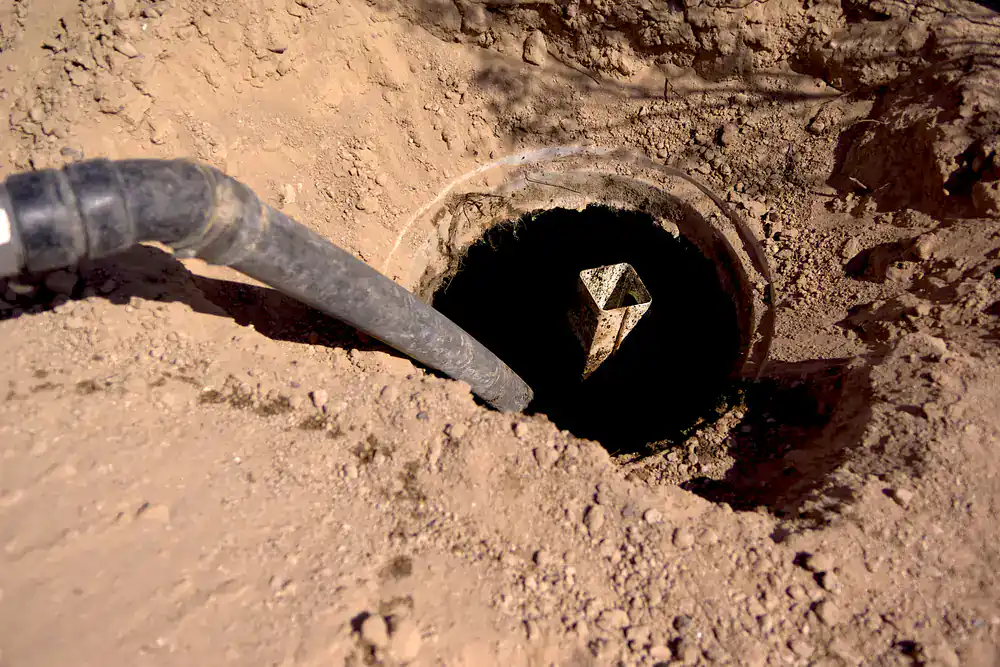
It starts with locating the system. On a lot of Rocky Point properties especially the older ones on the narrow, wooded streets north of Route 25A the lid isn’t sitting at the surface waiting for you. It’s under soil, roots, or years of landscaping. We specialize in finding hard-to-locate cesspools and septic tanks, so if you don’t know exactly where yours is, that’s not a problem that stops the job.
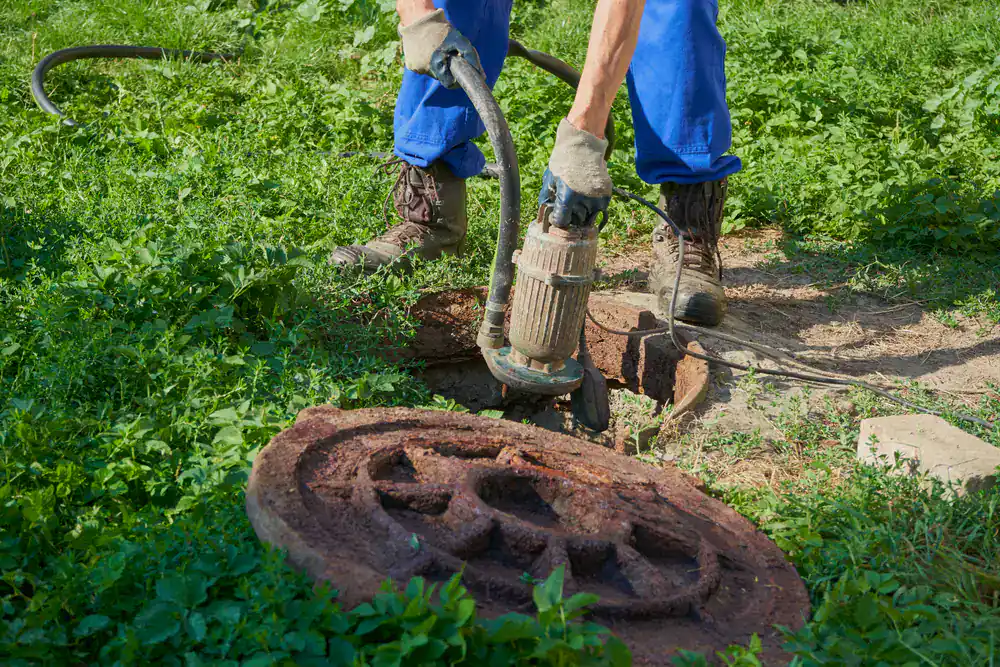
Once the tank is located and accessed, we pump out all accumulated sludge and scum not a partial pull, but a complete evacuation of the tank. After that, the system gets assessed: baffles are checked, the tank condition is evaluated, and if anything looks off, you’ll hear about it plainly. No pressure, no invented problems, just what’s actually there.
In Rocky Point, it’s worth noting that routine pumping doesn’t require a permit that only comes into play if you’re replacing or modifying the system. Suffolk County does have strict rules about how waste is transported and disposed of, and we handle all of that through licensed, legal channels. You don’t have to think about that side of it. The whole job, start to finish, is handled.

Ready to get started?
Septic tank pumping is the core of what brings most Rocky Point homeowners to the phone, but it’s rarely the only thing a North Shore property needs. We handle the full range: septic pumping, cesspool pumping, drain cleaning, drywell cleaning, house trap replacements, and main sewage line cleaning and replacement. If your system has more than one issue which older Rocky Point properties often do you’re not bouncing between three different contractors to sort it out.
For homeowners who recently bought a home in the 11778 ZIP code and have no documentation on the system’s history, a pump-out combined with a full assessment is the right starting point. You’ll know what you have, when it was last serviced (to the extent the tank condition can tell that story), and what, if anything, needs attention before it becomes a real problem.
It’s also worth knowing that since July 2019, Suffolk County no longer allows in-kind cesspool replacement. If a system fails and needs to be replaced, it has to be upgraded and there are active state and county grant programs helping Rocky Point homeowners fund those upgrades. If that conversation comes up during your service call, we can walk you through what you’re looking at without pushing you toward anything you don’t need.