By submitting you consent to receive service-related texts from Drastic Drainage. Reply STOP to opt out. Msg & data rates may apply. Consent not required to book service.
Useful Links
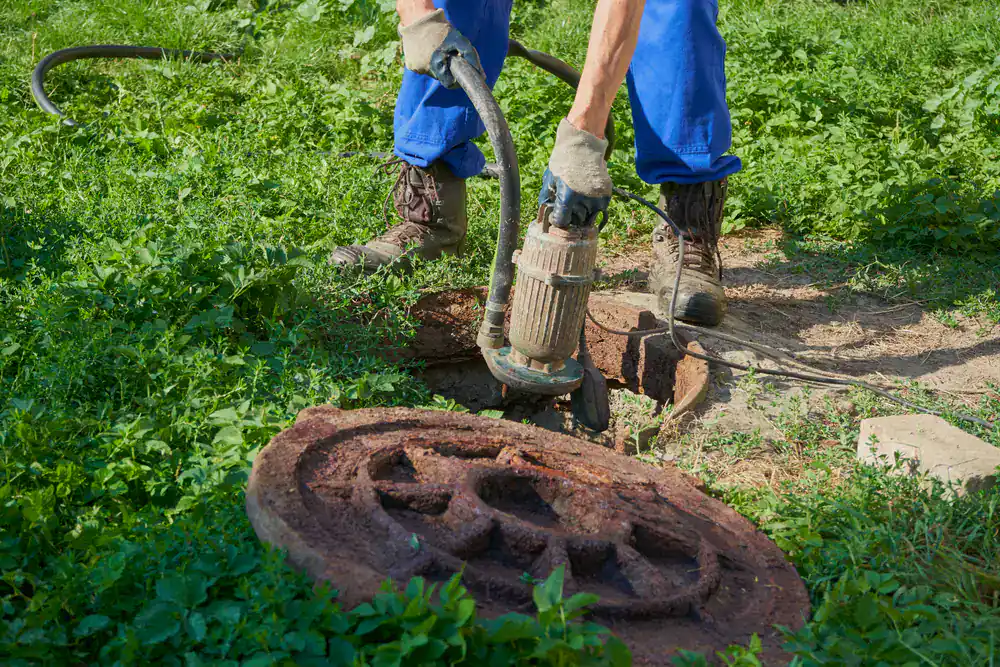
Here is what septic pumping in Ronkonkoma looks like once the work is done. When you get your septic tank pumped on a schedule, you’re not just avoiding a mess you’re protecting a home you’ve invested heavily in. In Ronkonkoma, where the median sale price has climbed past $650,000 and homes move fast, a failing septic system is the kind of surprise that derails closings, tanks appraisals, and costs far more than routine maintenance ever would.
Ronkonkoma’s housing stock tells a specific story. Most of these homes went up in the late 1950s and 1960s part of the same post-war building boom that created neighborhoods like Ronek Park. That means the cesspool or septic system underneath your yard is likely the same age as the house itself. Systems from that era weren’t designed for how households use water today, and they’ve had decades of use without the regulatory oversight that exists now.
Then there’s the lake. Lake Ronkonkoma is the largest freshwater lake on Long Island, and unlike most lakes, it has no surface inlet or outlet its water level is determined entirely by the local groundwater table. That connection is direct. A septic system that’s overdue or failing in Ronkonkoma doesn’t just affect your property. It affects the water your neighbors swim in, fish in, and live near. Staying current on pumping is the simplest thing you can do to keep both your home and your community in good shape.
The honest answer depends on what type of system you have. If your Ronkonkoma home has a traditional cesspool which is common given the age of the housing stock here it typically needs pumping every one to two years. Cesspools are simpler systems that don’t separate waste the way a septic tank does, so solids build up faster. If you have a true septic tank with an inlet and outlet baffle, the general recommendation is every three to five years, though a household of four using a 1,000-gallon tank will usually be on the shorter end of that range.
If you’ve recently purchased a home in Ronkonkoma and have no records of the last service, the right move is to schedule a pump-out now and use that as your baseline. A technician can assess the current condition of the system and give you a realistic maintenance schedule going forward. Guessing based on how the drains feel isn’t a reliable method systems can appear to function fine while sludge levels are already past the point where damage begins.
It matters more than most people realize, and the confusion is extremely common in Ronkonkoma. The majority of homes built here in the 1950s and 1960s were originally equipped with cesspools single-chamber systems where all waste enters one pit and liquid seeps out through the surrounding soil. A septic tank, by contrast, separates solids from liquids before anything leaves the tank, which is why it requires less frequent pumping.
The practical difference affects your pumping schedule, the cost of service, and what your options are if the system ever fails. Under Suffolk County’s current regulations, a failed cesspool cannot be replaced in kind it must be upgraded to a more advanced system. If you’re not sure what you have, a service call from us will give you a clear answer. Our technician will assess the system, explain what they find in plain terms, and help you understand what you’re working with before anything else is discussed.
The most obvious signs are slow drains throughout the house, gurgling sounds from toilets or sinks, sewage odors inside or outside, and wet or unusually green patches in the yard above where the tank is buried. Any one of these is worth taking seriously. All of them together means you’re past due and the system is already under stress.
In Ronkonkoma, there’s an additional factor worth knowing about. Because Lake Ronkonkoma is a groundwater lake its level directly tied to the local water table the water table in this area can shift meaningfully, especially in spring when groundwater recharge is at its peak. When the water table rises near a cesspool or septic tank, it can cause backups that look like a system failure but are actually groundwater infiltration. A technician can tell the difference. If you’re seeing wet spots or slow drains in spring, don’t assume the worst but do call, because the cause needs to be properly diagnosed before any work is done.
Standard residential septic tank pumping in Suffolk County runs roughly $225 to $600 depending on the size of the tank. A 1,000-gallon tank typically falls in the $225 to $400 range. A 2,000-gallon system runs closer to $400 to $600. These are the real market figures for 2024 and 2025 not teaser prices, not estimates that exclude half the job.
What often catches homeowners off guard is the cost of lid excavation. If your tank lid is buried which is common in Ronkonkoma’s older properties locating and exposing it can add anywhere from $300 to $1,200 depending on how deep it’s buried and how accessible the area is. This is one of the most common sources of price discrepancy in this industry: a company quotes a low pump-out price, then adds excavation costs on-site that weren’t mentioned upfront. We’re upfront about what the job involves before work begins, and the free estimate offer exists specifically so you know what you’re agreeing to before a truck is dispatched.
Schedule a pump-out and assessment as soon as you can. This is especially true in Ronkonkoma, where the average home is approximately 60 years old and most sellers don’t have documented service records going back more than a few years if at all. You may have just purchased a home with a cesspool that hasn’t been pumped in five years, or one that was partially upgraded at some point and no longer matches what’s on file with the county. You won’t know until someone looks.
A pump-out does two things at once: it removes whatever has accumulated, and it gives the technician a clear view of the system’s actual condition. You’ll find out whether the baffles are intact, whether there are signs of infiltration or cracking, and whether the system is a cesspool or a septic tank. That information is worth having before a problem surfaces on its own. If you moved to Ronkonkoma from an apartment or from a home on town sewer, this is your starting point for understanding a system that’s now your responsibility to maintain.
Yes and this is more common than most people expect, particularly in Ronkonkoma’s older neighborhoods. Homes built in the 1950s and 1960s often have cesspool lids that have been buried under decades of soil, landscaping, and sod. Previous owners may have had no idea where the tank was either, and the location was never documented anywhere accessible to the new owner.
We specifically list cesspool location as one of our specialties. An experienced technician can identify likely tank locations based on the home’s age, construction, and the layout of the property without immediately resorting to excavation. This matters because some companies charge significant fees to locate a buried lid before the pump-out even begins. Getting the location right the first time without unnecessary digging is part of what 30-plus years of hands-on Long Island experience looks like in practice. If you genuinely don’t know where your tank is, that’s not a reason to avoid calling. It’s exactly the kind of situation we’re set up to handle.
Free, no-obligation estimates on cesspool, sewer, and drain work.
We get there quickly. No waiting days for a callback.
Backups don’t wait for business hours. Neither do we.
Fully licensed and insured across Long Island.
Up-to-date trucks and tools for cleaner, faster jobs.
Straight quotes, no surprises on the bill.
Hear from Our Customers

Here is what septic pumping in Ronkonkoma looks like once the work is done. When you get your septic tank pumped on a schedule, you’re not just avoiding a mess you’re protecting a home you’ve invested heavily in. In Ronkonkoma, where the median sale price has climbed past $650,000 and homes move fast, a failing septic system is the kind of surprise that derails closings, tanks appraisals, and costs far more than routine maintenance ever would.
Ronkonkoma’s housing stock tells a specific story. Most of these homes went up in the late 1950s and 1960s part of the same post-war building boom that created neighborhoods like Ronek Park. That means the cesspool or septic system underneath your yard is likely the same age as the house itself. Systems from that era weren’t designed for how households use water today, and they’ve had decades of use without the regulatory oversight that exists now.
Then there’s the lake. Lake Ronkonkoma is the largest freshwater lake on Long Island, and unlike most lakes, it has no surface inlet or outlet its water level is determined entirely by the local groundwater table. That connection is direct. A septic system that’s overdue or failing in Ronkonkoma doesn’t just affect your property. It affects the water your neighbors swim in, fish in, and live near. Staying current on pumping is the simplest thing you can do to keep both your home and your community in good shape.
We’ve been handling septic and cesspool work across Suffolk County since 2002. Our team brings over 30 years of hands-on Long Island experience the kind that comes from working on aging systems in communities exactly like Ronkonkoma, where buried lids, original cesspools, and decades of settled soil are just part of the job.
We’re locally owned and operated out of West Babylon, which means we’re a real Suffolk County company not a national chain dispatching from a regional hub. When you call, you’re reaching people who know this county’s specific regulatory environment, its older housing stock, and the particular challenges that come with systems installed in the 1950s and 1960s.
We don’t recommend unnecessary techniques or charge high prices for simple tasks. That’s not a tagline. It’s how we actually operate. In a market where bait-and-switch pricing complaints are common, that kind of transparency is worth something.
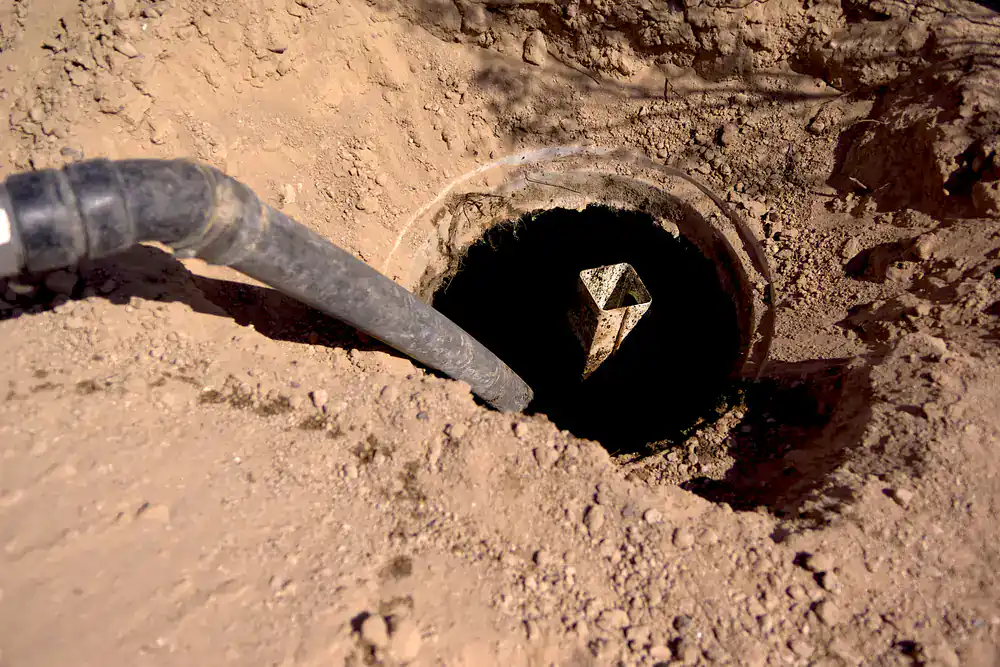
It starts with locating the tank. In Ronkonkoma’s older neighborhoods, this is often the first real challenge. Homes built in the 1950s and 1960s frequently have cesspool or septic lids buried under years of soil, sod, and landscaping nobody knows where they are anymore. We specialize in finding hard-to-locate systems, which saves you from paying excavation fees just to find something an experienced technician can locate without tearing up your yard.
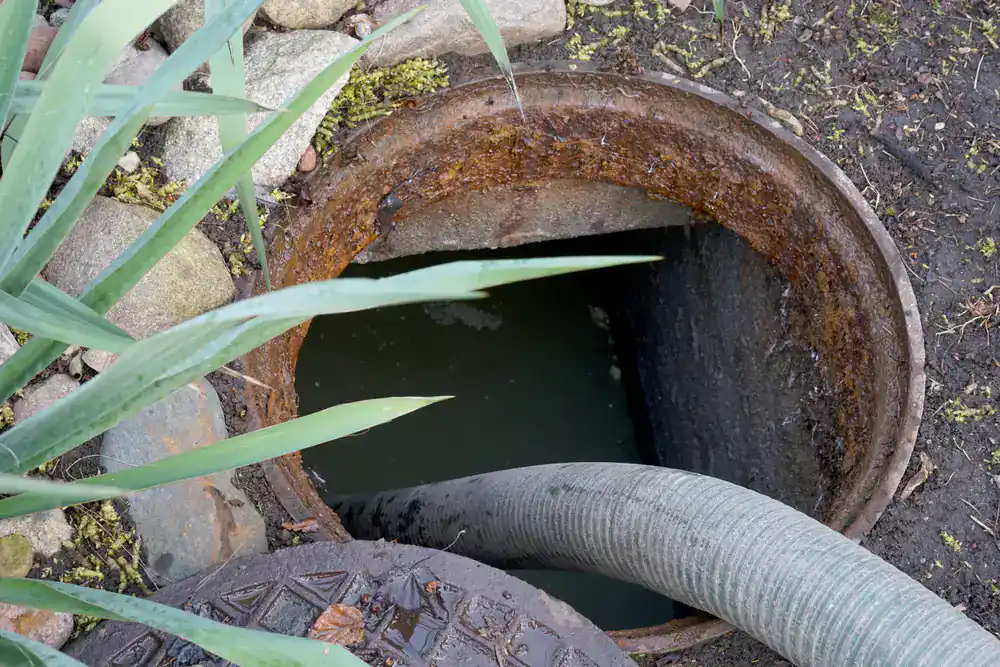
Once the tank is accessed, the full pump-out begins. That means removing all accumulated sludge and waste not just what’s easy to reach. A thorough pump-out also gives our technician a clear look at the system’s condition: the baffles, the tank walls, signs of infiltration or damage. If something needs attention, you’ll hear about it plainly, along with what’s actually necessary versus what can wait.
After the work is done, septage is transported and disposed of at a licensed treatment facility this is a legal requirement under New York State DEC waste transporter regulations, and it’s how every job we run is handled. The whole process is designed to be straightforward: you know what’s happening, you know what it costs, and the technician doesn’t leave until the job is finished.
Ready to get started?
Septic tank pumping is the core service, but most systems in Ronkonkoma involve more than just the tank. We handle the full range cesspool pumping, drywell cleaning, main sewer line cleaning and replacement, house trap replacements, drain cleaning, and full system installation when a system has reached the end of its life. If one part of your system has a problem, there’s a good chance something adjacent needs attention too, and having one company that can assess and handle all of it saves you the time and cost of coordinating between multiple contractors.
Suffolk County’s regulatory environment matters here. Since 2019, in-kind cesspool replacement has been prohibited any failed system that needs replacing must be upgraded to meet current standards. For Ronkonkoma homeowners with original 1960s-era cesspools, this is important context. Routine pumping extends the life of an aging system and gives you more time to plan. Waiting until a system fails forces the decision, and at that point the cost and timeline are no longer yours to control.
We also serve commercial customers, which is relevant for properties along Ronkonkoma’s Motor Parkway corridor and the businesses surrounding MacArthur Airport. Holding tank pumping for commercial properties in Suffolk County follows the same licensed, documented process as residential work legal disposal, honest assessment, no unnecessary add-ons.