Useful Links
Other Services we provide in West Sayville
The honest answer depends on what type of system you have, and a lot of West Sayville homeowners aren’t entirely sure which one is under their yard. If you have a conventional cesspool—which is the most common setup in homes built in the 1940s through 1960s—the general recommendation is every one to two years. Cesspools don’t separate solids from liquids the way a true septic tank does, so they fill up faster and need more frequent attention.
If you have a septic tank with a leach field, the typical interval is every three to five years, depending on household size and water usage. A family of four with a 1,000-gallon tank is generally looking at every three to four years. West Sayville households that see a significant increase in water use during summer—hosting guests, having family stay through the beach season, or renting the property—should factor that extra load into their schedule. A system that handles two people comfortably all winter is working much harder by August.
By the time you notice a problem—slow drains, sewage smell in the yard, soggy patches in the lawn, or a backup inside the house—the system is already in distress. That’s not the beginning of a problem; it’s the end of one that’s been building for a while. At that stage, you’re not just looking at a pump-out. You may be dealing with a saturated drainfield, a cracked tank, or a system that’s failed outright.
The cost difference is significant. Routine pumping in Suffolk County runs $225 to $600. A failed drainfield or a system that needs full replacement can cost $10,000 to $15,000 or more—and under Suffolk County’s current regulations, a failed cesspool cannot simply be replaced in kind. Any system that fails must be upgraded to a more advanced treatment system, which adds to both the cost and the timeline. In a community where median home values are above $600,000, a neglected septic system is one of the fastest ways to complicate a sale or destroy equity you’ve spent decades building.
If you don’t have documentation of when the system was last serviced, the honest starting point is to assume it’s overdue and call for an assessment. On a property built in 1957—which is right around the median construction year for West Sayville—the original cesspool could be anywhere from moderately maintained to completely neglected, depending on what previous owners did or didn’t do. There’s no way to know without looking.
A service call from us includes a system assessment alongside the pump-out. Our technician will check the condition of the tank or cesspool, inspect the baffles, look for signs of infiltration or structural issues, and give you a plain-language rundown of what they found. You’re not going to get a vague “it looks okay” or an immediate push toward a $15,000 replacement. You’ll get an honest picture of where things stand and what, if anything, actually needs to happen next. For a home that’s been around since Eisenhower was president, that kind of baseline assessment is genuinely useful information.
It can, and it’s worth understanding why. Properties within 500 feet of Great South Bay surface waters may fall within nitrogen protection zones under Suffolk County’s regulatory framework. In those zones, the county has been pushing hard for homeowners to upgrade from conventional cesspools to Innovative/Alternative Onsite Wastewater Treatment Systems—commonly called I/A OWTS. These systems reduce nitrogen output by approximately 70 percent compared to a conventional cesspool, which is why Suffolk County secured $20 million specifically for septic upgrades along the Great South Bay corridor.
If your West Sayville property is in or near one of those zones, you may be eligible for grants or low-interest loans through Suffolk County’s Septic Improvement Program to offset the cost of an upgrade. An I/A system runs approximately $20,000 installed, but the combination of state and county funding can make that significantly more manageable. Even if you’re not in a designated protection zone, routine pumping and maintenance is the most direct thing you can do as a West Sayville homeowner to reduce the nitrogen load reaching the bay from your property.
Call immediately. A backup after a storm isn’t something to wait out or monitor. West Sayville’s position on the Great South Bay means the community sees coastal flooding, storm surge, and soil saturation during nor’easters and tropical weather events in a way that inland Suffolk County towns simply don’t. When the soil around a cesspool or septic system becomes saturated, the system can’t drain properly—and what was a slow system before the storm becomes a full backup during or after it.
We operate 24 hours a day, seven days a week, including weekends and holidays. That’s confirmed availability, which matters when a storm hits on a Sunday night in November and your basement is backing up. Emergency response for overflows and backups is part of what we handle. The best position to be in before storm season is a recently pumped system with adequate capacity. The second-best position is having a number you can actually call at 10 PM when it matters.
This is more common than most people realize, especially in West Sayville where a significant portion of homes have been standing since the 1950s and 1960s. Over decades, lids get buried under soil, sod, landscaping, and additions. Some homeowners have never seen their lid. Some didn’t even know they had a cesspool until they tried to sell the house and a buyer’s inspector went looking for it.
We specifically list cesspool location as one of our specialties—finding systems that haven’t been accessed in years or that have no clear visual markers above ground. When you call, let us know upfront that the lid location is unknown. We’ll factor that into the estimate so there are no surprises on arrival. Lid excavation, if needed, does carry an additional cost depending on depth and access—the range in Suffolk County runs $300 to $1,200—but that’s disclosed before the work starts, not after. For older properties along the South Shore, this is a routine part of the job, and it’s handled with the same straightforward approach as the rest of our service.
Hear from Our Customers

The most immediate thing you get from a proper septic pump-out isn’t a clean tank—it’s the confidence of knowing your system isn’t quietly building toward a problem. For a lot of West Sayville homeowners, that peace of mind has been missing for years, sometimes decades, because no one really knows when the system was last touched.
West Sayville’s housing stock tells the story. The median home here was built in 1957. That means the majority of properties in this community were constructed during an era when cesspools were standard and maintenance records weren’t something anyone kept. If you’ve lived in your home for twenty years and never had the system pumped, or if you bought a house and have no idea what the previous owners did, you’re not alone—and you’re not out of options.
Living on the Great South Bay adds a layer to this that inland Suffolk County towns don’t have. The bay is directly downstream from every septic system and cesspool in West Sayville. Suffolk County’s own data confirms that conventional systems are the primary source of nitrogen reaching the bay, fueling algal blooms and degrading the water quality that defines this area. Keeping your system properly maintained isn’t just about your home—it’s a direct contribution to the health of the water you look at every day.
We’ve been operating out of West Babylon since 2002, and our team brings over 30 years of hands-on experience with Long Island’s specific septic and cesspool landscape. That means we know what a 60-year-old cesspool looks like, where lids tend to get buried on properties along the South Shore, and what the soil and housing conditions in West Sayville actually demand from a service call.
We’re not a national franchise dispatching from a regional hub. West Babylon sits on the same Montauk Highway corridor as West Sayville—the next town over along the bay. When we pull up to a property near the Long Island Maritime Museum waterfront or a ranch house north of Montauk Highway, we’re not working from a generic playbook. We know this area.
Our approach is straightforward: don’t recommend what isn’t needed, charge what was quoted, and don’t leave until the job is done right. In a service category where price-bait complaints are common, that’s a meaningful position to hold.
It starts with a free estimate. You describe your situation, and we give you a real number before anyone shows up at your property. That price doesn’t change between the phone call and the driveway—that’s our policy, not a sales line.
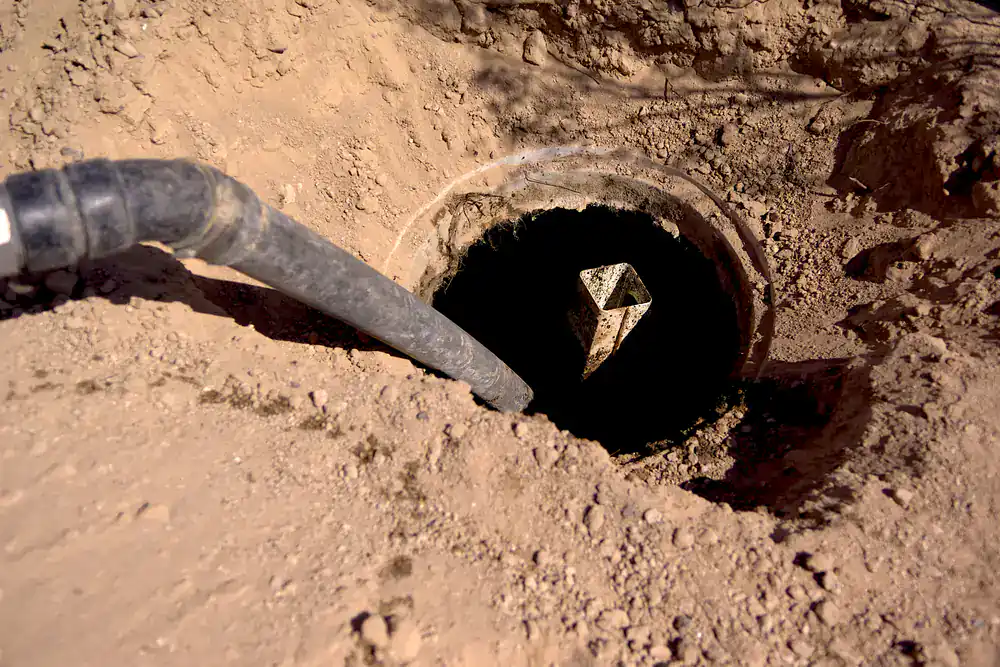
When our technician arrives, the first order of business is locating and accessing the tank or cesspool. On older West Sayville properties—and most of them are older—lids are frequently buried under years of soil and landscaping. We specifically market our expertise in finding hard-to-locate systems, which matters more than you’d think on a street of homes built in the 1940s and 1950s.
Once the lid is accessed, we fully pump out the tank. Not surface-level—all of it. Our technician will also assess the condition of your system: baffles, tank integrity, signs of infiltration, anything worth knowing about. You get a straightforward report of what was found, what’s in good shape, and what, if anything, actually needs attention.
All waste is transported and disposed of legally at a licensed treatment facility. Suffolk County requires a Liquid Waste License for this work and the proper NYS DEC waste transporter permit for legal septage hauling—both of which are part of operating legitimately in this county. The whole process is typically completed in a single visit, and we clean up before we leave.
Ready to get started?
Standard residential septic tank pumping in Suffolk County runs $225 to $600 depending on tank size. A 1,000-gallon tank typically falls in the $225 to $400 range; larger systems run closer to $400 to $600. Those are the real market numbers—not teaser quotes designed to get a truck in your driveway before the upsell starts.
If your lid is buried—which is common on West Sayville’s older properties—lid excavation is a separate cost that can add $300 to $1,200 depending on depth and access. We tell you this upfront. Beyond the pump-out itself, our service includes a system assessment, legal septage disposal, and a clear explanation of what was found.
If something needs attention, you’ll hear about it plainly and you’ll decide what happens next—not the other way around. For West Sayville homeowners near the Great South Bay, it’s also worth knowing that Suffolk County’s Septic Improvement Program offers grants and loans for homeowners who need to upgrade to a more advanced treatment system. If your cesspool is failing or you’re in a nitrogen protection zone close to the water, that program may apply to your property.
We handle the full range of services—from routine pump-outs to drain cleaning, drywell service, main line work, and full system installation—so if a pump-out reveals something bigger, you’re not starting over with a different company.