
By submitting you consent to receive service-related texts from Drastic Drainage. Reply STOP to opt out. Msg & data rates may apply. Consent not required to book service.
Useful Links
We do cesspool services across Greenlawn. Here is what changes for you. When a cesspool problem gets fixed properly, the difference is immediate, no more slow drains, no odors creeping into the yard, no wet patches showing up where they shouldn’t. But beyond the obvious relief, there’s something more important: you stop sitting on a problem that gets exponentially more expensive the longer it goes unaddressed. A routine pump-out is one thing. A sewage backup that overflows into your basement is a remediation job that can run $3,000 to $7,000 before you’ve even touched the structural damage.
For Greenlawn homeowners specifically, there’s a layer to this that doesn’t apply everywhere on Long Island. The hamlet’s housing stock is predominantly postwar, ranch homes, split-levels, and Cape Cods built from the late 1940s through the mid-1970s. The cesspools installed under those homes were designed to last 20 to 40 years. Many are now pushing 50 to 75. That doesn’t mean yours has failed, but it does mean the margin for error is thinner than it used to be, and the warning signs tend to show up faster than people expect.
Greenlawn’s proximity to Centerport Harbor adds another variable. After significant rainfall, the water table rises on the North Shore, and older cesspools in lower-lying areas can slow down or back up even if they were working fine the week before. That’s not necessarily a system failure. It’s a water table issue. But it looks the same from inside the house, and it takes someone who actually knows Greenlawn to read it correctly.
For most households in Greenlawn, the general recommendation is every three to five years, but that range shifts depending on a few factors specific to this area. Household size matters: more people means more daily wastewater, which fills the system faster. But there’s another variable that’s easy to overlook in Greenlawn specifically. NeighborhoodScout data shows that nearly 16% of the local workforce works from home. Well above the county average. A household where adults are home all day generates continuous wastewater loading that a standard maintenance schedule may not account for. If that describes your household, you’re likely on the shorter end of that range, not the longer one.
The age of your system is also a factor. Most homes in Greenlawn were built during the postwar boom, which means the cesspools underneath them are anywhere from 50 to 75 years old. Older systems don’t absorb and process waste as efficiently as they once did, which can mean they fill faster and need more frequent attention. If you’re not sure when your system was last serviced, or if it’s been more than three years, a professional inspection is the right starting point.
The cost depends heavily on what’s actually wrong. A routine pump-out in Suffolk County typically runs between $200 and $500 for a standard residential job, though that can climb to $308–$1,234 or more once excavation, access work, or additional labor is involved. Those are manageable numbers. What gets expensive fast is when a backup isn’t caught early.
If a cesspool overflows into a basement or causes a sewage backup inside the home, remediation costs start around $3,000 to $7,000, and that’s before any structural repairs, flooring replacement, or temporary housing costs are factored in. The math on regular maintenance is straightforward: a pump-out every few years is significantly cheaper than a single emergency remediation. For Greenlawn homeowners with systems that are already past their design lifespan, the risk of crossing from “manageable maintenance” into “emergency repair” is real and worth taking seriously before the first sign of trouble appears.
This is one of the most common calls we receive from homeowners on Greenlawn’s North Shore side, particularly those in lower-lying areas near Centerport Harbor. After significant rainfall, the water table rises. When it rises far enough, the soil surrounding your cesspool loses its ability to absorb effluent, the ground is already saturated. The result is that waste has nowhere to go, and the system backs up or produces odors even if it was functioning normally the week before.
This is not necessarily a sign that your cesspool has failed. It’s a water table issue, and it behaves differently than a structural failure or a full tank. The problem is that it looks the same from inside the house, slow drains, outdoor odors, sometimes a soft or wet patch in the yard. A company unfamiliar with North Shore conditions may misread this as a system failure requiring expensive repairs. We know to assess the timing relative to recent rainfall before drawing any conclusions. If the symptoms appeared within 24 to 48 hours of a heavy rain and cleared up on their own, that’s a meaningful piece of diagnostic information.
Yes, and it’s not optional. Suffolk County requires formal cesspool inspection and documentation for real estate transactions, and mortgage lenders will not approve financing on a property without it. This applies to homes throughout Greenlawn and the broader Town of Huntington. The inspection needs to produce a detailed report that satisfies the health department, the buyer’s lender, and typically the closing attorney as well.
The timing matters too. Real estate closings run on a schedule, and a cesspool inspection that surfaces a problem, or that simply hasn’t been scheduled, can stall or kill a deal. With average home listings in Greenlawn around $539,500, that’s not a small financial risk. We handle real estate certifications in-house, which means the inspection and documentation come from the same company doing the service work. If something needs to be repaired or pumped before the certification can be issued, that happens in the same process rather than requiring a second contractor and a second scheduling window.
Yes, and the program got significantly more generous in 2024. Under the Suffolk Water Quality Restoration Act signed in May 2024, eligible homeowners can now receive reimbursement of up to 75% of their project cost (or up to $25,000) for qualifying Innovative/Alternative (IA) onsite wastewater treatment system upgrades. That’s a substantial increase from the previous cap of 50% or $10,000.
This matters for Greenlawn homeowners because Suffolk County banned new conventional cesspool installations as of July 1, 2019. If your cesspool fails and requires replacement, you cannot simply install another traditional cesspool. It must be replaced with an IA system, which reduces nitrogen in wastewater by up to 70% but costs significantly more upfront than a conventional replacement. The grant program exists specifically to make that transition more financially manageable. Eligibility depends on the system type, property location, and application timing. We have 30+ years of experience navigating Suffolk County’s regulatory and permit processes, and can help you understand whether your situation qualifies before any work begins.
This comes up constantly with Greenlawn’s older housing stock. Homes built during the postwar boom, which describes the majority of Greenlawn’s residential character. Were often built with cesspools that had no standardized marking or surface access. Over the decades, covers get paved over during driveway work, buried under landscaping additions, or simply lost to time with no record of where the system sits. It’s not unusual for a homeowner to have lived in a house for years without ever knowing exactly where the cesspool is located.
Cesspool location is a named specialty for us, not something figured out on the fly. The process typically involves a combination of probing, electronic locating equipment, and knowledge of where systems were commonly installed in homes of a particular era and construction type, knowledge that 30+ years of working on Long Island’s postwar housing stock provides in a way that no manual or app can replicate. Once the system is located, access is established before any service work begins. If you’ve inherited a property in Greenlawn, bought an older home without documentation, or simply have no idea where your system is. That’s a completely solvable problem, and it’s the right first call to make.
Free, no-obligation estimates on cesspool, sewer, and drain work.
We get there quickly. No waiting days for a callback.
Backups don’t wait for business hours. Neither do we.
Fully licensed and insured across Long Island.
Up-to-date trucks and tools for cleaner, faster jobs.
Straight quotes, no surprises on the bill.
Hear from Our Customers
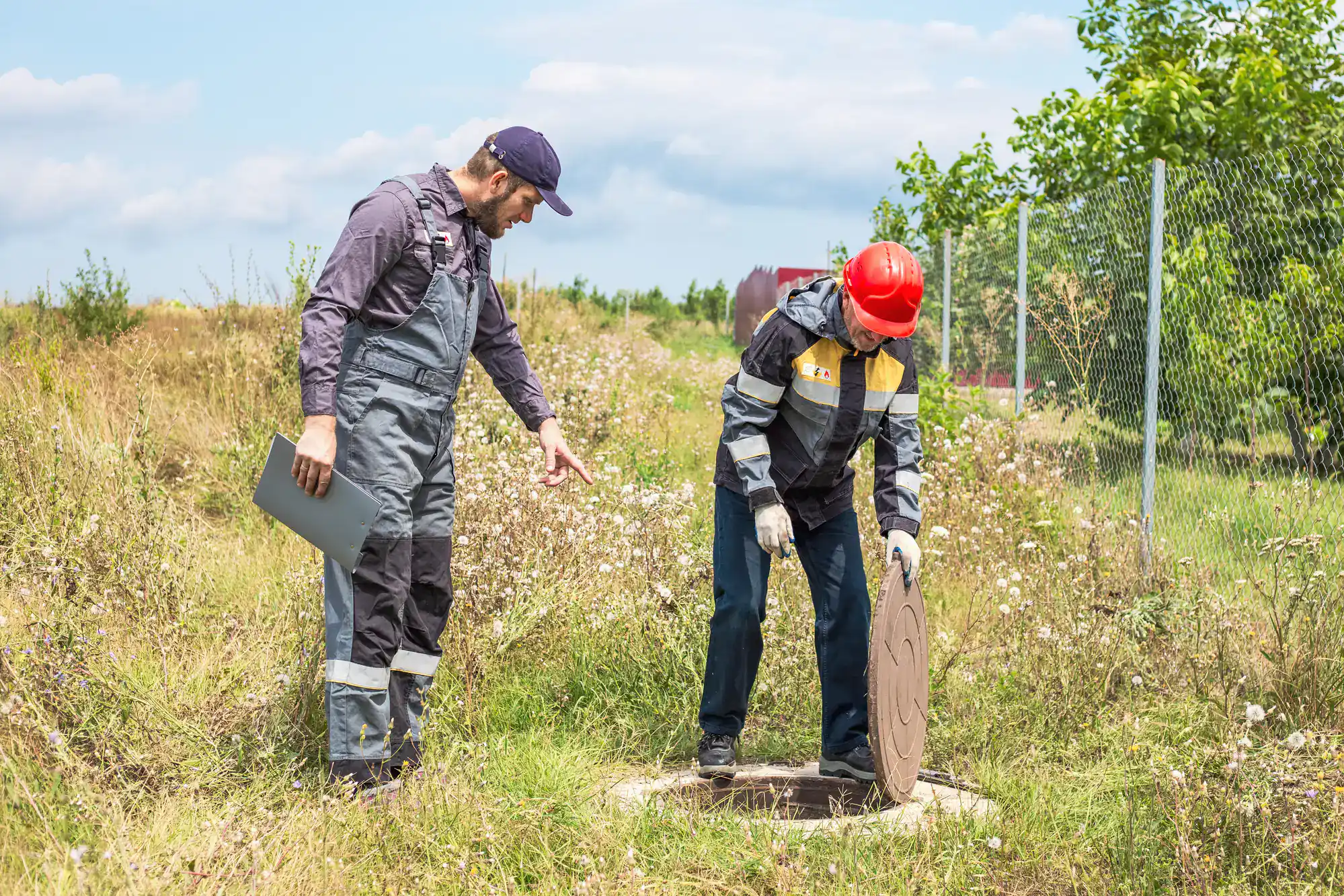
We do cesspool services across Greenlawn. Here is what changes for you. When a cesspool problem gets fixed properly, the difference is immediate, no more slow drains, no odors creeping into the yard, no wet patches showing up where they shouldn’t. But beyond the obvious relief, there’s something more important: you stop sitting on a problem that gets exponentially more expensive the longer it goes unaddressed. A routine pump-out is one thing. A sewage backup that overflows into your basement is a remediation job that can run $3,000 to $7,000 before you’ve even touched the structural damage.
For Greenlawn homeowners specifically, there’s a layer to this that doesn’t apply everywhere on Long Island. The hamlet’s housing stock is predominantly postwar, ranch homes, split-levels, and Cape Cods built from the late 1940s through the mid-1970s. The cesspools installed under those homes were designed to last 20 to 40 years. Many are now pushing 50 to 75. That doesn’t mean yours has failed, but it does mean the margin for error is thinner than it used to be, and the warning signs tend to show up faster than people expect.
Greenlawn’s proximity to Centerport Harbor adds another variable. After significant rainfall, the water table rises on the North Shore, and older cesspools in lower-lying areas can slow down or back up even if they were working fine the week before. That’s not necessarily a system failure. It’s a water table issue. But it looks the same from inside the house, and it takes someone who actually knows Greenlawn to read it correctly.
We’ve been doing this work across Nassau and Suffolk Counties for over 30 years. That’s not a number dropped in to sound impressive. It’s the difference between a company that’s read about Long Island’s soil conditions and one that has spent three decades working in them. The postwar housing stock in Greenlawn, the North Shore water table behavior near Centerport Harbor, the Suffolk County permit process, the real estate certification requirements, none of that is new information to us.
We’re licensed (License #LW-63684), insured, and bonded. When you call (631) 422-4122, a real person answers. Not a service, not a callback queue, a person who can give you a timeframe and tell you what to expect. Customers have called that out specifically in reviews, and it matters in a market where a lot of companies have gotten very good at looking available without actually being available.
From routine cesspool maintenance to emergency response to full IA system installations, we handle it all in-house. One company, one call.

It starts with a call. You describe what you’re seeing, slow drains, an odor outside, a wet area in the yard, or maybe nothing obvious but it’s been years since the system was last serviced. From there, we give you a real assessment of what’s likely going on and schedule a visit. Free estimates are standard. You’ll know what you’re looking at before any work begins.
On-site, the first step is locating and accessing the system. This matters more in Greenlawn than people realize, a lot of the older homes here have cesspools with no visible access point. The cover has been paved over, landscaped around, or simply never marked. We specialize in locating these systems before anything else happens.
Once access is confirmed, a waterproof video camera goes in before any digging does. This tells our crew exactly what’s happening underground (whether it’s a full tank, a blockage, a structural issue, or a water table problem from a recent rain event near the harbor) so the work that follows is targeted, not a guess.
From there, the job gets done: pumping, cleaning, repair, or a full assessment if replacement is on the table. If your system has reached the point where Suffolk County requires an Innovative/Alternative (IA) replacement, which has been mandatory for failed cesspools since July 2019. We handle the installation and can walk you through the county’s Septic Improvement Program, which now offers reimbursement of up to 75% of the project cost, or $25,000, for qualifying upgrades. After the work is complete, you get a clear explanation of what was done and what to watch for going forward.

Ready to get started?
Cesspool pumping and cleaning is the core of what we do, but it’s far from all of it. For Greenlawn’s older housing stock, where combination cesspool and leaching pool systems are common, our service goes wherever the system requires. That includes drywell cleaning, house trap replacements, main sewage line cleaning and replacement, storm drain cleaning, and video pipe inspections. If the system needs to be found before it can be serviced, that’s handled too, cesspool location is a named specialty, not an afterthought.
For homeowners selling a property in Greenlawn, we provide real estate certifications in-house. Suffolk County requires formal cesspool inspection and documentation for property transfers, and mortgage lenders won’t approve financing without it. With average home listings in Greenlawn around $539,500, a stalled closing over an undocumented cesspool is a serious problem. We produce the detailed inspection reports that satisfy the health department, lenders, and attorneys, so the sale moves forward on schedule.
Emergency cesspool service is available 24 hours a day. If something goes wrong at 11 PM on a Sunday (and it happens more often than people expect, especially after a heavy rain on the North Shore) the (631) 422-4122 line connects to real availability. Not a voicemail. Not a promise of a callback. Actual service.
