Useful Links
Other Services we provide in Blue Point
No and this catches a lot of Blue Point homeowners off guard. Since July 1, 2019, Suffolk County has prohibited replacing a failed cesspool with a new cesspool. Any replacement system installed in Blue Point must include at minimum a septic tank that precedes the leaching structure. You can’t simply swap one cesspool for another and call it done.
If you’re replacing a system on a property where new construction is involved, the requirements go further. Since July 2021, new single-family homes in Suffolk County must use Innovative and Alternative Onsite Wastewater Treatment systems the I/A OWTS nitrogen-reducing systems that treat wastewater before it reaches the soil. Given Blue Point’s direct proximity to the Great South Bay and the documented nitrogen problem in those waters, these regulations exist for a reason that’s very visible from this hamlet’s own shoreline. A licensed contractor who knows the current Suffolk County rules will make sure your replacement is compliant from day one.
It affects it in two meaningful ways. First, the water table in Blue Point is elevated because of the hamlet’s position directly on the bay. A higher water table reduces the effective depth between the bottom of your cesspool and the groundwater below it, which limits how well the soil can filter wastewater before it reaches the aquifer. This is why properties near the bay often need more frequent pumping every two to three years rather than the four to five year interval recommended in other parts of the country.
Second, Blue Point’s soil is primarily sandy and coastal in composition. Sandy soil is highly permeable, which means wastewater moves through it quickly. That’s less filtration time before nitrogen and other contaminants reach groundwater and, eventually, the bay. It’s one of the reasons Suffolk County has pushed hard on I/A OWTS systems specifically for coastal communities and why getting your installation right the first time matters more in Blue Point than it might in an inland town.
There’s no single number that applies to every property, and any contractor who quotes you a firm price before seeing your site should be a red flag. The research on what these jobs actually cost in Suffolk County is publicly available, and it’s worth knowing before you start getting estimates.
For a standard residential replacement using a conventional system (septic tank plus leaching pool, as required since 2019), costs in Suffolk County typically run in the range of thousands to tens of thousands of dollars depending on soil conditions, system complexity, lot access, and whether the existing system needs to be fully decommissioned. For I/A OWTS nitrogen-reducing systems, the cost is higher but the Suffolk County Septic Improvement Program currently offers combined State and County grants of up to $45,000 for eligible homeowners. Those grants are paid directly to us as the licensed installer, meaning your out-of-pocket cost is only the difference. We provide free estimates so you know exactly what you’re looking at before any commitment is made.
Yes, a permit is required. All cesspool installations and replacements in Blue Point fall under Suffolk County Department of Health Services jurisdiction, and the permit application has to be submitted before any work begins. The application requires engineered plans, soil testing results, and documentation of setback distances from wells, property lines, and any nearby water features which, in Blue Point, can include proximity to the Great South Bay itself.
The permit process typically takes two to four weeks from submission to approval. Skipping this step isn’t a shortcut it’s a liability. Unpermitted work can result in fines, force you to redo the entire installation at your own expense, and create serious problems if you ever try to sell your home or make an insurance claim. We handle the full permit coordination as part of the job, so you’re not left managing a government application process on top of everything else.
If your home was built in the 1960s and the original cesspool system has never been replaced, the math is straightforward: that system is now roughly 60 years old. The expected lifespan of a well-maintained cesspool is 30 to 40 years. You’re operating on a system that’s anywhere from 20 to 30 years past its designed service life.
The signs of a failing system are sometimes obvious sewage odors in the yard, wet or spongy ground above the cesspool, slow drains throughout the house, or gurgling sounds in the pipes. But sometimes the system degrades quietly before any of those symptoms appear. For a home of that age in Blue Point, where the coastal water table has been stressing the system’s leaching capacity for decades, a professional assessment is the only way to know where things actually stand. We offer free estimates that include an honest evaluation of your current system not just a sales pitch for a replacement you may or may not need yet.
In January 2023, Suffolk County announced a $2.4 million project to connect some Blue Point cesspool systems to the Patchogue wastewater treatment plant, with the goal of removing approximately 6,000 pounds of nitrogen from groundwater annually. A related project involves extending Patchogue’s sewer district to serve parcels in the surrounding watershed. So yes, some Blue Point properties are part of an active sewer extension plan.
The important word there is “some.” The sewer extension covers specific parcels not the entire hamlet. If your property isn’t in the extension zone, you’re responsible for your own system under Suffolk County’s current regulations, and those regulations aren’t waiting for a sewer line that may or may not reach your block. Even for properties that are in the extension zone, the connection timeline is not guaranteed, and a cesspool that fails in the meantime doesn’t pause for a construction schedule. If your system is showing signs of trouble or is simply old enough to be a concern, waiting on a sewer connection that hasn’t been built yet is a gamble that rarely pays off. A free estimate from us will give you a clear picture of where your system stands today so you can make that call with real information, not hope.
Hear from Our Customers

A code-compliant cesspool installation stops being something you think about. No odors creeping into the yard. No wet spots showing up in the grass after a rainstorm. No slow drains that keep getting worse while you hope for the best.
For Blue Point specifically, that outcome protects more than just your property. The hamlet sits directly on the Great South Bay, and the sandy coastal soil here moves wastewater through the ground quickly which means what goes into your cesspool reaches groundwater faster than it would in an inland community. A system that’s properly sized, correctly installed, and built to current Suffolk County standards is the difference between protecting your property and contributing to the nitrogen problem that’s already closing beaches and restricting shellfish harvesting in these waters.
The housing stock in Blue Point tells its own story. A significant portion of homes here were built between the 1940s and 1970s, which means the original cesspool systems on many of those properties are now 50 to 75 years old. The expected lifespan of a well-maintained cesspool is 30 to 40 years. If you’ve been in your home a while and the system has never been replaced, this isn’t a question of if it’s a question of when. Getting ahead of it means you choose the timeline. Waiting means the system does.
Drastic Drainage Long Island is a family-owned, fully licensed, insured, and bonded cesspool company based in West Babylon. We hold Suffolk County Liquid Waste License #LW-63684 and have been serving Nassau and Suffolk Counties for over 30 years. That’s not a marketing number it’s three decades of knowing how Long Island’s soil behaves, how the SCDHS permit process works, and what it actually takes to install a system that lasts.
We explicitly serve Blue Point and the surrounding coastal communities. Bayport and Blue Point share a school district, a shoreline, and the same coastal water table conditions that make cesspool work here different from inland Suffolk County jobs. When our crew shows up in Blue Point, we’re not learning the area on your dime. We already know it.
Every job is handled from start to finish permits, excavation, installation, and site cleanup. No subcontractors, no handoffs, no surprises on the bill. You get a free estimate upfront so you know exactly what you’re looking at before any work begins.
It starts with a free estimate and a site evaluation. Before anything gets dug up, our crew assesses your current system, the condition of your property, and what Suffolk County’s regulations require for your specific situation. In Blue Point, that evaluation includes accounting for the elevated water table that comes with being a bay community because the depth and placement of a leaching pool here isn’t the same calculation it would be a few miles inland.
From there, we handle the permit application with the Suffolk County Department of Health Services. This step alone trips up a lot of homeowners who try to coordinate it themselves. The application requires engineered plans, soil testing results, and documentation of setback distances from wells and property lines. The permit process typically takes two to four weeks, and the work doesn’t start until everything is approved and above board.
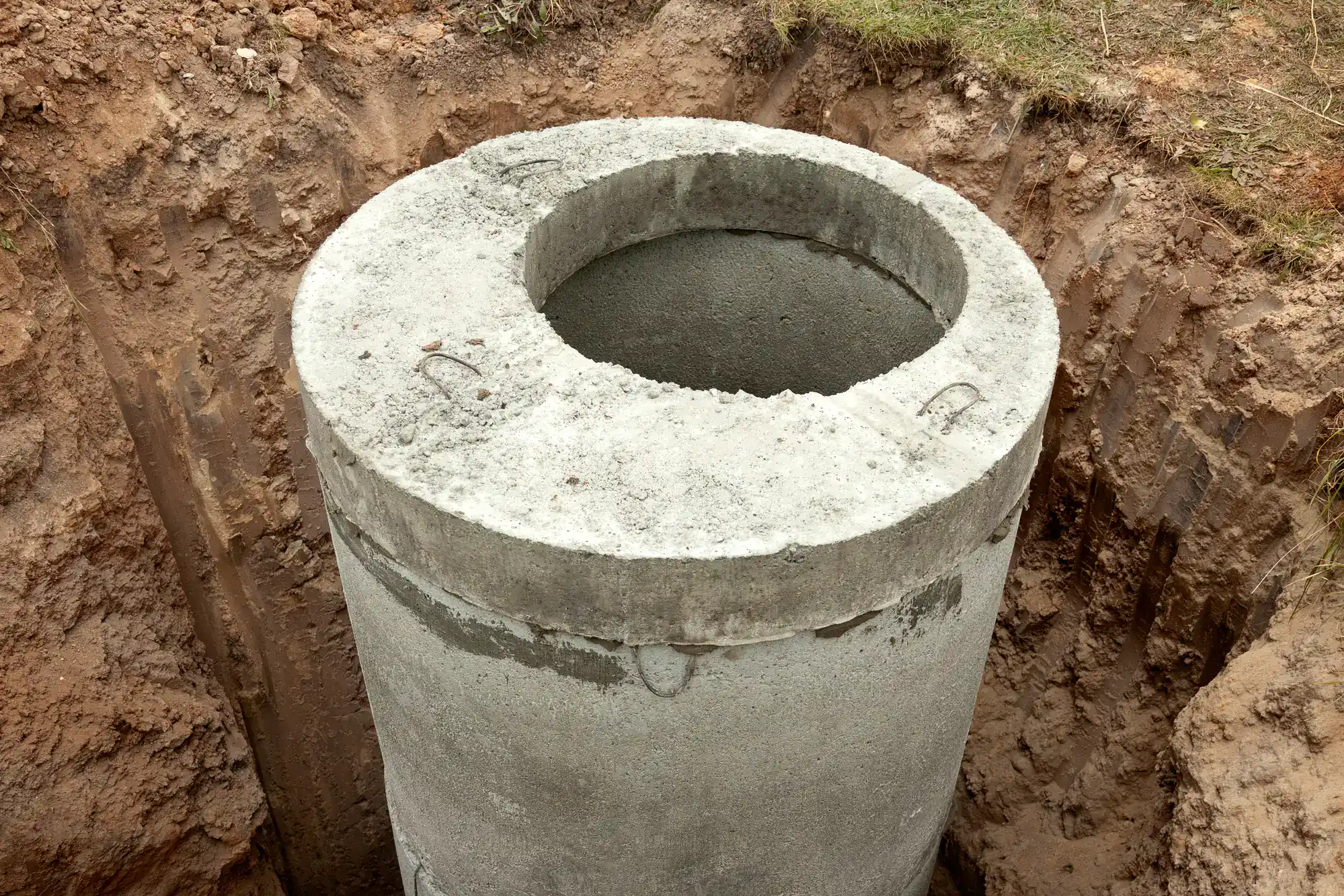
Once permits are in hand, the installation moves quickly. For most residential properties, the job takes one to five days depending on the complexity of the system and what’s already in the ground. Excavation goes down approximately 10 to 12 feet, the old system is properly decommissioned, the new tank and leaching pool are set, and the connection back to your home’s sewer line is made. The site gets backfilled and graded when it’s done. In a tight-knit hamlet like Blue Point where your neighbors are going to notice the trucks in your driveway, our crew cleans up after themselves.
Ready to get started?
Cesspool installation with us covers the full scope not just the tank drop. That means permit coordination with the SCDHS, full excavation, decommissioning of the old system, installation of the new tank and leaching pool, drywell installation where applicable, connection to your existing sewer line, backfill, and final grade restoration. If your property has cesspool rings that have shifted or deteriorated a common issue in Blue Point’s older homes that gets addressed as part of the evaluation too.
Since July 2019, Suffolk County has prohibited replacing a failed cesspool with a new cesspool. Any replacement system must include at minimum a septic tank preceding the leaching structure. For new construction since 2021, Innovative and Alternative Onsite Wastewater Treatment systems the nitrogen-reducing I/A OWTS systems are required. Blue Point’s position on the Great South Bay makes this regulation especially relevant here, given the direct connection between cesspool nitrogen discharge and the bay water quality that the community has been working to protect.
If you’re a homeowner who qualifies for the Suffolk County Septic Improvement Program, combined State and County grants of up to $45,000 are currently available for eligible I/A OWTS installations. That funding goes directly to us as the licensed installer after final inspection, meaning you only pay the remaining balance. Grant funding is first-come, first-served and limited we can walk you through whether your property and system type qualify before you commit to anything.