
By submitting you consent to receive service-related texts from Drastic Drainage. Reply STOP to opt out. Msg & data rates may apply. Consent not required to book service.
Useful Links
When your cesspool is properly serviced, you stop guessing. The slow drain that’s been bothering you for weeks gets diagnosed — not just pumped and forgotten. You find out whether you’re dealing with a full tank, a failing leaching pool, or something that needs a real fix before it becomes a $3,000 to $7,000 remediation job.
For East Patchogue homeowners specifically, this matters more than people realize. The community sits at 23 feet of elevation on Long Island’s South Shore outwash plain — flat land with sandy soil and a water table that rises every wet season. A cesspool that drains fine in October can back up by March without anything changing about how you’re using it. That’s not a broken system — that’s a South Shore reality. But knowing the difference, and staying ahead of it, is what regular professional service actually buys you.
The older housing stock here compounds the issue. A significant portion of East Patchogue’s ranch homes, hi-ranches, and Cape Cods were built in the 1940s and ’50s, with cesspools engineered to last 30 to 40 years. If you’ve been in your house for a long time and can’t remember the last time the system was serviced, there’s a good chance it’s been longer than it should have been. Getting a clear picture of where things stand — from someone who actually knows these systems — is what puts you back in control.
The general recommendation across Suffolk County is every three to five years, but that guideline doesn’t account for South Shore conditions. In East Patchogue, where the water table sits close to the surface and the flat terrain holds moisture longer than inland communities, the absorption capacity of a leaching pool is under more stress — especially in late winter and spring after months of precipitation. For South Shore properties like those in East Patchogue, a more realistic interval is every one to two years, depending on household size and system capacity.
Most East Patchogue cesspools hold between 500 and 1,500 gallons. A household of four people will fill a 1,000-gallon system faster than a retired couple in the same house. If you’ve never had the system inspected or you can’t remember the last time it was pumped, that’s the starting point — find out what you have, how full it is, and what condition the leaching pool is in. That single visit gives you a real maintenance schedule instead of a guess.
The most common early signs are slow drains throughout the house — not just one fixture, but multiple — along with gurgling sounds in the pipes, an odor near drains or in the yard, and unusually green or wet patches of grass over or near the system. These aren’t always dramatic. A cesspool can be 90% full with no visible symptoms at all, and by the time you notice something wrong, the system is already in distress.
In East Patchogue, the spring season is when most homeowners first notice problems. The water table rises after winter precipitation, the flat South Shore terrain doesn’t drain quickly, and systems that functioned fine through the fall suddenly start showing signs of stress. If you’re seeing any of these symptoms in March or April, it’s worth a professional assessment before it escalates. A backup that gets addressed early is a pump-out. One that’s ignored long enough becomes a sewage backup inside the home — and that’s a remediation job, not a maintenance call.
No — not since July 1, 2019. Suffolk County banned the installation of new conventional cesspools as of that date. If your cesspool fails and requires replacement, it must be replaced with an Innovative/Alternative (IA) onsite wastewater treatment system, not another conventional cesspool. These systems are designed to reduce nitrogen in residential wastewater by up to 70%, which matters significantly in East Patchogue given the community’s proximity to Patchogue Bay and the Great South Bay.
The cost of an IA system is higher than a conventional replacement, but the 2024 Suffolk Water Quality Restoration Act expanded the county’s reimbursement program significantly. Qualifying homeowners can now receive up to 75% of the project cost back, with a maximum reimbursement of $25,000. That changes the math considerably for many East Patchogue homeowners who assumed a cesspool replacement was financially out of reach. We can walk you through what the replacement process involves and what you may be eligible to recover through the county program.
Free, no-obligation estimates on cesspool, sewer, and drain work.
We get there quickly. No waiting days for a callback.
Backups don’t wait for business hours. Neither do we.
Fully licensed and insured across Long Island.
Up-to-date trucks and tools for cleaner, faster jobs.
Straight quotes, no surprises on the bill.
Hear from Our Customers
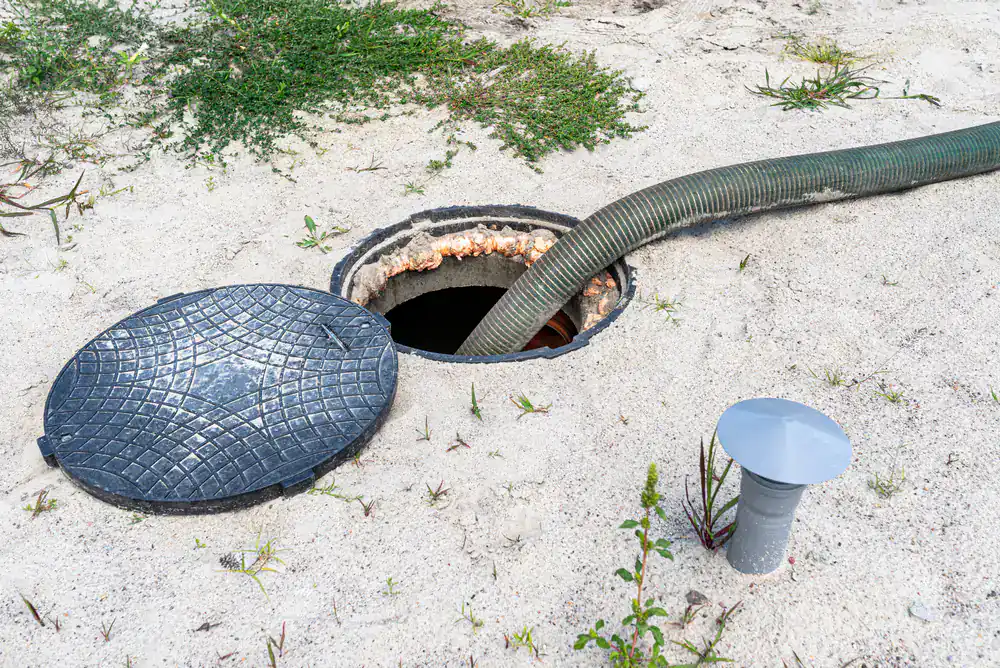
When your cesspool is properly serviced, you stop guessing. The slow drain that’s been bothering you for weeks gets diagnosed — not just pumped and forgotten. You find out whether you’re dealing with a full tank, a failing leaching pool, or something that needs a real fix before it becomes a $3,000 to $7,000 remediation job.
For East Patchogue homeowners specifically, this matters more than people realize. The community sits at 23 feet of elevation on Long Island’s South Shore outwash plain — flat land with sandy soil and a water table that rises every wet season. A cesspool that drains fine in October can back up by March without anything changing about how you’re using it. That’s not a broken system — that’s a South Shore reality. But knowing the difference, and staying ahead of it, is what regular professional service actually buys you.
The older housing stock here compounds the issue. A significant portion of East Patchogue’s ranch homes, hi-ranches, and Cape Cods were built in the 1940s and ’50s, with cesspools engineered to last 30 to 40 years. If you’ve been in your house for a long time and can’t remember the last time the system was serviced, there’s a good chance it’s been longer than it should have been. Getting a clear picture of where things stand — from someone who actually knows these systems — is what puts you back in control.
We’ve been doing this work for over 30 years, and our service area has always included Suffolk County communities like East Patchogue. That kind of time in the field isn’t just a number — it means the crew that pulls up to your property on Montauk Highway or off a side street near Swan Lake Park has worked on the same mid-century cesspool configurations that define this neighborhood. They’re not learning on your property.
We’re licensed (LW-63684), insured, and bonded. There are no subcontractors, no answering services, and no runaround. When you call, a real person picks up. When a technician shows up, they explain what they find and what it means — not in technical jargon, but in plain language. Customers have specifically called this out in reviews, and it’s not an accident. It’s just how we work.
Free estimates are standard. No charge to find out where you stand.
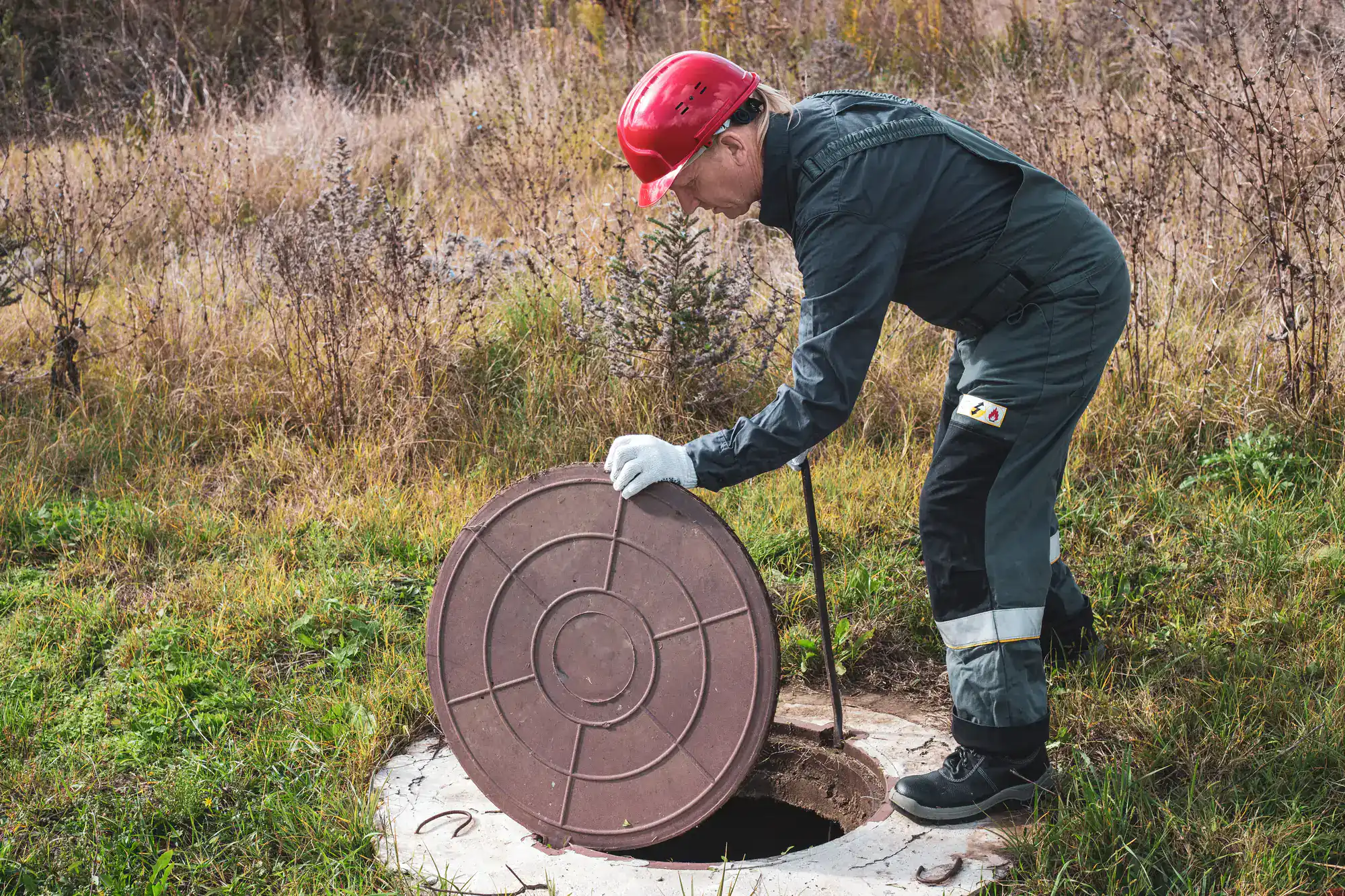
It starts with the phone call. A real person answers, gets the basics about your situation, and gives you an honest timeframe. If it’s an emergency — sewage backing up, a wet spot in the yard, a toilet that won’t drain — our 24-hour service means you’re not waiting until Monday morning.
When our crew arrives, the first step is assessment. For East Patchogue properties, especially older homes where the cesspool has no visible access point or no documentation of prior service, that means locating the system first. We specialize in cesspool location — finding systems that have no cover, no record, and no obvious marker. Once the system is located and accessible, a waterproof video camera goes in before anything else. This is the part most companies skip.
The camera tells you exactly what’s happening underground — whether it’s a full tank, a collapsed section, a compromised leaching pool, or a pipe problem — so the work that follows is targeted, not guesswork. After the diagnosis, you get a clear explanation of what’s needed. If it’s a routine pump-out, that gets done on the spot. If something more significant is required — a leaching pool service, a line replacement, or a full cesspool installation — you’ll know what’s involved and what it will cost before any additional work begins.
In Suffolk County, certain repairs and all new installations require permits and, since the 2019 ban on conventional cesspool replacements, must use an Innovative/Alternative system. We handle that process and can walk you through what grant reimbursement options may apply under the 2024 Suffolk Water Quality Restoration Act.

Ready to get started?
We handle the full range of cesspool and drainage work — not just pump-outs. That includes cesspool cleaning and pumping, leaching pool service, video pipe inspection, cesspool location, drywell cleaning, house trap replacement, main sewage line cleaning and replacement, storm drain cleaning, and complete cesspool installation. One company, one call, one point of accountability.
For East Patchogue specifically, a few services come up more often than others. Cesspool location is one of them. A large portion of the homes here were built before 1970, and many have systems with no visible cover, no access point, and no paperwork trail. If you don’t know where your system is, you can’t maintain it — and when something goes wrong, you need someone who can find it before they can fix it.
Real estate certifications are another high-demand service in this area. With median home values in East Patchogue reaching $518,343, homes move in a competitive market — and a cesspool inspection and certification is a required document with a closing date attached to it. We handle these with the same urgency as an emergency call.
Leaching pool service is also a recurring need given the South Shore water table conditions — when absorption capacity drops during wet seasons, a compromised leaching pool can turn a manageable system into an emergency fast. Getting that addressed before it fails is always the better outcome.
