
If you've been searching for a straight answer on septic installation costs in Brentwood, this breaks down what you actually need to know, no vague ranges, no runaround.

You searched for a number. Maybe you found $8,000 on one site and $35,000 on another, and now you’re more confused than when you started. That gap isn’t a mistake. It reflects a real difference between what septic installation costs nationally and what it costs here in Suffolk County, where the rules, the soil, and the regulatory requirements are unlike almost anywhere else in New York State.
We’ve been installing and maintaining septic systems across central Suffolk County for over 30 years. This page gives you the honest breakdown: what a standard system actually includes today, what it typically costs in Brentwood, what grant money might be available to you, and what to watch out for before you sign anything.
Here’s the first thing worth knowing: the word “standard” means something different in Suffolk County than it did even five years ago. Since July 1, 2019, it has been illegal to install a new cesspool in Suffolk County. That’s not a technicality. It’s a hard ban.
If your existing system fails and needs to be replaced, you cannot simply swap in a new cesspool. At minimum, the replacement must include a septic tank preceding a leaching structure. That’s what a conventional septic system is, and that’s the floor for any new installation in Brentwood today.
Whether you need to go a step further (into what’s called an I/A OWTS, or Innovative and Alternative Onsite Wastewater Treatment System) depends on your specific situation. New construction, major renovations, and certain additions can trigger that requirement. But for many homeowners in Brentwood dealing with a failing cesspool, a conventional septic system is still the legally permissible path.
The key is knowing which one applies to your property before anyone starts digging.

For a conventional septic system installation in Suffolk County (a tank plus a leaching structure, meeting the current Article 6 requirements) the typical cost range runs from $10,000 to $25,000. Where your project lands within that range depends on several factors that are genuinely property-specific: the size of your home and the number of bedrooms, the depth and condition of the soil on your lot, how accessible the installation site is, whether your old system needs to be properly decommissioned, and what the Suffolk County Department of Health Services permit process requires for your specific address.
The soil in central Suffolk County, where Brentwood sits, is primarily glacial outwash, a mix of sandy deposits and occasional clay pockets left behind from the last ice age. Sandy soil drains quickly, which sounds like a benefit for a septic system but actually creates its own complications: solids can move through the system faster than intended, and the proximity of everything to Long Island’s sole-source aquifer means the county holds installations to a very high standard.
That’s part of why Suffolk County’s costs run significantly higher than the national average of roughly $8,000, the regulatory environment here is among the strictest in New York State, and for good reason.
Labor typically accounts for 50% to 70% of total installation cost. The rest covers the tank itself, the leaching structure, excavation, backfill, permit fees, and disposal of the old system. A written, itemized estimate should break all of this out clearly.
If a contractor gives you a single lump number over the phone without seeing your property, that number isn’t reliable enough to plan around. Permit processing through the SCDHS typically takes two to four weeks, so factor that into your timeline. Work cannot begin until the permit is approved, and the system cannot be put into service until it passes a final SCDHS inspection.
Not every installation in Brentwood requires a nitrogen-reducing I/A OWTS system, but it’s worth understanding exactly what triggers that requirement, because the cost difference is significant. A conventional septic system might run $10,000 to $25,000. A full I/A OWTS installation typically runs $22,000 to $32,000 before any grants are applied.
The triggers for I/A OWTS in Suffolk County include new construction on a vacant lot, renovations where the cost of the work exceeds 50% of the home’s assessed market value, and additions that push the total bedroom count to five or more. If none of those conditions apply to your situation, if you’re simply replacing a failing cesspool on an existing single-family home in Brentwood without a major renovation attached. You may qualify for a conventional system.
We can tell you definitively after a site visit which system your property requires.
That said, even if an I/A OWTS isn’t required, it may be worth considering. The grant programs available in Suffolk County right now are specifically designed to offset the higher cost of nitrogen-reducing systems. As of July 2025, eligible homeowners can access up to $10,000 from the Suffolk County Septic Improvement Program, plus up to $25,000 from the New York State Septic System Replacement Fund, a combined maximum of $45,000 in non-repayable grant funding for qualifying properties.
The state earmarked $20 million of its most recent $30 million funding round specifically for Suffolk County. For many Brentwood homeowners, that changes the math considerably. After grants, the homeowner’s out-of-pocket share for an I/A OWTS installation can fall to somewhere between $2,000 and $12,000, sometimes less than a conventional system would cost without any assistance.
One critical detail about the grant process: the funding is paid directly to the installer after final inspection, not reimbursed to the homeowner after the fact. That means you need to apply before work begins, and your contractor must be enrolled in the program. We’re fully enrolled in both the Suffolk County Septic Improvement Program and the New York State Septic System Replacement Fund. Choosing a contractor who isn’t familiar with the SIP application process doesn’t just create paperwork headaches. It can disqualify you from funding entirely.
Want live answers?
Connect with a Drastic Drainage expert for fast, friendly support.
A lot of the anxiety around septic installation comes from not knowing what you don’t know. The questions below come up constantly in conversations with homeowners across central Suffolk County, people who’ve been putting off the call because they weren’t sure what they were walking into.
The goal here is to give you enough context that when you do call someone, you’re asking the right questions and you know what a reasonable answer sounds like.
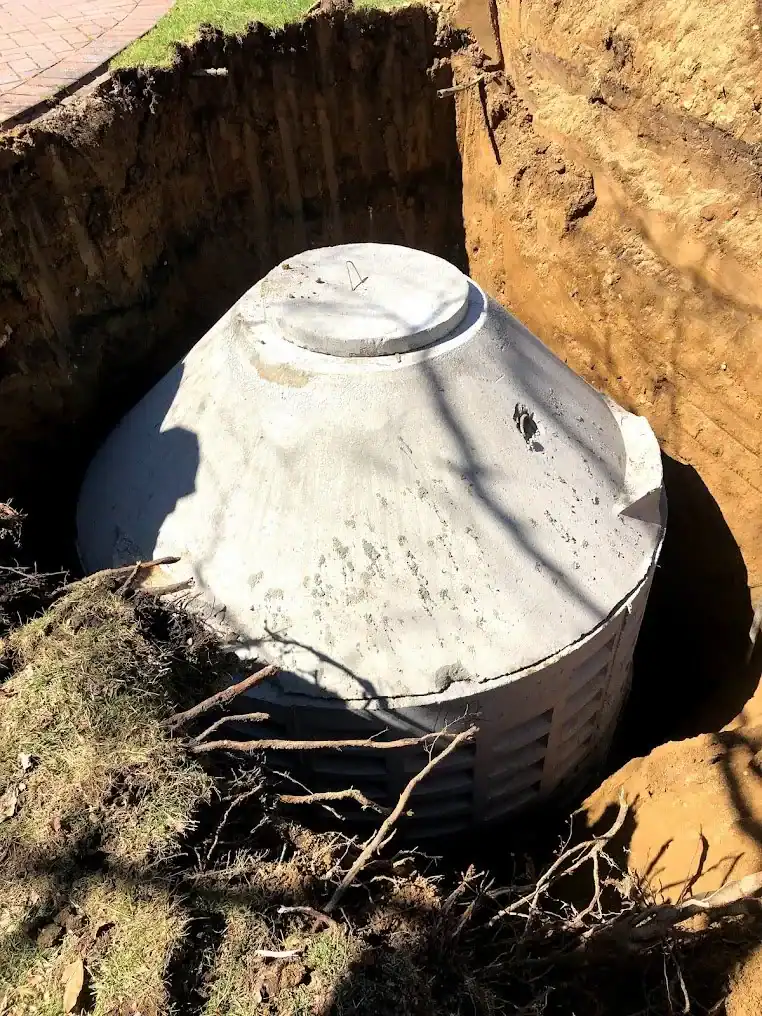
Yes, every septic system installation in Suffolk County requires a permit from the Suffolk County Department of Health Services. This isn’t optional, and it isn’t a formality. The SCDHS reviews the proposed system design, the site conditions, the setback distances from wells and property lines, and the soil data before approving any work. No legitimate contractor should break ground without that permit in hand.
The permit process typically takes two to four weeks from submission to approval, assuming the application is complete and the site meets the required standards. Some complex sites or properties with unusual soil conditions can take longer. That timeline matters for planning purposes, if you’re dealing with a system failure or a real estate transaction with a closing deadline, you need to factor in permit lead time before scheduling installation.
As a hamlet within the Town of Islip, Brentwood properties fall under both Islip Town regulations and the Suffolk County Sanitary Code. We’re familiar with both. Article 6 of the Suffolk County Sanitary Code is the governing framework for cesspool and septic work in the county, and it’s been updated significantly since 2019.
When you hire us to pull permits on your behalf, you’re working with someone current on those updates. We hold Suffolk County liquid waste license #LW-63684 and are fully bonded and insured. That’s the minimum standard you should expect from anyone doing this work on your property.
This is one of the most common situations we encounter in Brentwood and the surrounding Islip Town area. Much of the housing stock here was built in the 1940s, 1950s, and 1960s, and a lot of those original cesspools have never been serviced, never been documented, and in some cases, genuinely can’t be located without specialized equipment. Decades of landscaping, soil settling, and property improvements have buried lids and obscured access points that were never mapped to begin with.
If you don’t know where your cesspool is, that’s not an unusual starting point. We locate hard-to-find cesspools routinely, and it’s often the first step before any assessment or installation work can happen. Once the system is located, we can evaluate its condition, determine whether it’s still functioning within acceptable parameters, and give you an honest read on whether you’re looking at routine maintenance, a near-term replacement, or something more urgent.
The absence of service records also matters for grant eligibility. If you’re applying for the Suffolk County Septic Improvement Program, the application requires documentation of your existing system. Getting that documentation in order before you apply, rather than scrambling to find it mid-process, saves time and reduces the risk of delays.
If you’re buying or selling a home in Brentwood and the system’s status is unknown, that’s a situation worth addressing before closing, not after. Cesspool certifications are required for property transfers in Suffolk County, and a system that hasn’t been inspected or pumped in years can surface problems at exactly the wrong moment.
Routine cesspool pumping, which typically runs $300 to $600 every two to three years, is the most cost-effective way to stay ahead of that scenario and avoid a forced emergency installation at full cost with no time to plan.
The cost of septic system installation in Brentwood isn’t a number anyone can give you accurately without knowing your property. What we can tell you is that the range for a conventional system runs $10,000 to $25,000 in Suffolk County, that I/A OWTS systems typically run $22,000 to $32,000 before grants, and that as of July 2025, qualifying homeowners can access up to $45,000 in combined state and county funding that most people don’t know they’re eligible for.
What matters most is working with someone who knows this county, the soil, the permit process, the grant programs, and the regulations that have changed significantly in the last several years. We’ve spent over 30 years working specifically in Suffolk County, and we can walk you through what your property actually requires, what it will realistically cost, and what funding options apply to your situation.
Reach out for a free estimate, and get a straight answer from someone who picks up the phone.
Summary:

Article details:
Share: