
Southold's cesspool rules have changed. Here's what the new materials and systems actually look like — and why it matters for your property.

Most Southold homeowners don’t think about their cesspool until something goes wrong. Then suddenly you’re dealing with slow drains, a soggy patch in the yard, or a home inspector telling you the system needs to go — and you’re being asked to make a $10,000 to $25,000 decision about something you’ve never had to think about before.
What makes this harder is that the landscape has genuinely changed. What gets installed today is not what came out of the ground. The materials are different. The technology is different. The regulations are different. And for Southold specifically, the environmental stakes and the funding opportunities are different too. Here’s what you actually need to know.
On July 1, 2019, Suffolk County banned the installation of new traditional cesspools. If your system fails and needs to be replaced, you can no longer put back what came out. At minimum, you’re looking at a conventional septic system. In many cases — particularly for new construction or major renovations — you’re required to install what’s called an I/A OWTS, which stands for Innovative and Alternative Onsite Wastewater Treatment System.
The reason for the change comes down to nitrogen. Suffolk County has roughly 252,000 cesspools still in the ground, and a conventional cesspool releases an average of 40 pounds of nitrogen per household per year into the groundwater. On Long Island, that matters more than almost anywhere else in the country — because 100% of the drinking water here comes from groundwater. There are no reservoirs. No surface water backup. What goes into the ground eventually comes back out of the tap.
For Southold specifically, this environmental issue is even more acute. The town sits between the Long Island Sound to the north and Peconic Bay to the south. Nitrogen from cesspools drains toward both waterways, and the Peconic Estuary Partnership has identified onsite wastewater systems as the largest single cause of degraded water quality in the bay. That translates to beach closures, shellfish harvest restrictions, toxic algae blooms, and fish kills — real consequences for a community built around its waterfront.

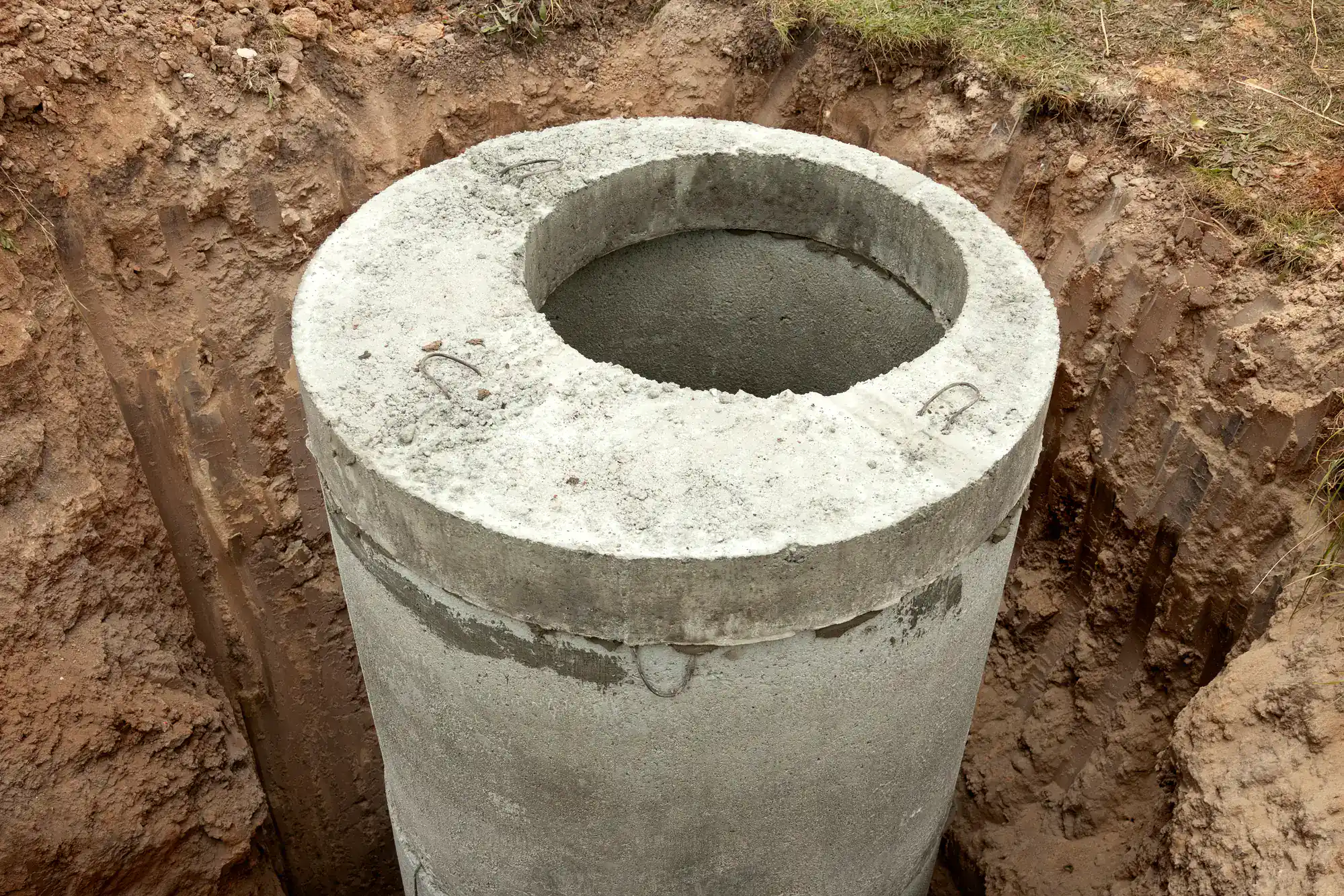
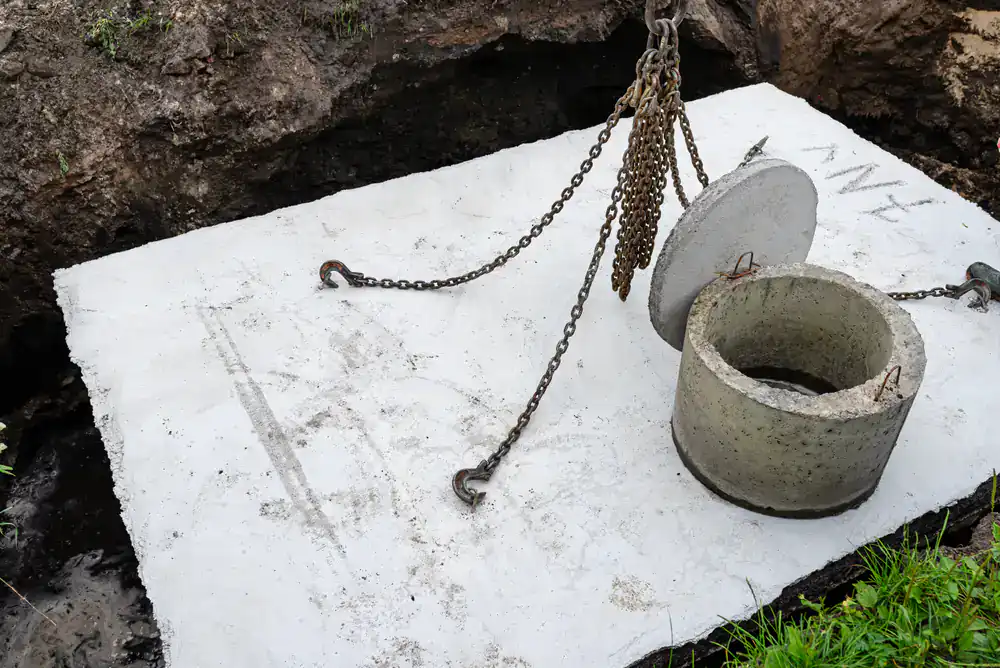
A traditional cesspool is essentially a buried concrete chamber with perforated walls. Wastewater flows in, solids settle at the bottom, and liquid seeps out through the walls into the surrounding soil. It’s a passive system — there’s no treatment happening, just slow dispersal. The concrete rings that make up most of the older systems on Southold’s housing stock were designed for smaller households generating less water, and they were installed before anyone was seriously measuring what they were putting into the aquifer.
An I/A OWTS works fundamentally differently. These systems use engineered treatment media, controlled aeration, biological processes, and in some cases recirculation to actively break down nitrogen before the effluent ever reaches the soil. The result is a dramatic reduction in nitrogen output — up to 70% less than a conventional cesspool. That’s not a minor improvement. It’s the difference between a system that slowly degrades the groundwater and one that actively protects it.
The materials used in modern installations reflect this shift. Where older cesspools used precast concrete rings that were poured, stacked, and lowered into the ground, today’s systems often incorporate fiberglass tanks, high-density polyethylene components, and engineered treatment media that wouldn’t have existed in the era when most Southold homes were built. These materials are more durable, more resistant to the chemical environment of wastewater, and better suited to Long Island’s sandy, coastal soils than the concrete systems they’re replacing.
It’s also worth noting that I/A OWTS technology is still evolving. Stony Brook University’s Center for Clean Water Technology is actively developing next-generation systems designed to be less expensive and more accessible than the current proprietary options — which means the landscape five years from now may look different again. For now, the systems being installed under Suffolk County’s requirements are proven. More than 1,000 Suffolk County homeowners have already completed installations through the SIP grant program alone, and the performance data on these systems is solid.
One thing that surprises many homeowners: I/A OWTS systems are not experimental. They’ve been in widespread use in Suffolk County since the Septic Improvement Program launched in 2017. If a contractor tries to sell you on the idea that the old concrete-ring cesspool is still a legal option, or that the newer systems are unproven, neither of those things is true.
Southold isn’t just another Suffolk County town when it comes to cesspool installation. It sits in the Peconic Bay region — a designation under New York State law that includes five towns: East Hampton, Riverhead, Shelter Island, Southampton, and Southold. That designation matters for two reasons: environmental priority and grant funding.
On the funding side, that environmental priority translates into real money. The Suffolk County Septic Improvement Program offers grants to homeowners upgrading to I/A OWTS systems, and properties in environmentally sensitive areas — which includes Southold’s proximity to Peconic Bay and Long Island Sound — receive priority consideration for that funding. As of July 2025, combined state and county grants of up to $45,000 are available. An additional loan of up to $10,000 is available through CDCLI at 3% interest over 15 years. For many Southold homeowners, that funding can cover the entire cost of a new system.
NY Town Law § 64-EE, passed in 2024, specifically names Southold in the Peconic Bay Region Septic System Replacement Loan Program. This isn’t a general Suffolk County program that Southold happens to qualify for — it’s legislation written with the Peconic Bay region explicitly in mind. That distinction matters when you’re trying to understand whether you qualify and how quickly you can move through the application process.
The other factor specific to Southold is the housing stock. A significant portion of the town’s homes were built between the 1940s and the 1970s. Those original cesspool systems were never designed for modern household water use, and they’re reaching or exceeding the end of their useful life. A properly installed system today is designed to last 20 to 30 years. Many of the systems still in the ground across Southold’s hamlets — from Mattituck to Orient — are well past that mark.
Want live answers?
Connect with a Drastic Drainage expert for fast, friendly support.
Understanding what you’re buying makes the whole process less stressful. Cesspool and septic system installation isn’t just digging a hole and dropping in a tank. There’s a specific sequence of steps, each with its own requirements, and skipping any of them creates problems down the road — often at the worst possible time, like when you’re trying to sell the property.
The process starts before anything touches the ground. Soil testing and percolation tests determine how well the soil absorbs water, which directly affects system sizing and placement. Suffolk County requires permits through the Department of Health Services for all cesspool replacements since 2019 — permits typically cost between $200 and $500 and take two to four weeks to process. A contractor who skips this step isn’t saving you time. They’re creating a liability that will surface at your next real estate transaction.
The single most important credential to verify is the Suffolk County Consumer Affairs Liquid Waste License. This is not a general contractor’s license or a plumbing license — it’s a specific credential the county requires for any company performing cesspool or septic work in Suffolk County. Ask for the license number before you agree to anything. A legitimate contractor will give it to you without hesitation. We hold Suffolk County Consumer Affairs Liquid Waste License number LW-63684, and we’re happy to confirm that upfront.
Beyond licensing, ask whether the contractor will handle all SCDHS permit applications and inspection scheduling, or whether that falls on you. The installation process involves multiple inspection stages — at excavation, at tank placement, and before backfill — and each one needs to be coordinated with the health department. A contractor who leaves you to manage that process on your own is leaving you with real work and real risk.
Ask about grant assistance too. If you’re a Southold homeowner upgrading to an I/A OWTS system, you may qualify for significant funding through the Suffolk County Septic Improvement Program. A contractor who knows the program and can help you navigate the application process is providing direct financial value — not just installation services. The difference between a $25,000 out-of-pocket bill and a substantially reduced cost after grants is not trivial, and the priority consideration that Peconic Bay region properties receive makes Southold homeowners particularly well-positioned to access that funding.
Also ask how the contractor handles older properties with no system records. A significant number of Southold homes — especially those built in the mid-20th century — have cesspools with no documentation, no markers, and no clear location on record. Locating those systems requires more than a shovel and a guess. We use electronic locating equipment to find systems that other companies give up on, which is a necessary capability when the first step of installation is knowing exactly what you’re working with and where it is.
Finally, ask for a written estimate before any work begins. The fear of hidden charges added after the job is one of the most common concerns homeowners in this space express, and for good reason. A contractor who won’t put the scope and cost in writing before starting is a contractor worth walking away from.
For most Southold properties, the physical installation itself — once permits are in hand — takes one to three days depending on system type, site conditions, and access. I/A OWTS systems involve more components than a conventional septic system, so they typically take longer to install than a straight tank replacement.
The part that takes the most time is permitting. The SCDHS permit process runs two to four weeks under normal conditions. That timeline can stretch if there are complications with the soil testing, if the property has unusual setback requirements, or if the application needs additional review. Starting the permit process as early as possible — before you’re in a crisis situation — is the most effective way to control your timeline.
Real estate transactions are one of the most common drivers of cesspool installation demand in Southold, and they’re also the situation where timeline pressure is highest. If a home inspector flags a failing system and the closing has a fixed date, you’re working backward from a deadline. That’s a stressful position to be in, and it’s worth understanding that the permitting timeline is largely outside any contractor’s control once the application is submitted. What we can do is submit a complete, accurate application the first time — avoiding the delays that come from paperwork errors or missing documentation.
Seasonal factors play a role too. Spring and summer are the busiest seasons for cesspool installation on Long Island, which means scheduling demand is highest exactly when Southold’s real estate market is most active. If you know a replacement is coming — whether because of a home inspection, a system that’s been showing signs of trouble, or a renovation that will trigger the permit requirement — getting the process started before the peak season puts you ahead of the queue.
Southold’s sandy, well-draining glacial soils are actually well-suited to septic system installation. The same coastal soil conditions that affect how these systems perform over time also make excavation relatively straightforward compared to the clay-heavy soils you’d find in other parts of the region. That’s one of the reasons Long Island’s sandy geology, despite its challenges for nitrogen retention, has supported onsite wastewater systems for as long as it has.
The technology has changed. The regulations have changed. And for Southold specifically, the funding available to help you upgrade has never been more substantial. What hasn’t changed is the importance of working with a contractor who actually knows what they’re doing in this county, in these soils, under these regulations.
We’ve spent thirty-plus years doing cesspool installation and septic system pumping on Long Island, which means we’ve worked through every regulatory shift, every soil condition, and every type of system — from the old concrete-ring cesspools that are still coming out of the ground across the North Fork to the I/A OWTS systems that are going in today. We handle permits, we work with the SIP grant process, and we use electronic locating equipment to find systems that other companies can’t.
If you’re a Southold property owner dealing with a failing system, facing a replacement requirement, or just trying to understand what your options are, reach out to Drastic Drainage Long Island. We’ll give you a straight answer about what you’re dealing with and what it actually takes to fix it.
Summary:
Article details:
Share: