
The rules around septic system installation in Suffolk County have shifted significantly. Here's what that means for Amityville homeowners, and what to do about it.
If your home sits on Suffolk County’s South Shore, there’s a good chance the wastewater system beneath your property is older than your roof, your HVAC, and maybe even your kitchen. Most homeowners don’t think about it until something goes wrong, a backup, a soggy patch in the yard, or a failed inspection before a home sale. But the rules around what you can do when something does go wrong have changed significantly over the last few years. Understanding those changes now, before you’re in crisis mode, could save you thousands of dollars and a lot of stress.
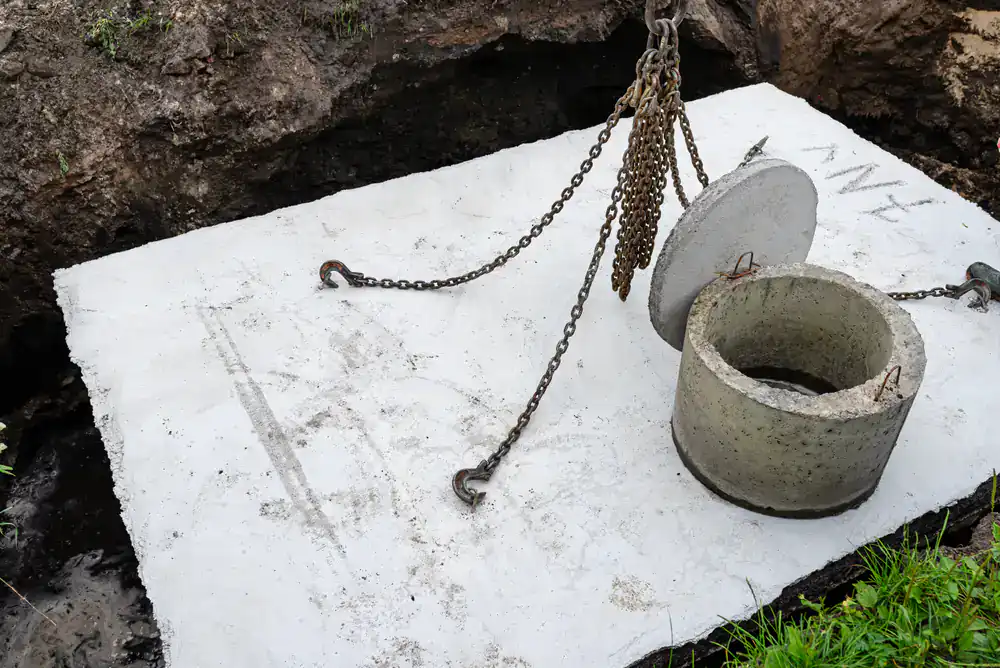
The biggest shift most homeowners haven’t heard about happened in July 2019. That’s when Suffolk County prohibited in-kind cesspool replacement. In plain terms: if your cesspool fails, you can no longer replace it with another cesspool. At minimum, the replacement must include a full septic tank preceding the leaching structure.
In many cases, particularly near waterways like the Great South Bay, a nitrogen-reducing system called an I/A OWTS (Innovative and Alternative Onsite Wastewater Treatment System) may be required. This wasn’t a quiet policy tweak. It fundamentally changed the landscape for every homeowner in Amityville and across the South Shore. The “wait until it breaks, then fix it cheap” approach is no longer an option.
When a system fails now, the replacement is a full septic installation, and that changes both the cost and the planning timeline involved.

Amityville’s location matters here. The village sits directly along the Great South Bay, and the South Shore of Suffolk County has two conditions that make aging cesspools a genuine problem: a high water table and sandy, porous soil. That combination means that whatever leaves a cesspool or septic system doesn’t stay put for long.
Nitrogen and other contaminants move quickly through the soil column and into the groundwater, the same groundwater that supplies 100% of Long Island’s drinking water. There are no reservoirs here, no rivers feeding a municipal water treatment plant. Every drop of drinking water on this island comes from underground aquifers, and those aquifers have been absorbing nitrogen from more than 360,000 outdated cesspools and septic systems across Suffolk County for decades.
Nitrogen levels in the main Long Island aquifer rose 200% between 1987 and 2005. The trend hasn’t reversed. For Amityville homeowners specifically, this matters beyond the tap. The Great South Bay has faced serious water quality degradation from nitrogen runoff, affecting local shellfish and the recreational use of the bay that defines the community.
Suffolk County voters recognized this in November 2024, passing the Water Quality Restoration Act, a new fund backed by a 1/8% sales tax dedicated specifically to modernizing wastewater infrastructure across the county. That vote wasn’t abstract environmental politics. It was a direct response to what’s happening in communities like Amityville, where the bay is right there and the consequences of inaction are visible.
I/A OWTS systems are designed to address exactly this problem. Unlike a conventional septic system, which treats wastewater to a basic standard before releasing it into the soil, an I/A OWTS removes nitrogen at the treatment stage, significantly reducing the amount that reaches the groundwater. For properties near the bay or in areas with a high water table, these systems aren’t just a regulatory checkbox. They’re genuinely better technology for the environment your home sits in.
One of the biggest sources of anxiety for homeowners going through this process for the first time is not knowing what to expect. The physical work, excavation, tank placement, connecting the leaching structure, backfill, typically takes five to seven days. But the full timeline from start to finish is longer, because the permit process through the Suffolk County Department of Health Services (SCDHS) Office of Wastewater Management runs on its own schedule.
After a complete application is submitted, permit processing typically takes two to four weeks. That application isn’t a simple form. It requires property documentation, a site plan, soil evaluation data including percolation testing, and system design specifications. For systems handling more than 1,000 gallons of daily flow, a licensed professional engineer must certify the design.
This is part of why choosing a contractor who knows the SCDHS process matters as much as choosing one who can run an excavator. A contractor who’s done this dozens of times in Suffolk County knows what the application needs to include, how to avoid delays, and when to expect the permit to come through.
There’s another step that often gets overlooked on older South Shore properties: locating the existing system before any new work begins. Many homes in Amityville were built in the post-WWII suburban boom of the 1950s and 1960s, and their cesspools were installed before modern record-keeping requirements. There may be no map, no prior service records, and no obvious surface markers.
Finding an unmapped or buried cesspool is a prerequisite to designing a replacement system, and it requires a contractor with the right equipment and experience to do it accurately. Skipping this step or guessing at it creates problems downstream, sometimes literally. After installation, the system must pass a final inspection by the county health department before backfill. That inspection is the official sign-off that the system was installed correctly and to code.
A contractor who manages this entire sequence, from permit application through final inspection, removes a significant burden from the homeowner and reduces the risk of a non-compliant system that creates legal and financial headaches later.
Want live answers?
Connect with a Drastic Drainage expert for fast, friendly support.
Here’s the part of this conversation that tends to change how homeowners feel about the whole situation. Suffolk County’s Septic Improvement Program, often referred to through the county’s Reclaim Our Water initiative, currently offers a base grant of $15,000 toward the cost of an I/A OWTS installation. The county has proposed increasing that figure to $20,000.
For a system that can cost between $19,000 and $25,000, that’s not a minor discount. That’s a program that can cover the majority of the expense for eligible homeowners. Most people have either never heard of it or assume they won’t qualify. The reality is more accessible than that, and a contractor who knows the program can walk you through what eligibility looks like for your specific property.

The program is open to residential properties in Suffolk County that are currently served by a cesspool or conventional septic system that does not meet current nitrogen-reducing standards. Properties near environmentally sensitive areas, including waterways like the Great South Bay, may receive priority consideration, which makes this particularly relevant for Amityville homeowners.
Eligibility isn’t determined by income alone. The program looks at the type of system currently in place, the property’s location relative to water bodies and the aquifer, and whether the property meets the basic criteria for an I/A OWTS installation. The county has administrative capacity to issue between 500 and 1,000 grants per year, with plans to increase that to 1,500 annually by 2027.
That sounds like a lot until you consider that there are more than 360,000 properties in Suffolk County with outdated systems. The program is real and funded, but it isn’t unlimited. Timing matters in a practical way here. A homeowner who applies proactively, before their system fails, can plan the installation on their own schedule, choose their contractor, and use the grant to offset the cost.
A homeowner whose system fails unexpectedly may face the same $19,000 to $25,000 replacement cost in emergency conditions, potentially without the time to navigate the grant application process properly. The financial case for acting before a failure, rather than after, is straightforward.
The application process involves submitting documentation through the county, selecting a contractor who is authorized to perform I/A OWTS installations, and entering into an operation and maintenance agreement for the new system. It’s not a one-page form, but it’s a manageable process, especially with a contractor who has done it before and knows what the county needs at each step.
Not every contractor who offers septic system installation in Suffolk County has the same depth of experience with local regulations, the SCDHS permit process, or the SIP grant program. The difference between a contractor who knows this county and one who doesn’t can show up in a failed inspection, a delayed permit, or a missed grant opportunity worth thousands of dollars.
A few things are worth confirming before you hire anyone. First, verify that the contractor is licensed and insured, and ask for their license number. A legitimate contractor will give it to you without hesitation. Second, ask specifically whether they’ve managed SCDHS permit applications for septic installations in Suffolk County and how many they’ve handled. Third, if you’re considering an I/A OWTS system, ask whether they can assist with the SIP grant application process. Not every installer can, and the ones who can save you significant time and money.
It’s also worth asking how they handle older properties where the existing system may not be mapped or easy to locate. On South Shore properties built in the 1950s and 1960s, this is a common situation, not an edge case. A contractor who treats it as routine is a contractor who’s actually worked in this market.
Beyond credentials, pay attention to how a contractor communicates during the estimate process. Do they explain what they found during the site evaluation? Do they walk you through what the permit requires and why? Do they give you a written estimate that itemizes the work before anything starts? These aren’t just nice-to-haves. They’re signals that you’re dealing with someone who will manage your project the way it needs to be managed, and won’t surprise you with a different number once the excavator is already in your yard.
We’ve been working on Long Island’s septic and cesspool systems for over 30 years. That’s not a general claim about experience. It’s three decades of working specifically with the soil conditions, water table dynamics, and aging infrastructure that define South Shore communities like Amityville. We know the SCDHS process, we know the SIP grant program, and we know how to find a cesspool that hasn’t been touched since 1967. Our license number is LW-63684, and we’re fully insured and bonded. When you call us, you reach us, not a national dispatch center.
The homeowners who navigate this process most smoothly are the ones who didn’t wait for a backup or a failed real estate inspection to start asking questions. Suffolk County’s regulatory environment has changed, the grant funding is real and available, and the technology for modern septic system installation is genuinely better than what most South Shore homes are currently running on.
If your home is on a cesspool, especially one that’s never been inspected, is more than 20 years old, or sits on a property near the Great South Bay, it’s worth understanding where you stand before the system makes that decision for you. A free estimate costs nothing and gives you real information about your property, your options, and whether the SIP grant program applies to your situation.
We offer free estimates and have spent more than three decades helping Suffolk County homeowners understand and navigate exactly this kind of project. Reach out when you’re ready to get a straight answer about what’s actually under your yard.
Summary:

Article details:
Share: