
Shirley homeowners have real options for reducing the cost of a cesspool installation, most just don't know where to start. Here's what actually moves the needle.
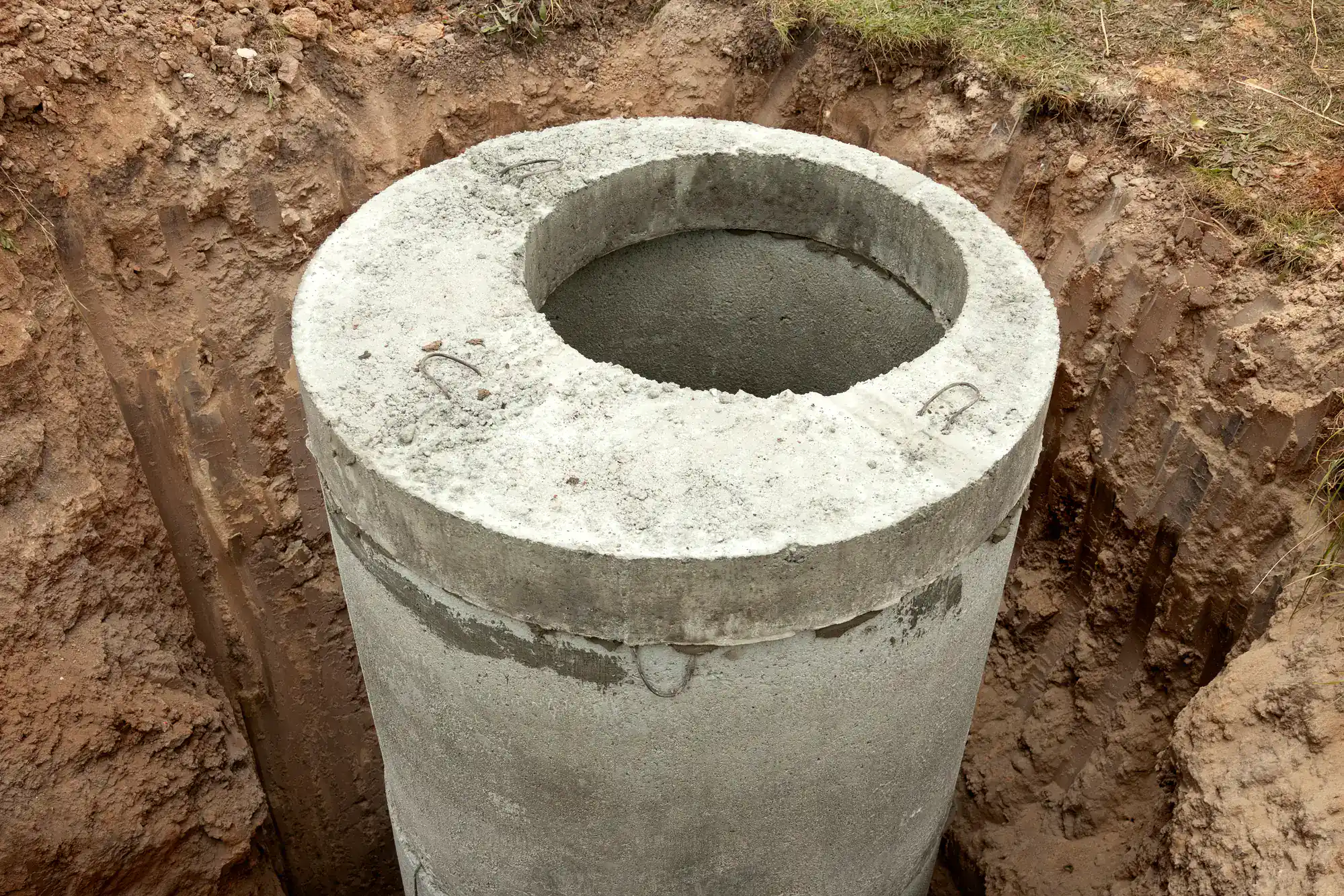
If you own a home in Shirley, there’s a reasonable chance your cesspool is older than your car, your kids, and maybe even your mortgage. The community was built up largely in the 1940s and ’50s, Walter T. Shirley’s postwar development put roughly 4,000 homes on this stretch of the South Shore, and many of those original systems are still underground right now, doing their best.
The problem isn’t just age. It’s that most homeowners don’t think about their cesspool until something goes wrong. And by then, the options for saving money have already narrowed considerably. Here’s what to know before you get there.
There’s a version of this where you plan ahead, schedule the work during a slower season, apply for grant funding, and come out the other side paying a fraction of what a rushed replacement would cost. Then there’s the version where your system backs up in March, you’re on the phone at 7 a.m. trying to find someone available that week, and every advantage you had is gone.
The difference between those two scenarios isn’t luck. It’s timing. A planned cesspool installation in Suffolk County gives you access to permit scheduling, contractor availability, and, most importantly, grant programs that can dramatically reduce what you pay out of pocket. An emergency replacement eliminates all of that.
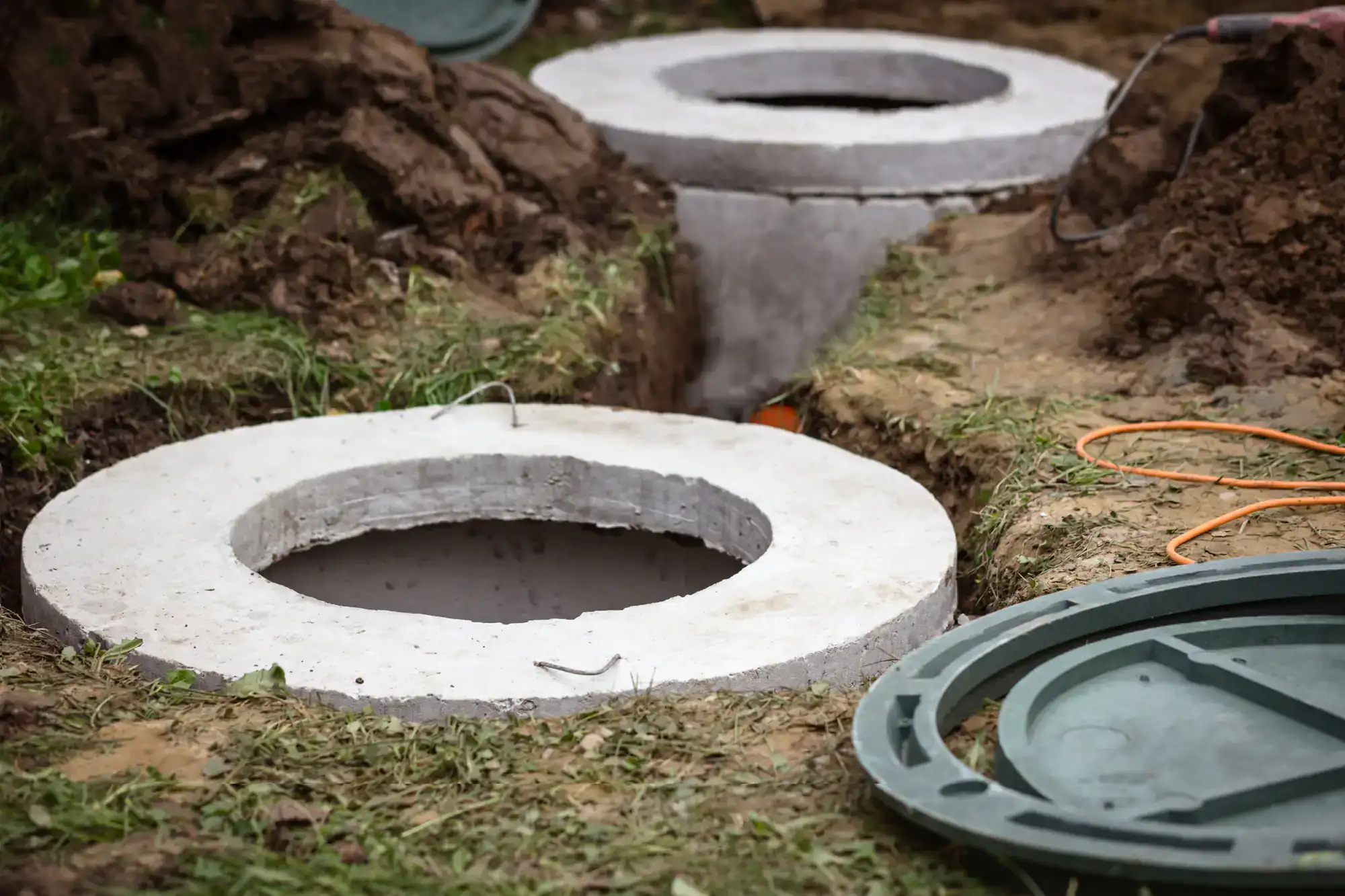
This is the part most Shirley homeowners don’t know about, and it’s the single biggest lever for reducing the cost of a cesspool installation.
Suffolk County’s Septic Improvement Program, part of the broader “Reclaim Our Water” initiative, offers eligible homeowners up to $20,000 in county grant funding for installing an I/A OWTS, which stands for Innovative/Alternative Onsite Wastewater Treatment System. These are nitrogen-reducing systems that have become the standard for new construction and major renovations in Suffolk County since the 2019 regulatory change. On top of the county grant, New York State offers up to an additional $25,000. Combined, that’s up to $45,000 in available funding as of July 2025.
Here’s the part that surprises people: the grant doesn’t go to you. It goes directly to the licensed installer after the final Suffolk County Department of Health Services inspection. That means you’re not paying the full cost upfront and waiting for reimbursement. You’re paying only what’s left after the grant is applied. For a system that typically runs $19,200 to $25,000 for complete installation including engineering and permits, that’s a meaningful difference.
The catch is that this funding is first-come, first-served. There’s no guarantee the same amounts will be available next year, or that your application won’t be sitting behind a long queue of other homeowners who planned ahead. Shirley sits in the heart of one of the most nitrogen-impacted watersheds on Long Island, the Forge River and Moriches Bay have both suffered serious water quality degradation from decades of cesspool runoff, which means there’s real regulatory momentum behind these programs. But momentum doesn’t mean unlimited funding.
If you’ve been thinking about replacing an aging system and haven’t looked into grant eligibility yet, that’s worth doing before anything else.
It’s a fair question, and we hear it. The Forge River Watershed Sewer Project, a $224 million initiative announced by Governor Hochul and County Executive Bellone, is designed to eliminate 1,889 cesspools and septic systems in the Mastic-Shirley area by connecting homes to a new wastewater treatment plant. For homeowners in the project footprint, sewer access is coming.
But “coming” and “available now” are two different things. The project is phased, and not every home in Shirley will be connected in the near term. If your cesspool is already showing signs of failure (slow drains, wet patches in the yard, odors near the system, or a pump-out that only buys you a few months) waiting for a sewer connection that may still be years away is a real financial risk.
A system failure near Moriches Bay or in a low-elevation part of Shirley doesn’t just mean an inconvenient repair. It can mean Department of Environmental Conservation involvement on top of the standard Suffolk County Department of Health Services permitting process, which adds both time and cost. The tidal water proximity that makes this part of the South Shore beautiful is also the reason a failing cesspool here carries more regulatory weight than it might elsewhere on Long Island.
The practical answer for most Shirley homeowners is this: if your system is approaching the end of its useful life and you’re eligible for grant funding, a planned replacement now is almost certainly the better financial decision than waiting. If and when sewer connection becomes available to your property, that’s a separate conversation, one that won’t be made worse by having a functioning, compliant on-site system in place in the meantime.
Want live answers?
Connect with a Drastic Drainage expert for fast, friendly support.
One reason people put this off is that the process feels opaque. Permits, inspections, excavation, health department approvals. It sounds like a project that could spiral. In practice, it’s more straightforward than most homeowners expect, especially when you’re working with a contractor who handles the permitting side entirely.
In Suffolk County, all cesspool installations and replacements require permits through the Suffolk County Department of Health Services. This is not optional, and it’s not something a legitimate contractor will skip. The permit process typically takes two to four weeks, and most residential jobs are completed in one to five days once approvals are in place.

The installation process follows a defined sequence, and understanding it helps you ask better questions when you’re getting estimates.
It starts with a site assessment, evaluating soil conditions, water table depth, system sizing requirements based on bedroom count, and proximity to wells or water features. On the South Shore where Shirley is located, the shallow water table is a real factor. In many Shirley neighborhoods, you’re working with less than ten feet of separation between the surface and groundwater. That affects how a system is designed and placed, and it’s exactly the kind of local condition that a contractor without South Shore experience may not account for properly.
From there, we pull permits through SCDHS, handle any required soil percolation testing, and coordinate the three required inspections: one at excavation, one at tank placement, and one at backfill. A quality contractor manages all three of those touchpoints with the health department. You shouldn’t have to chase down inspection scheduling yourself.
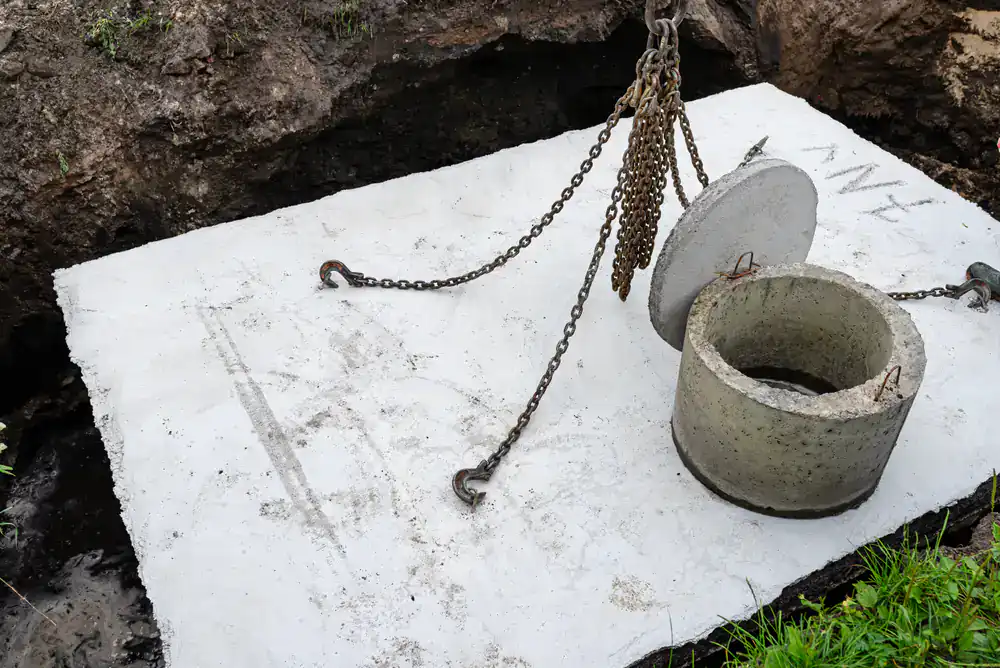
Excavation and installation follow permit approval. For most residential properties in Shirley, the physical work takes one to five days. The crew handles the full scope: excavation, tank and leaching pool placement, connection to the home’s sewer line, backfill, and site restoration. When the job is done, your yard should look like a yard again, not a construction site someone abandoned.
One thing worth asking any contractor before you hire them: do they subcontract? Some companies send out a sales crew, then hand the actual work to a different team. That creates accountability gaps, especially if something comes up during installation that needs a judgment call. The crew that pulled the permit should be the crew doing the work.
This part matters more than most homeowners realize, and it’s also easier to check than people think.
Suffolk County requires a specific credential for anyone performing cesspool work: a Suffolk County Consumer Affairs Liquid Waste License. This isn’t a general contractor’s license or a state plumbing license. It’s a county-issued credential specific to liquid waste work on Long Island. Any contractor who can’t give you a license number when you ask for it is a contractor you should walk away from.
Why does it matter beyond the legal requirement? Because unpermitted work, work done by an unlicensed operator who skips the SCDHS permit process, creates problems you may not discover until you try to sell your home. A cesspool that was replaced without permits doesn’t have a documented inspection record. Buyers’ attorneys will find that. And fixing it after the fact, under the pressure of a closing timeline, is not a situation you want to be in.
There’s also the question of insurance and bonding. A licensed contractor carries liability coverage that protects your property if something goes wrong during excavation, a damaged utility line, an unexpected soil condition, anything that requires a change in scope. An unlicensed operator typically carries none of that. If something goes sideways, the financial exposure lands on you.
Beyond licensing, look for real local reviews, not star ratings, but actual written feedback from homeowners in communities like Shirley, Mastic, Patchogue, or elsewhere on the South Shore. Someone who’s had a cesspool pumped or replaced in a neighborhood with similar soil conditions and a similar housing stock is a more useful reference than a generic five-star rating. Look for language around responsiveness, whether the crew showed up when they said they would, whether the estimate matched the final invoice, and whether the site was properly restored after the job.
The combination of a verifiable license number, proof of insurance, written estimates, and documented local work is a short checklist, but it’s the one that separates contractors worth hiring from the ones worth avoiding.
The homeowners who come out ahead on a cesspool installation aren’t the ones who found the cheapest quote. They’re the ones who planned early enough to access grant funding, scheduled work before the spring rush, hired a licensed contractor who handled the permits, and avoided the emergency replacement scenario entirely.
Shirley’s housing stock is aging. The grant programs are real but competitive. And the cost gap between a planned installation and an emergency one is significant enough that timing genuinely matters here.
If you’re not sure where your system stands, or you want to understand what a replacement would actually cost after available funding is applied, we’re a straightforward call away. We’ve been working on the South Shore for over 30 years, we hold Suffolk County Liquid Waste License #LW-63684, and we handle the full process (permits, excavation, installation, and site restoration) with one crew, start to finish. No guesswork, no surprises. We’re Drastic Drainage Long Island, and we know Shirley.
Summary:
Article details:
Share: