Useful Links
Other Services we provide in Nesconset
Yes all cesspool replacements in Nesconset require permits through the Suffolk County Department of Health Services (SCDHS). This applies whether you’re doing a full system replacement or a significant repair. The permit application requires engineered plans, soil evaluation results, and documentation showing the system meets setback requirements from wells, property lines, and any nearby water features. Skipping this step isn’t just a code violation it can void your certificate of occupancy and create serious liability if you go to sell the property.
The good news is that we handle the permit process for you. You don’t need to figure out what forms to file or which office to call. Permit processing in Suffolk County typically takes two to four weeks, so the earlier you start, the better especially if you’re working around a home sale or a system that’s already struggling.
You can no longer replace a failed cesspool with another conventional cesspool in Suffolk County that’s been the law since July 1, 2019. Any replacement system must include at minimum a septic tank preceding the leaching structure. For new single-family construction, the requirement goes further: since July 2021, new builds in Suffolk County must install an I/A OWTS nitrogen-reducing system.
What this means practically for Nesconset homeowners is that if your home has an original cesspool from the 1960s or 1970s that’s reached the end of its life, you’re not looking at a simple swap. You’re looking at a compliant replacement that meets current county standards. That’s not necessarily a bad thing modern systems perform better, last longer, and protect the groundwater that supplies 100 percent of Long Island’s drinking water. It’s just important to understand what the rules actually require so you’re not caught off guard by a contractor who quotes you something that won’t pass inspection.
We don’t publish flat rates because the cost of a cesspool installation genuinely depends on your specific property the condition of the existing system, soil conditions, system type required under current Suffolk County regulations, lot access, and whether permit coordination is included. What we do offer is a free written estimate before any work begins, so you know the full number upfront with no surprises when the crew arrives.
What can significantly affect your out-of-pocket cost is the Suffolk County Septic Improvement Program. If you’re eligible for an I/A OWTS installation the nitrogen-reducing system now required for new construction in Suffolk County combined State and County grants of up to $45,000 are currently available. That funding is disbursed directly to the installer after final inspection, meaning you only pay the balance. Grant funding is first-come, first-served, so if you’ve been putting off the conversation, it’s worth having it sooner rather than later.
For most residential properties in Nesconset, the physical installation takes one to five days once permits are approved and the crew is on-site. Simpler jobs a standard replacement on a straightforward lot typically wrap up in one to two days. More complex systems, larger properties, or situations where the old system requires more involved decommissioning can run closer to four or five days.
The part that takes the most time is the permit process, not the installation itself. SCDHS permit processing in Suffolk County typically takes two to four weeks. That’s why it’s worth calling sooner rather than waiting until the system is actively failing. If you’re already noticing slow drains, wet spots in the yard, or any sewage odor around your property, those are signs the system is under stress and getting the permit process started now means you’re not scrambling for emergency service later at emergency pricing.
This is more common in Nesconset than most people realize. The bulk of the hamlet’s housing stock was built in a compressed window between the mid-1950s and early 1970s, and after decades of ownership changes, the original cesspool records if they ever existed are long gone for a lot of these homes. No map, no paperwork, no memory of the last service call.
We specifically list locating hard-to-find cesspools as one of our specialties. Before any excavation happens, we locate the system which saves you from unnecessary digging and guesswork that can turn a straightforward job into a much more expensive one. Once the system is found and its condition is assessed, you get a clear picture of what you’re actually dealing with and what the right next step is. That assessment is part of the free estimate process, so you’re not paying to find out where things stand.
These terms get used interchangeably in conversation, but they’re not the same thing. A cesspool is a single underground chamber that receives both solids and liquids solids settle at the bottom, liquids leach out through the walls and bottom into the surrounding soil. A leaching pool is a separate structure designed to receive only the liquid effluent that flows out of a septic tank after solids have already been separated. A drywell is similar to a leaching pool but is typically used for stormwater or greywater drainage rather than sewage.
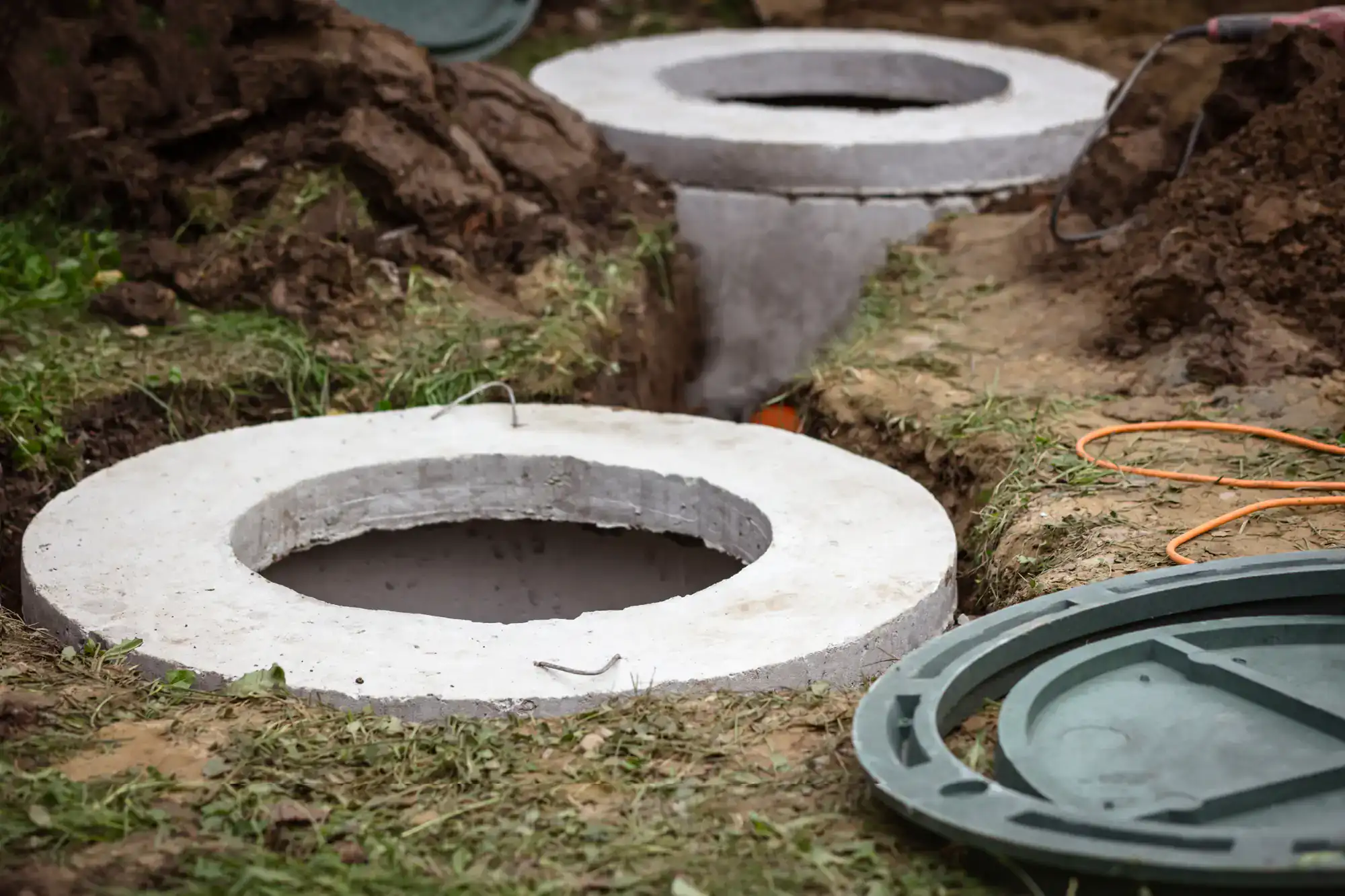
In Nesconset, most homes built during the 1950s through 1970s were installed with conventional cesspool systems a single chamber handling everything. Under current Suffolk County regulations, any replacement must now include a proper septic tank feeding into a leaching pool, which separates the solids before liquid reaches the soil. This is a better-performing setup and is what we install. If you’re not sure what you currently have, the assessment during your free estimate will identify the system type and what a compliant replacement looks like for your specific property.
Hear from Our Customers

When NY Route 347 was built through Nesconset in the 1950s, it triggered one of the fastest residential buildouts in Smithtown’s history. The hamlet’s population tripled in a single decade. Those homes filled up fast and so did the cesspools installed beneath them. A system put in the ground in 1962 is now over 60 years old. The expected lifespan of a well-maintained cesspool is 30 to 40 years. Do the math, and a lot of Nesconset homeowners are already past due.
A properly installed replacement system means no more slow drains, no more wet patches in the yard, no more smell creeping up from the ground on a warm afternoon. It means your home is compliant with Suffolk County’s current regulations which matter more now than they ever have. And it means the next time you go to sell, you’re not handing a buyer’s attorney a reason to renegotiate your price or kill the deal entirely.
Nesconset sits within the Smithtown groundwater management zone, and the sandy Suffolk County soil here moves water quickly which sounds like a good thing until you realize it also moves nitrogen and contaminants straight through to the aquifer with almost no natural filtration. A modern, properly installed system stops that. It protects your property, your neighborhood’s water supply, and the Nissequogue River watershed that flows northwest from Smithtown toward the Sound.
We’re a family-owned, fully licensed, insured, and bonded cesspool and drainage company based in West Babylon right in western Suffolk County, the same territory Nesconset sits in. This isn’t a company stretching its service map to pick up extra calls. We know this area because we’ve been working it for over 30 years.
Our Suffolk County Liquid Waste License #LW-63684 is on every page of our website not buried in fine print, but front and center because it matters. It’s the license Suffolk County requires for all cesspool work, and it’s publicly verifiable through Suffolk County Consumer Affairs. When you hire us, you’re hiring a crew that pulls permits, coordinates with SCDHS, and does the job in a way that holds up to inspection.
One thing worth knowing: we specialize in locating hard-to-find cesspools. If your Nesconset home was built in the 1960s or early 1970s and you have no idea where your system is no records, no map, no memory of the last service that’s not a problem. It’s something we deal with regularly in communities like Nesconset, where decades of ownership changes have made the paperwork disappear long before the cesspool did.

It starts with a free estimate. Before any equipment shows up, we come out, assess your property, locate the existing system if needed, and give you a written quote. You know what you’re paying and why before a single shovel breaks ground. That’s not a courtesy it’s the standard, because price surprises after the truck arrives are the number one complaint in this industry.
Once the scope is confirmed, the permit process begins. In Suffolk County, all cesspool installations and replacements require permits through SCDHS. That means engineered plans, soil evaluation, and documentation of setback distances from wells and property lines. We handle the permit application you don’t have to navigate that process yourself. Permit processing typically takes two to four weeks, so getting started early matters, especially if you’re working against a deadline like a home sale or a system that’s already showing signs of failure.
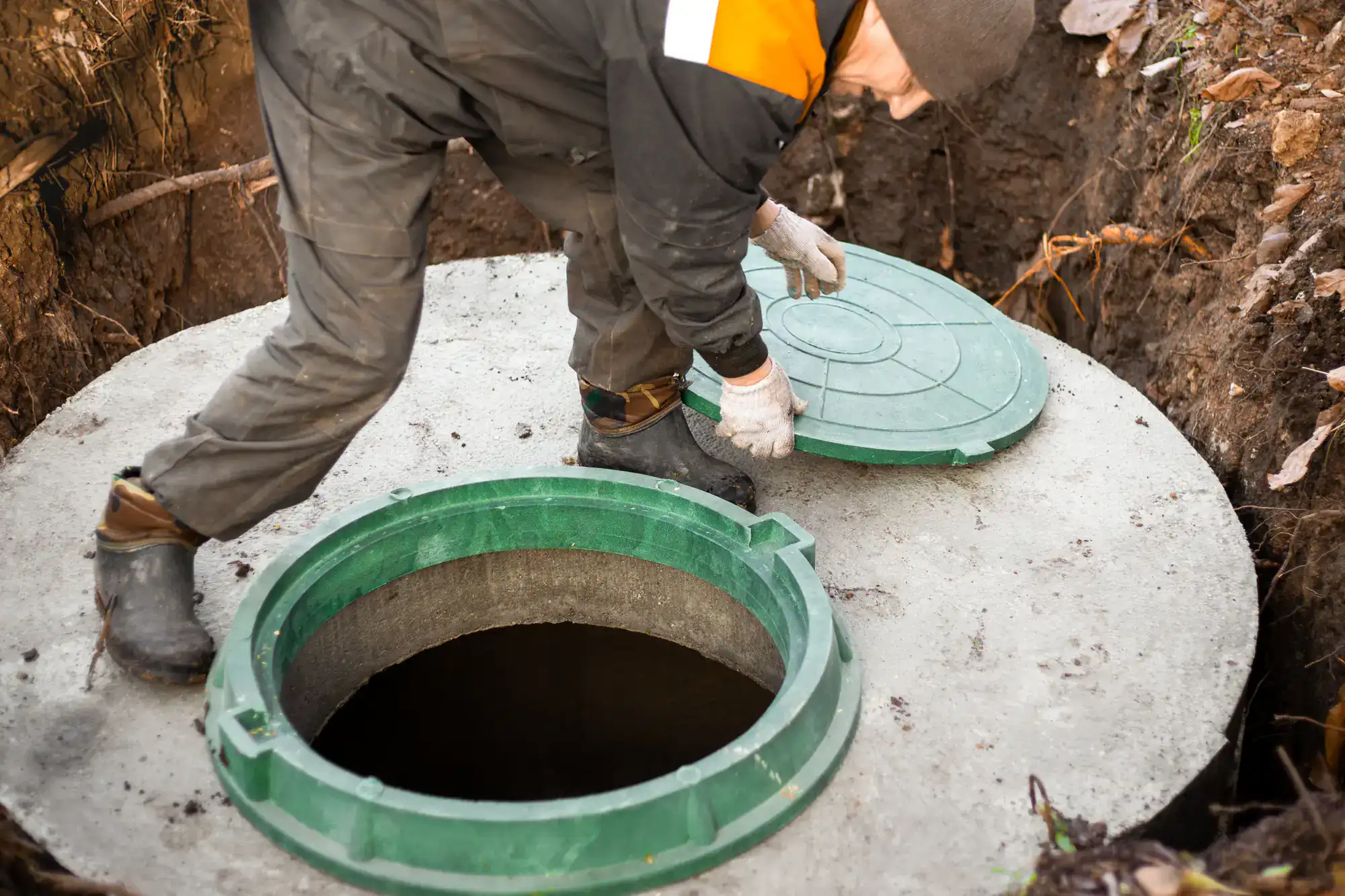
After permits are approved, our crew handles everything: excavation, tank and leaching pool installation, connection to your home’s sewer line, backfill, and site restoration. Most residential jobs in Nesconset take one to five days depending on system complexity and soil conditions. Suffolk County’s sandy soil generally makes excavation more straightforward than clay-heavy areas, but every property is different. When the work is done, the system goes through final inspection before it’s signed off and you’re left with a compliant, properly installed system built to last.
Ready to get started?
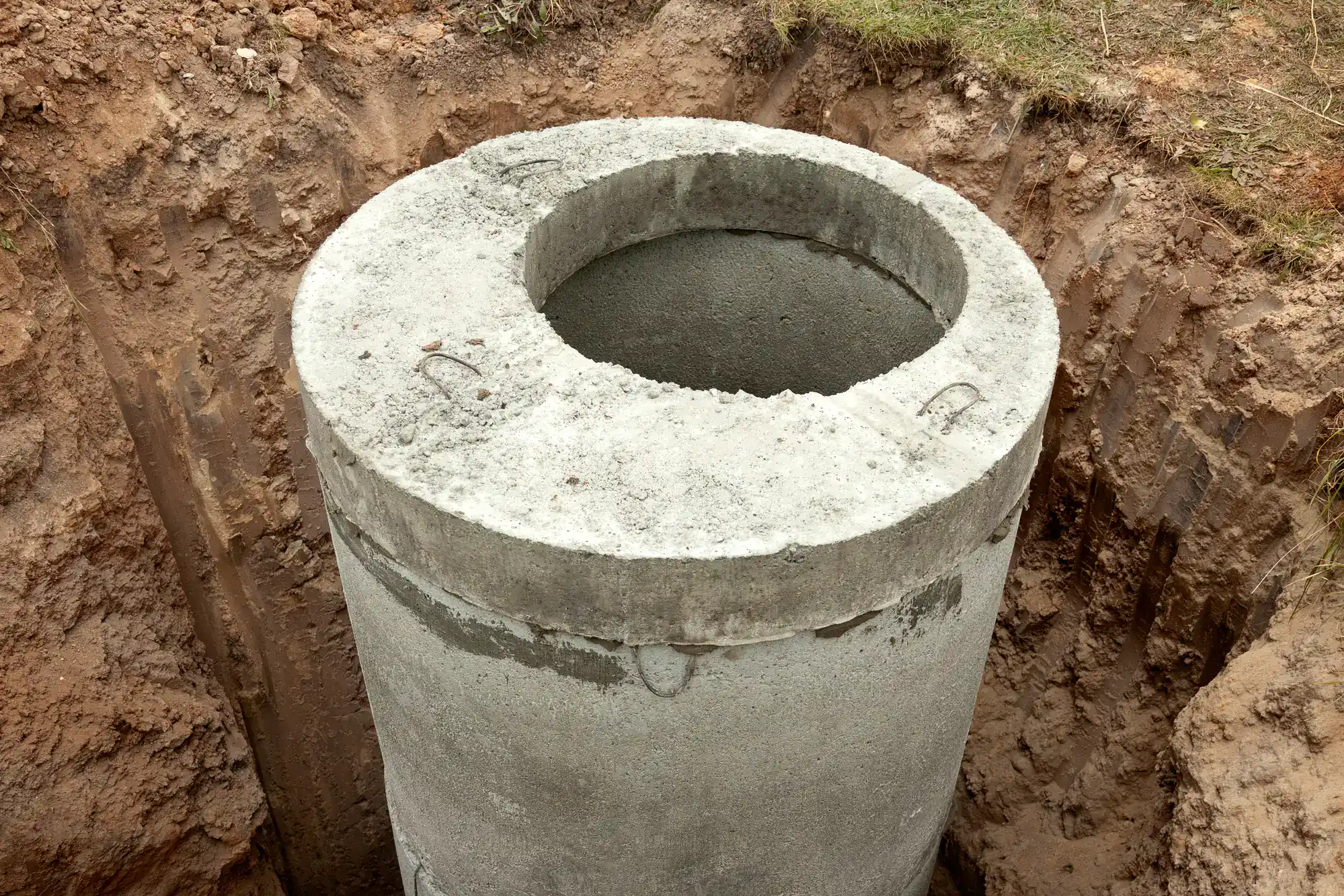
Cesspool installation isn’t just dropping a concrete ring in the ground. The full scope includes decommissioning the old system, excavating to the correct depth, installing the new tank and leaching pool or drywell, connecting everything to your home’s existing sewer line, and restoring the site when the work is done. We handle all of it one crew, one call, no subcontractors to coordinate.
There’s an important regulatory reality every Nesconset homeowner needs to know: since July 1, 2019, Suffolk County no longer allows a cesspool to be replaced with another conventional cesspool. Any replacement must include at minimum a septic tank preceding the leaching structure. And for new construction in Suffolk County since July 2021, an Innovative and Alternative Onsite Wastewater Treatment System commonly called an I/A OWTS is required. These nitrogen-reducing systems remove 70 to 90 percent of nitrogen before wastewater reaches the soil, which is a significant upgrade over the near-zero removal of a conventional cesspool. Given Nesconset’s sandy soil and its position within the Smithtown groundwater management zone, that distinction isn’t just regulatory it’s practical.
If you’re eligible for an I/A OWTS installation, it’s worth knowing that Suffolk County’s Septic Improvement Program currently offers combined State and County grants of up to $45,000 for qualifying homeowners. That funding is first-come, first-served. We can walk you through what’s available and what your out-of-pocket cost actually looks like before you commit to anything.