
Useful Links
Other Services we provide in Shirley
No and this catches a lot of Shirley homeowners off guard. As of July 1, 2019, Suffolk County banned cesspool-only replacements. If your system fails, you’re required to install at minimum a conventional septic tank before the leaching structure. You cannot simply drop a new cesspool in where the old one was.
For some properties in Shirley particularly those near the Carmans River watershed or within proximity to the Great South Bay the requirement may go further. Suffolk County’s Subwatersheds Wastewater Plan identifies shoreline-adjacent properties as high-priority zones, and those locations may be required to install an I/A OWTS nitrogen-reducing system rather than a conventional septic replacement. Whether that applies to your specific property depends on where it sits relative to those designated areas, which is something we evaluate as part of the free estimate process.
The honest answer is that it depends on what your property actually needs, and that’s exactly why a written estimate matters before any work begins. What’s documented in the industry for Suffolk County: conventional cesspool-to-septic replacements typically run in the range of $10,000 to $25,000. I/A OWTS nitrogen-reducing systems which may be required for some Shirley properties near the bay or the Carmans River average around $25,000 before any grant assistance is applied.
That grant piece is important for Shirley homeowners to understand. As of July 2025, eligible Suffolk County residents can receive up to $45,000 in combined State and County funding for an I/A OWTS installation. That funding is disbursed directly to the installer after final inspection you pay only the balance. The grant program is first-come, first-served, so the cost picture can look very different for a homeowner who applies early versus one who waits. We can walk you through what the estimate looks like both with and without grant funding before you commit to anything.
The installation itself excavation through site restoration takes most Shirley residential jobs anywhere from one to five days, depending on the size of the system and the soil conditions on your specific property. South Shore soil near tidal areas and wetlands can behave differently than inland Suffolk County lots, and that can affect how excavation proceeds and how the leaching field is configured.
What takes longer is the permit process. The Suffolk County Department of Health Services requires a permit application that includes engineered plans, soil testing results, and documentation of setbacks from wells, property lines, and water bodies. That review typically takes two to four weeks from submission. We handle the permit application on your behalf, so you’re not navigating the SCDHS process alone but it’s worth factoring that timeline into your planning, especially if you’re working against a real estate contract deadline or a system that’s already showing signs of failure.
Potentially, yes and given Shirley’s location within the Great South Bay and Carmans River watershed, many properties here are well-positioned for eligibility. The Suffolk County Septic Improvement Program (SIP) was created specifically to fund I/A OWTS installations in communities where aging cesspools are contributing to nitrogen pollution in critical water bodies. The Great South Bay is one of those water bodies, and Shirley sits directly within that zone.
Eligibility is based on several factors: the property must be in an unsewered area (which Shirley overwhelmingly is, given that 94 percent of homes here are detached single-family with private systems), the installation must be an I/A OWTS system, and the work must be performed by an SCDHS-approved installer. Grant payments are not counted as taxable income under IRS Announcement 2022-26. The funding is first-come, first-served, which means waiting to explore this isn’t a neutral decision it’s a decision to risk losing access to funding that could cover a significant portion of your installation cost.
This is more common in Shirley than most homeowners realize. A large portion of the housing stock here was built in the 1950s and ’60s, and the original construction records if they existed at all are long gone. Previous owners didn’t always document it. The town doesn’t have a map. And digging randomly across a yard looking for a cesspool is expensive and destructive.
We specialize in locating hard-to-find cesspools it’s one of our specific areas of expertise. This matters because locating the system correctly before any work begins determines the entire scope of the job: how much excavation is needed, where the new system will be positioned relative to setback requirements, and whether the existing tank can be decommissioned in place or needs to be removed. If you’re not sure where your cesspool is, that’s not a reason to delay it’s the first thing to figure out, and it’s something our crew handles as part of the process.
Not always, but in Shirley it’s a warning worth taking seriously. The South Shore water table sits closer to the surface here than in most inland communities, and when a major rain event or storm surge saturates the ground the way Superstorm Sandy did, or the way the August 2024 flash flooding did a cesspool that was already struggling has nowhere to drain. The system backs up because the soil around it is already full of water.
If it happened once during an unusually severe event and the system recovered on its own within a day or two, it may just be a sign that the system needs pumping and monitoring. But if the backup was severe, if it’s happened more than once, or if the system is more than 30 years old which describes a lot of Shirley homes then a storm event is often the thing that pushes a marginal system into actual failure. A free estimate from us gives you a clear read on whether you’re dealing with a temporary overload or a system that’s genuinely at the end of its life. That’s a much better position to be in than waiting until the next storm makes the decision for you.
Hear from Our Customers
When a cesspool in Shirley finally gives out, it rarely gives you much warning. One week you’ve got slow drains, the next you’ve got sewage surfacing in the yard or backing up into the house. Getting a properly installed replacement system means that stops and it stays stopped. No more wondering whether the smell outside is what you think it is. No more timing your laundry around the system’s bad days.
For Shirley homeowners specifically, there’s a geography problem that doesn’t go away on its own. The South Shore water table sits closer to the surface here than it does in most inland Suffolk County communities. That means a cesspool that’s already aging is working harder than it should be, draining slower, and filling faster especially after a heavy rain or a storm event. A properly sized and properly installed replacement system accounts for those conditions from the start, not as an afterthought.
There’s also the legal reality. Since July 2019, Suffolk County has required that any cesspool replacement include at minimum a septic tank before the leaching structure. You can’t swap an old cesspool for a new one anymore. Getting this done correctly with permits pulled, inspections passed, and the installation built to current code protects your home’s certificate of occupancy and keeps you out of trouble if you ever sell.
We are a family-owned, fully licensed, insured, and bonded cesspool and drainage company serving Nassau and Suffolk Counties. Our license number LW-63684 is on every page of this website not buried in fine print because it should be the first thing you check before anyone breaks ground on your property.
We’ve been doing this work on Long Island for over 30 years. That matters in Shirley specifically because the South Shore conditions here the proximity to the Carmans River, the Wertheim National Wildlife Refuge wetlands, the Great South Bay create a specific set of challenges that someone without local experience won’t anticipate. Soil near tidal areas behaves differently. Permit requirements near watershed zones can be more involved. These aren’t surprises to a crew that’s been working this part of Suffolk County for decades.
From the first call to the final inspection, we handle the entire job. No handoffs, no subcontractors managing your project while you chase someone down for updates.
It starts with a free estimate. Before anything else, you get a clear picture of what the job involves and what it costs in writing, before a single shovel hits the ground. For Shirley properties near the Carmans River watershed or within proximity to the Great South Bay, the evaluation also takes into account whether your location falls within a zone that may require an I/A nitrogen-reducing system rather than a conventional septic replacement. That determination affects your permit application and your potential eligibility for Suffolk County grant funding, so it’s worth knowing upfront.
Once the scope is confirmed, the permit application goes to the Suffolk County Department of Health Services. Permit processing typically takes two to four weeks, and the application requires engineered plans, soil testing results, and documentation of setback distances from wells, property lines, and water bodies. We handle that process you don’t need to navigate the SCDHS on your own.
When permits are approved, our crew comes out with the equipment to do the full job: excavation, tank installation, leaching pool setup, connection to your home’s existing sewer line, backfill, and site restoration. Most residential installations in Shirley are completed within one to five days depending on system complexity and soil conditions. After the work is done, the system goes through a final SCDHS inspection before it’s considered live. That inspection is what makes the installation official and what protects you going forward.

Ready to get started?
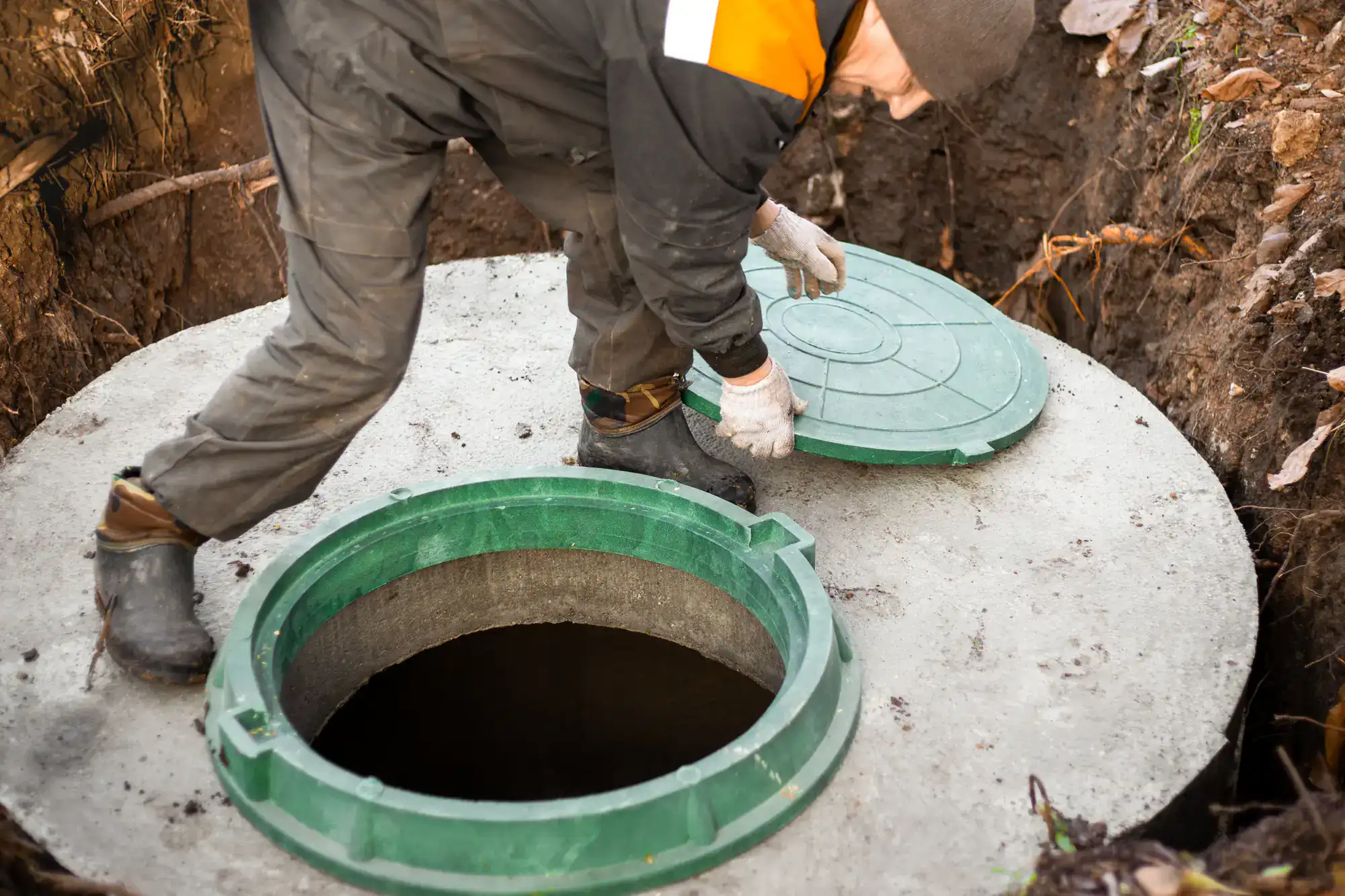
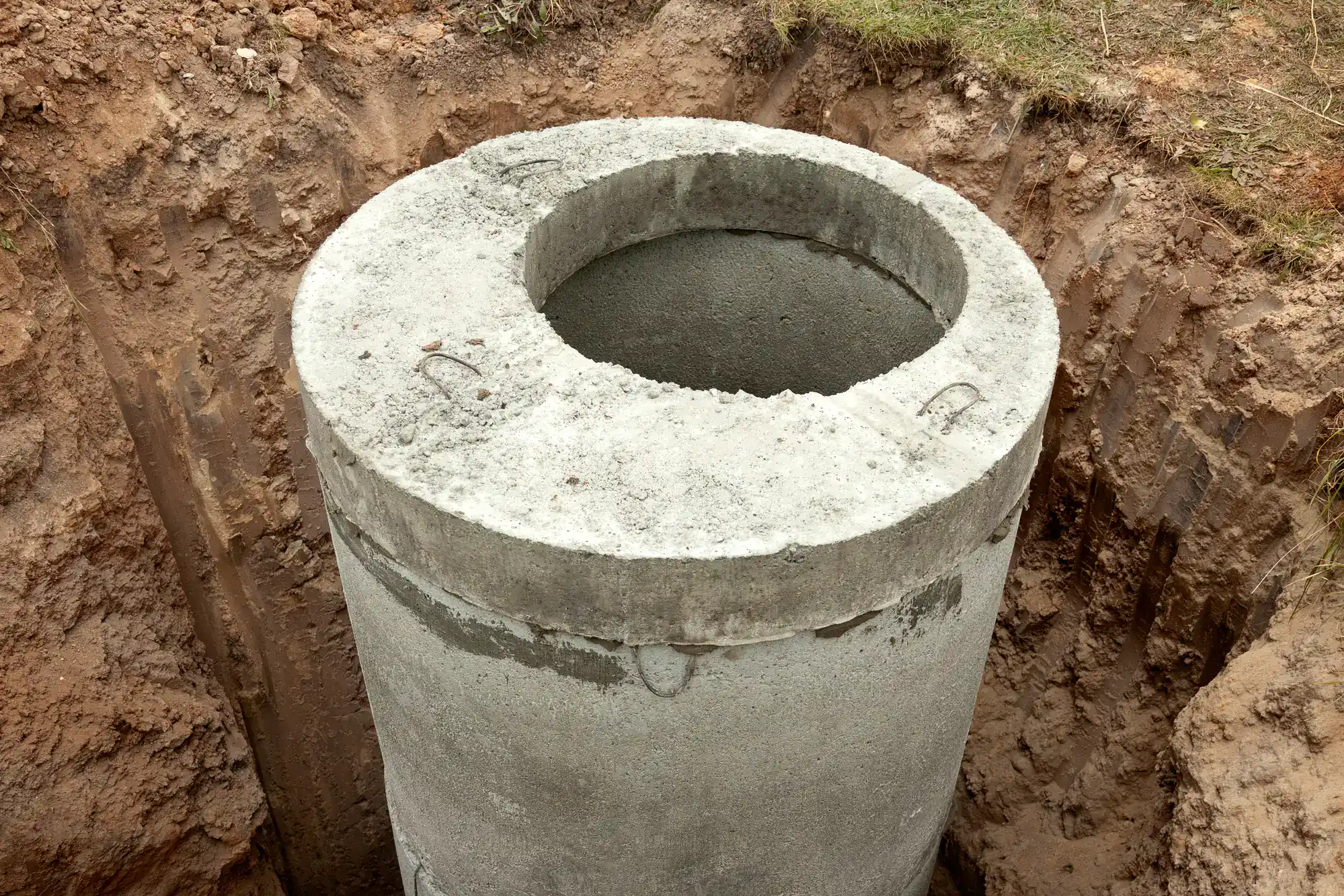
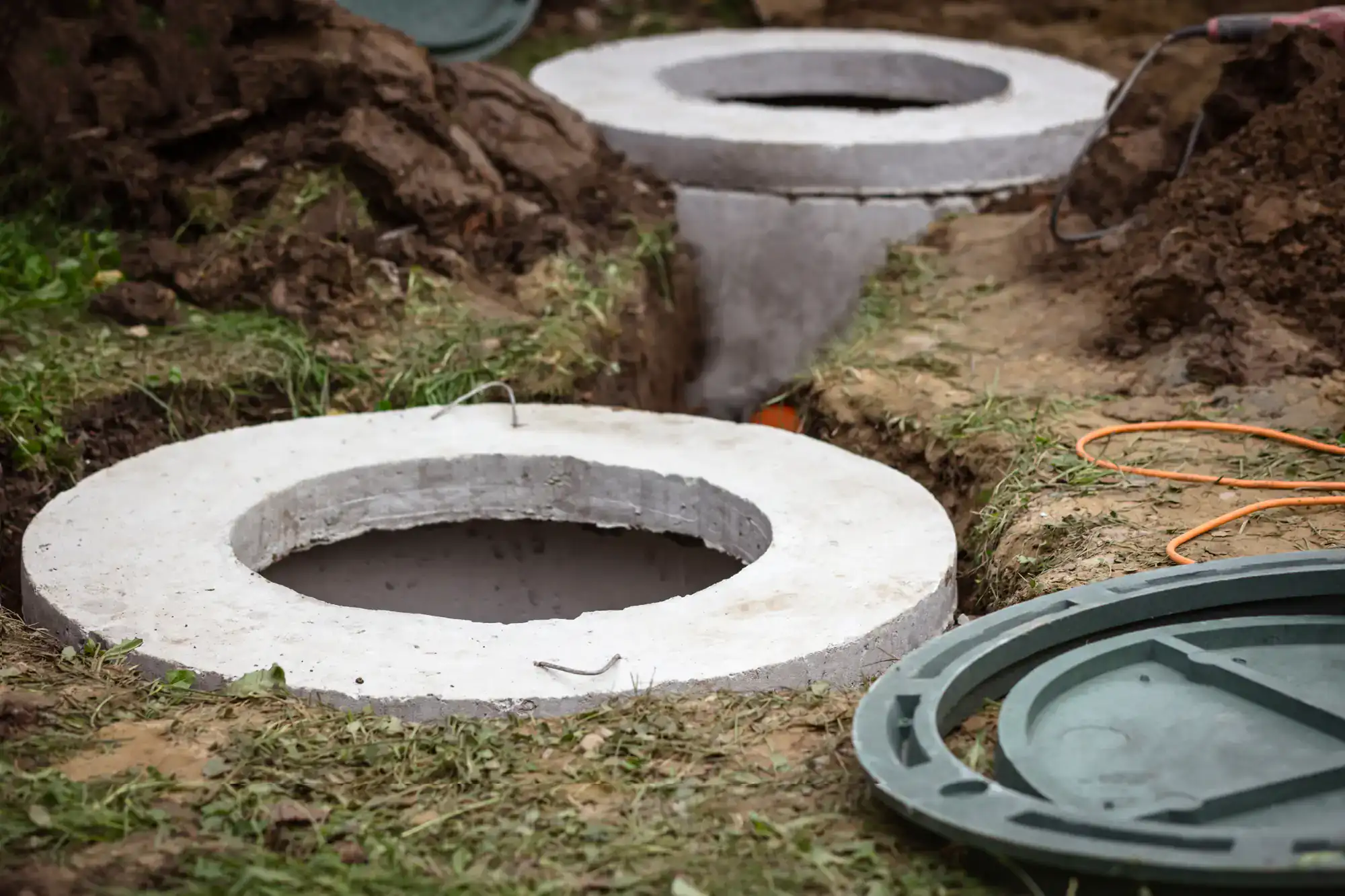
Cesspool installation in Shirley covers more ground than most homeowners expect when they first start looking into it. The full scope includes decommissioning the old system pumping it out, collapsing it safely, and filling it with approved material before any new installation begins. From there, the new system is built from the ground up: precast concrete tanks, leaching pool rings, gravel bedding, and a proper connection back to the home’s sewer line.
For homes in Shirley’s older sections the post-war neighborhoods built through the 1950s, ’60s, and into the ’70s the original leaching pools and drywells are often what’s failing first. These components absorb and distribute the liquid waste after it exits the tank, and when they’re 50 or 60 years old, they stop doing that effectively. Replacing the rings, or replacing the entire leaching structure, is often the core of the job even when the tank itself is still serviceable. We assess all of it and tell you what actually needs to go not what’s easiest to sell.
For properties near the Great South Bay or the Carmans River corridor, an I/A OWTS system may be required or strongly recommended. These nitrogen-reducing systems remove 70 to 90 percent of the nitrogen that a conventional cesspool releases into the ground. Suffolk County’s grant program exists specifically to offset that cost eligible Shirley homeowners may qualify for up to $45,000 in combined State and County funding as of July 2025. That’s real money, and it’s worth understanding before you make any decisions about what type of system to install.
