Useful Links
Other Services we provide in Shirley
It depends on a few things, and the details matter here. The Suffolk County Septic Improvement Program provides grant funding up to $45,000 in combined state and county assistance as of July 2025 specifically for homeowners replacing failing cesspools or conventional septic systems with I/A OWTS nitrogen-reducing systems. To qualify, your property generally needs to be a single or two-family residence with a valid certificate of occupancy, no outstanding tax liens, and a design flow at or under 1,000 gallons per day.
Here’s the Shirley-specific nuance: homes within the Forge River Watershed Sewer District boundaries roughly the area south of Sunrise Highway and west of William Floyd Parkway may not qualify for the SIP grant, because sewer service is being made available to those properties. If your Shirley home is outside that district, which covers the majority of Shirley, you’re likely a much stronger candidate. The other critical point is timing: the grant must be applied for and approved before installation begins. You can’t do the work first and apply for reimbursement after. That’s a common misconception that costs homeowners real money.
I/A OWTS stands for Innovative and Alternative Onsite Wastewater Treatment System. It’s a septic system that includes an advanced treatment process to remove nitrogen from wastewater before it reaches the soil and groundwater. Conventional cesspools release roughly 40 pounds of nitrogen per household per year into the ground. An I/A OWTS system reduces that by up to 70%. On Long Island, where the sole-source aquifer supplies all drinking water and where that groundwater feeds directly into the Great South Bay, that reduction matters.
Whether you specifically need one in Shirley depends on your property’s location. Suffolk County’s 2019 ban on new cesspool installations means any replacement must meet modern septic standards at minimum. But if your property falls within the Town of Brookhaven’s Nitrogen Protection Zone which applies to properties within 500 feet of Great South Bay, the Carmans River, or the Forge River an I/A OWTS system is required by Town code, not just recommended. Given how much of Shirley sits near those waterways, a significant number of properties in this hamlet are subject to that requirement. A site assessment will confirm which standards apply to your specific address.
The actual installation work excavation, system installation, abandonment of the old cesspool, backfill typically takes one day for most residential properties. That’s the part that happens in your yard. What takes longer is the permitting process that comes before it. Filing with the Suffolk County Department of Health Services, completing any required soil evaluation or perc test, and obtaining approval generally adds several weeks of lead time before a shovel goes in the ground.
For properties in Shirley that require Town of Brookhaven permits in addition to SCDHS permits particularly those near the bay or river corridors where the Nitrogen Protection Zone applies there may be an additional permitting step through the Town’s Division of Environmental Protection. That doesn’t dramatically extend the timeline, but it’s a step that needs to be coordinated correctly. Perc tests typically run $500 to $1,500, and permit fees generally fall in the $200 to $500 range. The total timeline from first call to completed installation is usually a few weeks to a couple of months depending on how quickly permits move through the county. Starting the process before your system reaches a crisis point is always the better move.
The honest answer is that you often don’t, at least not from inside the house. Many failing cesspools in Shirley’s older housing stock the original homes built starting in the late 1940s show no obvious symptoms until the system is significantly compromised. Slow drains and sewage odors are the obvious signs, but in low-lying coastal areas like Shirley, a cesspool can be functionally failing because the water table has risen close to the leaching pit, even when nothing looks wrong inside.
A conventional cesspool has a typical functional lifespan of 25 to 40 years. A home built in 1955 with its original system is now carrying infrastructure that is 35 to 50 years past that window. Regular pumping slows the deterioration, but it doesn’t reverse it. The only reliable way to know what you’re working with is a proper site assessment locating the system, evaluating its condition, and checking the soil and groundwater conditions around it. In many of Shirley’s older homes, the cesspool location itself isn’t well-documented, which is part of why our cesspool location specialty is relevant here. Knowing exactly what’s underground before any work begins prevents expensive surprises once excavation starts.
Yes, and it’s one of the more common ways a home sale in Shirley gets complicated. Home inspections flag cesspool and septic system issues regularly, and when a buyer’s inspector identifies a failing or non-compliant system, it becomes a negotiating point or a deal-breaker. In Suffolk County, any replacement triggered by a sale must meet current standards, which means no simple like-for-like cesspool swap. The replacement has to comply with Article 6 of the Suffolk County Sanitary Code, and for properties in Brookhaven’s Nitrogen Protection Zone, it needs to meet I/A OWTS requirements.
Shirley’s home values have risen dramatically over the past two decades from a median of around $122,800 in 2000 to over $460,000 today. There’s real equity at stake in these transactions. A seller who discovers a failing system at inspection is in a weaker negotiating position than one who already has a compliant, documented system in place. Getting ahead of it replacing the system before listing puts you in control of the process and the cost, rather than responding under deadline pressure at the worst possible moment.
A cesspool is essentially a pit lined with concrete or block that allows raw waste to seep directly into the surrounding soil with no treatment. There’s no separation of solids and liquids, no leaching field, and nothing filtering the nitrogen before it reaches the groundwater. A septic system is a more advanced setup: waste enters a tank where solids settle and liquids are separated, and the treated effluent then disperses through a leaching field where it undergoes further natural filtration before reaching the water table.
In Shirley, this distinction has real consequences. The Great South Bay clam harvest has declined 93% over the past 25 years a loss documented in the Town of Brookhaven’s own legislative findings and attributed directly to nitrogen loading from cesspools and septic systems. The Carmans River, which empties into Bellport Bay at Shirley’s eastern edge, carries that same nitrogen load. For homeowners near the bay or the river, the Town of Brookhaven has made the choice explicit through the Nitrogen Protection Zone: properties within 500 feet of those waterways must install an I/A OWTS system when replacing their existing cesspool. But even for properties outside that 500-foot buffer, Suffolk County’s 2019 ban means a straight cesspool replacement is no longer legal. The direction is clear, and understanding the difference between these system types is the starting point for making the right decision for your property.
Hear from Our Customers
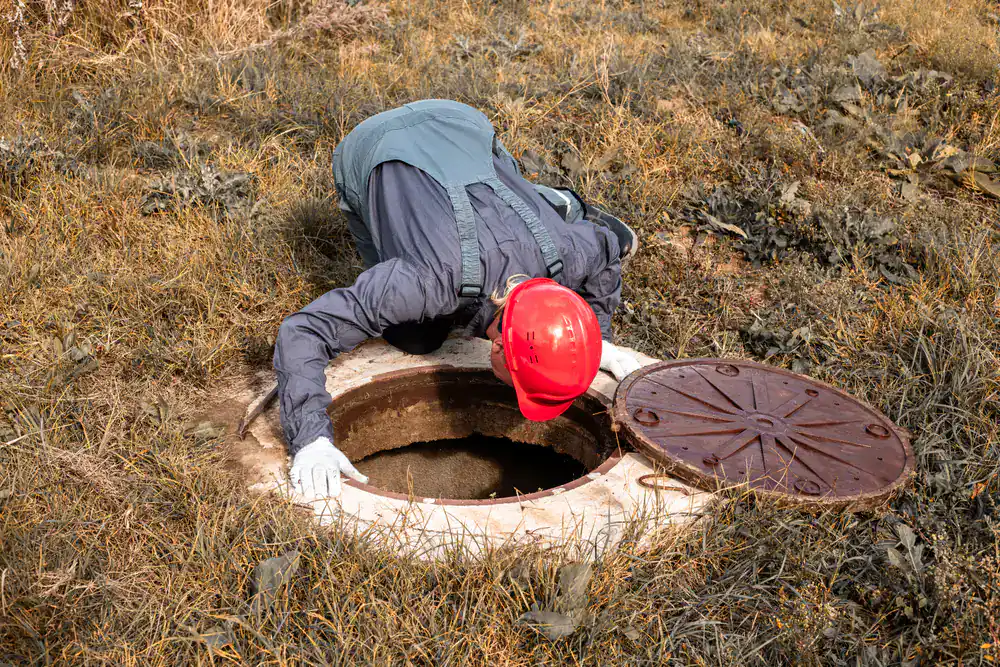
Shirley sits on the South Shore with Great South Bay at its back and the Carmans River emptying into Bellport Bay at its eastern edge. That’s not just scenery it’s a groundwater environment that puts real stress on older cesspools. When the water table rises after a heavy storm or a nor’easter pushes surge up from the bay, conventional systems in low-lying areas like Shirley can fail without any warning inside the house. A properly installed septic system accounts for that. It’s designed for the actual conditions of the ground it’s sitting in, not a generic template.
Beyond the physical performance, there’s a regulatory layer here that most homeowners don’t expect. The Town of Brookhaven’s Nitrogen Protection Zone requires properties within 500 feet of the bay, the Carmans River, or the Forge River to install an I/A OWTS system a nitrogen-reducing advanced treatment system when replacing their existing cesspool or septic. That’s a Brookhaven Town requirement on top of Suffolk County’s own rules. Getting a new system installed correctly means navigating both, and that’s exactly the kind of work we’ve been doing across Suffolk County for over 30 years.
Once the work is done, you’re not just checking a regulatory box. You have a system built to current code, documented for your records, and designed to last. That matters whether you plan to stay in your Shirley home for decades or you’re thinking about selling because a failing cesspool will surface in any home inspection, and it will cost you at closing.
We’re a family-owned company based in West Babylon, and Shirley is a straight shot east on Sunrise Highway the same road that runs along Shirley’s northern edge. This is our backyard. We’ve been working across Nassau and Suffolk Counties for over 30 years, and that experience isn’t transferable from somewhere else. Long Island’s soil conditions, the SCDHS permitting process, and the specific regulatory requirements that apply to South Shore communities like Shirley those things take years to learn firsthand.
When you call, a real person answers. When a job is scheduled, our crew shows up in the window we gave you. Customers have called out technicians by name in their reviews George, Mike, Lucas because the work is done by people who are accountable, not anonymous. Michael Chiofalo’s name is on the business, and that means something when the job is on a property near Smith Point or along the William Floyd Parkway corridor in Shirley.

It starts with a site assessment. Before any equipment shows up, we evaluate what’s actually underground where the existing system is, what condition it’s in, and what the soil and groundwater conditions look like on your specific property. In Shirley, that last part matters more than it does in most inland towns. High groundwater, coastal soil, and proximity to protected waterways all affect system design, and a system designed without accounting for those conditions is a problem waiting to happen.
From there, permits are filed with the Suffolk County Department of Health Services. If your property falls within Brookhaven Town’s Nitrogen Protection Zone which covers a significant portion of Shirley given its proximity to Great South Bay and the Carmans River the system design will need to meet I/A OWTS nitrogen standards, and the Town of Brookhaven may require additional permitting. We handle that coordination. You don’t need to figure out which agency wants what.
Once permits are in hand, most residential installations are completed in a single day. The old system is properly abandoned pumped, documented, and filled and the new system goes in. After installation, you receive documentation of the work, which matters for your records, for any future sale, and for any grant program you may be participating in. The process is straightforward, and you’ll know what’s happening at every step.
Ready to get started?
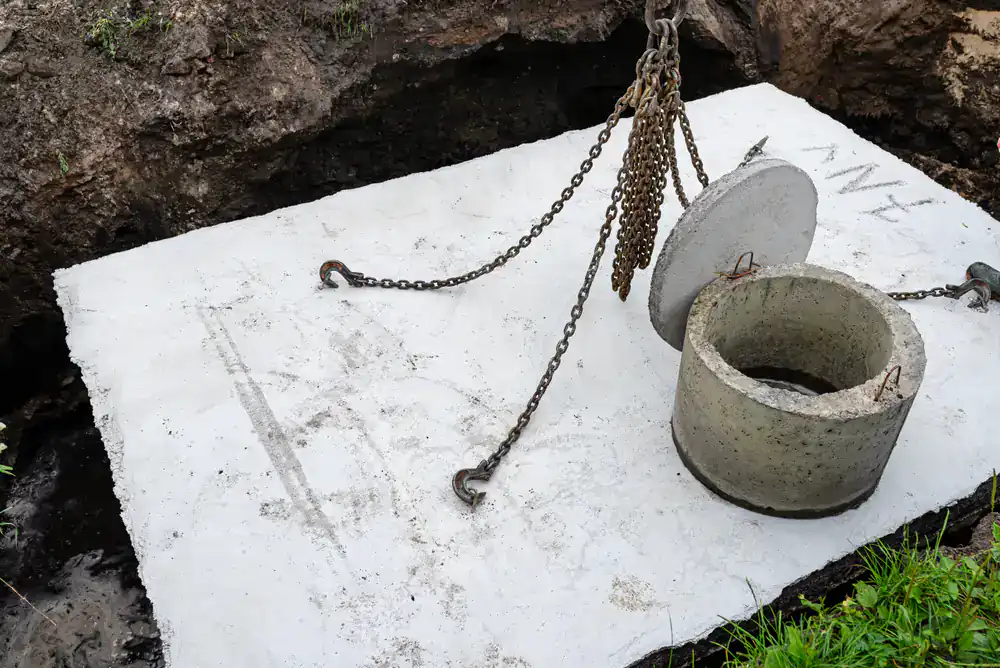
Septic system installation in Shirley isn’t a one-size situation. The scope of the work depends on what’s currently underground, what your property’s soil and groundwater conditions look like, and what the applicable regulations require for your specific location. For properties near the Great South Bay shoreline or within the Carmans River corridor, Brookhaven Town’s Chapter 78A Nitrogen Protection Zone mandates an I/A OWTS system one that reduces nitrogen discharge by up to 70% compared to a conventional cesspool. That’s not optional for those properties, and any contractor who doesn’t know that going in is going to create problems for you.
The full scope of work typically includes a site evaluation and cesspool location assessment especially relevant in Shirley’s older housing stock, where many of the original homes from the 1940s and 1950s have cesspools with little or no documentation. It also includes permit filing with SCDHS, coordination of any required Town of Brookhaven permits, excavation, installation of the new system, proper abandonment of the old one, and post-installation documentation.
If your property qualifies for the Suffolk County Septic Improvement Program which provides combined state and county grant funding for I/A OWTS installations we can walk you through how that program works and what your eligibility looks like. Homeowners outside the Forge River Watershed Sewer District are typically strong candidates, since properties with available sewer access may not qualify. The grant application needs to be submitted and approved before installation begins, so that conversation happens early.