
Useful Links
Other Services we provide in Shoreham
For most residential properties in Shoreham, pumping every one to three years is a reasonable baseline but that range assumes your system was sized for the way you’re currently using the home. That’s where things get complicated for a lot of properties here. Many Shoreham homes started as seasonal summer cottages and were later converted for year-round use. If the cesspool under your home was originally installed for a household in residence three or four months a year, it may fill faster than the standard schedule anticipates. A system that’s technically functioning isn’t necessarily keeping up with the load being put on it.
Household size matters too. A two-person household puts significantly less strain on a system than a family of four or five, especially during summer when guests and extended family are common in a community with Shoreham’s seasonal heritage. The safest approach is to have the system assessed rather than just going by the calendar. We can tell you how full the system actually is and give you a realistic service interval based on what we find not just a generic number.
The most common warning signs are slow drains throughout the house not just one fixture, but multiple along with gurgling sounds from toilets, a sewage smell coming from drains or HVAC vents, and wet or unusually green patches in the yard above where the system is located. Any one of these is worth taking seriously. More than one at the same time means you should call today, not next week.
In Shoreham, there’s a seasonal dimension to this worth knowing. After heavy rain events or during spring snowmelt, the water table on the North Shore can rise enough to reduce the effective capacity of your leaching field. That means a system that was managing fine last month may show backup symptoms after a significant storm not because the system failed, but because the saturated ground has nowhere to send the overflow. If you’re seeing symptoms shortly after heavy rain, don’t assume it will resolve on its own. Get it looked at. Waiting typically makes the situation worse and more expensive to address.
Pumping removes the liquid waste and floating solids from your cesspool. It’s the standard service most homeowners schedule on a routine basis, and it’s what keeps the system from reaching capacity and backing up into the house. Cleaning is more involved it targets the hardened sludge that accumulates on the bottom and walls of the cesspool over time, material that pumping alone doesn’t fully remove. A system that’s been pumped regularly but never cleaned may still have significant buildup affecting its capacity.
The distinction matters because some companies use the terms interchangeably, and homeowners end up unsure what they actually paid for. Before any service call, it’s worth asking specifically what’s included. For older systems and Shoreham has a lot of them, with nearly half the housing stock built before 1950 a more thorough cleaning at regular intervals is often the more appropriate service. A technician who actually inspects the system after pumping can tell you whether the condition warrants cleaning or whether a standard pump-out is sufficient for now.
Yes, and it’s something not every cesspool contractor is familiar with. Properties near tidal waters including those along the bluffs and waterfront areas on the northern edge of Shoreham are subject to oversight from both the New York State Department of Environmental Conservation and Suffolk County. Work done near tidal waters must comply with specific setback requirements and environmental standards that don’t apply to properties further inland. This affects what permits may be required, how the work is documented, and what the county expects in terms of compliance records.
This is one of the reasons local experience matters more than it might seem. A contractor who primarily works in flat, inland communities may not be familiar with what’s required for a waterfront-adjacent property on the North Shore. Before any work is done on a property near the Sound, confirm that the contractor knows the applicable rules and can tell you specifically what documentation will be provided after the job. We’ve worked across Suffolk County for over 30 years, including properties along the North Shore where these considerations are part of the standard scope.
For a standard residential pump-out in Suffolk County, the typical range is $200 to $500. More complex jobs larger tanks, systems that are harder to access, or situations where additional services like locating a buried cover or cleaning hardened sludge are needed can run higher, with the full range across different scenarios spanning $308 to $1,234 depending on what the job actually involves. Emergency calls command a premium over scheduled service.
The more important cost comparison is between routine maintenance and the alternative. A conventional pump-out in the $200 to $500 range is a very different number than a full system replacement, which under Suffolk County’s current rules must be an Innovative/Alternative Onsite Wastewater Treatment System and those installations typically run $20,000 to $40,000 or more. In a community like Shoreham where median home values are close to $770,000, a neglected system that reaches the point of full replacement is a significant financial event. Routine pumping isn’t just maintenance it’s the most cost-effective way to extend the life of the system you have.
This comes up constantly in Shoreham and throughout the older parts of the North Shore. Systems installed in homes built in the 1940s and 1950s many of which started as summer cottages were not always documented in a way that survived the decades. Records get lost, covers get buried under landscaping, and by the time a homeowner needs service, there’s no obvious place to start looking. It’s one of the most common situations we encounter on North Shore properties.
Locating a hard-to-find cesspool is a specific skill, not a standard step that every contractor handles well. It typically involves a combination of probing the ground, reviewing any available property records or prior service documentation, and using the layout of the home and plumbing to make an educated assessment of where the system is likely to be. In some cases, prior service records are on file with the Suffolk County health department and can be requested. If you’ve bought a home in Shoreham without clear records of the system’s location or last service date, that’s exactly the kind of situation where calling us before you call anyone else is worth it.
Hear from Our Customers
When a cesspool is working the way it should, you don’t think about it. No odor coming through the vents, no slow drains, no soggy patches in the yard that weren’t there last week. That’s the goal and it’s completely achievable with routine pumping before something forces your hand.
For Shoreham homeowners specifically, the stakes are a little higher than they are in newer communities. A significant portion of homes here were originally built as summer cottages along the Sound designed for a few months of use, then retrofitted over the decades for year-round living. That shift in how the home is used rarely came with a corresponding upgrade to the wastewater system underneath it. So if your home was built mid-century and you’ve been on a standard pumping schedule, it’s worth asking whether that schedule actually accounts for how your system was originally sized.
There’s also the property value side of this. With median home values in Shoreham approaching $770,000, a well-documented maintenance history isn’t just good practice it’s something buyers’ attorneys will ask about at closing. A routine pump-out that costs $200 to $500 and comes with written service documentation is a very different situation than discovering a problem during a sale inspection. Getting ahead of it protects the home you’ve invested in.
We’ve been working across Nassau and Suffolk Counties for over 30 years. That means our technicians have seen the full range of what Shoreham and the North Shore’s older housing stock looks like underneath. Systems with no surviving records. Covers buried under decades of landscaping. Cesspools that three other companies couldn’t locate. That’s a real specialty, and it matters more in Shoreham than almost anywhere else on the island.
Shoreham and East Shoreham sit in a part of Suffolk County where the housing stock is older, the terrain is hillier, and properties near the Long Island Sound bluffs come with their own set of regulatory considerations. We’re a family-owned operation not a franchise, not a call center dispatching a subcontractor. When you call, a real person answers. When the truck arrives, it’s our crew doing the work.
It starts with a call, and someone actually picks up. You describe what’s going on whether it’s a scheduled pump-out, a warning sign you’ve noticed, or an emergency and you get a straight answer about timing and what to expect. No vague windows, no voicemail loop.
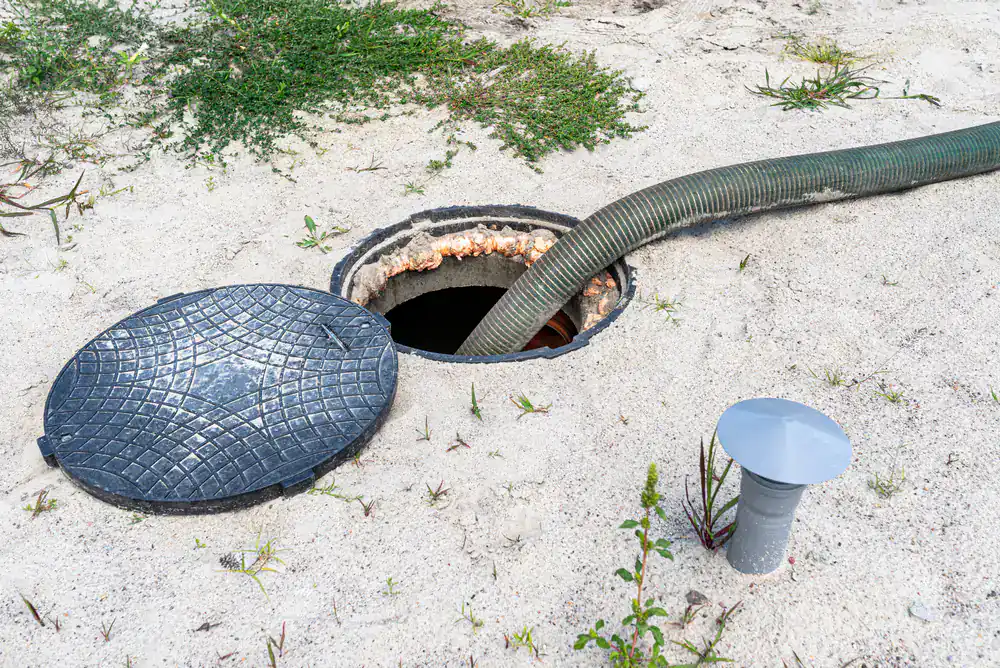
When our crew arrives, the first thing we do is locate and access the cesspool. In Shoreham, where a meaningful number of homes were built in the 1940s and 1950s with little documentation, that step isn’t always straightforward. We specifically specialize in locating hard-to-find cesspools systems where the cover has been buried, the records are long gone, or the original installation wasn’t mapped. Once access is confirmed, we pump the system thoroughly and assess what we find. If there’s something worth flagging buildup, structural concerns, signs the system is under stress you’ll hear about it plainly, not as a sales pitch.
For properties near the Sound or the bluffs along the northern edge of Shoreham, there are NYSDEC and Suffolk County environmental compliance considerations that apply to waterfront-adjacent work. We’re familiar with those requirements. After the job, you receive written service documentation the kind that matters when the home eventually sells or when Suffolk County records come into play.
Ready to get started?
Cesspool pumping removes the accumulated liquid and solids from your system so it can function properly. Cesspool cleaning goes a step further it involves more thorough removal of hardened sludge and an inspection of the system’s interior condition. These aren’t the same service, and knowing which one your system actually needs matters more in Shoreham than in a newer development where systems are younger and better documented.
The Town of Brookhaven has formally designated northern Brookhaven the area that includes Shoreham and East Shoreham as a Nitrogen Protection Zone. Groundwater data shows nitrogen concentrations in this part of the Upper Glacial aquifer rose 40 percent between 1987 and 2005. That’s not an abstraction for residents who live along the Sound. Regular pumping is the most direct action a homeowner can take to reduce the nitrogen load their system puts into the ground. It doesn’t replace the system, but it keeps a functioning system from becoming a failing one.
We handle the full scope: routine pump-outs, cesspool locating, drain cleaning, septic pumping, and full system installation when that’s what’s needed. Suffolk County’s 2019 ban on new conventional cesspool installation means any replacement now requires an Innovative/Alternative Onsite Wastewater Treatment System. If your system reaches that point, you want one company that can walk you through the whole picture not three separate contractors.
