Useful Links
Other Services we provide in Shoreham
For most Shoreham homeowners, the honest answer depends on two things: what type of system you have and how many people are using it. A conventional septic tank serving a family of four typically needs pumping every three to four years. If you have a cesspool which is common in Shoreham’s older housing stock that interval shortens to every one to two years, because cesspools don’t separate solids from liquids the way a septic tank does. They accumulate sludge faster and need more frequent attention to stay functional.
What complicates this for a lot of Shoreham residents is that they genuinely don’t know when the system was last serviced, or whether they have a cesspool or a septic tank at all. If you bought the home from an original owner or an estate and there are no service records, the safest starting point is a pump-out now and a proper assessment of what you’re working with. From there, you can set a realistic schedule rather than guessing.
Standard residential septic tank pumping in Suffolk County runs between $225 and $600 depending on tank size. A 1,000-gallon tank typically falls in the $225 to $400 range; larger systems 2,000 gallons run closer to $400 to $600. Those are real 2024-2025 market figures, not teaser prices.
Where homeowners sometimes get caught off guard is with add-on costs that weren’t disclosed upfront. Lid excavation if your tank lid is buried, which is common on older Shoreham properties can add anywhere from $300 to $1,200 depending on how deep it’s set and how accessible the area is. A low phone quote that doesn’t mention excavation isn’t necessarily a better deal. Our approach is to be straight about what’s included before anyone shows up, so the estimate you get reflects the actual job not a best-case scenario.
The most obvious signs are slow drains throughout the house, gurgling sounds from toilets or sinks, sewage odor inside or outside, and wet or unusually green patches of grass over the tank or drainfield. Any of these is a clear signal that the system is under stress and needs attention soon.
The harder truth is that most systems don’t give obvious warning signs until they’re already in trouble. A tank that’s 80 or 90 percent full doesn’t look or smell any different from the outside than one that’s at 50 percent. By the time you notice symptoms, the system has usually been overdue for a while. For Shoreham homes where many systems are 50 to 70 years old and the sandy soil above Long Island Sound provides little buffer if effluent starts migrating waiting for symptoms is a riskier strategy than it might be elsewhere. Staying on a regular pumping schedule is the only way to stay ahead of it.
The system keeps accumulating solids until there’s no room left. At that point, solids start pushing into the drainfield the network of pipes or leaching area that disperses liquid effluent into the soil. Once solids clog a drainfield, it typically can’t be restored. You’re looking at full replacement, which in Suffolk County can run $10,000 to $15,000 or more depending on the system type and site conditions.
Under Suffolk County’s current regulations, a failed system that requires replacement can’t simply be swapped out for the same type of system. Since 2019, failed cesspools and conventional septic systems must be upgraded to a more advanced design. That’s a significantly larger project than a routine pump-out and it comes with no warning. For a Shoreham homeowner with a property valued at $650,000 or more, a $400 pump-out every few years is genuinely the least expensive form of insurance available for the system underneath your home.
Start with a pump-out and inspection. If the previous owners didn’t leave service records which is common, especially with estate sales or long-term ownership the only reliable way to understand what you have is to have a technician access the tank, pump it out, and assess its current condition. That tells you the system type, the tank size, the approximate state of the baffles and structure, and whether anything needs immediate attention.
Shoreham’s pre-war and postwar housing stock makes this especially relevant. A home built in the 1940s or 1950s may have a system that was never upgraded, has never been professionally serviced, or has a lid buried so deep that previous owners simply stopped thinking about it. Getting that baseline assessment done early before a problem surfaces gives you real information to work with. It also gives you documentation, which matters if you’re planning to sell the home at some point and buyers request a septic inspection before closing.
Yes. We serve the incorporated village of Shoreham, East Shoreham, and the broader Route 25A North Shore corridor including Wading River and Rocky Point. The whole stretch shares the same basic conditions older homes, private septic and cesspool systems, sandy glacial soil, and direct groundwater exposure to Long Island Sound so the work here is familiar territory.
East Shoreham in particular has its own share of older properties, including homes near the Wardenclyffe site on Randall Road and along the Route 25A corridor that have been in continuous use for decades. Whether you’re in the incorporated village or just outside it, we cover you. We operate seven days a week, 24 hours a day, so whether you’re scheduling routine maintenance or dealing with something that can’t wait, the response is the same someone actually picks up and someone actually comes.
Hear from Our Customers
The most common thing homeowners say after a pump-out is that they wish they’d done it sooner. Not because anything dramatic happened but because they finally stopped wondering. No more second-guessing whether the slow drain means something serious. No more avoiding the topic when the neighbors mention their system failed last spring. You just know it’s handled.
For Shoreham specifically, that peace of mind carries extra weight. A significant portion of homes in this village were built before 1939, and the broader 11786 area shows an average home age of around 47 years. Systems installed in the 1950s and 1960s or earlier weren’t designed for the daily load of a modern household. Regular pumping keeps those older systems functional and gives you early warning before a small issue becomes a $10,000 repair.
There’s also the groundwater reality that’s unique to Shoreham. The village sits on high bluffs above Long Island Sound, and the sandy glacial soil beneath it filters almost nothing before effluent reaches the water table. A neglected system here doesn’t just threaten your yard it moves quickly toward one of the most monitored coastal bodies of water in the Northeast. Staying current on pumping is the most direct thing you can do about that.
We’ve been working on Long Island’s septic and cesspool systems since 2002, and our team brings over 30 years of hands-on experience in this specific environment North Shore housing stock, aging infrastructure, buried lids, sandy soil, and all the quirks that come with it. This isn’t a national franchise reading from a script. It’s a locally owned operation that knows the difference between a system that needs a pump-out and one that actually needs repair and won’t tell you otherwise.
We serve all of Suffolk County, including Shoreham and the surrounding Route 25A corridor through East Shoreham, Wading River, and Rocky Point. In a village where nearly every home is owner-occupied and virtually none are connected to municipal sewer, the work here is personal. Customers describe our technicians Mike, Lucas, George by name. That’s not a coincidence. It’s what happens when a company actually shows up, does the job completely, and doesn’t manufacture problems to pad the bill.
It starts with a call and a free estimate. Before anyone shows up at your property, you’ll know what to expect what the service includes, what it costs, and what happens if the technician finds something worth flagging. That’s not a sales approach. It’s just how the job should work.
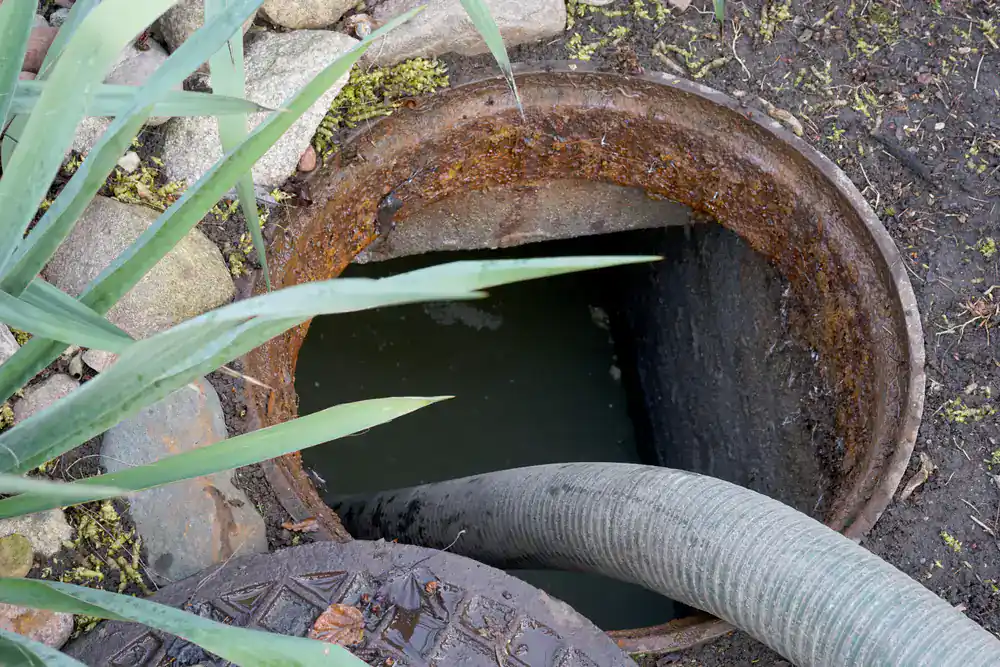
When our crew arrives, the first step is locating and accessing the tank. In Shoreham, this is often where older homes create a real challenge. Properties built in the 1930s, 1940s, and 1950s many of them originally summer cottages frequently have lids buried under years of soil and landscaping with no documentation of where the tank sits. We specialize in locating hard-to-find cesspools and septic tanks, so if your lid isn’t obvious, that’s not a problem that gets passed back to you.
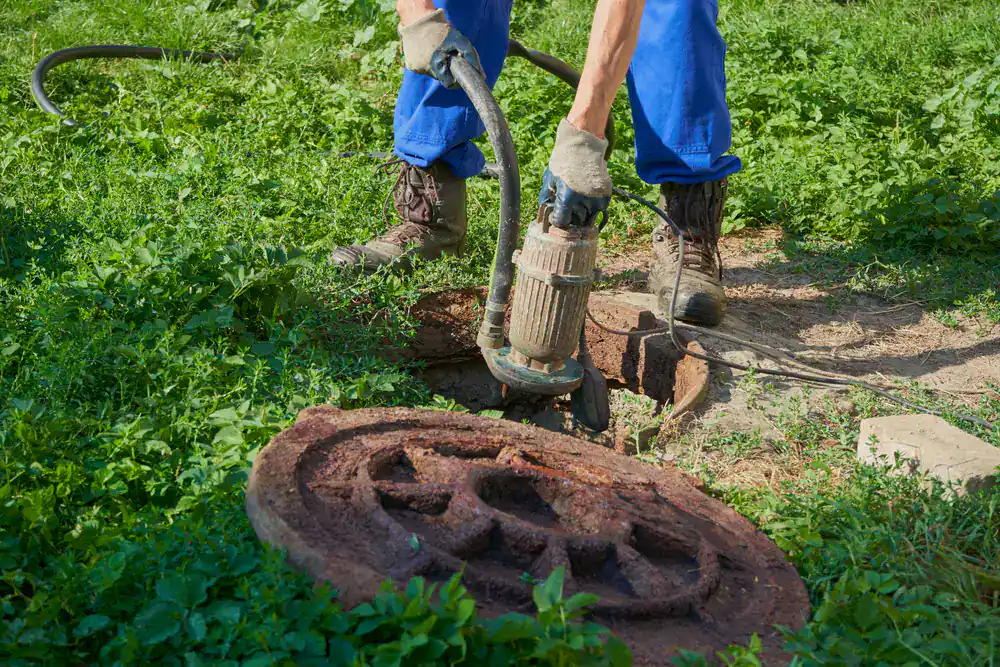
Once access is clear, we pump the tank completely not partially, not surface-level. That means removing accumulated sludge and scum from the bottom up, which is the only way the service actually resets the system’s capacity. After pumping, our technician assesses the tank’s condition: checking baffles, looking for signs of infiltration or damage, and letting you know what’s there. If everything looks fine, you’re done. If something needs attention, you’ll hear about it plainly what it is, why it matters, and what your options are.
Ready to get started?
Septic tank pumping is the core of what brings most Shoreham homeowners to call, but it’s rarely the only thing a property needs especially on older lots where the infrastructure has been layered and added to over decades. We handle the full picture: septic pumping, cesspool pumping, drywell cleaning, drain cleaning, house trap replacements, and main sewage line cleaning and replacement. If your home has a holding tank rather than a conventional system, that’s covered too.
All work is performed under Suffolk County’s Liquid Waste License requirements, which govern cesspool and septic contractors throughout the county under Chapter 563, Article VII. That matters in Shoreham because Suffolk County’s 2019 regulatory change means any system that fails and requires replacement must be upgraded not simply replaced in kind. Knowing your system’s actual condition before it reaches that point gives you options. A routine pump-out is also the best time to catch early warning signs that, left alone, would eventually trigger that conversation.
For homes along the North Country Road corridor and throughout the incorporated village, we’re available seven days a week, 24 hours a day, including holidays. Emergencies don’t schedule themselves, and in a village without a nearby commercial center, having a company that actually answers at 10 PM on a Sunday is worth knowing about before you need it.