

Useful Links
Other Services we provide in Farmingville
The honest answer is that cost depends heavily on what’s in the ground and what the soil conditions look like on your specific property. In Suffolk County, a full septic system replacement generally runs somewhere between $20,000 and $40,000 depending on system type, site conditions, and whether excavation reveals anything unexpected like the clay layers that show up on some lots in Farmingville’s moraine terrain.
If you’re installing an I/A OWTS system the advanced nitrogen-reducing type that Suffolk County is increasingly requiring the average cost runs around $25,000. That number looks different once you factor in the Suffolk County Septic Improvement Program, which currently offers up to $45,000 in combined state and county grant funding for eligible homeowners. For many Farmingville households, the grant covers the bulk of the cost. There’s also a CDCLI loan program offering up to $10,000 at 3% interest over 15 years for costs above what the grant covers. The key thing to know: you have to apply for the grant and receive your certificate before installation starts not after the fact.
No and this catches a lot of Farmingville homeowners off guard. Since July 1, 2019, Suffolk County banned new cesspool-only installations. If your existing cesspool fails or needs replacement, the new system has to meet modern septic standards at minimum. In many situations, particularly for new construction or projects that trigger the county’s thresholds, an I/A OWTS nitrogen-reducing system is required.
This matters practically because it changes both the cost and the process. A modern septic system involves a tank that separates solids from liquids and a proper leaching field it’s not the same as the simple pit that most of Farmingville’s older homes were built with in the 1950s and 1960s. The good news is that the upgrade path is well-established, the permit process is manageable with the right contractor, and the grant funding available through the Suffolk County Septic Improvement Program makes the cost far more workable than it might initially seem.
Farmingville sits directly on the Ronkonkoma Moraine the glacial ridge that runs through the center of Long Island roughly along the path of the Long Island Expressway. Unlike the sandy outwash plains south of the moraine, moraine soils are what geologists call poorly sorted glacial till: a mix of boulders, clay, silt, and sand deposited without any particular order as the glacier stopped advancing. The practical result is that soil conditions vary significantly from one property to the next.
On some Farmingville lots, you’ll find relatively good drainage. On others, you hit clay layers that don’t perc well and require excavation and soil replacement before a drain field can function properly. This is why a phone quote for septic installation in Farmingville isn’t worth much and why a perc test isn’t just a regulatory box to check, but a genuine necessity. A site-specific assessment tells you what you’re actually working with before the design is finalized and before any money changes hands on the installation itself.
The Suffolk County Septic Improvement Program (SIP) is a grant program that helps homeowners cover the cost of upgrading to an I/A OWTS an advanced septic system that removes nitrogen before it reaches the groundwater. Farmingville homeowners are eligible as long as the property is residential, has a valid Certificate of Occupancy, has no outstanding tax liens, and the project involves replacing an existing system rather than serving new construction.
The grant amount currently goes up to $45,000 in combined state and county funding, which covers a significant portion of a typical I/A OWTS installation. Here’s the part that trips people up: the grant certificate has to be issued before installation begins. You can’t install first and apply after. The funds are also assigned directly to the approved installer they don’t come to you as a reimbursement. That means you need a contractor who’s on the SIP approved installer list, and the paperwork needs to be in order before any excavation starts. Getting the sequence right is something a contractor with Suffolk County experience handles as part of the process.
The active installation work excavation, system installation, abandonment of the old system typically takes one to three days for a residential job. Many straightforward installations are completed in a single day, which is something Farmingville homeowners with landscaping and yards they’ve maintained for decades tend to appreciate. The disruption is real but it’s finite.
What takes longer is the front end of the process. A perc test has to be completed before the permit application can be filed. The permit itself, once submitted to the Suffolk County Department of Health Services, adds some lead time before work can legally begin. If the SIP grant is part of your plan, the grant application and approval adds another step that has to come before installation. Realistically, from the time you start the process to the day installation is complete, you’re looking at several weeks which is exactly why acting before a system failure is so much better than waiting. When a system fails, you lose the ability to control that timeline.
The old system doesn’t just get abandoned in place and forgotten. Proper decommissioning is a required part of any permitted installation in Suffolk County. The existing cesspool is pumped out completely, then filled or crushed to prevent it from becoming a collapse hazard underground. The entire process is documented, and that documentation becomes part of the installation record for your property.
This matters more than it might seem, especially for Farmingville’s older homes. Many of the ranches and cape cods built here in the 1950s and 1960s have cesspools that were never formally mapped or documented some homeowners aren’t entirely sure where the system is on their own property. Locating the existing system before any design or permit work begins is part of what we do. We’re recognized as a cesspool location specialist, which is a practical advantage on properties where decades of landscaping, additions, and driveway work have made what’s underground less than obvious. Finding it first means no surprises once excavation starts.
Hear from Our Customers
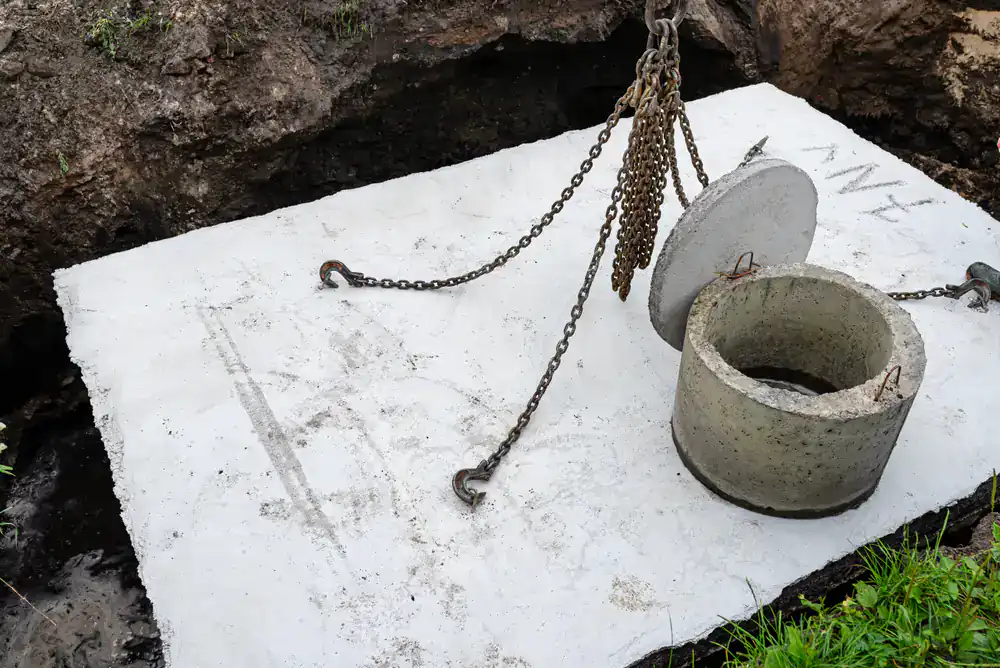
When a septic installation goes right, you stop thinking about what’s underground. No slow drains. No odors creeping into the yard. No anxiety every time it rains. That’s what a properly installed system gives you and in a home you’ve likely owned for years and plan to stay in, that peace of mind is worth a lot.
Farmingville sits directly on the Ronkonkoma Moraine, which means the soil conditions on your property aren’t necessarily what your neighbor has two streets over. Poorly sorted glacial till the mix of clay, silt, and sand the glacier left behind creates real variability from lot to lot. A system designed without a proper site assessment here isn’t just a gamble on cost. It’s a gamble on whether the drain field will actually function the way it’s supposed to.
The homes along Horseblock Road and throughout the Newport Village section of Farmingville were largely built within a tight window in the 1950s and 1960s. That means a lot of cesspools in this hamlet are aging out at the same time. Getting ahead of it while you can still choose your contractor, apply for grant funding, and plan the work around your schedule is a much better position than calling someone at 11pm when the system backs up.
We’re a family-owned and operated company based in West Babylon, serving both Nassau and Suffolk Counties. Our team has been doing this work on Long Island for over 30 years through every regulatory change, every shift in county requirements, and every variation in soil the Ronkonkoma Moraine throws at a job site.
Farmingville is in the Town of Brookhaven the largest town in Suffolk County and Brookhaven Town Hall sits right here in the hamlet. That’s not a trivia fact. It means the permit process, the SCDHS filing requirements, and the inspection expectations for jobs in this area are a known quantity for a contractor with decades of Suffolk County experience. There’s no learning curve on your dime.
What customers consistently say about working with us is that a real person answered the phone, gave them a real arrival window, showed up when we said we would, and explained what was happening throughout the job. In a business where that’s rarer than it should be, it matters.
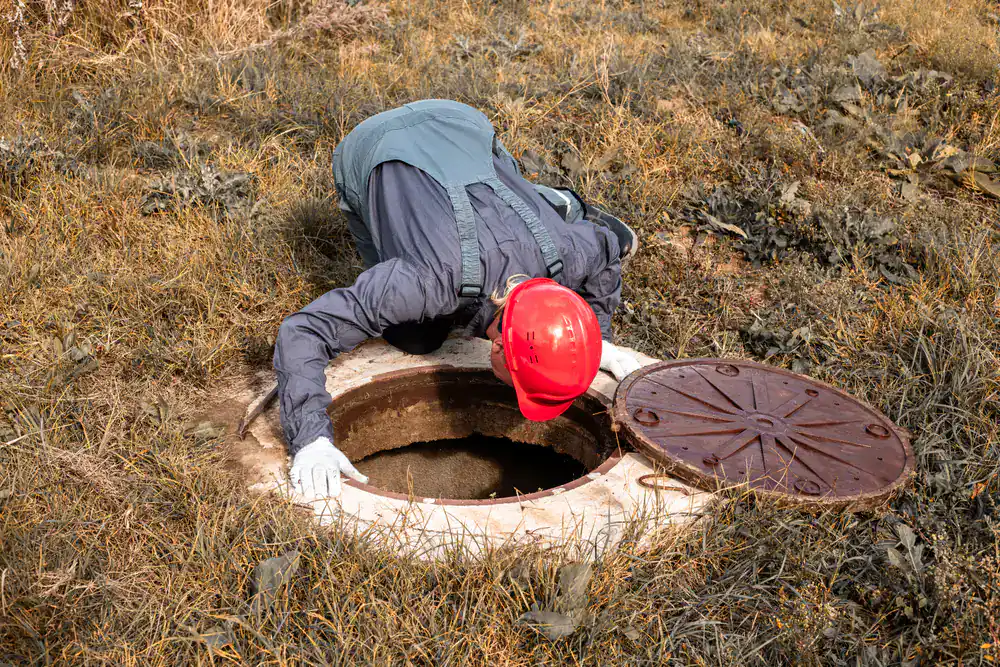
It starts with a site visit, not a phone quote. Because Farmingville’s moraine soils vary so significantly from property to property, there’s no responsible way to design or price a system without seeing the land first. The assessment looks at your existing setup, the soil conditions, the available space for a drain field, and any site-specific factors like elevation or clay layers that affect system design. A perc test is typically required before a permit can be filed, and that result drives the final design.
Once the design is confirmed, the permit application goes to the Suffolk County Department of Health Services. This is a required step before any installation work begins no legitimate contractor skips it. The permit process adds some lead time, but it also protects you: a permitted installation comes with a documented record that matters when you sell the home or need to make a future claim. For Farmingville homeowners pursuing the Suffolk County Septic Improvement Program grant, the grant certificate has to be in hand before installation starts, so the sequencing of these steps matters.
On installation day, the old system is properly abandoned pumped, filled, and documented and the new system goes in. Most residential jobs are completed in a single day of active work. When the installation is done, we provide you with the installation records for the new system. The SCDHS inspection follows, and once that’s cleared, the job is closed out cleanly.
Ready to get started?
We handle the complete installation process site assessment, system design, permit coordination, excavation, installation, proper abandonment of the old system, and post-installation documentation. You’re not managing multiple contractors or chasing down paperwork. One company, one point of contact, start to finish.
For Farmingville homeowners replacing an aging cesspool, the current Suffolk County rules are important to understand. Since July 2019, you cannot simply replace a cesspool with another cesspool. Any replacement has to meet modern septic standards at minimum. In many cases particularly for new construction or major renovation projects an I/A OWTS system (an innovative, advanced treatment system that significantly reduces nitrogen output) is required. These systems cost more upfront, but they’re also what qualifies you for the Suffolk County Septic Improvement Program, which offers combined state and county grants of up to $45,000 as of 2025. If the grant is part of your plan, the application has to be submitted and approved before the installation begins not after.
We offer both conventional septic system installation and I/A OWTS installation, and work with homeowners to understand which system fits their property, their budget, and their grant eligibility. Our approach is to assess the individual needs of each property before recommending anything which, on Farmingville’s variable moraine soils, is the only way to get the design right.
