Useful Links
Other Services we provide in Huntington Bay
It depends on a few factors, but Huntington Bay properties are generally strong candidates. The Suffolk County Septic Improvement Program was designed specifically for waterfront and near-waterfront communities where nitrogen from aging cesspools is directly impacting local waterways and Huntington Bay fits that description precisely. The harbor the village borders is directly affected by nitrogen discharge from the peninsula’s aging infrastructure.
To qualify, the property generally needs to have an existing cesspool or conventional septic system that will be fully replaced, a valid certificate of occupancy, and no outstanding tax liens. The system being replaced has to be abandoned not just supplemented. The grant funding, which can reach up to $45,000 in combined state and county funds as of 2025, is assigned directly to the approved installer rather than reimbursed to the homeowner after the fact. That means the application has to be submitted and a grant certificate issued before installation begins. If you’re thinking about this, the time to start the conversation is before you’ve committed to a timeline, not after.
A cesspool is essentially a buried pit that allows raw waste to seep directly into the surrounding soil with no treatment. There’s no separation of solids from liquids, no leaching field, and no mechanism for removing nitrogen or pathogens before they reach the groundwater. A septic system even a conventional one includes a tank that separates solids from liquids, with treated effluent then dispersing through a leaching field. An I/A OWTS system goes further, using an additional treatment stage that removes nitrogen before effluent leaves the system.
This distinction matters in Suffolk County for two reasons. First, as of July 1, 2019, Suffolk County banned all new cesspool-only installations. If your existing cesspool needs to be replaced, it cannot simply be swapped for a new cesspool the replacement has to meet modern septic standards at minimum. Second, in coastal communities like Huntington Bay, the groundwater that receives untreated effluent from cesspools flows directly toward the harbor. That’s not a theoretical pathway. It’s a documented connection between what’s under your yard and the water quality in Huntington Bay and Huntington Harbor.
The active installation work itself excavation, system installation, abandonment of the old system typically takes one to three days once permits are in hand. The permit process is what adds time to the overall timeline. Filing with the Suffolk County Department of Health Services under Article 6 of the Sanitary Code, waiting for review, and scheduling the required soil evaluation all happen before a shovel goes in the ground. That process generally adds a few weeks to the front end of the project.
If you’re pursuing I/A OWTS installation and want to use the Suffolk County SIP grant program, factor in additional lead time for the grant application to be submitted and approved before work begins. For Huntington Bay homeowners dealing with a real estate transaction where a buyer’s inspection has flagged the system and there’s a closing date on the calendar getting the process started as early as possible is the right move. Waiting until the last minute compresses a timeline that has regulatory steps that can’t be rushed.
This is one of the more common situations on East Neck, and it’s exactly why cesspool location is a specialty we offer at Drastic Drainage Long Island. Many homes in Huntington Bay were originally built as Manhattan and Brooklyn estates in the late 1800s and early 1900s, long before modern permitting records existed. The cesspool or drainage infrastructure on those properties was installed without documentation that would appear in any current county record. It may have been added to, modified, or partially abandoned over the decades and the current homeowner may have no idea where any of it is.
Before any new system can be properly designed and installed, the existing underground infrastructure has to be located and assessed. We use cesspool location techniques to find what’s there, determine its condition, and map it before excavation begins. This step isn’t optional it’s what prevents a new installation from running into an unmarked structure mid-project, which is both costly and time-consuming to resolve. If you own an older property in Huntington Bay and you’re not sure what’s underground, that’s the first question to answer before anything else moves forward.
Yes, and this is one of the most important things waterfront and near-waterfront homeowners in Huntington Bay need to understand. A conventional septic leaching field works by dispersing treated effluent into the soil below it, where natural filtration continues before the water reaches the groundwater table. That process depends on having adequate vertical distance between the bottom of the leaching field and the top of the water table. In low-lying coastal areas on the East Neck peninsula, that distance can shrink significantly especially after heavy rain, a nor’easter, or a seasonal rise in the water table.
When the gap closes, the system stops treating effluent properly. Nitrogen and pathogens move directly into the groundwater without adequate filtration. From the surface, everything can look completely normal no odor, no surfacing effluent, no backup. The system appears to be working. But hydraulically, it isn’t. This is why a professional site assessment that accounts for water table depth isn’t just a regulatory formality it’s the only reliable way to know whether your system is actually performing or just appearing to. For properties near Huntington Harbor, an I/A OWTS installation designed for coastal conditions is often the appropriate long-term solution.
The old system has to be properly abandoned it can’t just be left in place and ignored. Proper abandonment means the existing cesspool is pumped out completely, then filled or crushed to prevent any future collapse or structural failure underground. The abandonment is documented, and that documentation becomes part of the installation record for the new system. This matters for your own records and for any future real estate transaction, where a buyer’s attorney or home inspector may ask for proof that the old system was properly decommissioned.
In Suffolk County, the abandonment of the existing system is part of the SCDHS registration and permitting process it’s not something that happens informally on the side. For Huntington Bay properties where the existing cesspool may be old enough that its exact location wasn’t previously known, proper abandonment starts with locating the structure, assessing its condition, and then following the county’s required process for taking it out of service. We handle this as part of the full installation scope, so there’s no gap between removing the old system and putting the new one in.
Hear from Our Customers

Most homeowners wait for something to go wrong before they think about their septic system. On a coastal peninsula like East Neck, that’s a gamble that doesn’t always give you a warning.
In low-lying waterfront areas near Huntington Bay, the water table can creep close enough to your leaching field that the system stops treating effluent properly no odor, no backup, no obvious sign while nitrogen drains directly into the groundwater that feeds Huntington Harbor. The problem isn’t visible. The damage is.
When you replace an aging cesspool or conventional system with a modern I/A OWTS installation, you’re not just checking a regulatory box. You’re getting a system that was actually designed for a coastal lot one that reduces nitrogen output by up to 70% compared to what’s likely sitting under your yard right now. For a property that looks out over the bay, that’s not an abstract environmental benefit. It’s the water your neighbors swim in, the harbor the Huntington Yacht Club sits on, and the estuary that determines whether Crescent Beach stays worth visiting.
There’s also the practical side. Huntington Bay’s housing stock includes homes that date back to the late 1800s, many of them originally built as Manhattan and Brooklyn estates before East Neck was subdivided. The underground infrastructure on those properties is often just as old unmapped, undocumented, and in conditions nobody has assessed in decades. Getting a proper installation done means knowing what’s already underground before a new system goes in, not discovering it mid-project.
Drastic Drainage Long Island is a family-owned and operated company based in Suffolk County, with over 30 years of hands-on experience working on Long Island’s specific soil conditions, drainage systems, and the regulatory process that governs every septic installation in this county. The owner’s name is on every job. That’s not a marketing angle it’s how a family business works.
Huntington Bay is a confirmed service area, and the work we do on North Shore properties along the Long Island Sound corridor is meaningfully different from what you’d encounter further inland. The high water table near the water, the age of the housing stock, the older infrastructure that predates modern permit records these are real factors that change how a job gets planned and executed. We’ve navigated all of it, including the Suffolk County Department of Health Services permitting process that every installation here has to go through.
What customers consistently tell us after the job is done: a real person answered the phone, we showed up when we said we would, and the work was explained clearly before anything started. For a Huntington Bay homeowner with a demanding schedule and a high-value property, that kind of reliability matters.
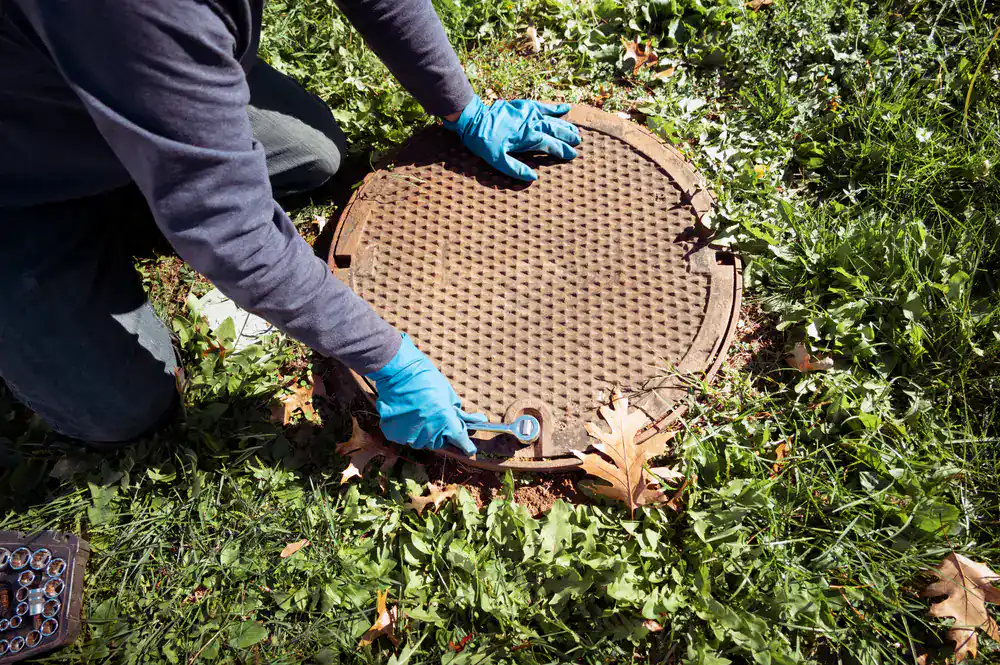
It starts with a site assessment. Before any design work happens, we evaluate the property soil conditions, lot size, proximity to the water table, and the location of whatever’s already underground. On older Huntington Bay properties, that last part matters more than most people expect. Our cesspool location specialty exists precisely because a lot of East Neck homes have infrastructure that was never mapped. Finding it before excavation starts is how we avoid expensive surprises.
Once the site is assessed, the system gets designed around what the property actually needs not a one-size-fits-all approach. In Suffolk County, all new installations require a permit filed with the Suffolk County Department of Health Services under Article 6 of the Suffolk County Sanitary Code. That permit process adds lead time before active work can begin, typically a few weeks. If you’re considering an I/A OWTS installation and want to access the Suffolk County Septic Improvement Program grant funding, the grant application has to be submitted and approved before installation starts not after. We can walk you through that process so the timing works in your favor.
Once permits are in hand, most residential installations are completed in one to three days of active work. We pump the old system completely, abandon it properly, and document everything. The new system goes in. A post-installation inspection by SCDHS closes the loop. You get installation records for the new system documentation that matters for your own records and for any future real estate transaction on a property at Huntington Bay’s price points.

Ready to get started?
Septic system installation in Huntington Bay isn’t a single task it’s a sequence of steps that have to happen in the right order, with the right documentation at each stage. We handle the full scope: site assessment, cesspool location if the existing infrastructure isn’t mapped, system design, SCDHS permit filing, excavation, installation, proper abandonment of the old system, and post-installation records.
For properties on or near the water which covers a significant portion of Huntington Bay’s East Neck peninsula the system design has to account for the coastal water table. That’s a real engineering consideration that affects which system type is appropriate and how the leaching field gets positioned. If your property qualifies for an I/A OWTS nitrogen-reducing system, we can discuss whether the Suffolk County SIP grant program applies to your situation. As of 2025, eligible homeowners may access up to $45,000 in combined state and county grant funding and Huntington Bay was one of the earliest communities in Suffolk County where this program was publicly demonstrated, back in 2017. The grant goes directly to the approved installer, not to the homeowner as a reimbursement, and it has to be secured before work begins.
We handle both residential and commercial installations. If you’re dealing with a real estate transaction a buyer’s inspection flagged the system, or you’re preparing a property for sale we can assess what’s there, advise on what’s required, and get the work done with the documentation that a transaction at this price point demands.