By submitting you consent to receive service-related texts from Drastic Drainage. Reply STOP to opt out. Msg & data rates may apply. Consent not required to book service.
Useful Links
Here is what septic installation in Mastic Beach looks like once the work is done. Most septic problems in Mastic Beach aren’t really about the system being broken. They’re about a system that was never designed for this environment in the first place. When the water table rises during a nor’easter or a high tide event, a poorly sited or aging cesspool has nowhere to send effluent and the backup finds its way into your yard, your home, or both. A properly engineered installation accounts for that from the start.
The majority of homes here were built as seasonal summer bungalows in the 1920s through the 1960s. The cesspools underneath them were sized for a family spending a few months a year at the beach not for full-time, year-round use. If your home has been converted to permanent occupancy, your system has been running well beyond its original design load for years, maybe decades. That’s not a maintenance issue. That’s a replacement conversation.
Getting a new system installed correctly means you stop rationing your water use during storms, stop worrying about what’s happening underground every time it rains hard, and stop waiting for a failure that’s already overdue. It also means getting ahead of Suffolk County’s regulations before they catch up to you at the worst possible time during a home sale, a renovation, or an emergency.
Yes, and it’s one of the most important factors in designing a system that will actually function here. Mastic Beach sits at an average elevation of just 6.6 feet above sea level, which means the water table in many parts of the community is extremely close to the surface. When a conventional leaching field is installed too close to the seasonal high groundwater level, it can’t properly treat or disperse effluent especially during nor’easters, heavy rain events, or high tides that push groundwater upward.
This is why a soil evaluation and groundwater depth assessment are required steps before any system is designed for a Mastic Beach property. Depending on the results, a standard gravity-fed septic system may work fine on your lot, or the design may need to account for elevated groundwater with a pressurized shallow drainfield or an I/A OWTS system engineered for high-water-table conditions. There’s no one-size answer it depends on your specific parcel, not just the general neighborhood. Getting that evaluation done correctly at the start is what prevents a system that looks fine on paper from failing during the first big storm.
The Suffolk County Septic Improvement Program commonly called the SIP is a grant program that helps homeowners cover the cost of replacing a failing cesspool or conventional septic system with a nitrogen-reducing I/A OWTS system. As of 2025, qualifying homeowners can receive combined Suffolk County and New York State grant funding of up to $45,000. For a replacement that might otherwise cost $20,000 to $40,000 out of pocket, that’s a significant offset.
Mastic Beach homeowners are generally eligible as long as the property is in Suffolk County, has an existing onsite wastewater system, has a valid Certificate of Occupancy, is not a new construction project, and doesn’t have outstanding tax liens. One thing to be aware of: the grant has to be approved before installation begins. You can’t complete the work and then apply for reimbursement. The funds are also paid directly to the approved installer, not to the homeowner which means you need to be working with a contractor who is on the SIP approved installer list before the project starts.
It’s a relevant detail, and it comes up often in Mastic Beach. Most of the housing stock here was built as seasonal cottages in the 1920s through the 1960s, with cesspools sized for light, part-time use. When those homes were converted to year-round residences which most have been the hydraulic load on those systems increased dramatically. A cesspool designed for a family spending eight weeks at the beach is not built to handle daily showers, laundry, dishwashers, and full-time occupancy 365 days a year.
When you’re replacing the system in a converted bungalow, the new design has to be based on how the home is actually being used today, not how it was originally permitted. That means accounting for the current number of bedrooms, the daily water usage, and any additions or renovations that have been made over the years. Suffolk County’s Article 6 requirements govern the sizing and design of any new installation, and the SCDHS permit process will require documentation of the current property configuration. Getting this right from the start avoids the scenario where a system is installed, then flagged during a future sale or renovation because it was undersized for the actual occupancy.
The Forge River Watershed Sewer District is connecting approximately 1,889 homes in the Mastic-Shirley area to a new treatment facility but the sewer district boundary does not cover all of Mastic Beach. The majority of single-family homes in the hamlet are outside the sewer district and will not receive a hookup through that project. A separate, smaller sewer district is being developed for the Neighborhood Road commercial corridor, but that covers a limited area and is focused on commercial properties.
If your property is outside the sewer district boundary, you will remain on a private onsite wastewater system for the foreseeable future. That means Suffolk County’s evolving regulations including the 2019 ban on new cesspool-only installations and the growing push toward I/A OWTS systems in nitrogen-sensitive areas like the Forge River watershed apply directly to you. The practical step is to confirm your parcel’s sewer district status with the Town of Brookhaven before making any decisions. If you’re not getting a hookup, planning a proper septic replacement now and potentially accessing SIP grant funding is a smarter move than waiting for a system failure or a regulatory deadline to force the issue.
There are two timelines to understand here: the permit process and the actual installation work. The active installation excavation, system installation, abandonment of the old cesspool, and site cleanup typically takes one to three days once permits are in hand. Most residential jobs are completed in a single day or two, which means your yard isn’t a construction site for a week.
The permit process is a separate matter. Filing with the Suffolk County Department of Health Services, completing the required soil evaluation and perc test, and waiting for SCDHS review adds time before any excavation begins. That window is typically a few weeks, though it can vary depending on the time of year and the complexity of your application. This is worth knowing if your current system is already struggling the sooner you start the process, the sooner work can actually begin. In Mastic Beach specifically, spring is historically the busiest season for septic calls because snowmelt and spring rains raise the water table and push failing systems over the edge. Getting ahead of that window, rather than calling during it, tends to make the whole process smoother.
The old system doesn’t just get abandoned in place and forgotten there’s a required process for properly decommissioning it. The existing cesspool gets pumped out completely, then it’s either crushed and filled with clean material or properly sealed, depending on its construction and location. The decommissioning is documented and recorded with SCDHS as part of the installation file. This matters for two reasons: it’s required by Suffolk County, and it protects you if questions ever come up during a future home sale or renovation.
In Mastic Beach, where many properties have older cesspools that were installed decades ago and may not have clear records, the site assessment phase sometimes involves locating the existing system before any work can begin. We handle cesspool location as part of the process this is especially relevant in a community where the original installation records may be incomplete or missing entirely. The full scope of work, from locating and pumping the old system to installing and documenting the new one, is handled under one roof so you’re not managing multiple contractors or chasing down paperwork on your own.
Free, no-obligation estimates on cesspool, sewer, and drain work.
We get there quickly. No waiting days for a callback.
Backups don’t wait for business hours. Neither do we.
Fully licensed and insured across Long Island.
Up-to-date trucks and tools for cleaner, faster jobs.
Straight quotes, no surprises on the bill.
Hear from Our Customers

Here is what septic installation in Mastic Beach looks like once the work is done. Most septic problems in Mastic Beach aren’t really about the system being broken. They’re about a system that was never designed for this environment in the first place. When the water table rises during a nor’easter or a high tide event, a poorly sited or aging cesspool has nowhere to send effluent and the backup finds its way into your yard, your home, or both. A properly engineered installation accounts for that from the start.
The majority of homes here were built as seasonal summer bungalows in the 1920s through the 1960s. The cesspools underneath them were sized for a family spending a few months a year at the beach not for full-time, year-round use. If your home has been converted to permanent occupancy, your system has been running well beyond its original design load for years, maybe decades. That’s not a maintenance issue. That’s a replacement conversation.
Getting a new system installed correctly means you stop rationing your water use during storms, stop worrying about what’s happening underground every time it rains hard, and stop waiting for a failure that’s already overdue. It also means getting ahead of Suffolk County’s regulations before they catch up to you at the worst possible time during a home sale, a renovation, or an emergency.
Drastic Drainage Long Island is a family-owned company based in West Babylon, serving both Nassau and Suffolk Counties. The owner’s name is on every job, and the crew that shows up has been navigating Long Island’s specific soil conditions, coastal groundwater challenges, and Suffolk County permit requirements for over 30 years.
Mastic Beach is not a forgiving environment for wastewater systems. The Forge River corridor, the proximity to Great South Bay, the low-lying terrain along William Floyd Parkway these aren’t abstract geographic details. They’re the conditions your new system has to perform in, season after season. We’ve been doing this kind of work on the South Shore long enough to know what those conditions demand, and we’ve installed systems throughout Mastic Beach that are still working properly decades later.
When you call, a real person picks up. They give you a real arrival window. And they show up when they say they will something that matters more than it should in this industry, but matters nonetheless.
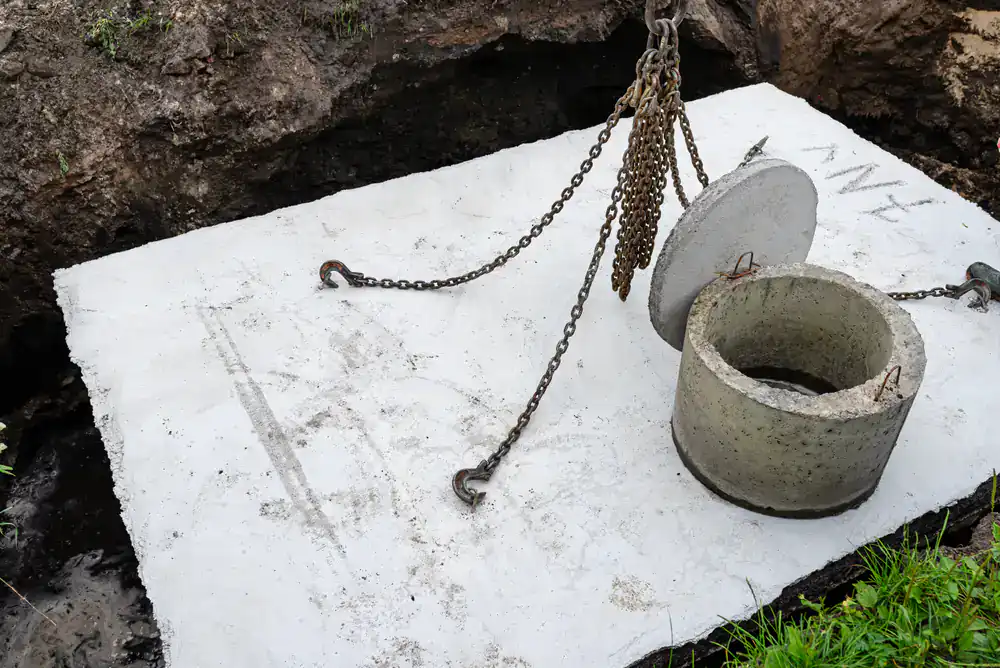
The process starts with a site assessment. Before any work is designed or priced, we evaluate the property soil conditions, groundwater depth, available space for a leaching field, and proximity to any setback requirements under Article 6 of the Suffolk County Sanitary Code. In Mastic Beach, that groundwater depth evaluation matters more than it does in most other parts of Long Island. A perc test is typically required and factors directly into what kind of system gets designed for your property.
Once the design is finalized, a permit application goes to the Suffolk County Department of Health Services. This step adds time before excavation can begin, but it’s not optional and any contractor who suggests skipping it or working around it is not someone you want on your property. The permit process typically adds a few weeks to the timeline, so if your system is already struggling, it’s worth calling sooner rather than waiting for a full failure.
When permits are in hand, installation usually takes one to three days of active work. We handle the full scope excavation, installation, abandonment of the old system, and any documentation required by SCDHS. The old cesspool gets properly pumped, crushed or filled, and recorded. You’re not left coordinating between multiple contractors or chasing paperwork. One company, start to finish.

Ready to get started?
Suffolk County banned new cesspool-only installations as of July 1, 2019. That means any replacement regardless of what’s currently in the ground has to meet modern septic standards at minimum. For many Mastic Beach properties, particularly those in or near the Forge River watershed, an I/A OWTS (innovative/alternative onsite wastewater treatment system) may be required or strongly recommended. These nitrogen-reducing systems are designed to cut nitrogen output by up to 70% compared to a conventional cesspool, which matters in a community where the Forge River has been documented as one of the most nitrogen-polluted waterways in Suffolk County.
The good news is that Suffolk County and New York State offer combined grant funding of up to $45,000 for qualifying I/A OWTS installations through the Suffolk County Septic Improvement Program. For many Mastic Beach homeowners, that grant is the difference between being able to move forward and putting it off another year. One important detail: the grant has to be issued before installation begins you can’t apply after the fact. And the funds go directly to the approved installer, not to you as a reimbursement. That means working with a contractor who is on the SIP approved installer list is essential if you want to use the grant.
We work with both residential and commercial properties throughout Mastic Beach and the surrounding Town of Brookhaven area. Every installation includes a written estimate before any work begins no verbal quotes that change once the excavator is on your lawn.