Useful Links
Other Services we provide in Westhampton
This is one of the most common points of confusion for Westhampton homeowners, and it’s worth being direct about: the Village of Westhampton Beach’s sewer project connects the Main Street business district and certain condominium complexes to the sewage treatment plant at Gabreski Airport. It does not extend to the surrounding residential hamlet. If your property is in the hamlet of Westhampton not within the incorporated village’s limited sewer service area you remain on a private onsite wastewater system, and all Suffolk County cesspool and septic replacement requirements apply to you.
The sewer project was specifically designed to reduce nitrogen loading into Moriches Bay, targeting a 5,000-pound-per-year reduction. That’s a meaningful environmental step for the village’s downtown core. But for the vast majority of residential addresses in Greater Westhampton, the path to a compliant, nitrogen-reducing system is still a private I/A OWTS installation on your own property. If you’re unsure whether your specific address falls within the sewer service area, that’s worth confirming before you make any decisions and we’re happy to help you think through it.
Cost varies based on the system type, lot conditions, soil evaluation results, and the specifics of your existing system. In Suffolk County, a complete septic system replacement generally ranges from the lower end for a conventional system to significantly higher for a full I/A OWTS installation on a coastal or high-water-table property. Westhampton’s sandy soils and proximity to Moriches Bay often mean the conversation defaults to I/A OWTS, which carries a higher upfront cost but is increasingly offset by grant funding.
The Suffolk County Septic Improvement Program, the New York State grant program, and potentially a Town of Southampton supplemental grant can combine to cover a substantial portion of a qualifying I/A OWTS installation. The important thing to understand is that grant funds are assigned directly to the installer not reimbursed to you after the fact and you must apply and receive your grant certificate before installation begins. That sequencing matters. We can walk you through where your property likely stands and what the realistic cost picture looks like before you commit to anything.
The old system doesn’t just get abandoned in place and forgotten. Under Suffolk County requirements, the existing cesspool must be properly pumped out, and then either crushed and filled or sealed according to SCDHS standards. This is documented as part of the installation process, and the records become part of your permanent file. It’s not optional, and any contractor who suggests otherwise is cutting a corner that could create problems during a future property inspection or real estate transaction.
For older Westhampton properties and there are plenty of homes here with cesspools that date back to the mid-20th century, some of which haven’t been mapped or properly documented locating the existing system before excavation begins is sometimes its own step. We have experience finding and assessing systems on properties where the original installation records are long gone, which is more common on the East End than most homeowners expect. That groundwork upfront is what keeps the project on schedule and on budget.
Yes, a permit is required. All septic system installations and replacements in Suffolk County fall under Article 6 of the Suffolk County Sanitary Code and require filing with the Suffolk County Department of Health Services before any work begins. That process includes a soil percolation test, a site evaluation, and a formal SCDHS application. The permit phase typically adds a few weeks to the overall timeline before active installation work can start.
For Westhampton properties near Moriches Bay or in areas with proximity to tidal wetlands or freshwater wetlands, additional NYSDEC or SCDHS review may be required, which can extend the timeline further. This is one of the reasons it pays to start the process earlier than you think you need to especially if you’re working around a summer rental calendar, a real estate closing date, or a specific seasonal window. We handle the permit filing and coordination as part of the installation process, so you’re not navigating that on your own while also managing everything else that comes with owning a property out here.
Westhampton falls within Suffolk County, which means qualifying properties may be eligible for grant funding through the Suffolk County Septic Improvement Program and the New York State Septic System Replacement Program. These programs are specifically designed to offset the cost of installing I/A OWTS systems that reduce nitrogen pollution which is directly relevant to Westhampton given the area’s sandy soils and the documented nitrogen loading into Moriches Bay.
There are a few things that trip people up about the grant process. First, you have to apply and receive your grant certificate before the installation begins you cannot install first and apply for reimbursement afterward. Second, the grant funds go directly to the approved installer, not to you as a homeowner. Third, only contractors who are on the SIP approved installer list can accept those funds on your behalf. If you’re serious about accessing grant funding, the first step is making sure the contractor you hire is on that list. Beyond that, the Town of Southampton may offer supplemental grant funding that stacks on top of the county and state programs confirm current availability and amounts when you call, as program details are updated periodically.
It can, and it’s a more common issue in Westhampton than in year-round residential communities. When a septic system or cesspool sits largely dormant for several months, the bacterial activity inside the tank slows down significantly. That’s not inherently a problem, but it means the system may take some time to reestablish normal function when the house reopens in spring.
More importantly, issues that develop over the winter a slow leak, a failing component, early signs of system stress often go unnoticed until the house is opened and occupied again. For properties that also experience heavy summer usage, the combination of winter dormancy followed by sudden peak load is genuinely hard on aging systems. It’s one of the reasons older cesspools in Westhampton tend to fail faster than their counterparts in communities with steady, moderate year-round use. If your system is already aging and you’re noticing any symptoms when you open the house in spring slow drains, odors, wet patches in the yard that’s worth addressing before the summer season starts, not after. Waiting until July to call is the most expensive version of this problem.
Hear from Our Customers

A property in Westhampton doesn’t get used like a house in Islip or Deer Park. From Memorial Day through Labor Day, what’s normally a two-person home becomes a full house weekends packed, rentals back-to-back, and a wastewater system absorbing load it was never designed to handle. That’s not a small ask. When the system fails in July, you’re not just dealing with a repair bill you’re dealing with guests displaced, a rental canceled, and a contractor who can’t get to you for two weeks because every other homeowner in the Hamptons is calling at the same time.
A properly installed septic system, sized for the way your property actually gets used, removes that vulnerability entirely. No more hoping the old cesspool holds through August. No more crossing your fingers before opening the house in May.
Westhampton’s sandy soils Riverhead sandy loam, Carver and Plymouth sands move water fast. That matters because nitrogen from an aging cesspool reaches the groundwater beneath your property quickly, and from there it flows north into Moriches Bay. A modern I/A OWTS system removes up to 70–90% of that nitrogen before it ever reaches the soil. That’s not an abstract environmental benefit it’s a direct outcome for the water quality of the bay that defines this community.
Drastic Drainage Long Island is a family-owned company based in West Babylon, and we’ve been doing this work on Long Island for over 30 years. That includes the East End the sandy soils that characterize Westhampton, the proximity to Moriches Bay, the Town of Southampton’s regulatory process, and the specific challenges that come with coastal properties and seasonal usage patterns that are nothing like what you’d find in central Suffolk County.
When you call us, a real person answers. When we give you a time, we show up at that time. Most installations are completed in a single day, which matters when your summer calendar is already planned and your rental check-in is Friday. Michael Chiofalo’s name is on every job, and the team that shows up is the same team that has been praised by name in reviews from homeowners across Long Island.
Whether your property is near Dune Road, in Westhampton hamlet itself, or in one of the surrounding communities like Remsenburg or Speonk, we know the ground conditions and the permit process for this part of Suffolk County.
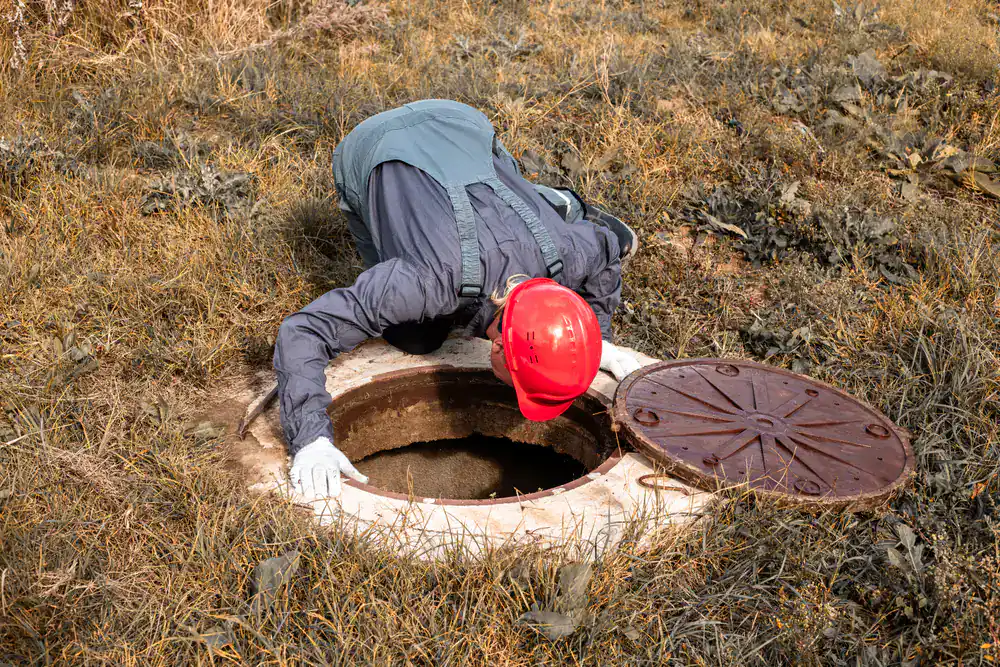
It starts with a site assessment. Before anything is quoted or scheduled, we evaluate your property the soil conditions, the existing system’s location and condition, and the site layout. In Westhampton, that includes accounting for the sandy, highly permeable soils that characterize this area, and any proximity to Moriches Bay or local wetlands that might affect system design or require additional permitting. This step is what keeps the estimate accurate. Skipping it is how jobs end up costing more than the original quote.
From there, we handle the permit filing with the Suffolk County Department of Health Services. This is where a lot of homeowners get frustrated when working with contractors who don’t know the process the Article 6 requirements, the SCDHS registration, the perc test coordination. We’ve done this hundreds of times. Permits typically take a few weeks to process, so the earlier you start, the better especially if you’re working around a summer rental calendar or a real estate transaction timeline.
Once permits are in hand, most residential installations are completed in a single day. We excavate, remove and properly abandon the old system, install the new one, and restore the site. You get installation records and documentation the kind that satisfies buyers, attorneys, and lenders if your property ever goes to market. If your installation qualifies for the Suffolk County Septic Improvement Program, we coordinate the grant process so you’re not navigating that paperwork alone.
Ready to get started?
Septic system installation in Westhampton isn’t a one-size job. The system design depends on your lot size, soil conditions, the number of bedrooms, and how the property is actually used which for many Westhampton homes means accounting for peak summer occupancy, not just the baseline household size. We look at all of that before recommending a system type or size.
For most replacement projects in this part of Suffolk County, the conversation quickly turns to I/A OWTS innovative, advanced treatment systems that reduce nitrogen output by up to 70–90% compared to a conventional cesspool. Since Suffolk County banned new cesspool-only installations in July 2019, any system replacement must meet modern septic standards at minimum, and many Westhampton properties particularly those near Moriches Bay or in areas with high groundwater sensitivity are strong candidates for a full I/A OWTS installation. If your property qualifies for the Suffolk County Septic Improvement Program, we manage the application process and coordinate the grant assignment directly, so the funding works the way it’s supposed to without you having to chase paperwork.
What you get at the end: a properly permitted, fully installed system with complete documentation soil evaluation results, permit filings, installation records, and post-installation guidance on how to maintain the system going forward. For properties in Westhampton, Westhampton Beach, Remsenburg, Speonk, or the surrounding area, that documentation is also what protects you in a real estate transaction. A clean installation record is one less thing a buyer’s attorney can use to renegotiate your deal.