Useful Links
Other Services we provide in Central Islip
The standard guidance of every three to five years works for a household of four with a properly sized system. Central Islip is not that situation for a lot of homeowners. The community has one of the higher population densities in Suffolk County, and large households six, seven, or more people sharing a single system are common.
When occupancy is that high, sludge accumulates significantly faster than any general schedule accounts for. For households of five or more in Central Islip, annual pumping is a reasonable benchmark. The age of the systems here adds another layer. Most Central Islip homes were built between the 1950s and 1970s, and the cesspools installed during that era were sized for smaller households and lower water usage.
Running a 1960s system at full capacity without regular pumping is how you end up with a backup or a drainfield problem that costs far more than a few pump-outs would have. If you don’t know when your system was last serviced, treat that as your answer and schedule one now.
For a standard residential pump-out in Central Islip, you’re generally looking at somewhere in the $300 to $500 range depending on tank size and access. That’s consistent with the broader Suffolk County market. Where costs can increase is when the lid needs to be excavated and in a neighborhood of 1950s and 1960s homes like Central Islip, buried lids are common.
Excavation to reach a buried lid can add meaningfully to the base cost, which is why companies that advertise very low teaser prices often end up charging more by the time the job is done. The honest version of pricing is straightforward: know what’s included before anyone shows up. We offer free estimates and don’t charge for work you didn’t agree to.
If the lid is buried and excavation is needed, that gets discussed upfront not added to the invoice after the fact. The cost of a proper pump-out, done completely, is a fraction of what a failed system costs to repair or replace under Suffolk County’s current regulations.
This is one of the most common questions from homeowners in older Long Island communities, and Central Islip is a good example of why. The hamlet’s housing stock is concentrated in the post-war era the 1950s through the 1970s and the systems installed during that period were almost universally pre-cast concrete ring cesspools.
A cesspool is a simpler design: it collects waste without separating solids from liquids first, which is why it needs to be pumped more frequently than a modern septic tank. If your home was built before 1980 and you’ve never had a full system inspection, there’s a reasonable chance you have a cesspool rather than a septic tank.
The distinction matters for pumping frequency, for what happens if the system fails (Suffolk County now requires an upgrade, not a like-for-like replacement), and for what a buyer’s lender may require if you sell the home. One of our technicians can identify your system type during a standard pump-out visit and explain exactly what you’re working with.
The short answer is that by the time you notice a problem slow drains, odor in the yard, soggy patches in the grass, sewage backing up into the house the system is already in distress. At that point, you’re not dealing with a maintenance call anymore. You’re dealing with a potential drainfield failure, which can cost $10,000 to $15,000 or more to address, plus landscaping restoration and possible health department involvement.
In Central Islip, where lot sizes are smaller and homes are closer together, a failing system is also harder to ignore and harder to contain. The high water table in this part of Suffolk County means a saturated leaching field shows up quickly and so does the smell.
Routine pumping on a schedule that actually matches your household size is what keeps a $300 to $500 maintenance call from becoming a five-figure emergency. The math is straightforward, and the risk of waiting isn’t worth it.
It’s increasingly expected, and as of July 2025, the answer is more clear-cut than it used to be. New York State updated the Property Condition Disclosure Statement effective July 1, 2025, adding more detailed required disclosures about septic system operation and maintenance history. Sellers of Central Islip homes are now required to provide more information about their system’s condition, and buyers and their lenders are increasingly asking for documentation of recent service.
Even before the updated disclosure requirements, a pre-sale pump-out was common practice in communities with older housing stock. A buyer’s home inspector may flag the system, a lender may require a certification, or the buyer may simply want confirmation before closing on a 1960s home with no service records.
Getting a pump-out done before listing puts you in a stronger position and removes a potential negotiation point. Certified cesspool inspections for real estate closings with or without a dye test are part of what we offer in this market, and it’s worth asking about when you call.
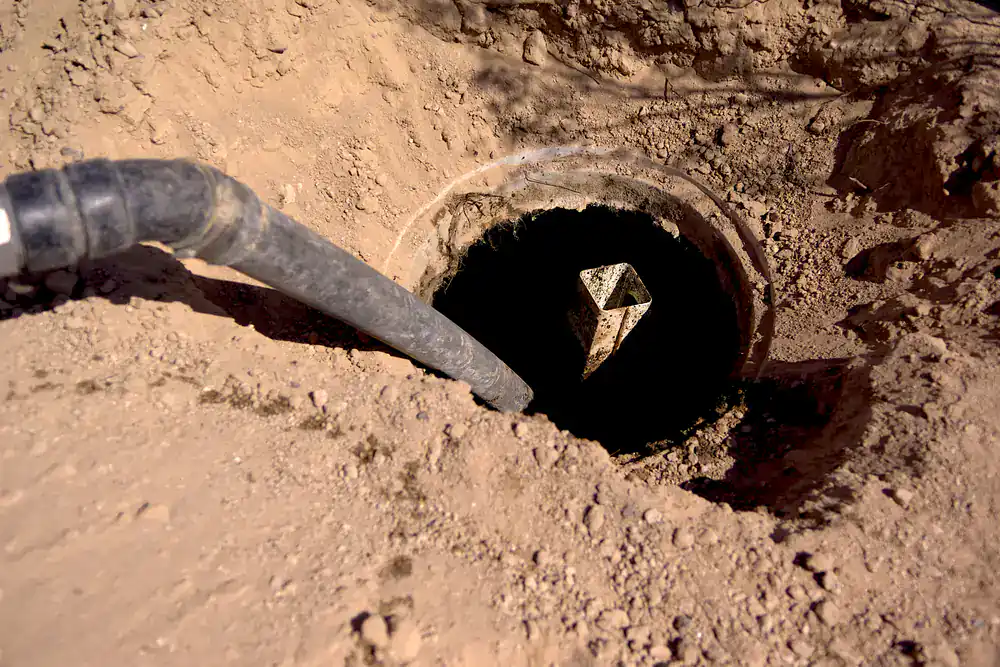
Yes, and this comes up regularly in Central Islip. Homes that have been through multiple owners since the 1950s or 60s often have no documentation of where the tank is located, and decades of landscaping, repaving, and yard work can bury a lid under a foot or more of soil. It’s not unusual for a homeowner to have no idea where to start looking.
We specifically list cesspool location as a specialty finding systems that are difficult to locate is part of what we do, and we’ve been doing it across Suffolk County for long enough to know the common patterns for where tanks were placed in homes of this era. The process doesn’t involve tearing up the entire yard.
Once the tank is located and the lid is uncovered, the pump-out proceeds normally. If excavation is needed to reach a buried lid, that’s discussed with you before any additional work begins not added to the bill after the fact.
Hear from Our Customers
When a pump-out is done right, you’re not just emptying a tank. You’re getting a clear picture of where your system stands what’s working, what’s wearing out, and what can wait. That matters a lot more in Central Islip than in many other Suffolk County communities, because the housing stock here is old and the household sizes are large.
A system that was installed under a three-bedroom Cape in 1962 was not designed for the way most Central Islip families actually live today. The sandy soil and higher water table in this part of Islip Town also mean systems reach capacity faster than the standard pumping schedule assumes.
When the ground is saturated after a heavy spring rain or a nor’easter rolls through from the south shore, an already-stressed system doesn’t have much room for error. Staying on top of pumping is what keeps a manageable maintenance cost from turning into a drainfield failure that runs well into five figures.
After a proper pump-out, you walk away knowing the system was fully cleared not skimmed and that a real technician looked at it and told you the truth about what they found.
We’ve been working on Long Island cesspools and septic systems since 2002, and our team brings over 30 years of hands-on experience with the specific systems that are common in Central Islip pre-cast concrete ring cesspools, aging tanks with buried lids, and setups that haven’t been touched since the previous owner lived there.
When our technician pulls up to a home off Carleton Avenue or Northwood Boulevard, they already have a good idea of what they’re likely to find before they start digging. We’re based in West Babylon, just a short drive from Central Islip via the Southern State Parkway. We’re locally owned, not a franchise, and the people who show up are the same crew that answers for the work.
Our approach is simple: tell you what we found, explain what’s needed versus what can wait, and not push you toward anything you don’t actually need.
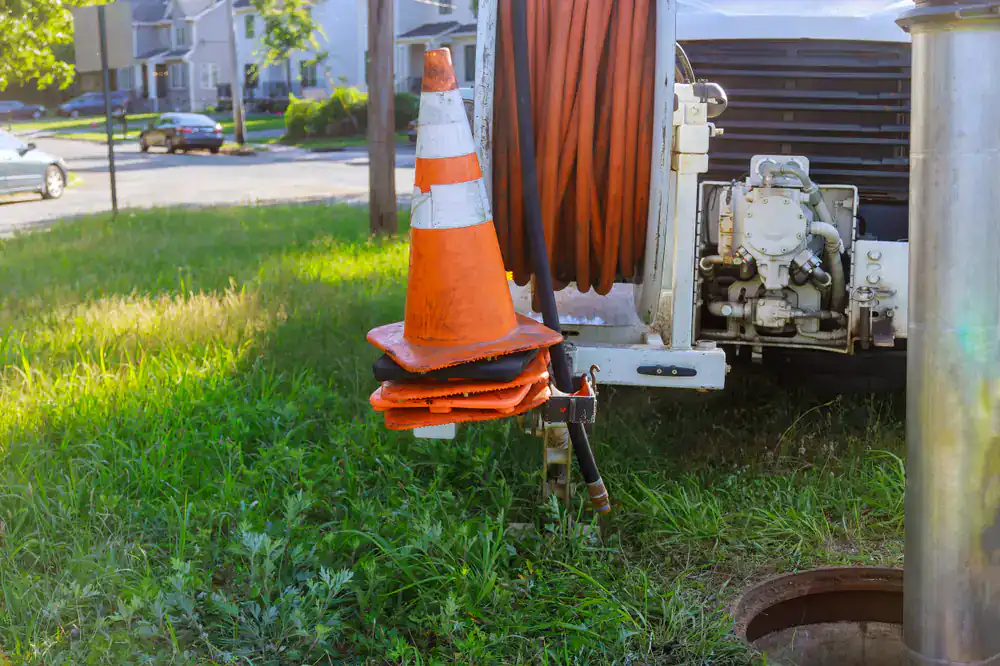
The first step is locating the tank. In Central Islip, where homes were built in the 1950s through the 1970s and have changed hands multiple times, the lid is often buried under years of soil, sod, or repaving. We specialize in finding cesspools and septic tanks that aren’t easy to locate without tearing up the entire yard to do it.
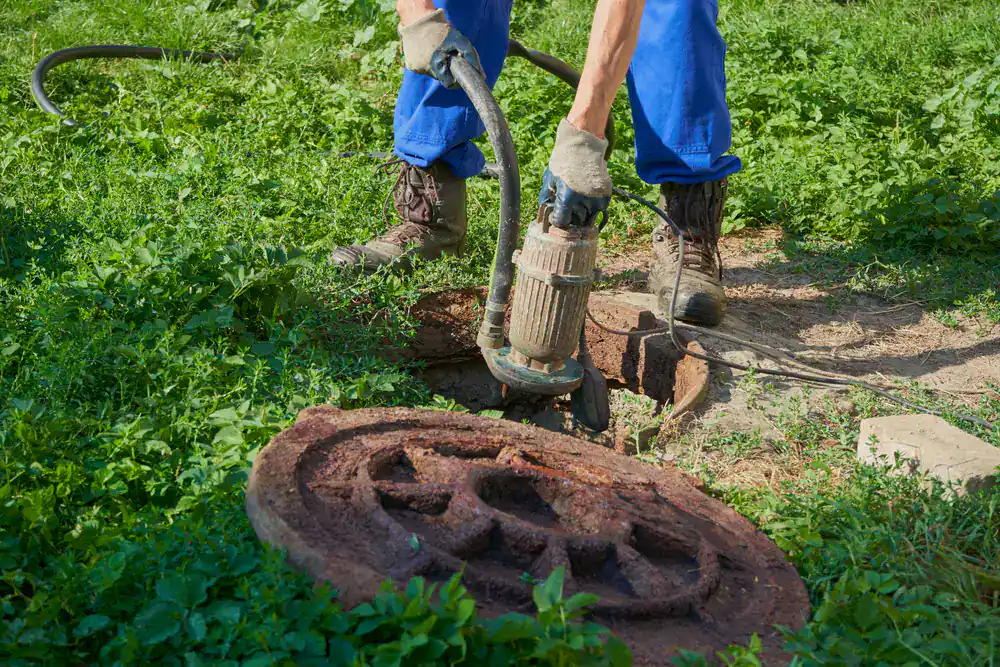
Once the lid is uncovered, our technician assesses access and gets to work. The actual pump-out removes all accumulated sludge and scum from the tank not just the surface layer. This distinction matters. A partial pump-out might look like a completed job, but it leaves behind the material that causes backups and drainfield damage.
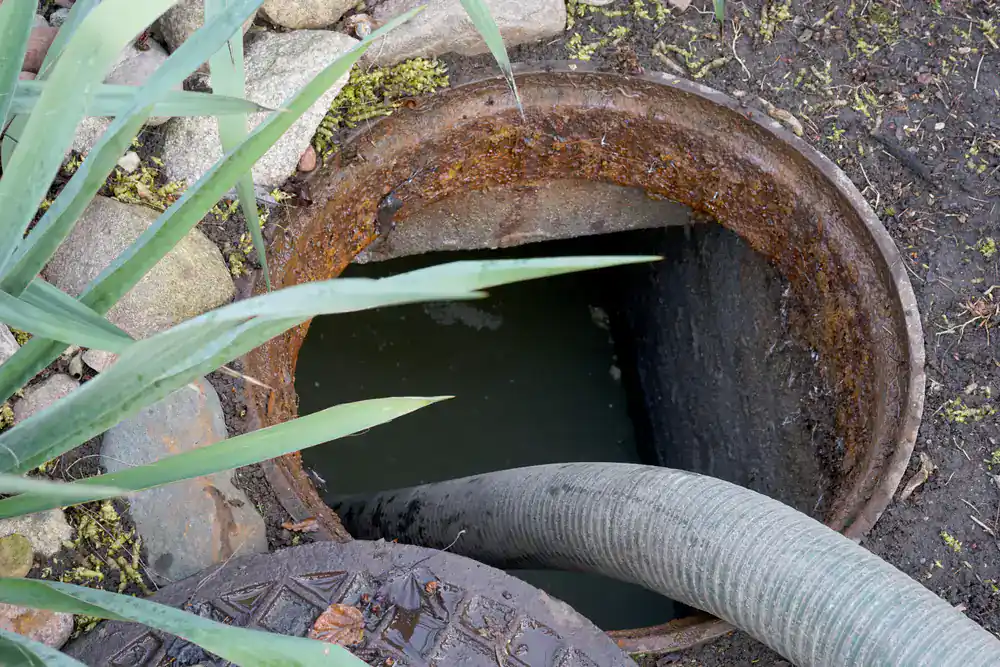
After the tank is cleared, we check the system’s condition: baffles, signs of infiltration, structural integrity, anything that tells the story of how the system is holding up. All waste is transported and disposed of at a licensed facility that’s a legal requirement under New York State’s waste transporter rules, and it’s not something every low-price operator handles correctly.
Before we leave, you’ll get a straight answer on what was found and what, if anything, needs attention. No pressure, no upsell, no inflated repair recommendations. Suffolk County’s Liquid Waste licensing requirements exist for a reason, and working with a properly licensed contractor is the baseline for any legitimate job in Central Islip.

Ready to get started?
Septic tank pumping is the core of what brings most Central Islip homeowners to call, but it’s rarely the only thing a 60-year-old system needs attention on. We handle drain cleaning, drywell cleaning, house trap replacements, main sewer line cleaning and replacement, and full cesspool or septic installation including situations where Suffolk County’s 2019 regulatory change means a failed system can no longer be replaced in kind and must be upgraded to a more advanced setup. That’s a real scenario for homes in Central Islip, and it’s worth understanding before a failure forces the decision.
For the two-family homes and higher-occupancy properties that are common throughout Central Islip, our service scope also extends to commercial systems and holding tanks. A duplex or multi-unit property puts significantly more load on a system than a single-family home, and the pumping frequency needs to reflect that not just follow a generic schedule.
If you recently bought a home in Central Islip and have no records of when the system was last serviced, a pump-out is the right starting point. It tells you what type of system you have, what condition it’s in, and what the realistic maintenance schedule looks like going forward. The amended New York State Property Condition Disclosure Statement updated as of July 2025 now requires more detailed septic disclosures in home sales, so this is increasingly a step buyers are asking for before closing as well.