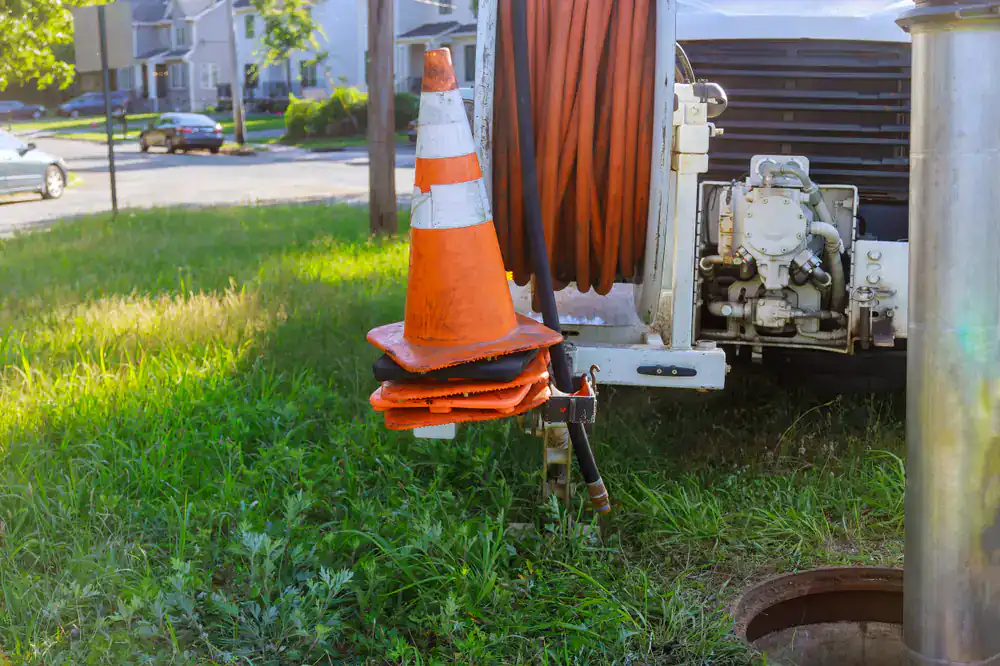
Useful Links
Other Services we provide in East Islip
The honest answer depends on what type of system you have. If you have a cesspool which is common in East Islip given the age of the housing stock the general recommendation is every one to two years. Cesspools don’t separate solids from liquids the way a modern septic tank does, so they fill up faster and need more frequent attention.
If your home has a true septic tank with a drain field, the standard pumping interval is every three to five years, though a family of four with a 1,000-gallon tank is typically looking at every three to four years. The older the system and the more people using it daily, the more frequently it should be serviced. If you’re not sure what type of system you have which is a genuinely common situation for East Islip homeowners, especially those who’ve recently bought a professional inspection will give you a clear answer.
The most obvious signs are the ones that are hard to ignore: slow drains throughout the house, toilets that gurgle or back up, or a sewage smell coming from your yard or basement. Wet, soggy patches in the lawn especially over where the tank is located are another red flag, and so is unusually lush, green grass in that same spot.
What’s trickier is that systems can be failing without showing any of these symptoms yet. That’s particularly relevant in East Islip, where a lot of systems are 50 to 70 years old and have been absorbing more water usage than they were originally designed for. By the time visible signs appear, the system is often already under significant stress. If you can’t remember the last time your system was serviced, that’s reason enough to schedule a pump-out.
It does, in a few ways. The Great South Bay has been listed as an impaired water body by New York State since 2008, and aging cesspools and septic systems are explicitly identified as a primary source of the nitrogen loading that’s causing that impairment. If your system is overdue for service or not functioning properly, it’s contributing to a problem that’s visible from your own backyard.
There’s also a storm-related dimension that’s specific to South Shore communities like East Islip. Nor’easters and tropical systems can push bay water inland, and a compromised or near-capacity septic system is significantly more vulnerable during those events. Getting pumped before storm season not after is the kind of maintenance decision that makes a real difference here. It’s not a concern that applies the same way to inland towns, but for East Islip homeowners, it’s worth factoring into your service schedule.
This is one of the most common situations we see, and it’s a smart question to be asking early. East Islip’s real estate market moves quickly, and sellers don’t always have detailed records of when a system was last serviced or whether it was ever serviced properly at all. If you bought a home in a neighborhood like Country Village, Deer Run, or Brookwood Estates and don’t have documentation on the septic system, the most practical first step is a professional pump-out and inspection.
A pump-out does two things at once: it services the system and gives the technician a clear look at what’s actually going on inside. You’ll find out what type of system you have, what condition it’s in, whether the baffles are intact, and whether there’s anything that needs attention now or will need attention soon. That’s information you want before a problem surfaces, not after. Given that East Islip homes are currently valued at over $640,000 at the median, knowing the condition of your septic system is part of knowing what you actually bought.
The short version: it gets expensive. When a septic tank or cesspool isn’t pumped on schedule, solids build up past the point where the system can handle them. That overflow moves into the drain field or surrounding soil, and once that happens, you’re not looking at a pump-out anymore you’re looking at a potential system failure that can cost $10,000 to $15,000 or more to remediate.
Beyond the repair cost, a failed system in Suffolk County now triggers additional requirements. Since 2019, a cesspool that fails and needs replacement cannot simply be replaced with another cesspool it has to be upgraded to a nitrogen-reducing system, which runs around $20,000 installed. There are grant programs available to help offset that cost, but none of that applies if you’re dealing with an emergency failure with no time to plan. Routine pumping at $300 to $600 for a standard residential tank is the cheapest insurance you have against that scenario.
A lot of East Islip homeowners genuinely don’t know, and that’s not unusual given how old the housing stock is. The simplest way to find out is to have a professional come out and take a look but there are a few indicators that can point you in the right direction before that.
Homes built before the 1970s in East Islip are very likely to have a cesspool rather than a modern septic tank. Cesspools are single-chamber systems that collect everything without separating solids from liquids, and they were the standard installation in Suffolk County during the postwar building boom that shaped most of East Islip’s neighborhoods. If your home was built in the 1950s or 1960s which describes the majority of properties here there’s a strong chance you have a cesspool. A septic tank, by contrast, is a two-stage system that separates waste before it moves to a drain field. The distinction matters because it affects how often you need service, what that service involves, and what your options are if the system ever needs to be replaced under current Suffolk County regulations.
Hear from Our Customers
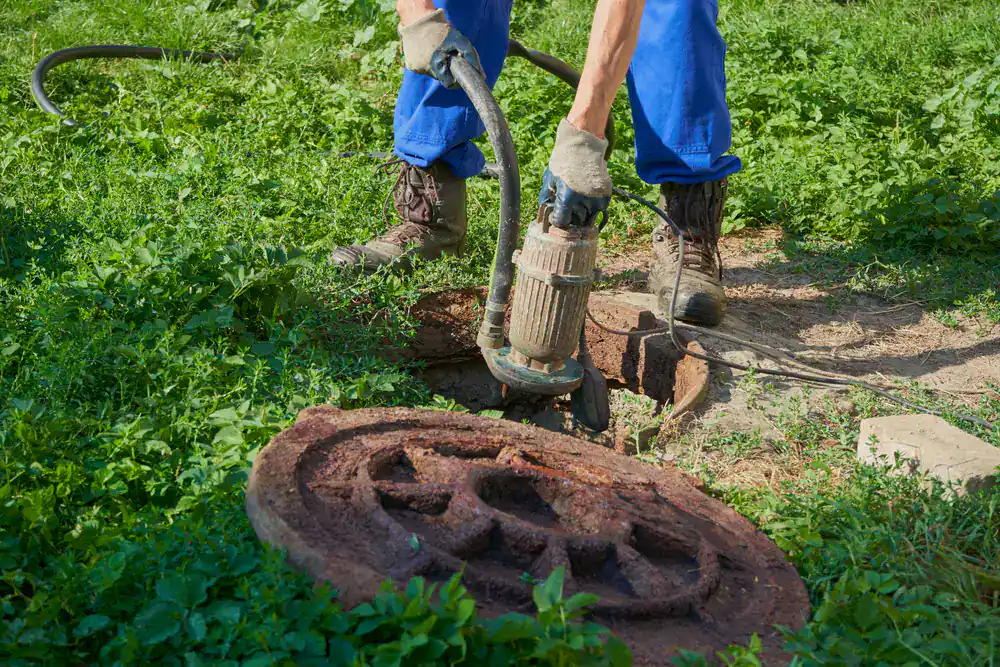
When your septic system is properly pumped and inspected, you stop guessing. No more wondering if that slow drain is a minor clog or the start of something expensive. You know where things stand, and you’re not sitting on a problem that’s quietly getting worse underground while your home’s value keeps climbing.
East Islip’s housing stock tells the story. The median home here was built in 1958 and the cesspools and septic tanks installed back then were sized for smaller families using far less water than the average household does today. When those systems go years without service, they don’t fail loudly. They fail slowly, and by the time you notice, the damage is already done. A routine pump-out keeps you ahead of that.
There’s also something specific to East Islip that doesn’t apply to towns further inland: you’re on the South Shore, right next to the Great South Bay. The bay has been on New York State’s list of impaired water bodies since 2008, and aging cesspools are one of the primary reasons why. Getting your system serviced properly by a licensed company that disposes of waste legally isn’t just about your house. It’s about the water your family is out on every summer.
We’ve been handling cesspools and septic systems across Suffolk County since 2002, and our team brings over 30 years of hands-on experience with Long Island’s specific conditions older housing stock, buried lids, and the particular demands that come with South Shore properties like those in East Islip.
We’re locally owned and operated out of West Babylon, which puts us roughly 10 to 12 miles west of East Islip along the same South Shore corridor. We know what systems look like in communities like Country Village and Deer Run homes that have been through multiple owners, systems that haven’t been touched in years, and cesspools that nobody can find because they’ve been buried under decades of landscaping. That’s not a new problem for us.
What keeps people calling back is straightforward: we don’t recommend work you don’t need. We’ll tell you what we found, explain what it means, and let you decide. No pressure, no upsell, no inflated bill at the end.
It starts with a call and a free estimate. Before anyone shows up at your property, you’ll know what to expect. That’s not a small thing in this industry price discrepancies between what’s quoted on the phone and what’s charged on arrival are one of the most common complaints homeowners have with septic companies. We don’t operate that way.
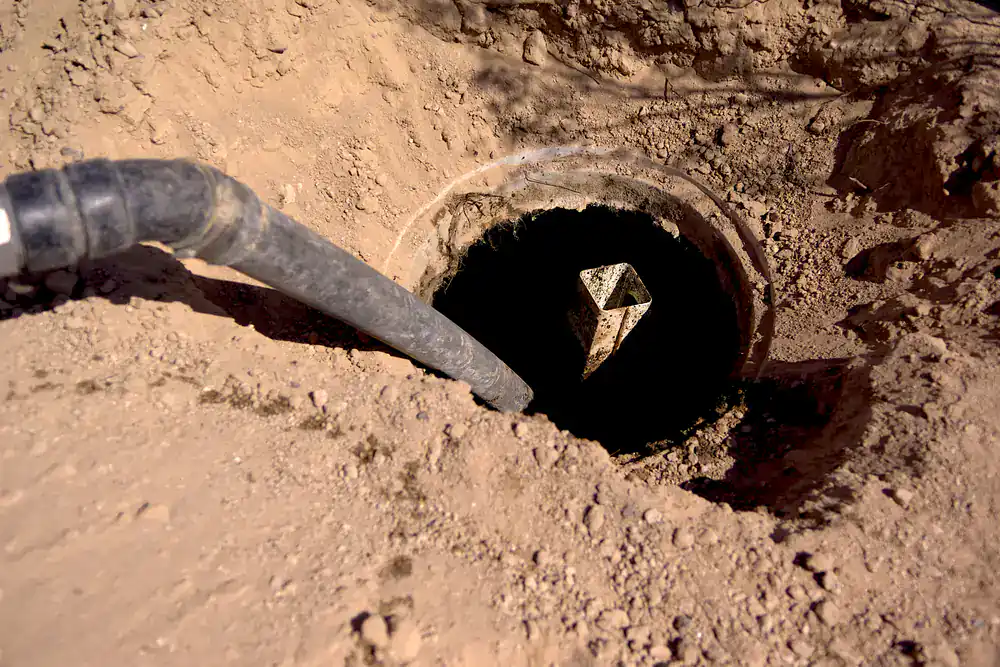
When our crew arrives, the first order of business is locating your tank. In East Islip, where a significant portion of homes were built in the 1940s through the 1960s, finding the lid isn’t always straightforward. Systems get buried. Landscaping changes. Previous owners don’t leave records. We specialize in locating hard-to-find cesspools, so if yours isn’t obvious, that’s not going to stop the job or become a reason to pad the bill.
Once the tank is located and accessed, we do a complete pump-out not a partial one. Everything comes out: sludge, scum, the works. After pumping, we assess the condition of the system, check for anything worth flagging, and walk you through what we found before we leave. All waste is transported and disposed of at a licensed treatment facility. Nothing ends up back in the ground or anywhere near the Great South Bay.
Ready to get started?
Standard residential septic tank pumping in Suffolk County runs $300 to $600 depending on tank size. That’s the honest range for a complete pump-out not a teaser rate that grows once someone’s in your driveway. If your lid is buried and needs to be excavated, that’s a separate cost that we’ll tell you about upfront, not after the fact.
Beyond pumping, our full scope of services covers drain cleaning, drywell cleaning, cesspool and septic installation, house trap replacements, and main sewer line cleaning and replacement. If your East Islip home has a holding tank, we handle that too. The point is that you’re not calling three different companies for three different problems one crew covers the whole system.
Suffolk County’s regulations are also worth understanding before you call anyone. Since 2019, failed cesspools can no longer be replaced in kind any system that needs replacement must be upgraded to a more advanced nitrogen-reducing system. If your East Islip property is sitting on a cesspool that’s nearing the end of its life, knowing that now rather than during an emergency gives you time to explore options, including state and county grant programs that exist specifically to help homeowners make that transition. We can walk you through what we find and what your options look like.