By submitting you consent to receive service-related texts from Drastic Drainage. Reply STOP to opt out. Msg & data rates may apply. Consent not required to book service.
Useful Links
When a cesspool is properly maintained, you stop guessing. No more wondering if that slow drain is a minor clog or the start of something that costs thousands to fix. You get a clear picture of what you have, what it needs, and how long you’ve got before anything becomes urgent. That kind of clarity is worth a lot — especially when your home is worth what East Islip homes are worth.
For homeowners in East Islip, the stakes are higher than in most Suffolk County towns. The water table here is already close to the surface under normal conditions. Add a heavy rain or a storm surge off the Great South Bay, and a system that was borderline-functional can tip into failure fast. Getting ahead of that — with proper inspections and maintenance on the right schedule — is the difference between a routine service call and an emergency at the worst possible time.
The average East Islip home is about 56 years old. That means most of the cesspools in this hamlet were installed in the late 1960s or early 1970s. These systems were built to last 20 to 40 years. A lot of them are already past that window, and many homeowners have no idea where their system actually stands. A professional assessment tells you exactly that — without guesswork, without pressure, without unnecessary work.
The general rule is every one to three years, depending on household size and how much daily water use the system is handling. But in East Islip specifically, that schedule deserves a closer look. The water table along this stretch of the South Shore sits close to the surface under normal conditions — and after a significant rain event or storm surge off the Great South Bay, the soil’s ability to absorb and filter waste gets compressed further. A system that’s performing adequately in dry conditions can show signs of stress much faster here than it would in an inland town with deeper soil drainage.
If your home was built in the 1960s or 1970s — which describes most of East Islip’s housing stock — and you haven’t had a professional inspection in the past few years, that’s where to start. An inspection gives you an honest baseline: how full the system is, whether the leaching field is functioning, and whether anything is showing early warning signs. That information is far more useful than a calendar-based guess.
The most obvious signs are sewage backing up into drains or toilets, a strong odor near the system or in the yard, and wet or unusually green patches of grass directly above where the cesspool is located. Slow drains throughout the house — not just one fixture — can also indicate that the system is at or near capacity. Any of these warrant a call, not a wait-and-see approach.
What makes this more urgent in East Islip is the proximity to the Great South Bay. Cesspools and septic systems are already identified as the source of roughly 70% of the nitrogen pollution reaching the bay via groundwater. A failing system doesn’t just create a problem on your property — it contributes directly to the degradation of a waterway that the entire community uses. For waterfront properties in areas like The Moorings, a visible failure can also carry regulatory consequences beyond the repair itself. If you’re seeing any of these signs, the sooner a licensed professional assesses the system, the better the outcome — and the lower the final cost.
No. As of July 1, 2019, Suffolk County banned new conventional cesspool installations. If your existing system fails and needs to be replaced, it must be replaced with an Innovative/Alternative onsite wastewater treatment system — what the county calls an IA system. These advanced systems are designed to reduce nitrogen in residential wastewater by up to 70%, which is a direct response to the water quality issues affecting the Great South Bay and Suffolk County’s groundwater supply.
The cost of an IA system is higher than a conventional cesspool replacement, but the 2024 Suffolk Water Quality Restoration Act significantly expanded the financial assistance available. Qualifying East Islip homeowners can now receive combined State and County grants of up to $45,000 toward the cost of an approved system. The key word is qualifying — the grant process requires planning and cannot be applied retroactively to an emergency replacement. If your system is aging and you’re within a few years of potential failure, starting that conversation now puts you in a much better position than being forced into a rushed decision.
Free, no-obligation estimates on cesspool, sewer, and drain work.
We get there quickly. No waiting days for a callback.
Backups don’t wait for business hours. Neither do we.
Fully licensed and insured across Long Island.
Up-to-date trucks and tools for cleaner, faster jobs.
Straight quotes, no surprises on the bill.
Hear from Our Customers
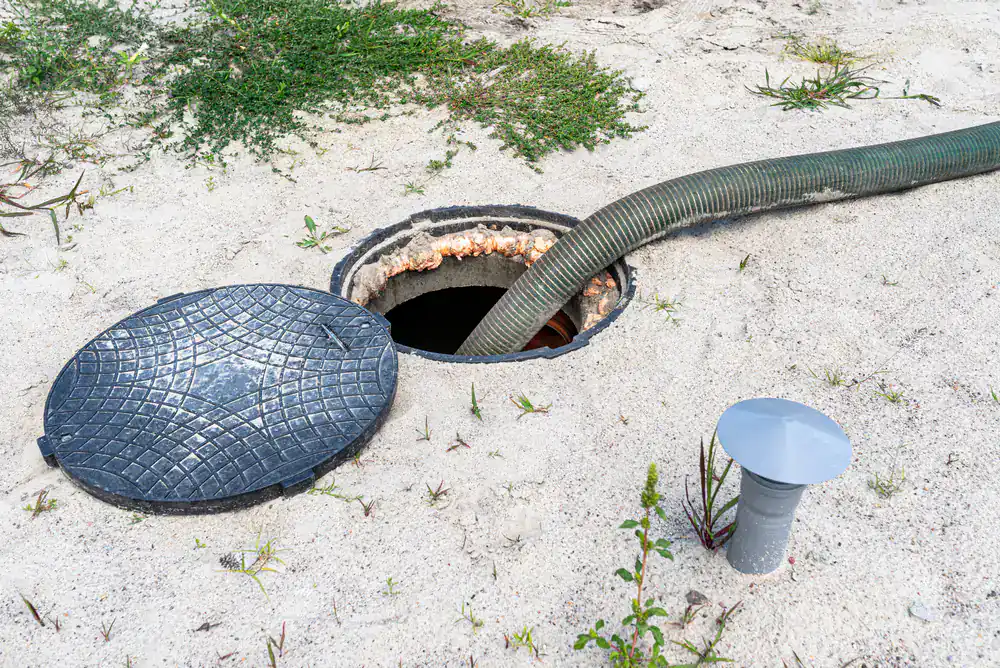
When a cesspool is properly maintained, you stop guessing. No more wondering if that slow drain is a minor clog or the start of something that costs thousands to fix. You get a clear picture of what you have, what it needs, and how long you’ve got before anything becomes urgent. That kind of clarity is worth a lot — especially when your home is worth what East Islip homes are worth.
For homeowners in East Islip, the stakes are higher than in most Suffolk County towns. The water table here is already close to the surface under normal conditions. Add a heavy rain or a storm surge off the Great South Bay, and a system that was borderline-functional can tip into failure fast. Getting ahead of that — with proper inspections and maintenance on the right schedule — is the difference between a routine service call and an emergency at the worst possible time.
The average East Islip home is about 56 years old. That means most of the cesspools in this hamlet were installed in the late 1960s or early 1970s. These systems were built to last 20 to 40 years. A lot of them are already past that window, and many homeowners have no idea where their system actually stands. A professional assessment tells you exactly that — without guesswork, without pressure, without unnecessary work.
We’ve been handling cesspools across Nassau and Suffolk Counties for over 30 years. We’re based in West Babylon — a few miles west of East Islip along the same stretch of Great South Bay coastline. That proximity matters. The low-lying terrain, the high water table, the flood zone exposure — this isn’t new information to us. It’s the environment we’ve been working in for decades.
We’re licensed (License #LW-63684), insured, and bonded. When you call, a real person picks up — not an answering service, not a callback form. Our customers have specifically called that out in reviews, and it’s not an accident. When something goes wrong with your cesspool near the bay, you need to reach someone immediately, and that’s exactly what happens when you call us.
From waterfront properties in The Moorings to established neighborhoods like Deer Run and Country Village, we’ve worked throughout East Islip and know what these systems typically look like, how they age in this environment, and what they actually need.

It starts with a call. A real person answers, gets the basic information about your situation, and gives you a realistic timeframe — not a four-hour window with a maybe. For emergency calls, our response is around the clock. For scheduled maintenance or inspections, same-day service is available.
When our crew arrives, the first step is understanding what you’re actually dealing with. Before any digging happens, we use waterproof camera inspection technology to see exactly what’s going on inside the system. This matters a lot in East Islip, where established neighborhoods have mature landscaping, driveways, and property features that nobody wants torn up unnecessarily. Accurate diagnosis means targeted work — not exploratory excavation to find what a camera could locate in minutes.
From there, the scope of work is explained clearly before anything starts. Whether it’s a routine pump-out, a leaching pool service, a main sewage line cleaning, or something more involved, you know what’s happening and why. If the system is approaching the end of its life and a replacement is on the horizon, we can walk you through what that looks like under Suffolk County’s current regulations — including the grant programs that can cover a significant portion of the cost for qualifying East Islip homeowners. After the work is done, you get documentation you can actually use, whether that’s for your own records or for a real estate transaction.

Ready to get started?
We handle the full range of cesspool and drain services — cesspool cleaning and pumping, cesspool installation, leaching pool service, drywell cleaning, video pipe inspections, house trap replacements, main sewage line cleaning and replacement, storm drain cleaning, cesspool location, and 24-hour emergency response. One call covers it.
For East Islip homeowners, a few of these services carry particular weight. Real estate certifications are a hard requirement for home sales in Suffolk County, and East Islip’s active market — with listings ranging from the $300,000s to nearly $2.6 million — means closings happen on tight timelines. We provide the detailed inspections and documentation required for property transfers, handled with the urgency a closing date demands.
Cesspool location is another service that comes up frequently in East Islip, where much of the housing stock dates to the 1960s and 1970s. Older systems often have no visible access point, and finding them requires experience and the right equipment — not a shovel and a guess. We also stay current on Suffolk County’s regulatory requirements, including the 2019 cesspool replacement ban and the 2024 Suffolk Water Quality Restoration Act, which makes qualifying East Islip homeowners eligible for combined State and County grants of up to $45,000 toward an advanced replacement system. If your cesspool is aging and you’re near the bay, understanding those options now — before a failure forces the decision — is worth a conversation.