Useful Links
Other Services we provide in Lake Grove
It depends on whether you have a cesspool or a modern septic tank, and that distinction matters a lot in Lake Grove. The majority of homes built here before 1973 which is most of the village were constructed with cesspools, since Suffolk County didn’t require septic tanks over cesspools for new construction until that year. Cesspools have no separation of solids from liquids, which means they accumulate waste faster and need pumping more frequently: typically every one to two years for an active household.
If your home has a true septic tank with a separate drain field, the standard interval is closer to three to five years, though household size and water usage affect that significantly. A family of four with a 1,000-gallon tank is generally looking at pumping every three to four years. The problem is that many Lake Grove homeowners don’t know which system they have and some have been following the wrong schedule for years as a result. If you’re not sure, a technician can identify your system type during the service call and give you a realistic maintenance schedule based on what’s actually under your lawn.
The most obvious signs are slow drains throughout the house not just one fixture, but multiple along with gurgling sounds in the pipes, sewage odors inside or outside the home, and soft or unusually green patches of grass directly above the tank or drain field. If you’re seeing water pooling in the yard in an area that doesn’t normally collect water, that’s a sign the system is saturated and backing up into the soil above it.
In Lake Grove, heavy rain events can temporarily mask or accelerate these symptoms. When the ground around a cesspool is already saturated from rainfall, a system that’s borderline full will back up faster than it would in dry conditions. If you notice these signs in the days following a significant storm, don’t wait to see if they clear on their own they usually don’t. A backup that reaches the basement or the interior plumbing is significantly more expensive and disruptive to deal with than a pump-out scheduled before the system reaches that point.
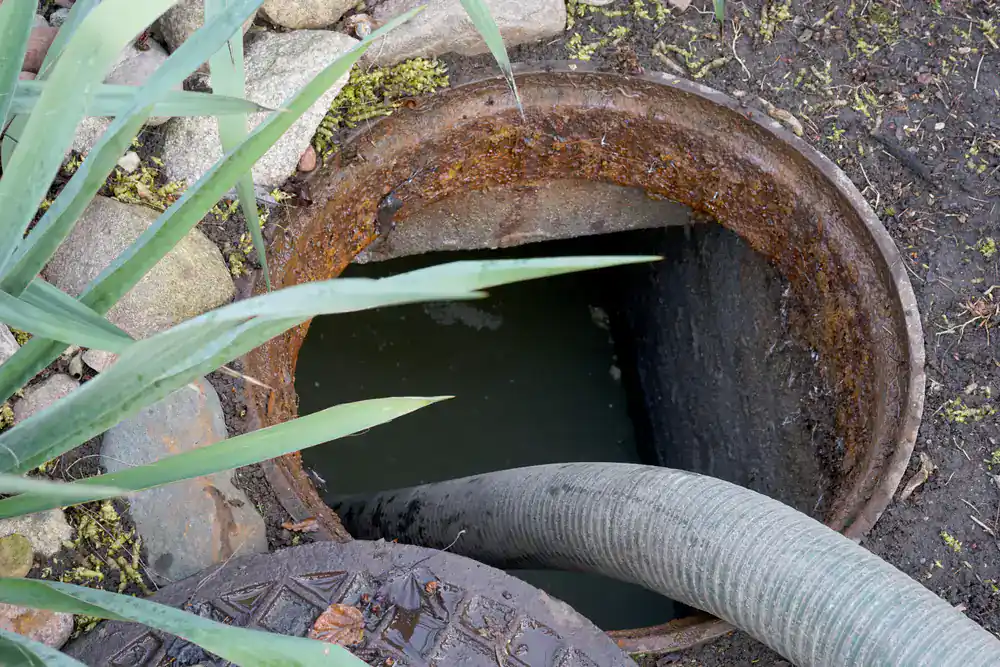
A cesspool is a single underground chamber typically concrete or block that collects all household waste in one place. Liquids seep out through the walls and bottom into the surrounding soil, while solids accumulate at the bottom. There’s no separation of waste, no treatment process, and no drain field. A septic tank, by contrast, is a two-stage system: solids settle in the tank, liquids flow out to a separate drain field where they’re filtered through the soil before reaching the groundwater.
In Lake Grove, the odds are good that you have a cesspool if your home was built before 1973. Suffolk County didn’t mandate septic tanks over cesspools for new construction until that year, and the village’s median build year of 1969 puts most of its housing stock squarely in cesspool territory. If you don’t have records from when the home was built or last serviced, a technician can identify your system type when they come out it’s usually apparent from the tank configuration and how many access points are present. Knowing which system you have is the first step to maintaining it correctly.
A failed cesspool or septic system is not a repair you can defer. When a system fails completely meaning it can no longer process waste at the rate the household generates it sewage backs up into the home, surfaces in the yard, and in some cases contaminates the surrounding soil and groundwater. The cleanup and repair costs are significant: a failed drain field or collapsed cesspool can run $10,000 to $15,000 or more to address.
What makes this especially consequential in Suffolk County is the 2019 regulatory change. Before July 2019, a homeowner with a failed cesspool could replace it in kind same type of system, roughly the same cost. That’s no longer allowed. Any failed cesspool that requires replacement must now be upgraded to an approved septic system or an Innovative/Alternative Onsite Wastewater Treatment system, which runs approximately $20,000 installed. New York State does offer grant programs to help offset that cost, but the process takes time and the upgrade is still a major undertaking. Routine pumping every one to two years is a straightforward way to avoid reaching that point.
Standard residential septic tank pumping in Suffolk County runs between $225 and $600, depending primarily on tank size. A 1,000-gallon tank typically falls in the $225 to $400 range; a 2,000-gallon system is closer to $400 to $600. Those figures reflect a straightforward pump-out where the lid is accessible and the system doesn’t present any unusual complications.
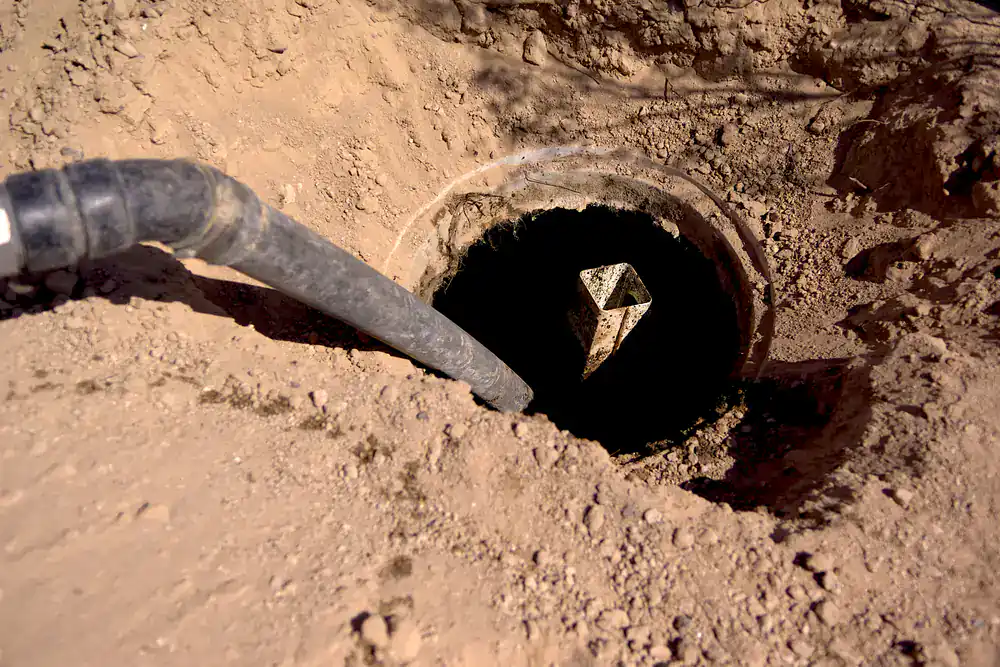
What can add to that cost is lid excavation. In Lake Grove, where many homes were built in the late 1960s and the cesspool lids have had decades to get buried under soil, landscaping, or paving, locating and accessing the lid is sometimes a job in itself. Excavation to reach a buried lid can add to the overall cost depending on depth and access conditions. The important thing is knowing about that upfront not discovering it on the invoice after the truck leaves. Our approach is to give you a clear picture of what the service involves before work begins, so the number you hear on the phone is the number you’re working with.
Yes we service all of Lake Grove and the surrounding central Suffolk County area, including homes throughout the 11755 ZIP code. Whether your property is near the Route 347 corridor, off Hawkins Avenue, or in any of the residential neighborhoods that make up the village, we cover it. The same applies to the adjacent communities along Nicolls Road and the areas connecting toward Centereach and Lake Ronkonkoma.
Being based in West Babylon means we’re a genuine Suffolk County operation not a company stretching its service map to include Lake Grove on a list. Our crew is familiar with the housing stock in this part of Brookhaven Town, the types of systems common to homes built in this era, and the permitting and regulatory framework that applies to work done here. Service is available 24 hours a day, seven days a week, including weekends and holidays so if something goes wrong on a Saturday night when Route 347 is backed up and you can’t reach anyone else, this is the number to call.
Hear from Our Customers
When your septic tank is pumped properly not partially, not rushed you stop guessing. No more wondering if that slow drain is the beginning of something expensive. No more avoiding the corner of the yard that always seems a little soggy after it rains. You just know the system is handled, and you can move on.
For Lake Grove homeowners, that peace of mind carries more weight than it might somewhere else. The median home here was built in 1969, which means the typical system under your lawn has been running for over half a century well past the lifespan it was originally designed for. Add to that the fact that Lake Grove isn’t a seasonal community. With nearly 4,000 people per square mile, these systems process full household loads every single day of the year.
There’s no slow season that gives the system a break, which means sludge builds faster and the window between necessary pump-outs is shorter than most homeowners realize. Getting ahead of it means a routine service call every year or two instead of a five-figure repair when the system finally gives out.
With Suffolk County’s 2019 ban on in-kind cesspool replacement, a failed system doesn’t just get swapped out anymore it gets upgraded, and that’s a very different conversation to have with your wallet.
We’ve been doing this work in Suffolk County since 2002. Our team brings over 30 years of hands-on experience with Long Island’s specific cesspool and septic landscape the older housing stock, the buried lids, the systems that were installed before anyone required a proper septic tank over a cesspool.
That experience matters when you’re dealing with a home off Hawkins Avenue or anywhere else in Lake Grove where the property looks perfectly normal from the street but has a wastewater system underneath that nobody’s touched in years. We’re based in West Babylon a real Suffolk County address, not a regional dispatch hub. When you call, you’re reaching people who work this county every day and know what we’re looking at when we pull the lid.
Our approach is straightforward: show up, assess honestly, pump thoroughly, and tell you what we found. If something needs attention beyond the pump-out, you’ll hear about it and why. If it doesn’t, you won’t be told it does.
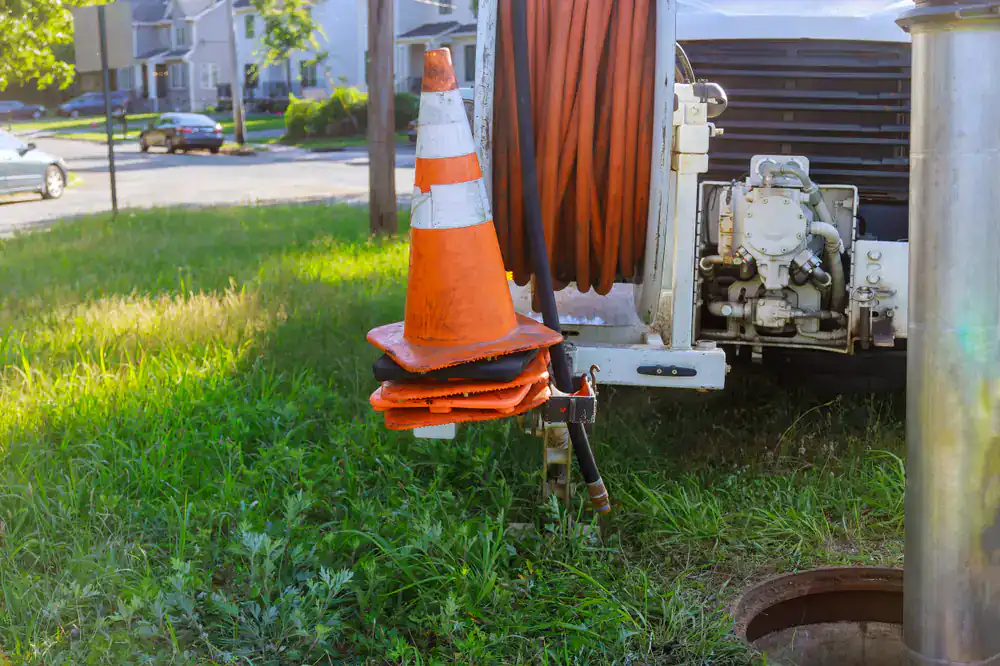
It starts with a call and a free estimate. Before anyone shows up at your door, you’ll know what to expect what the service covers, what it costs, and how long it takes. There are no surprises added at the curb after the truck is already in your driveway.
When our crew arrives, the first thing we do is locate the tank. In Lake Grove, this step matters more than people expect. Homes built in the late 1960s and early 1970s which describes most of the housing stock here often have lids buried under years of soil, landscaping, or even paving. We specialize in finding hard-to-locate cesspools, so if you don’t know exactly where your system is, that’s not a problem that gets passed back to you.
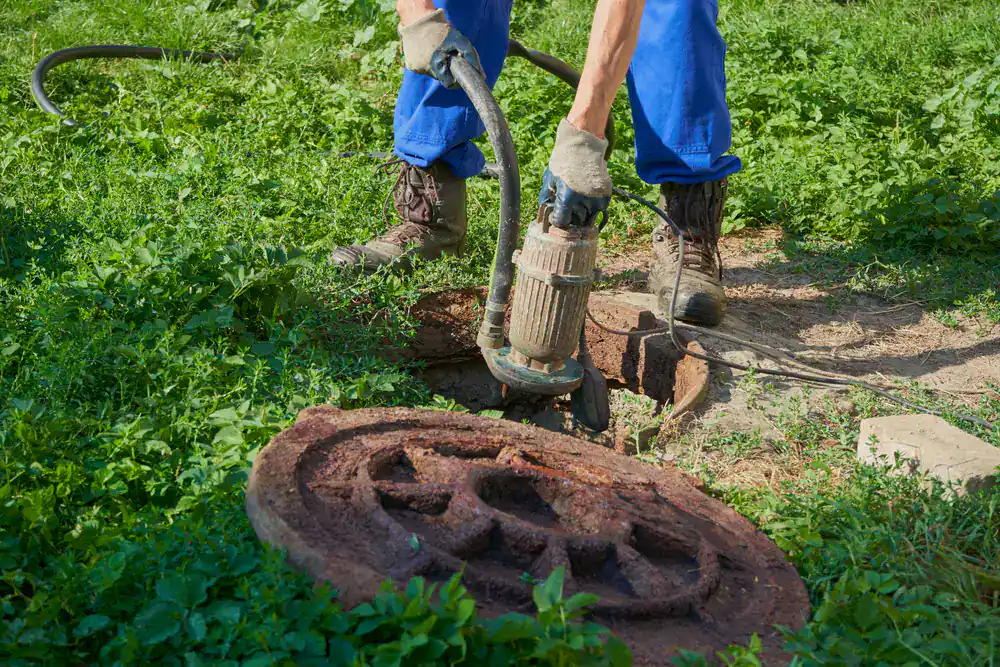
Once the lid is accessed, the full pump-out begins not a partial drain, but a complete removal of accumulated sludge and waste. After pumping, our technician inspects the condition of the system: baffles, tank walls, signs of infiltration or damage. You get an honest read on what’s there.
Spring is the busiest season for this service in central Suffolk County post-winter ground saturation makes existing problems visible fast, and real estate activity picks up around the same time. If you’re buying or selling a home in Lake Grove, a documented pump-out and inspection is often expected before closing. Getting it scheduled before the spring rush means shorter wait times and more flexibility on timing.

Ready to get started?
Septic tank pumping is the core of what we do in Lake Grove, but it’s rarely the only thing a home’s wastewater system needs. Alongside septic and cesspool pumping, our crew handles drain cleaning, drywell cleaning, main sewer line cleaning and replacement, house trap replacement, and full cesspool or septic installation when a system has reached the end of its life.
That matters for Lake Grove specifically. When a system that’s been in the ground since 1969 starts showing problems, it often isn’t just one thing. A cesspool that needs pumping might also have a failing baffle or a drywell that’s compacted beyond function. Being able to assess and address all of it under one call rather than coordinating three separate contractors saves time and usually saves money.
For homeowners dealing with a holding tank, commercial property, or a system that doesn’t fit the standard residential mold, we cover that too. We handle both residential and commercial service across Suffolk County, including Lake Grove and the broader Brookhaven Town area. And because Suffolk County now requires any failed cesspool to be upgraded rather than replaced in kind, having a contractor who handles full installation not just pump-outs means you’re not starting over from scratch if the assessment turns up something serious.