By submitting you consent to receive service-related texts from Drastic Drainage. Reply STOP to opt out. Msg & data rates may apply. Consent not required to book service.
Useful Links
Most Stony Brook homeowners don’t think about their septic system until something goes wrong. A slow drain, a smell near the yard, a soggy patch of lawn that wasn’t there last week. By the time those signs show up, the system has usually been struggling for a while. Getting ahead of it with a proper pump-out and honest assessment is almost always the cheaper, simpler path.
For homes in the Three Village area, that peace of mind comes with an extra layer of stakes. The Town of Brookhaven’s Nitrogen Protection Zone means that if your aging system fails and needs replacement, you’re not just swapping it out for the same thing. You’re looking at a mandatory upgrade to a more advanced system, at a cost that typically runs around $20,000. Routine pumping on a regular schedule is the most straightforward way to keep your existing system healthy and avoid triggering that requirement.
There’s also the harbor to consider. Stony Brook Harbor sits downstream from the septic systems in this neighborhood, and researchers at Stony Brook University have documented the direct connection between poorly maintained on-site systems and nitrogen pollution in Long Island’s waterways. Keeping your system properly maintained isn’t just about protecting your home it’s about the water quality that defines this community.
For most homes in Stony Brook, the general guidance is every three to five years for a conventional septic tank, and every one to two years for a cesspool. The right interval for your property depends on the size of your tank, how many people are in the household, and how the system has been maintained over time.
What makes Stony Brook worth calling out specifically is the age of the housing stock. Most homes in the B Section, S Section, and M Section were built in the 1960s, which means the systems underneath them are anywhere from 50 to 60 years old. Older systems that have been inconsistently serviced or that haven’t been pumped in years because the previous owners didn’t keep records often need more frequent attention until you establish a baseline. If you’ve recently purchased a home in the Three Village area and have no documentation of prior service, the right move is to get it pumped and inspected now, regardless of where you are in a theoretical schedule.
Standard residential septic tank pumping in Suffolk County typically runs between $225 and $600, depending on the size of the tank. A 1,000-gallon tank generally falls in the $225 to $400 range, while a 2,000-gallon system is more likely to land between $400 and $600.
One cost that surprises a lot of homeowners is lid excavation. If the lid is buried which is common on older properties in Stony Brook where decades of landscaping and soil movement have covered it accessing the tank can add to the overall cost of the visit. The range for excavation work varies significantly depending on how deep the lid is and how accessible the area is. This is exactly why upfront pricing matters: a company that gives you a complete estimate before the truck arrives is worth more than one that quotes a low number and adds fees once they’re on your property. We’re straightforward about what’s included before any work begins.
This is one of the most common points of confusion for Long Island homeowners, and it’s especially relevant in Stony Brook where the housing stock dates primarily to the 1960s. A cesspool is a simpler system it’s essentially a buried concrete or block structure with perforated walls that allows liquid waste to seep directly into the surrounding soil while solids accumulate at the bottom. A septic tank is a two-chamber system that separates solids from liquids before the liquid effluent flows out to a drainfield for further treatment in the soil.
The practical difference matters for maintenance. Cesspools need pumping more frequently typically every one to two years because they don’t separate waste the way a septic tank does. Septic tanks can generally go three to five years between pump-outs. Many older homes in the Three Village area have cesspools rather than full septic systems, though the terms are often used interchangeably by homeowners. If you’re not sure which system your home has, a technician can identify it during the service visit.
This is a question that matters a lot more in Stony Brook than in many other parts of Long Island. Suffolk County eliminated in-kind cesspool replacement in 2019 meaning if your system fails and needs to be replaced, you can’t simply swap in the same type of system. It has to be upgraded. The Town of Brookhaven adds another layer on top of that through its Nitrogen Protection Zone ordinance, Chapter 78A of the Town Code. Within that zone, any replacement septic system must be an Innovative/Alternative Onsite Wastewater Treatment System commonly called an I/A OWTS that discharges no more than 19 milligrams of nitrogen per liter of effluent.
The cost of an I/A OWTS installation runs approximately $20,000. That’s a significant expense compared to the $225 to $600 cost of routine pumping. The way most homeowners avoid triggering that requirement is straightforward: keep the existing system properly maintained so it doesn’t reach the point of failure. It’s also worth knowing that state and county grant programs currently offer up to $45,000 in combined funding for homeowners who voluntarily upgrade to an I/A OWTS so if your system is aging and you’re considering a proactive upgrade, there is financial assistance available.
The most dangerous thing about a failing septic system is that it often gives very little warning until the problem is serious. That said, there are signs worth paying attention to. Slow drains throughout the house not just one fixture can indicate the tank is full or the drainfield is struggling. A sewage smell near the yard or in the basement is a more urgent signal. Unusually green or soggy patches of grass over the tank or drainfield area, especially after dry weather, suggest the system is pushing effluent closer to the surface than it should be.
For Stony Brook homeowners with older systems, the spring season is a particularly important time to watch for these signs. Groundwater on the North Shore rises seasonally with snowmelt and spring rain, which puts additional stress on aging systems that are already working near capacity. A system that performs adequately in dry summer conditions can show signs of distress when the water table rises in March or April. If you notice any of these symptoms, don’t wait a pump-out and inspection is far less disruptive and far less expensive than dealing with a backup or a drainfield failure.
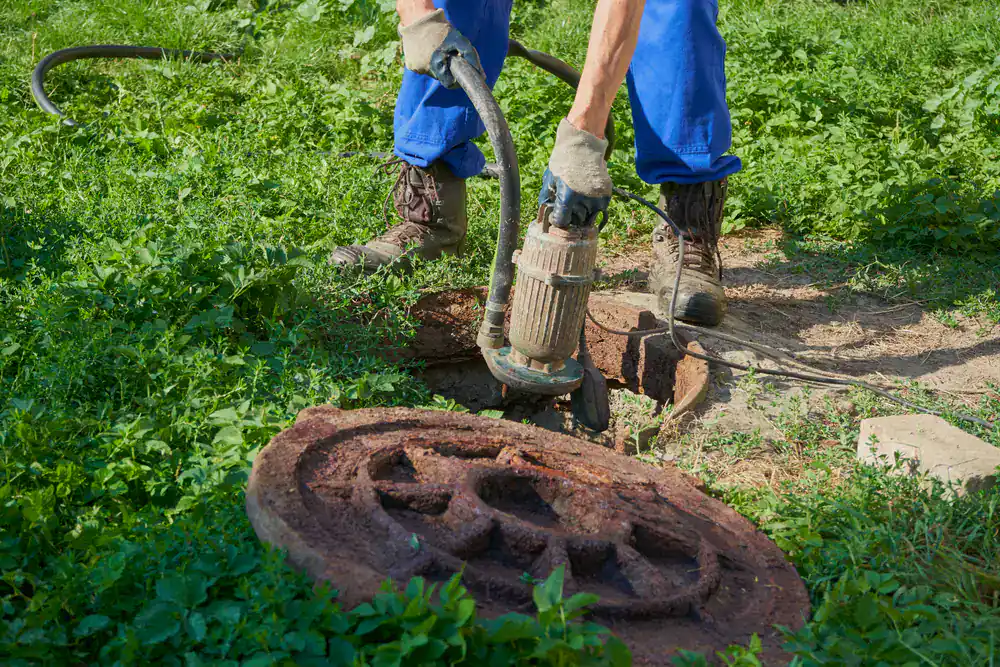
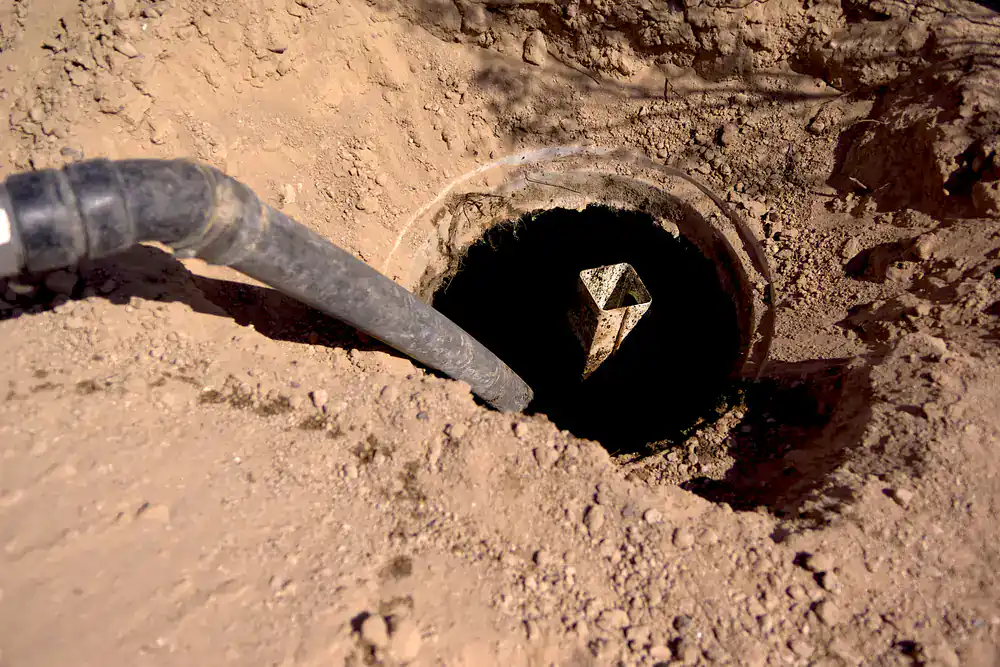
Yes and this is actually one of the more common situations on older Stony Brook properties. Homes in the B Section and S Section were built in the mid-1960s, and in many cases the cesspool or septic tank lid has been buried under years of soil accumulation, landscaping, and renovation work. Previous owners may not have kept records of where the tank is located, and in some cases the system hasn’t been professionally accessed in over a decade.
We specialize in locating hard-to-find cesspools and septic tanks. This is a specific capability that not every company offers confidently, and it matters on the North Shore where older housing stock and decades of yard work have made buried lids genuinely common. The process involves knowing where to look based on the age and layout of the home, and using that experience to locate the access point without unnecessary digging or yard disruption. Once the tank is located, the lid position can be noted for future visits which saves time and cost on every subsequent service call.
Free, no-obligation estimates on cesspool, sewer, and drain work.
We get there quickly. No waiting days for a callback.
Backups don’t wait for business hours. Neither do we.
Fully licensed and insured across Long Island.
Up-to-date trucks and tools for cleaner, faster jobs.
Straight quotes, no surprises on the bill.
Hear from Our Customers
Most Stony Brook homeowners don’t think about their septic system until something goes wrong. A slow drain, a smell near the yard, a soggy patch of lawn that wasn’t there last week. By the time those signs show up, the system has usually been struggling for a while. Getting ahead of it with a proper pump-out and honest assessment is almost always the cheaper, simpler path.
For homes in the Three Village area, that peace of mind comes with an extra layer of stakes. The Town of Brookhaven’s Nitrogen Protection Zone means that if your aging system fails and needs replacement, you’re not just swapping it out for the same thing. You’re looking at a mandatory upgrade to a more advanced system, at a cost that typically runs around $20,000. Routine pumping on a regular schedule is the most straightforward way to keep your existing system healthy and avoid triggering that requirement.
There’s also the harbor to consider. Stony Brook Harbor sits downstream from the septic systems in this neighborhood, and researchers at Stony Brook University have documented the direct connection between poorly maintained on-site systems and nitrogen pollution in Long Island’s waterways. Keeping your system properly maintained isn’t just about protecting your home it’s about the water quality that defines this community.
We’ve been working on Long Island’s cesspools and septic systems for over 30 years. That experience covers the full range of what you find under the older housing stock on the North Shore aging tanks, buried lids that haven’t been located in years, systems that were installed in the 1960s and have been quietly absorbing decades of use since.
We’re locally owned and operated, headquartered in West Babylon, and serve all of Suffolk County, including Stony Brook and the Three Village area. Our approach is straightforward: show up, assess honestly, pump completely, and tell you what the system actually needs not what generates the biggest invoice. Customers in Stony Brook who’ve dealt with companies that quote one price over the phone and charge another on-site will find that we operate differently. The estimate you get is the job you get.
Named technicians, a local phone number, and a satisfaction guarantee that means the crew doesn’t leave until the work is done right that’s our standard here.
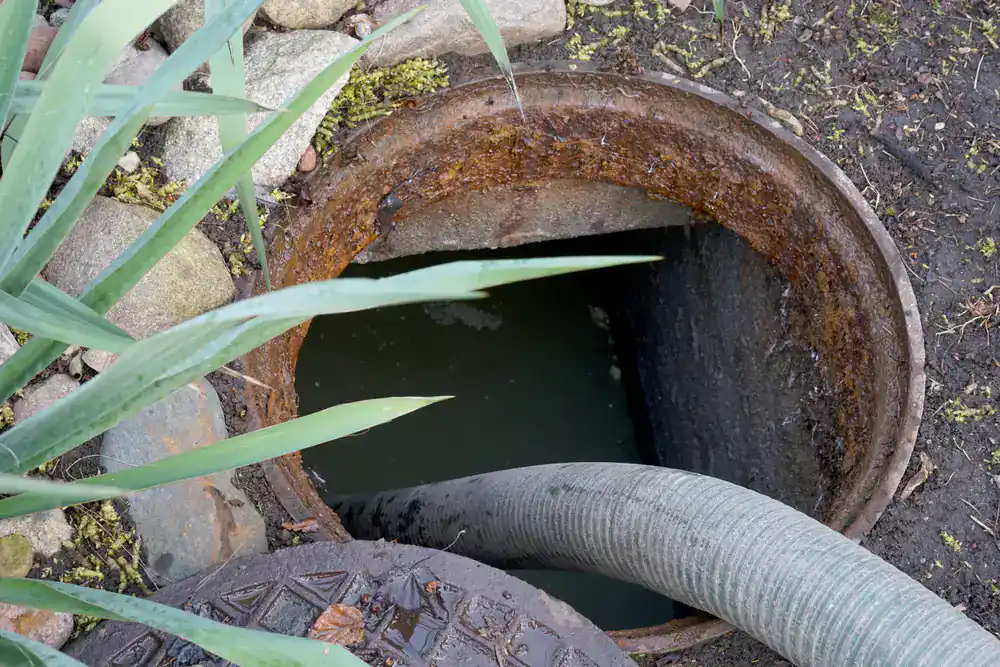
It starts with locating the tank. On older Stony Brook properties especially in the B Section and S Section, where homes were built in the mid-1960s the lid is often buried under years of soil and landscaping. We specialize in finding hard-to-locate cesspools and septic tanks, which is a more common problem on North Shore properties than most homeowners realize. Once the lid is accessed, our technician begins the pump-out.
A proper pump-out means removing all of the accumulated sludge and scum from the tank not just surface-level waste. This is where quality separates from a cheap, quick visit. Our technician also checks the condition of the baffles, looks for signs of infiltration or structural wear, and assesses whether the system is functioning the way it should. You get a clear picture of where things stand, not a vague “looks fine” and a bill.
Given that Stony Brook sits within the Town of Brookhaven’s regulatory zone, it’s also worth knowing whether your property falls within the Nitrogen Protection Zone under Chapter 78A something that affects what your options are if the system ever needs more than routine service. We can speak to what that means for your specific situation. All septage is removed and disposed of legally at a licensed treatment facility. The job is done when it’s actually done.
Ready to get started?
Septic tank pumping is the core of what we do in Stony Brook, but the reality of maintaining a 50- to 60-year-old system on the North Shore often means more than one service over time. We handle the full range: septic pumping, cesspool pumping, cesspool and septic installation, drain cleaning, drywell cleaning, house trap replacements, main sewage line cleaning and replacement, and holding tank pumping for properties that require it. One call, one company, no handoffs to subcontractors.
For new homeowners in the Three Village School District who just closed on a 1960s Colonial in the M Section or a ranch in the S Section with no service records from the previous owners, the first step is understanding what you actually have. Is it a cesspool or a septic tank? When was it last pumped? Is the lid accessible or buried? These are questions we answer as part of the service not as an upsell, just as part of doing the job right.
Stony Brook’s proximity to the harbor and the Town of Brookhaven’s active nitrogen protection ordinance make proper system maintenance more consequential here than in many other parts of Suffolk County. Whether you’re a longtime resident in the B Section keeping up with a system you know well, or a new homeowner who just bought into the Three Village district and has no idea what’s underground, the service is the same: honest, complete, and built around what your system actually needs.