By submitting you consent to receive service-related texts from Drastic Drainage. Reply STOP to opt out. Msg & data rates may apply. Consent not required to book service.
Useful Links
Bay Shore was largely built out between the mid-1950s and mid-1960s — rows of homes filled in quickly as families moved out from New York City. The cesspools that went in during that era were designed to last 20 to 40 years. Most of them are now 60 to 70 years old, and a lot of them have only ever been pumped, never properly assessed. That’s not a maintenance gap — that’s a ticking clock.
When a system that old finally gives out, you’re not looking at a simple pump job. You’re looking at a backup into your home, potential excavation, and in Suffolk County, a mandatory replacement with an Innovative/Alternative treatment system — not another conventional cesspool. Getting ahead of that with a real inspection is the difference between a manageable service call and a five-figure emergency.
There’s also something specific to Bay Shore that a lot of generic cesspool companies don’t account for: the water table. South of Sunrise Highway, especially along the South Country Road corridor near the ferry terminal, the ground sits low and close to the Great South Bay. After a nor’easter or a stretch of heavy rain, the water table rises fast enough that even a cesspool that isn’t structurally full can stop absorbing. If your drains slow down every time it storms, that’s not a coincidence — it’s geography. We’ve been diagnosing this exact issue on this stretch of the South Shore for decades.
The standard recommendation for most Long Island homes is every three to five years, but that guideline doesn’t fully apply in Bay Shore. The combination of older housing stock — most of it built in the 1950s and 1960s — and the denser multi-family housing that developed later means a lot of systems here are handling more load than they were originally designed for. When you add Bay Shore’s proximity to the Great South Bay and the elevated water table in the southern half of the hamlet, systems can fill and lose absorption capacity faster than the standard schedule accounts for.
For many Bay Shore homes, particularly those south of Sunrise Highway or in areas that have been converted to multi-family rentals, pumping every one to two years is more realistic. The honest answer is that the right interval depends on your system’s age, capacity, and current condition — which is exactly why a proper inspection is worth doing before you commit to any maintenance schedule. If you don’t know the last time your system was serviced, that’s the starting point.
This is one of the most common questions from Bay Shore homeowners, and the answer comes down to geography. When a cesspool is pumped, the tank is emptied — but the system relies on the surrounding soil to absorb the liquid that drains out of the tank. In Bay Shore, especially in low-lying areas south of Sunrise Highway and along the South Country Road corridor near the ferry terminal, the water table sits close to the surface. After a significant rain event or a nor’easter, that water table rises quickly and the soil around your cesspool becomes saturated.
When the soil is already holding as much water as it can, your cesspool has nowhere to drain — even if the tank itself has capacity. The result looks and feels exactly like a full system: slow drains, gurgling, odors. But pumping it again won’t fix the underlying issue. What you need is a proper diagnosis that accounts for your system’s absorption capacity and the current soil conditions around it. A video inspection can show whether the issue is the water table, a failing leaching pool, or something structural — and that distinction matters for what happens next.
Yes, and it’s not optional. Suffolk County requires a cesspool or septic system inspection as part of any residential property transfer. The inspection needs to be conducted by a licensed cesspool company, and the documentation — the certification report — is what your buyer’s attorney and their lender will ask for before closing. If the system fails inspection or is found to be in a condition that requires repair or replacement, that has to be resolved or negotiated before the deal can move forward.
In Bay Shore, this matters more than in a lot of other communities because of the age of the housing stock. A home built in 1958 with an original cesspool is going to get scrutinized. Buyers and their agents are increasingly aware of what to look for, and a failed inspection can kill a deal or force a significant price concession. We handle real estate certifications in-house — the inspection, the report, and the permit coordination — with the kind of turnaround that keeps closings on track. If you’re listing a home in Bay Shore, this is one of the first calls worth making.
Free, no-obligation estimates on cesspool, sewer, and drain work.
We get there quickly. No waiting days for a callback.
Backups don’t wait for business hours. Neither do we.
Fully licensed and insured across Long Island.
Up-to-date trucks and tools for cleaner, faster jobs.
Straight quotes, no surprises on the bill.
Hear from Our Customers
Bay Shore was largely built out between the mid-1950s and mid-1960s — rows of homes filled in quickly as families moved out from New York City. The cesspools that went in during that era were designed to last 20 to 40 years. Most of them are now 60 to 70 years old, and a lot of them have only ever been pumped, never properly assessed. That’s not a maintenance gap — that’s a ticking clock.
When a system that old finally gives out, you’re not looking at a simple pump job. You’re looking at a backup into your home, potential excavation, and in Suffolk County, a mandatory replacement with an Innovative/Alternative treatment system — not another conventional cesspool. Getting ahead of that with a real inspection is the difference between a manageable service call and a five-figure emergency.
There’s also something specific to Bay Shore that a lot of generic cesspool companies don’t account for: the water table. South of Sunrise Highway, especially along the South Country Road corridor near the ferry terminal, the ground sits low and close to the Great South Bay. After a nor’easter or a stretch of heavy rain, the water table rises fast enough that even a cesspool that isn’t structurally full can stop absorbing. If your drains slow down every time it storms, that’s not a coincidence — it’s geography. We’ve been diagnosing this exact issue on this stretch of the South Shore for decades.
We’re based in West Babylon — a short drive west along Sunrise Highway from Bay Shore — and have been serving the South Shore corridor for over 30 years. That’s not a marketing number. It means our team has worked on the same post-WWII housing stock that defines Bay Shore, understands how the Great South Bay’s proximity affects groundwater, and knows what Suffolk County’s Department of Health Services requires at every step of the process.
License number LW-63684. Licensed, insured, and bonded. Those aren’t just boxes to check — in Suffolk County, they’re the baseline for legal cesspool work, and they protect you if something goes sideways with permits or inspections down the road.
Customers specifically call out what it’s like to work with us: a real person answers the phone, our technicians explain what they found and why, and the work gets done without a runaround. Whether you’re in a single-family home near Brightwaters or managing a rental property closer to Downtown Bay Shore, that kind of straight communication matters.
When you call us, a real person picks up — not a voicemail, not an answering service. You describe what’s happening, and we give you a straight answer about timing and what to expect. We provide free estimates before any work begins, every time.
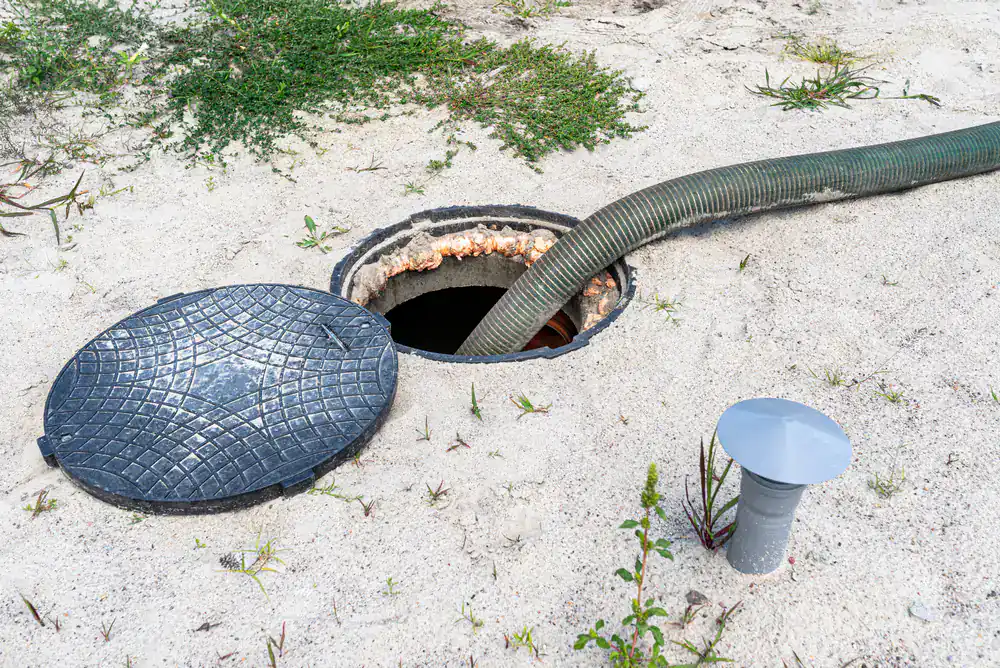
Once on-site, our first step is figuring out what you’re actually dealing with. A lot of Bay Shore homes — especially those built in the 1950s and 1960s — have cesspools with no visible surface access. Years of landscaping, patios, and additions have buried them. Before any digging happens, we use waterproof video cameras to see exactly what’s underground. That means the diagnosis is accurate, the excavation is targeted, and you’re not paying for guesswork.
From there, the scope of work depends on what the inspection reveals. Routine pumping, leaching pool service, line cleaning, a house trap replacement — we handle it all in-house. If the system needs more significant work, like a main sewage line replacement or a full cesspool installation, that’s in scope too. Suffolk County requires permits through the Department of Health Services for installation and major repair work, and we handle the coordination. If you’re selling a home in Bay Shore, the real estate certification documentation — the inspection report and paperwork your buyer’s attorney will ask for — gets produced as part of the process. One company, start to finish.

Ready to get started?
We cover the complete range of cesspool and drainage services — not just pump-and-go. For Bay Shore homeowners, that matters because the conditions here often require more than one type of service in a single visit. An aging system that’s been pumped but never inspected might have a failing leaching pool, a cracked line, or a main that’s partially collapsed. Finding that on camera before it backs up into your basement is the entire point.
Our services include cesspool cleaning and pumping, cesspool installation, leaching pool service, video pipe inspection, drywell cleaning, house trap replacements, main sewage line cleaning and replacement, storm drain cleaning, and cesspool location for systems with no visible access point. We handle real estate certifications in-house — a hard requirement for home sales in Suffolk County, and a service that’s in consistent demand in Bay Shore given the active real estate market along the LIRR corridor.
We offer 24-hour emergency cesspool service. Bay Shore’s South Shore exposure means nor’easters and coastal storms can push groundwater up fast, and backups don’t wait for Monday morning. Suffolk County’s Phase 1 South Shore cesspool replacement plan specifically targets the Great South Bay corridor — Bay Shore properties are in the priority zone. If your system fails and requires full replacement, we can walk you through what the 2024 Suffolk Water Quality Restoration Act means for your situation, including the reimbursement program that may cover a significant portion of the cost.