
By submitting you consent to receive service-related texts from Drastic Drainage. Reply STOP to opt out. Msg & data rates may apply. Consent not required to book service.
Useful Links
Most Bayport homes were built in the postwar decades — the 1950s, 1960s, and early 1970s — when cesspool-only systems were the standard and nobody was thinking about a 40-year lifespan limit. Those systems are now 55 to 75 years old. The home looks great. The cesspool underneath it may be a different story, and the frustrating part is that a failing cesspool often gives no visible warning until the day it does — slow drains, a smell you can’t place, a soft wet patch in the yard that wasn’t there last week.
What changes when you get ahead of it is simple: you stay in control. You know what condition your system is in. You’re not making decisions under pressure with sewage backing up on a Sunday evening. For homeowners along the canal streets in South Bayport, that matters even more — high water tables near the bay reduce your system’s ability to absorb effluent, which means a stressed system can cross into failure faster than it would five miles inland.
And if you’re selling your home — in a market where the median Bayport property is worth over $700,000 — a clean cesspool inspection and proper documentation isn’t just a formality. It’s what keeps a deal on track.
The general recommendation for Suffolk County is every one to three years, depending on household size and system capacity. For Bayport homeowners, particularly those in the southern part of the hamlet near the canals or the Great South Bay, that interval may need to be shorter. High water tables in those areas reduce the soil’s ability to absorb effluent efficiently, which means the system fills faster and works harder than it would in an inland community. A single-chamber cesspool — common in homes built before the 1970s, which describes a large portion of Bayport’s housing stock — also fills more quickly than a modern septic tank system.
If you don’t know when your system was last pumped, that’s actually the most important thing to find out first. A professional assessment will tell you what you’re working with and give you a realistic maintenance schedule going forward. Suffolk County also requires that all pump-out activity be reported to the Department of Health Services, so keeping records of your service history matters — especially if you ever plan to sell.
The clearest signs are slow drains throughout the house — not just one fixture, but multiple — combined with gurgling sounds in the pipes, sewage odors inside or outside the home, and wet or unusually green patches in the yard above or near where the system is buried. Any of these on their own warrants a call. All of them together is an emergency.
What makes this tricky is that a cesspool can be at or near capacity without any of these symptoms showing up yet. The system continues functioning until it doesn’t — and when it stops, it tends to stop all at once. For Bayport properties close to the bay or on canal streets, heavy rain events are a common trigger. When the water table rises quickly after a nor’easter, it reduces the soil’s absorption capacity, and a system that was managing fine the week before can back up within hours. If you notice slow drains after a significant storm, don’t wait to see if it resolves on its own.
Not in the sense that New York State mandates a specific cesspool inspection as a legal prerequisite to every sale — but in practice, it almost always comes up. Buyers’ attorneys in Suffolk County routinely request proof that the cesspool has been properly maintained, and in many transactions, a formal inspection and certification is expected before closing. In a market where Bayport homes are selling at median prices above $700,000, a buyer’s attorney is going to ask the question, and you want a clean, documented answer ready.
Beyond what the buyer’s attorney requests, the condition of your cesspool can affect the sale directly. A system that’s overdue for service, showing signs of failure, or lacking documentation of recent pump-outs can become a negotiating point — or a reason a deal falls apart. Getting a professional inspection done before you list gives you time to address anything that comes up on your terms, not under deadline pressure with a closing date already set. We handle real estate certifications in-house and understand what Suffolk County documentation requirements look like.
Free, no-obligation estimates on cesspool, sewer, and drain work.
We get there quickly. No waiting days for a callback.
Backups don’t wait for business hours. Neither do we.
Fully licensed and insured across Long Island.
Up-to-date trucks and tools for cleaner, faster jobs.
Straight quotes, no surprises on the bill.
Hear from Our Customers
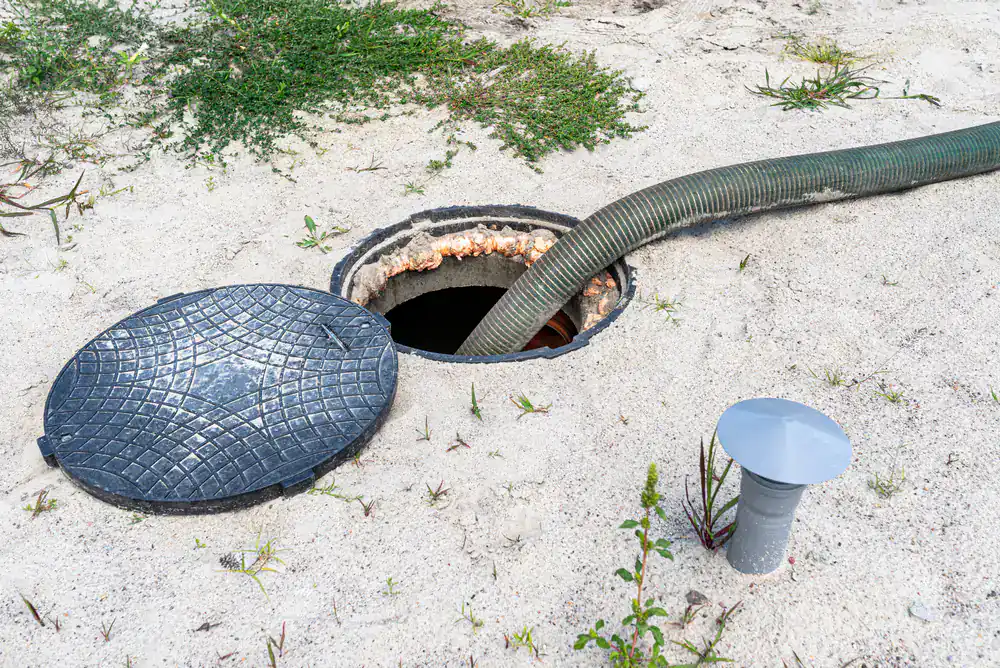
Most Bayport homes were built in the postwar decades — the 1950s, 1960s, and early 1970s — when cesspool-only systems were the standard and nobody was thinking about a 40-year lifespan limit. Those systems are now 55 to 75 years old. The home looks great. The cesspool underneath it may be a different story, and the frustrating part is that a failing cesspool often gives no visible warning until the day it does — slow drains, a smell you can’t place, a soft wet patch in the yard that wasn’t there last week.
What changes when you get ahead of it is simple: you stay in control. You know what condition your system is in. You’re not making decisions under pressure with sewage backing up on a Sunday evening. For homeowners along the canal streets in South Bayport, that matters even more — high water tables near the bay reduce your system’s ability to absorb effluent, which means a stressed system can cross into failure faster than it would five miles inland.
And if you’re selling your home — in a market where the median Bayport property is worth over $700,000 — a clean cesspool inspection and proper documentation isn’t just a formality. It’s what keeps a deal on track.
We’ve been servicing cesspools across Nassau and Suffolk County for over 30 years. That’s not a number we throw out to sound impressive — it’s the reason we understand what separates a Bayport service call from a generic Suffolk County job. The canal-front access challenges in South Bayport, the tidal influence on the water table, the salt air corrosion on older metal components, the smaller lot configurations common in the Town of Islip — these are things you learn from doing this work here, not from reading about it.
We’re licensed (LW-63684), insured, and bonded. We answer the phone — a real person, not an answering service. And when a technician shows up at your door, we’ll tell you exactly what we find and what it means before any work begins. Free estimates, no pressure, no surprises on the invoice. That’s been our standard for three decades, and it’s not changing.

It starts with a phone call. A real person picks up, asks a few straightforward questions about what you’re seeing or what you need, and gives you a clear timeframe. No callback queue, no form submission that disappears into a portal. If it’s an emergency — a backup, surfacing sewage, a system that’s clearly in distress — we treat it that way and respond accordingly, including after hours.
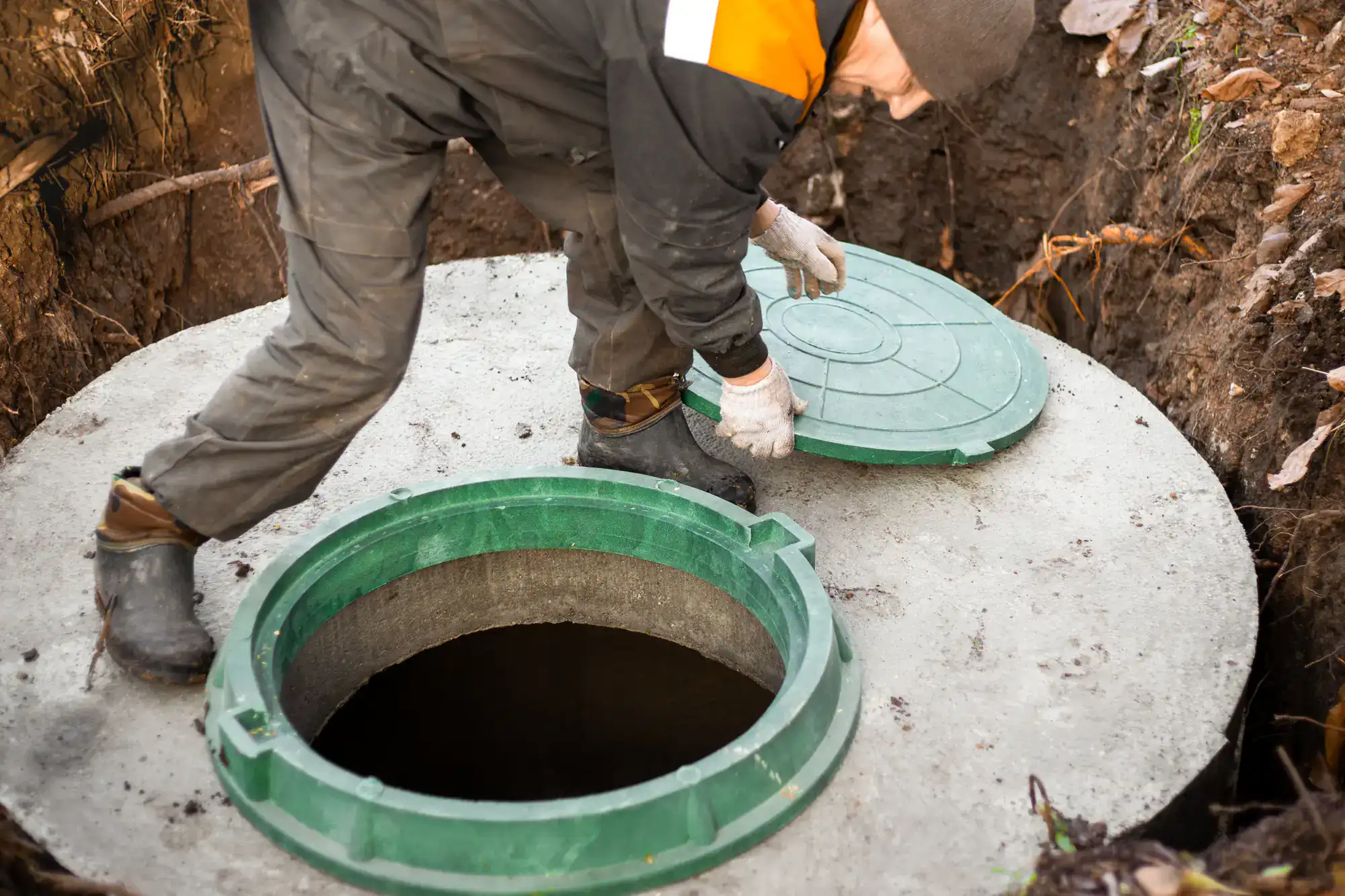
When we arrive, the first step is assessment. For most Bayport properties, that means locating the system — many older homes in this area have cesspools with no visible access point — and understanding what we’re working with before anything else happens. If the situation calls for it, we use a waterproof video camera to inspect the pipe and system interior. That camera goes underground before any digging does, which means we know exactly what’s wrong, not what we’re guessing might be wrong. It also means we only excavate what needs to be excavated.
From there, the work gets done — whether that’s a standard pump-out, a repair, a leaching pool service, or a full system replacement. Suffolk County requires that all cesspool pumping activity be reported to the Department of Health Services, and we handle that documentation as part of the job. If you’re in the middle of a real estate transaction, we can provide the certification your buyer’s attorney is going to ask for. When the job is finished, we walk you through what we found, what we did, and what — if anything — you should be watching for.
Ready to get started?
We handle the full scope of cesspool and drainage work — not just pump-outs. That includes cesspool cleaning, cesspool installation, leaching pool service, drywell cleaning, video pipe inspections, cesspool location for systems with no visible cover, main sewage line cleaning and replacement, house trap replacements, storm drain cleaning, and real estate certifications. If it’s connected to your home’s wastewater system, we do it.
For Bayport homeowners specifically, a few of these services carry extra weight. Real estate certifications matter here because transactions in a market with $700,000-plus median home values don’t have room for documentation gaps at closing. Cesspool location matters because a large share of Bayport’s housing stock was built before access risers were standard — finding the system is sometimes the first challenge. And for properties along the canal streets or close to the bay, the inspection process accounts for access limitations near tidal areas and the condition of older metal components that salt air degrades over time.
One more thing worth knowing: since July 2019, Suffolk County no longer permits traditional cesspool replacements. If your system fails and needs to be replaced, it must be replaced with an Innovative/Alternative treatment system. The county’s 2024 Septic Improvement Program now offers reimbursement of up to 75% of the project cost — capped at $25,000 — for qualifying upgrades. We can walk you through what that means for your specific situation.
