By submitting you consent to receive service-related texts from Drastic Drainage. Reply STOP to opt out. Msg & data rates may apply. Consent not required to book service.
Useful Links
Most cesspool problems don’t announce themselves until they’re already expensive. A slow drain, a faint smell near the yard, a patch of grass that’s greener than it should be — these are the early signs that something’s off underground.
In Eastport, the window between “early sign” and “real problem” is shorter than in most Suffolk County communities. The water table in the southern parts of the hamlet is shallow, which means when a system is overloaded or starting to fail, it doesn’t take long before it’s affecting the groundwater that feeds into Seatuck Cove and Moriches Bay.
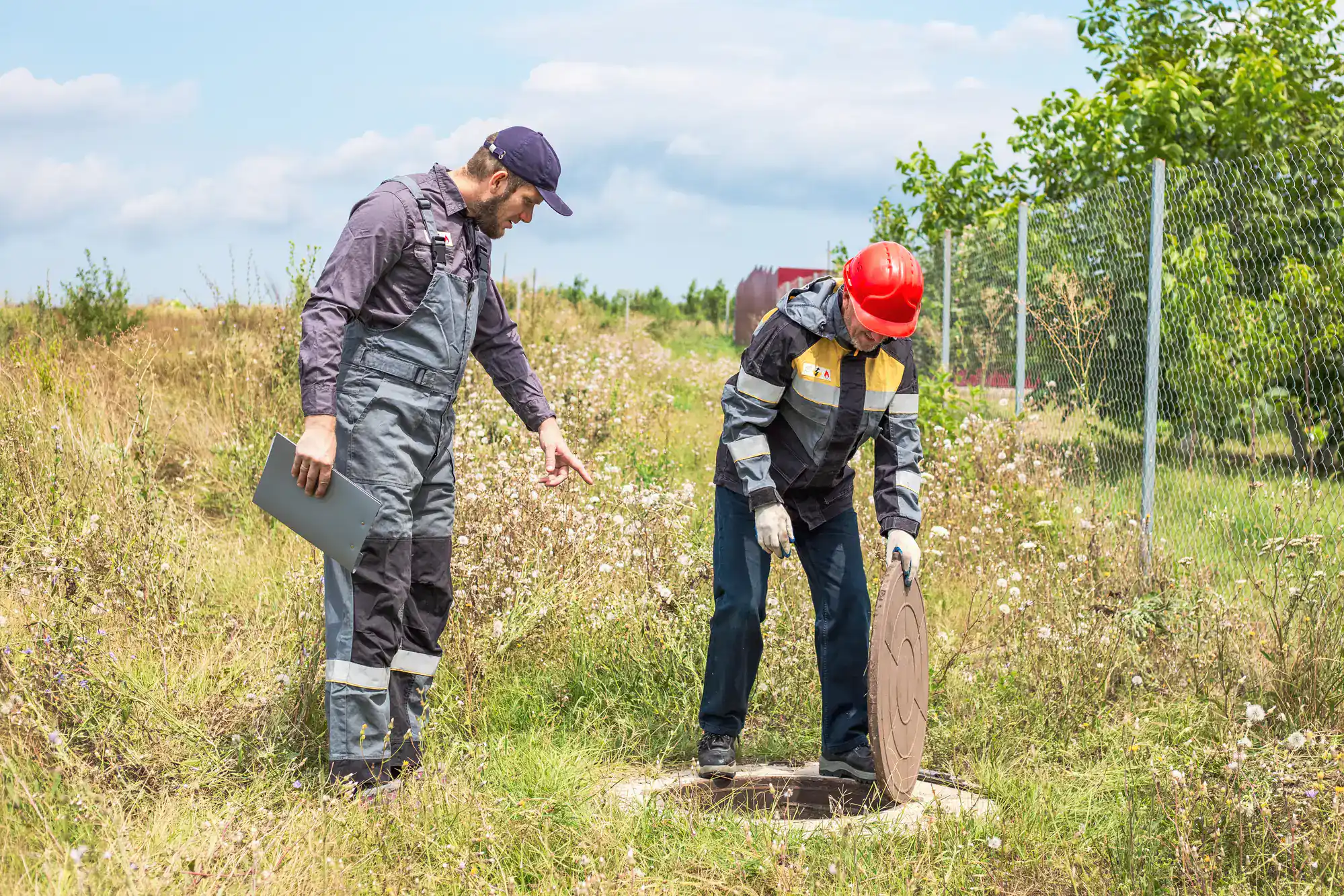
Getting ahead of it means you’re not calling someone in a panic on a Sunday night. It means knowing what you have, knowing its condition, and knowing what it will take to keep it working. A proper cesspool inspection and maintenance visit delivers exactly that — not just an empty tank, but a clear picture of where your system stands.
A lot of Eastport’s housing stock was built in the 1960s and 1970s on land converted from duck farms. Those systems are now 40 to 60 years old, and the conventional cesspool design life is 25 to 40 years. If you don’t know when your system was last serviced — or if the answer is “never” — that’s the starting point. Getting it assessed now costs a fraction of what remediation costs after a backup.
The general recommendation for most Long Island homes is every one to three years, depending on household size and how heavily the system is used. In Eastport specifically, a few factors can push that toward the more frequent end of the range.
Properties near Moriches Bay sit above a shallower water table than inland Suffolk County communities, which means the system has less margin before problems surface. If you’re on the southern end of the hamlet — closer to Seatuck Cove or along the South Bay Avenue corridor — that’s worth factoring in.
Summer use is another variable. If you have guests staying regularly from Memorial Day through Labor Day, your system is handling significantly more load than it does the rest of the year. Many Eastport homeowners find that a pre-summer inspection keeps them ahead of the peak season rather than reacting to a problem during it. If you genuinely don’t know when your system was last serviced, start with an inspection and assessment — that gives you a real baseline rather than a guess.
The most common early signs are slow drains throughout the house — not just one fixture, but multiple — along with gurgling sounds in the pipes, a sewage smell near the yard or inside the home, and wet or unusually green patches of grass above where the system sits. Any one of these on its own might have another explanation, but when two or three show up together, it’s worth calling for an inspection rather than waiting.
The more serious signs are sewage backing up into the lowest drains in the house, standing water or a soft, saturated area in the yard above the system, or a visible surfacing of waste. At that point it’s an emergency, not a maintenance call. In Eastport, surfacing sewage near the bay or a cove isn’t just a health issue — it’s a potential regulatory issue given the environmental sensitivity of the Moriches Bay watershed. Suffolk County takes nitrogen loading from failing systems seriously, and properties in environmentally sensitive areas can face additional scrutiny. Getting it addressed immediately is the right call on every level.
Not anymore. Suffolk County banned new conventional cesspool installations effective July 1, 2019. If your existing system fails and needs to be replaced, it must be replaced with an Innovative/Alternative Onsite Wastewater Treatment System — what the county calls an I/A OWTS. These systems are designed to reduce nitrogen in residential wastewater by up to 70%, which is a meaningful difference for communities like Eastport that sit on Moriches Bay.
The cost of an I/A system is higher than a conventional cesspool replacement, but there’s significant grant funding available to offset it. The Suffolk County Septic Improvement Program and New York State Septic System Replacement Program together offer combined grants of up to $45,000 for qualifying installations. Eastport properties near Moriches Bay may receive preferential consideration in the grant scoring because the area is classified as environmentally sensitive.
The new system also has to be registered with the Suffolk County Department of Health Services before work begins. We handle the permitting process — you don’t need to navigate the SCDHS portal on your own.
Free, no-obligation estimates on cesspool, sewer, and drain work.
We get there quickly. No waiting days for a callback.
Backups don’t wait for business hours. Neither do we.
Fully licensed and insured across Long Island.
Up-to-date trucks and tools for cleaner, faster jobs.
Straight quotes, no surprises on the bill.
Hear from Our Customers
Most cesspool problems don’t announce themselves until they’re already expensive. A slow drain, a faint smell near the yard, a patch of grass that’s greener than it should be — these are the early signs that something’s off underground.
In Eastport, the window between “early sign” and “real problem” is shorter than in most Suffolk County communities. The water table in the southern parts of the hamlet is shallow, which means when a system is overloaded or starting to fail, it doesn’t take long before it’s affecting the groundwater that feeds into Seatuck Cove and Moriches Bay.
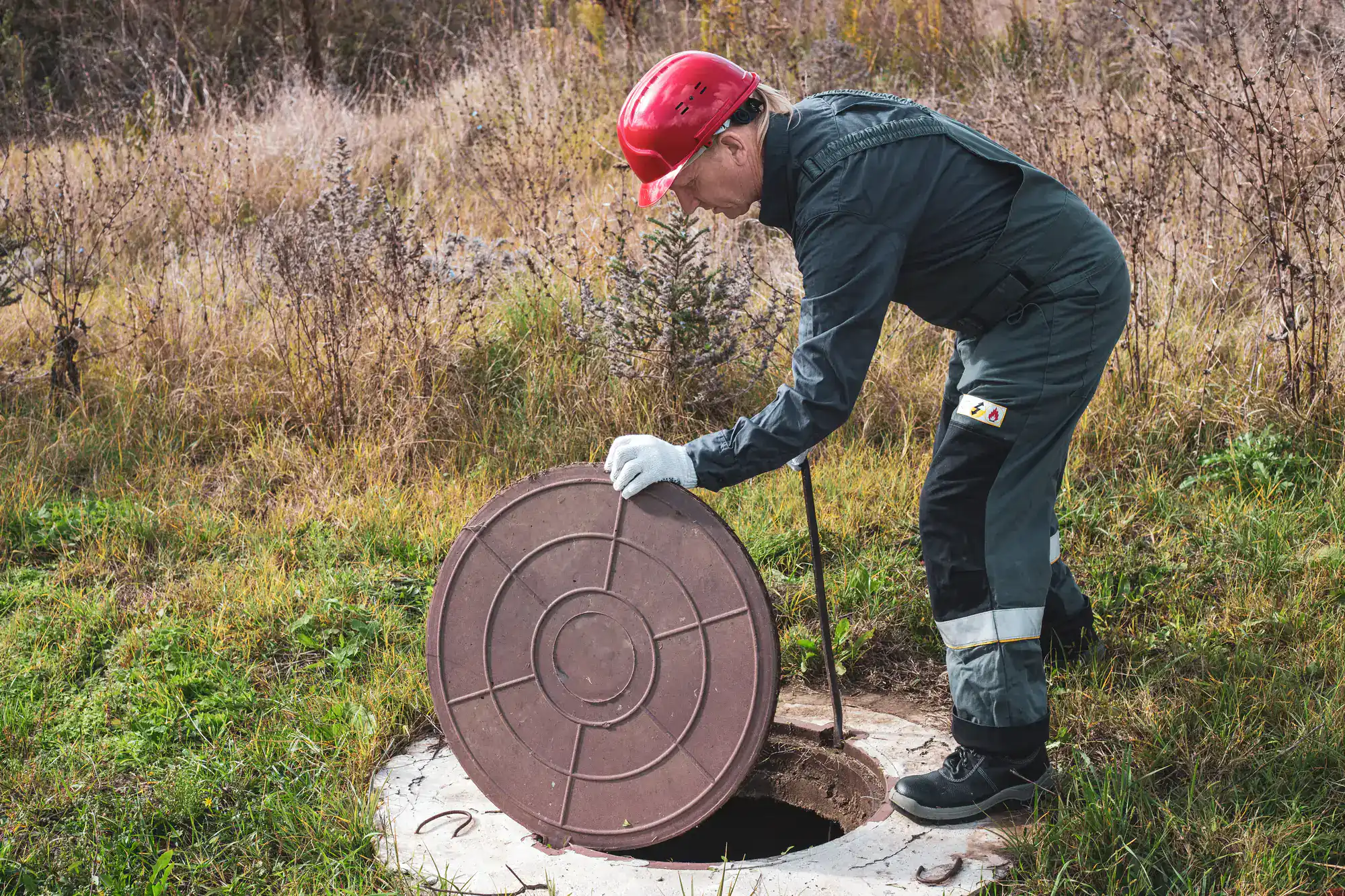
Getting ahead of it means you’re not calling someone in a panic on a Sunday night. It means knowing what you have, knowing its condition, and knowing what it will take to keep it working. A proper cesspool inspection and maintenance visit delivers exactly that — not just an empty tank, but a clear picture of where your system stands.
A lot of Eastport’s housing stock was built in the 1960s and 1970s on land converted from duck farms. Those systems are now 40 to 60 years old, and the conventional cesspool design life is 25 to 40 years. If you don’t know when your system was last serviced — or if the answer is “never” — that’s the starting point. Getting it assessed now costs a fraction of what remediation costs after a backup.
We’ve been doing this work across Nassau and Suffolk County for over 30 years. That’s not a number for the sake of it — it means our crew has seen what happens to cesspool systems in South Shore communities like Eastport: the sandy coastal soil, the high seasonal load from summer use, the older systems installed on former agricultural land that are well past their design life.
That context matters when we’re diagnosing your system, not just pumping it and leaving. We’re licensed (License #LW-63684), insured, and bonded under Suffolk County Article VII — the county-level licensing requirement that governs who is legally allowed to do this work.
When you call, a real person answers. When our technician shows up, they explain what they found and what it means. That’s what customers have specifically said in their reviews, by name.
We serve both sides of Eastport’s town line — Brookhaven to the west and Southampton to the east — and we handle the Suffolk County Department of Health Services process so you don’t have to figure it out yourself.

It starts with a phone call — and an actual person picks up, not a voicemail. You describe what you’re seeing: slow drains, a smell, a backup, or just a system that hasn’t been touched in years. From there, we give you a real timeframe and a free estimate before any work begins.
On arrival, the first step is assessment. If your system’s location isn’t documented or visible — which is common in Eastport, where many homes were built on former duck farm land without standardized permitting records — we can locate it. A video camera inspection goes underground before any digging happens. This matters on Eastport properties where waterfront landscaping, dock access, or bay-adjacent setbacks make unnecessary excavation a real concern.
The camera shows exactly what’s happening: blockages, structural issues, absorption problems, or a system that simply needs pumping. Once the picture is clear, we get the work done — whether that’s a routine pump-out, a repair, a leaching pool service, or a more involved replacement.
If your system has failed and Suffolk County’s 2019 ban means it can’t be replaced with another conventional cesspool, we walk you through what an Innovative/Alternative system involves and what grant funding may be available to offset the cost. After the job, you get documentation — which matters whether you’re maintaining compliance, preparing for a home sale, or simply keeping a record for the next service visit.

Ready to get started?
We handle the full range of cesspool and drain services — pumping, cleaning, repair, installation, video pipe inspection, cesspool location, drywell cleaning, storm drain cleaning, main sewage line cleaning and replacement, house trap replacements, and real estate certifications. The scope of work is determined by what your system actually needs, not a menu.
For Eastport homeowners, a few of these services come up more often than others. Real estate certifications are a hard requirement for property transfers in New York, and in a market where median list prices are approaching $800,000, the documentation behind a cesspool inspection can be the difference between a clean closing and a renegotiated deal. We provide the detailed inspection reports that buyers, sellers, and attorneys need.
Cesspool location is another service that’s particularly relevant in Eastport. Older systems — especially those installed on land converted from duck farming — often have no visible access point and no service history on file. We can find them. For properties near Seatuck Cove or along the South Bay Avenue corridor, where the combination of a shallow water table and seasonal load from summer use puts extra stress on the system, a leaching pool inspection is worth doing before the heavy-use months arrive.
Suffolk County now requires homeowners to have systems inspected every three years and submit reports to the county — staying ahead of that schedule means you’re not scrambling when the deadline hits.